


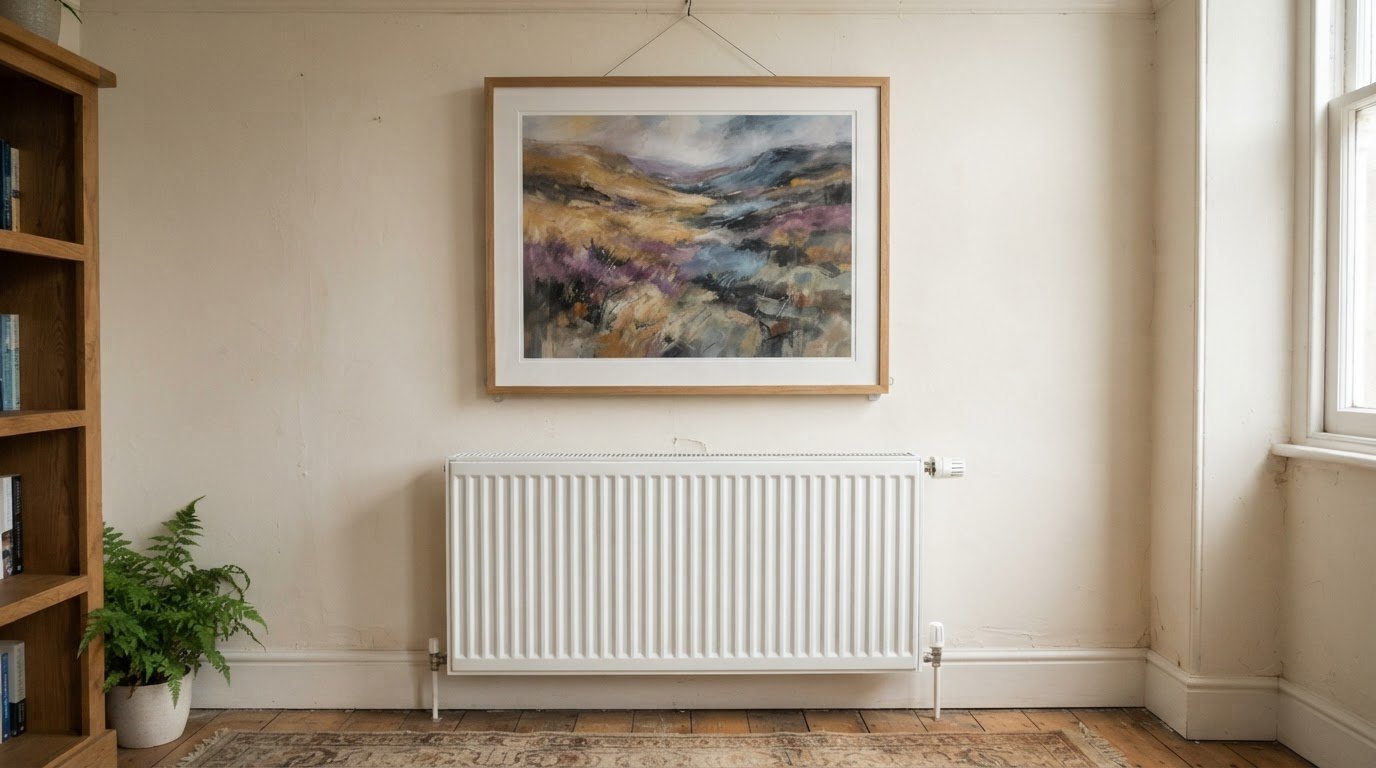
A radiator doesn’t automatically rule out a picture wall. The best art display ideas for above a radiator leave at least 15-20 cm between the radiator and the artwork placement, with space behind the frame for air to circulate. If the wall or artwork becomes very warm, choose another spot or use the radiator cover as your display surface instead.
It’s understandable to worry that rising heat could affect a treasured print or frame. A thoughtful arrangement lets you enjoy the space while keeping airflow in mind. Here are four practical approaches, from using a radiator cover as a shelf to choosing where to position artwork and what to consider when hanging framed pieces above a heat source.
Key Takeaways
- You don’t always need to avoid hanging art above a radiator; the wall’s warmth and the space around the frame help guide the decision.
- A decorative shelf or pelmet can create a useful display area while keeping artwork clear of the radiator.
- Use a radiator cover as a considered styling surface, but arrange objects so the room’s heat can still circulate.
- Plan the frame’s position and rear spacing to support airflow and give your artwork a comfortable place on the wall.
1. Should you avoid hanging a picture above a radiator?
Prints and photographs can work above a radiator when they’re positioned away from direct rising heat. Consider a framed landscape print or a small photographic gallery, and check how warm the wall gets before hanging anything valuable.
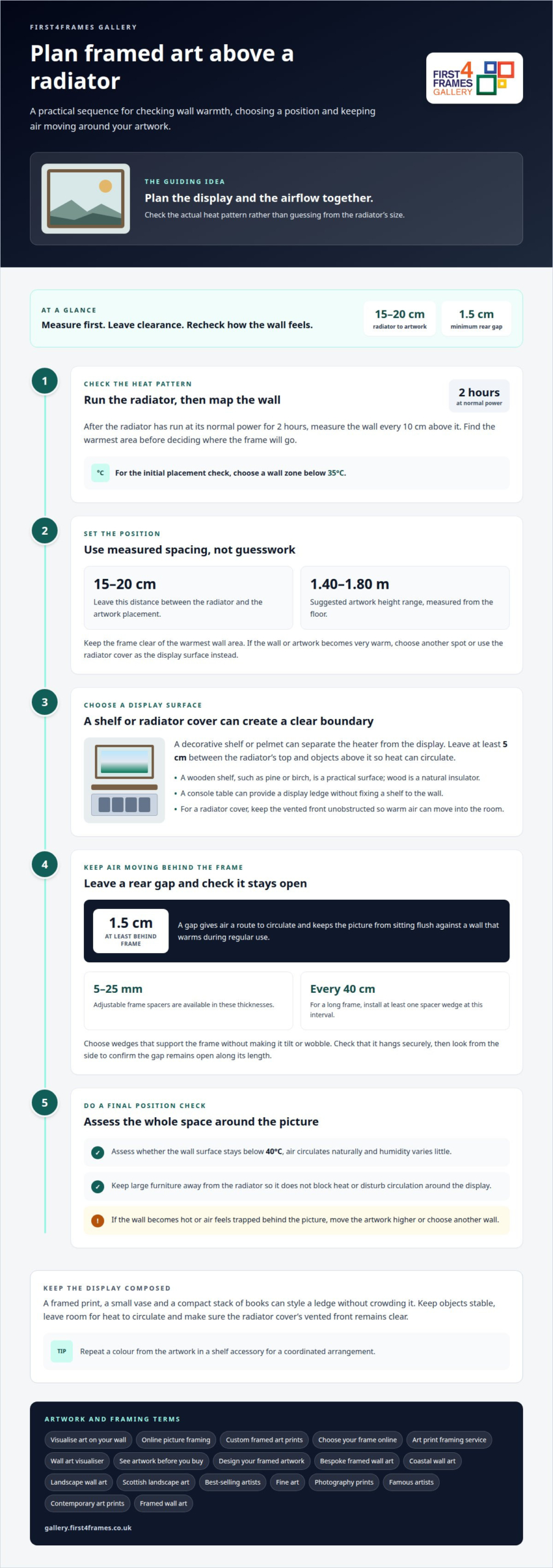
Map the warmest area first. Run the radiator at its normal power for 2 hours, then measure the wall every 10 cm above it. Choose a wall zone below 35°C and keep the artwork within the suggested height range of 1.40-1.80 m from the floor. These checks help you plan a display around the actual heat pattern, rather than guessing from the radiator’s size.
A decorative shelf or pelmet can create a clear boundary between the heater and your display. Leave at least 5 cm between the radiator’s top and objects above it, so heat can circulate. A wooden shelf, such as pine or birch, offers a practical surface because wood is a natural insulator. For a renter, a console table can provide a display ledge without fixing a shelf to the wall.
Vintage-inspired radiators suit period decor particularly well. Pair a column radiator with artwork in a classic frame, or echo its circular forms with rounded accessories. A flat-panel radiator, by contrast, can sit comfortably beneath clean-lined frames and a simple pelmet. Let the radiator’s shape guide the display rather than hiding its character.
Keep shelves and decorative displays edited. A framed print, a small vase and a compact stack of books can make a statement without crowding the ledge or obstructing the radiator. For a coordinated arrangement, repeat a colour from the artwork in a shelf accessory, such as a ceramic bowl or book spine.
These art display ideas for above a radiator work best when appearance and airflow are planned together. Check where the wall gets warm, choose a suitable shelf or frame position, and keep the radiator’s route for heat unobstructed.
2. Using a radiator cover as a shelf
A radiator cover can turn an awkward strip of wall into a useful display surface. Some covers direct heat into the room rather than upwards, so the top may stay cooler than the radiator itself. A vented front panel is important too, as it lets warm air move out instead of trapping it inside the cover.
Start by considering the cover’s construction and shape. MDF is commonly used for radiator covers, while a flat, stable top gives you room to arrange a small framed print, a vase or seasonal decorations. Avoid crowding the surface. Leaving space between objects keeps the arrangement calm and makes each piece easier to lift when dusting.
Plants can also bring a fresh touch to a radiator cover. Choose a plant that suits the room’s light and water it regularly, since the warmth nearby can dry its soil. If you prefer an arrangement that needs less attention, dried flowers offer texture without regular watering. In winter, a modest festive display can make the cover a stylish focal point.
In a narrow hallway, use the surface for practical items as well as decoration. A radiator console can hold incoming post and house keys, while a small framed image adds a personal detail. Group everyday objects in a shallow tray so the surface stays tidy rather than becoming a catch-all.
Think about the display as a composition. Pair a landscape print with a ceramic pot, or echo the cover’s colour in a frame or dried-flower vase. If you’d like to coordinate the shelf with artwork, browse the artwork gallery for visual inspiration. Keep heavier objects stable, and leave the vented front unobstructed so heat can circulate into the room.
3. Air circulation and rear spacing behind framed art
Space around a framed picture helps warm air move instead of becoming trapped against the wall. Leave at least 15-20 cm between the radiator and the artwork placement, then allow a gap behind the frame. This arrangement reduces direct contact with a warm wall and gives air a route to circulate. It also helps prevent the picture from sitting flush against a surface that heats during regular use.
Modern pigments can resist temperatures of 40-50°C without problems, but that doesn’t establish how every frame or artwork responds to heat. Avoid assuming that a material is automatically suitable because it feels sturdy. Consider the complete piece, including the print, glazing, backing and frame, and focus on giving it space from the radiator and wall.
For a practical wall check, assess whether the surface stays below 40°C, air circulates naturally and humidity varies little. These conditions together indicate a more compatible position than temperature alone. If the wall becomes hot or the air feels trapped behind the picture, move the artwork higher or choose another wall. Keep large furniture away from the radiator too, since it can block heat and disturb circulation around the display.
A small rear gap can be created with adjustable frame spacers, available in thicknesses of 5-25 mm. For a long frame, install at least one spacer wedge every 40 cm to help maintain even spacing. Choose wedges that support the frame without making it tilt or wobble. Check that the picture hangs securely, then look from the side to confirm the gap remains open along its length.
These simple adjustments suit framed landscapes, photographs and fine art prints alike. Keep the heating route clear, measure the distance from the radiator to the artwork, and leave at least 1.5 cm behind the frame. The resulting display can sit comfortably above the radiator while allowing airflow around its edges and back.

4. Hanging pictures above radiators
A picture can hang above a radiator if its position allows heat to circulate and avoids the warmest wall area. Mark the wall’s safety area, then keep the artwork at least 5 cm beyond its edge. This gives you a practical boundary for planning the display, rather than choosing a position by eye alone.
For a stylish gallery wall, arrange a small group of prints and photographs in a balanced cluster. Align their lower edges, or place one larger picture centrally with smaller works beside it. Keep the full arrangement within the marked safe zone and leave clear wall space around the radiator. This creates a considered feature without crowding the heating.
Plan the picture’s height around the room’s interior. A suggested position places the artwork’s centre at eye level, given as 1.60 m from the floor. Above a radiator console, hang the picture as you would above a larger piece of furniture. Check the frame’s clearance from the console and radiator before fixing it in place.
Choose wall fixings suited to the wall and frame, and consider heat exposure when hanging artwork above a radiator. Different materials may respond differently to heat, so consider both the frame and the artwork when choosing where to hang it. Keep airflow and the wall’s temperature in mind when choosing where to hang a print or photograph.
For an already fragile piece, begin with a 48-hour test before gradually increasing its exposure to heat. Look for changes in the artwork or frame during that period. If the picture is valuable or delicate, a position away from the radiator may be a more suitable choice.
Prints and photographs can bring a personal gallery feel to a living room, bedroom or hallway. Once you’ve mapped the safe area, browse artwork for your display and plan a composition that suits the space.
First4Frames Gallery: Ready-to-Hang Framed Art
First4Frames Gallery offers Ready-to-Hang Framed Art, Custom Picture Framing and Giclée Fine Art Prints. Explore Coastal wall art, Landscape wall art, Scottish landscape art, Photography prints and Contemporary art prints, alongside Fine art by Best-selling artists and Famous artists.
For custom framed art prints or bespoke framed wall art, online picture framing makes it simple to choose a frame and design your framed artwork. As you browse, visualise art on your wall and see how artwork could look before you buy. A wall art visualiser can help you picture how a style might suit your space, while a framing service brings the print and frame together.
Explore framed wall art in the First4Frames Gallery and find a piece that feels at home in your space.
Give your chosen artwork a place to belong
Make the space above your radiator part of the room’s design, rather than filling it as an afterthought. Choose a picture that connects with your colours, furnishings or personal memories, then make its position feel intentional. A quiet landscape can soften a formal interior, while a bold contemporary print can bring fresh energy to a familiar corner.
The best art display ideas for above a radiator balance visual impact with a considered location. Once you know where your artwork will sit, take time to find a piece and frame that feel right for the room. First4Frames Gallery offers artwork and framing options to help bring that combination together, including pieces that can be tailored to your choice of frame.
Contact First4Frames Gallery for advice as you explore artwork for your space. A thoughtful choice can turn an overlooked wall into a feature that feels distinctly yours.
Frequently Asked Questions
Should you avoid hanging a picture above a radiator?
No, a picture doesn’t have to be avoided automatically. Assess the wall where it will hang, since conditions vary with the radiator and room. Track indoor humidity at different times over three days; a variation below 10% is considered a successful result for this assessment. If the wall is persistently hot or humidity fluctuates noticeably, choose a cooler position, especially for a fragile or treasured piece.
Can you place things on top of radiator covers?
Yes, a radiator cover can hold a carefully arranged display, provided its front ventilation remains unobstructed. Keep objects stable and easy to move so you can access the cover for cleaning or adjustments. For example, group a small clock and a shallow tray instead of scattering loose items. Avoid placing anything where it could fall if the cover is bumped.
How much clearance should be left between a radiator and artwork?
Allow at least 15-20 cm between the radiator and the artwork placement. Treat this as clearance for the whole picture, not just its centre, and account for the frame’s lower edge when positioning it. A separate gap behind the frame also helps air circulate. Measure the planned position before drilling, then check that the finished arrangement keeps the same open space.
Can heat from a radiator damage paintings, prints or photographs?
Heat and changing humidity can make conditions less suitable for artwork over time, so consider the wall and room together. Paper-based prints and photographs deserve particular care above a frequently used radiator. Observe the display while the heating is on, and move delicate or valuable work if the wall becomes hot or the room’s humidity varies noticeably.
How can artwork be mounted safely above a radiator?
Choose fixings suited to both the wall and the weight of the framed piece, and use heat-resistant fixings rated to at least 60°C. Mark the position, secure the fixings, then check that the frame hangs level and stays stable. After installation, inspect the picture once a month for movement or loose fittings, particularly if the radiator is used regularly.
Are picture ledges or shelves suitable above radiators?
They can work if the shelf is securely fixed and doesn’t obstruct rising heat. A picture ledge makes it easy to change the display without rehanging every print, while a fixed shelf can also hold a small decorative object. Arrange items securely, avoid overloading the ledge and keep the radiator’s airflow clear so the display doesn’t interfere with heating the room.