


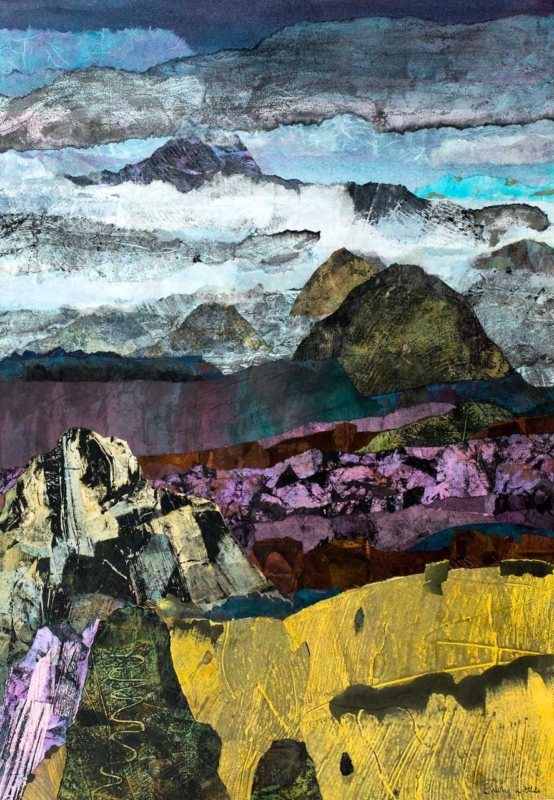
calming wall art for a meditation room should support attention rather than demand it. A quiet space does not need a literal lotus, slogan, or prescribed spiritual symbol. Between Earth and Sky by Emily Little offers a subtler alternative. Its atmospheric composition suggests landscape and distance while leaving enough ambiguity for the viewer to settle into their own response.
What calming wall art for a meditation room should do
The artwork is not there to fill every blank surface. Its role is to provide one stable point for the eye before practice begins or when attention wanders. Soft transitions, an open composition, and a title that connects ground with air can help establish that sense of steadiness without dictating how anyone should feel.
Between Earth and Sky works because it sits between recognisable landscape and abstraction. There is enough structure to hold the gaze, yet not so much detail that the mind starts cataloguing objects. This balance can suit a dedicated meditation room, a yoga corner, or a quiet section of a bedroom used for reflection.
Begin with the practice position
Arrange the room from the seated position outward. Sit on the cushion, chair, or bench you actually use and notice where the eyes rest naturally. The artwork should be visible without lifting the chin or twisting the body. If practice usually happens with closed eyes, the picture can still shape the transition into and out of the session.
Avoid placing the print directly above the practitioner’s head. That position removes it from view and may make the wall feel top-heavy. A wall opposite or slightly to one side often creates a more useful anchor. Keep enough clear space around the frame for the composition to feel open.
Build the room in three quiet layers
- The visual layer: one considered artwork and uncluttered wall space.
- The tactile layer: a supportive mat, cushion, natural textile, or simple chair chosen for comfort.
- The practical layer: soft controllable light, ventilation, and storage that removes everyday clutter from view.
Keeping these roles clear prevents the room from becoming a collection of wellness accessories. The picture supplies atmosphere. The furniture supports the body. Storage and lighting make the routine easy to repeat. Nothing needs to perform several jobs or compete for attention.
Let colour remain atmospheric
Instead of matching every tone, choose a wall colour and textile that allow the artwork’s quieter shifts to register. Warm off-white, mineral grey, muted clay, or a restrained natural green can all work, depending on the print in person and the room’s daylight. Test samples at the hours when the space is normally used.
Lighting should be gentle but sufficient to see the image clearly. A shaded lamp or dimmable wall light is often more comfortable than a bright ceiling fitting. Position the light so it does not throw a distracting reflection across the glazing from the usual seated viewpoint.
Frame for calm rather than disappearance
A frame does not have to vanish to feel calm. A restrained dark moulding can give an atmospheric work definition, while a pale timber may connect it to natural textures in the room. A measured mount creates a pause between image and frame. The best combination depends on the actual print, wall, light, and nearby materials.
First 4 Frames uses colour-managed Giclée production and completes bespoke framing in-house in Falkirk. The hand-finished presentation supports the artwork’s tonal detail and gives the piece a settled, lasting presence beyond a short-term room trend.
Atmosphere without a prescribed meaning
Emily Little creates atmospheric paintings in which memory, interior space, and landscape can overlap. Explore more of her work on Emily Little’s official website, or browse the Emily Little collection at First 4 Frames.
The most useful calming wall art for a meditation room leaves room for a personal practice. View the framed Between Earth and Sky print for an artwork that can steady the room through atmosphere, proportion, and thoughtful craftsmanship rather than obvious symbolism.