


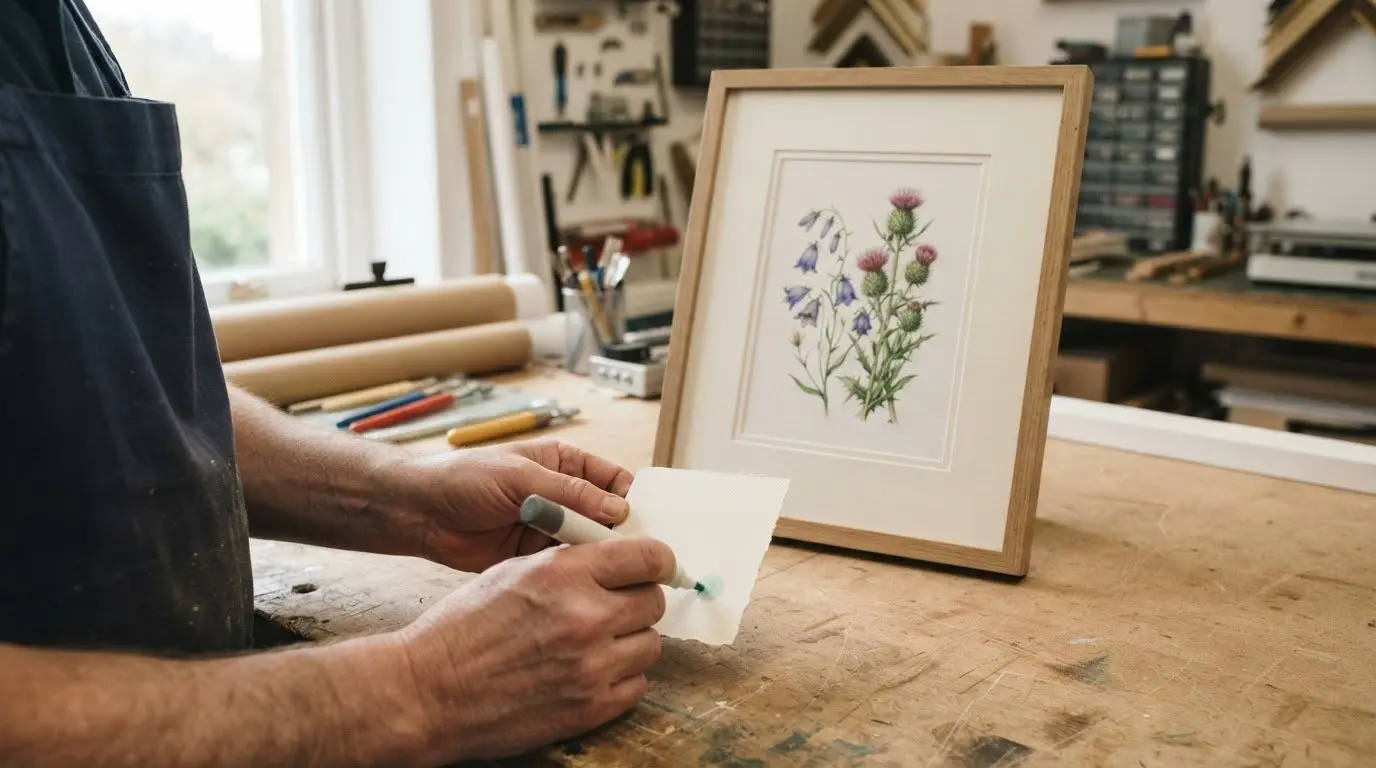
A mount can look beautifully finished while the board behind it affects how the artwork is preserved. Understanding what pH-neutral mount board means starts with the pH scale: it runs from 0, acidic, to 14, alkaline, with 7 as neutral. A board’s acid-free description concerns its chemical properties, not its colour or appearance.
It’s understandable to focus first on a mount’s shade, width and finish, since these shape how the artwork looks on the wall. But the board’s grade matters too, especially for fine art, photographs and prints you want to keep in good condition.
This guide explains how standard, conservation and museum-grade boards differ, and what an alkaline buffer does. You’ll learn why a buffered board can help counter acidity and which qualities to consider when choosing mount board for a particular piece.
Key Takeaways
- Learn what pH-neutral and acid-free labels tell you about mount board, and why they matter when framing artwork.
- Compare standard, conservation and museum-grade boards to match the level of protection to your piece.
- Understand how an alkaline buffer helps counter acidity and why that can matter for long-term preservation.
- Choose mount board with both the artwork’s preservation needs and the finished frame’s appearance in mind.
What is Mount Board?
Mount board frames a piece of artwork and separates it from the glazing. Its pH and composition matter because acidic materials can affect paper over time.
PH-Neutral and Acid-Free Board
pH-neutral mount board has a pH close to 7, the neutral point on the scale from 0 to 14. Acid-free paper is described as having a pH between 6.5 and 7.5 when manufactured. This matters in framing because the mount and backing board sit close to the artwork. For valuable or delicate pieces, choosing acid-free materials can reduce exposure to acidity.
Acid Migration from Wood-Pulp Boards
Acid migration occurs when acidic compounds in wood-pulp board move into nearby paper. The artwork may then become discoloured or brittle, particularly where it touches the mount or backing. A bright surface doesn’t reveal whether the board contains acidic material. That’s why composition matters as much as appearance, especially for fine art prints and photographs kept framed for years.
Checking Genuine pH Neutrality
To assess a board, look beyond a general “archival” description and check its stated pH and material. A pH specification gives a clearer indication than colour or finish alone. Acid-free conservation tape also matters: described gummed conservation tape has a neutral pH of 7, while cotton rag gummed archival tape has a pH range of 7-8. Framing materials work together, not in isolation.
Neutral pH Range and Archival Suitability
A pH of 7 is neutral, while paper materials below 6.5 or above 8.5 are not considered acid-free for picture framing. pH-neutral mount board can support archival framing and conservation, but the label alone does not establish the board’s full suitability. Conservation mount board or foam core board is typically used for acid-neutral backing. Consider the artwork’s sensitivity and the materials touching it, including the mount, backing board and tape, when choosing protection for expensive or treasured pieces.
Museum, conservation and standard board grades
Board grades differ in fibre, composition and intended role in framing. Standard board can provide a clean mount and finish, while conservation and museum grades focus more closely on preserving sensitive pictures. The grade name alone doesn’t describe every material choice. Cotton content, purified cellulose and an alkaline reserve each indicate something about how a board is made and how it supports the artwork.
For permanent collections, leading institutions require boards made from 100% cotton or purified cellulose. Cotton museum-grade mount board uses 100% cotton fibre and is described as stable for hundreds of years. For fine prints, watercolours and historic prints, 100% cotton-rag board with an alkaline reserve is recommended. ISO 18916 is identified as a conservation standard, giving a useful reference point when considering materials for more sensitive pieces.
Conservation mounting means selecting materials and methods with the artwork’s preservation in mind, rather than focusing only on the visible finish. A conservation-quality board may combine suitable fibres with calcium carbonate, which acts as an alkaline reserve. The described museum-quality board contains 2.5mm calcium carbonate buffers, intended to neutralise acids for 100 years. That specification distinguishes its buffering provision from a board chosen mainly for colour or surface appearance.
Choose between grades according to the picture’s material and value, its intended display, and the framing materials around it. A decorative print may have different preservation needs from a historic watercolour, so the same board choice won’t suit every piece. The mount, backing and finish should work together without drawing attention away from the artwork. To explore pictures that may call for considered framing, browse the artwork gallery.
Alkaline buffers in mount board
An alkaline buffer is an added alkaline material, commonly calcium carbonate, that helps counter acids affecting a board. Premium mount boards use calcium carbonate buffers with a pH of 8.5-9.5. This reserve can help protect paper as acidic compounds develop or migrate within the framing sandwich. It adds a layer of chemical protection, rather than changing the artwork’s visible colour or finish.
The buffer’s role is to neutralise some acidity before it reaches the picture. This matters because paper can become yellow or brittle as it ages, and acidic materials nearby can contribute to deterioration. Buffered boards are designed to provide a reserve over time; premium boards’ embedded buffers are designed to last more than 50 years. That design period is not a promise that every framed piece will remain unchanged.
Buffering is not a substitute for choosing suitable materials throughout the frame. For example, acidic adhesive or tape can still introduce unwanted compounds near the artwork. Cotton rag archival tape described for framing contains a 2% calcium carbonate buffer, showing that buffering can also be part of an attachment material. Hinging with minimal tape can secure a print while allowing paper to respond to changes in humidity.
Some materials may not suit an alkaline reserve, so the artwork’s composition matters alongside the board specification. A buffer can help protect many paper-based pieces, but it cannot prevent warping caused by poor mounting or unsuitable storage. Framers consider the paper, mount, backing and adhesive as a system. This joined-up approach helps the board support preservation without treating one buffer as a complete solution.

Meaning of pH-neutral mount board
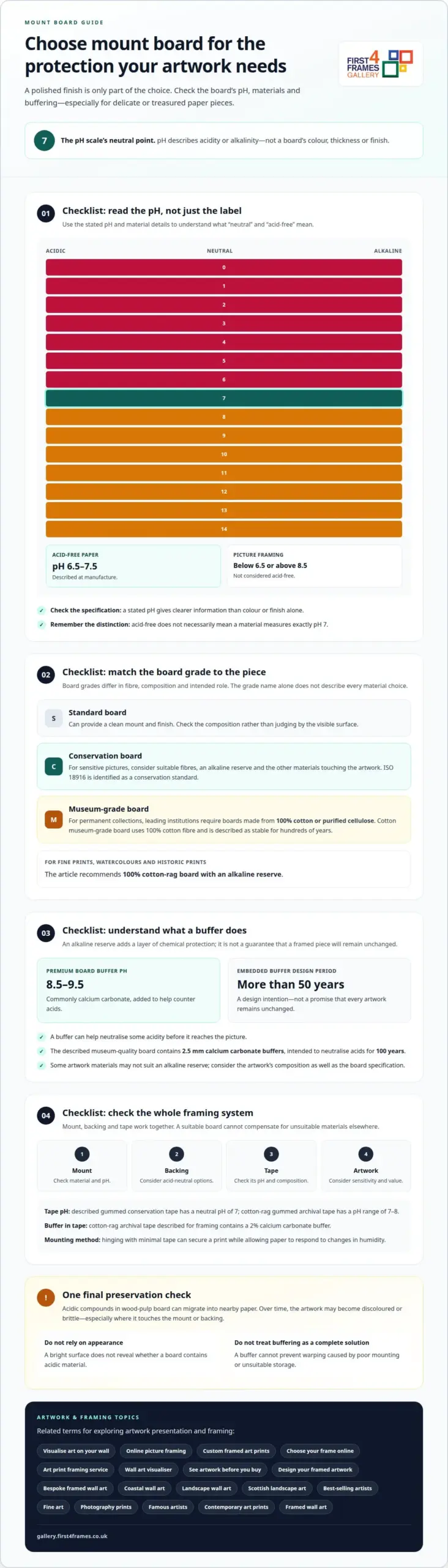
Understanding what pH-neutral mount board means starts with separating chemical properties from appearance. The pH scale runs from 0, acidic, to 14, alkaline, with 7 neutral. The term describes the board’s acidity or alkalinity, not its colour, thickness or finish. “Acid-free” is related, but doesn’t necessarily mean the material measures exactly 7.
That distinction matters because acid-free paper can have a pH between 6.5 and 7.5 when manufactured. A buffered board may be alkaline rather than exactly neutral, with an alkaline reserve intended to counter acids. So a board’s pH reading and its buffering provision describe different things. For example, an artwork framed with buffered board has a reserve against acidity, not a guarantee against every cause of deterioration.
Think of pH neutrality as one part of a framing decision, not a complete preservation label. The board sits close to the artwork, while the mount, backing, tape and adhesive also shape the materials surrounding it. A neutral mount cannot make acidic tape suitable, just as a conservation-grade description alone doesn’t identify every frame component. For a delicate print, the complete combination of materials matters.
The practical takeaway is to match the board’s properties to the artwork and its intended display. A treasured watercolour, for example, may call for more considered material choices than a decorative print. The weight of the piece also affects how it is supported, but weight and pH describe separate needs: one concerns physical support, the other chemical conditions. Consider both when planning a custom frame, then browse artwork for framing with its display setting in mind.
First4Frames Gallery
First4Frames Gallery helps turn mount-board knowledge into considered framing choices. Its handmade, bespoke Custom Picture Framing lets you choose a frame to complement your artwork and display. For online picture framing, choose your frame online and design your framed artwork around its colours and setting, whether you’re planning custom framed art prints or bespoke framed wall art.
Browse fine art prints to see artwork before you buy, and consider how framed wall art will look in your space. Ready-to-Hang Framed Art and Giclée Fine Art Prints offer different ways to bring artwork into your home. For help with your framing needs, contact First4Frames Gallery.
Choose a frame that feels right for your artwork
Knowing what pH-neutral mount board means gives you a useful starting point. Next, consider how the finished piece should look in your space: the artwork’s colours, the room’s character and whether you want a quiet, refined finish or a more striking frame. Preservation and presentation can work together, giving a treasured piece a place to be enjoyed every day.
First4Frames Gallery offers Ready-to-Hang Framed Art, Custom Picture Framing and Giclée Fine Art Prints, so you can explore different routes for presenting artwork. The right option depends on whether you already have a piece to frame or are choosing art for a particular wall. Take time to picture the finished result, then explore framed art and print options as you plan your next display. A thoughtful frame can help your artwork feel at home.
Frequently Asked Questions
What is acid migration and how does it affect artwork?
Acid migration is the movement of acidic compounds from one framing material into nearby paper. It can occur where artwork touches an acidic mount, backing board or tape. For example, wood-pulp board may transfer acidity to a print, contributing to discolouration or brittleness over time. Keeping acidic materials away from the artwork helps reduce this risk, particularly for delicate paper pieces.
What does pH-neutral mount board mean?
Understanding what pH-neutral mount board means starts with its position on the pH scale: neutral is 7, between acidic and alkaline. The term describes the board’s chemical character, rather than its colour or thickness. For a framed piece, this helps you consider whether the mount may introduce acidity near the artwork. It’s one part of choosing materials that suit the paper and its intended display.
What materials are pH-neutral mount boards made from?
Mount boards can use different paper fibres, including cotton or purified cellulose in museum-grade options. Standard wood-pulp boards are another category, and their composition may include acidic compounds that matter in close contact with artwork. Material names therefore add useful detail to a pH description. For example, cotton-rag board identifies its fibre source, while a pH reading describes its chemical character.
What is the difference between pH-neutral and acid-free mount board?
pH-neutral describes a material with a neutral reading, while acid-free indicates that it is made without harmful acidity under the stated conditions. These terms overlap, but they aren’t identical: acid-free paper can measure between 6.5 and 7.5 when manufactured. A board with an alkaline reserve may also be described as acid-free. Check both the pH information and the material description when comparing boards.
Does pH-neutral mount board contain an alkaline buffer, and what does that mean?
Not necessarily. “pH-neutral” describes a pH property, while an alkaline buffer is an added reserve, commonly calcium carbonate, intended to counter acids. A board may be neutral without that reserve. For a paper print exposed to acidic compounds from nearby materials, buffering provides an additional protective measure. The board’s description should distinguish its pH from whether it contains a buffer.
How does pH-neutral mount board compare with conservation-grade and museum-grade board?
pH-neutral describes a chemical property; conservation-grade and museum-grade describe broader material choices for preservation. Museum-grade boards may use cotton fibre or purified cellulose, while conservation options can include a buffered reserve. These grades are relevant for delicate watercolours, historic prints or works intended for long-term care. For a less sensitive decorative print, the desired level of preservation and presentation can guide your choice.