


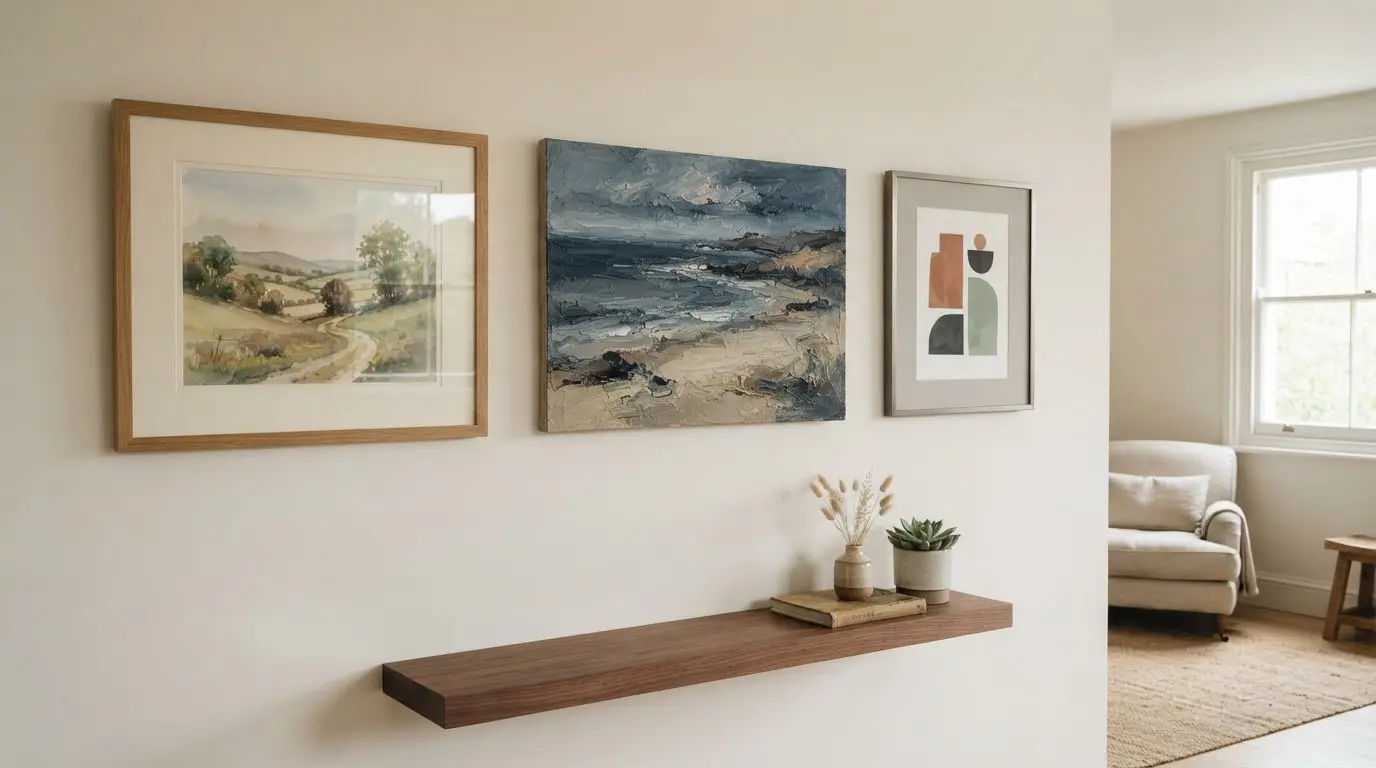
The right frame can protect an original artwork and help it feel at home on your wall. When framing original artwork in the UK, choose glazing to suit the medium: oil paintings are traditionally displayed without glass, while works on paper, such as prints and watercolours, generally need protection behind glass or perspex. A mount can create space between the artwork and the glazing.
It’s natural to focus first on how a frame looks, but the mount and protective materials matter too. A considered combination can complement the artwork, reduce the risk of contact with the glazing and support its long-term care.
This guide explains how to choose a frame that suits the artwork and your home, select suitable glazing, and consider mount colours, widths and conservation materials. You’ll also learn when it may make sense to preserve an existing frame and how careful choices can support the presentation of original artwork.
Key Takeaways
- Match the frame’s style and proportions to both the artwork and the room, while considering whether an existing frame should be preserved.
- Choose protective glazing with the artwork’s medium, display position and desired balance of clarity and protection in mind.
- Select a mount colour and width that gives the artwork visual breathing space without distracting from its details.
- For original works on paper, consider acid-free and conservation-minded materials to support their long-term care.
Choosing a frame to complement artwork style and colours
Carry artwork flat between clean protective sheets, supported by rigid board. Until it is framed, store it in a clean, dry place away from sunlight, heat and damp.
- Study the artwork’s palette, scale and the room’s furnishings. Simple, monotone frames can let contemporary art prints remain the focus, while a warmer finish may suit coastal wall art or a soft landscape. To visualise art on your wall, use a paper template to compare its size and placement before choosing.
- An exact-fit frame shows the artwork’s edges; a mount adds breathing space. Keep the artwork in proportion to the frame, and check that the mount opening won’t hide a signature or important detail. For a framed print, choose a finish that works with both the image and the room.
- Match the frame construction to the artwork. Standard frames suit many flat works, while box frames add depth. Floating or tray frames can show a canvas’s edges; a thin canvas may suit a canvas surround, while a thick canvas may fit a floater frame. Consider these options for framed wall art and fine art alike.
- Before replacing an existing frame or window mount, check its condition. Retain a sound original frame where possible, as it may contribute to the artwork’s value. If you’re considering keeping an old window mount, have a professional framer assess any potential risks to the artwork.
- Framing alone doesn’t determine insurance cover. The artwork’s valuation and your policy terms matter, so keep valuation records with details of the piece. This applies whether you own a Scottish landscape, photography prints or work by a well-known artist.
- For DIY framing, gather a ruler, suitable frame, glazing, mount and backing board, then measure carefully before cutting. Valuable or delicate originals benefit from professional attention. If comparing online picture framing or an art print framing service, review how each approach suits the medium. See artwork before you buy, and compare options such as a wall art visualiser for planning display.
Protective glazing for oil paintings, prints, pastels and watercolours
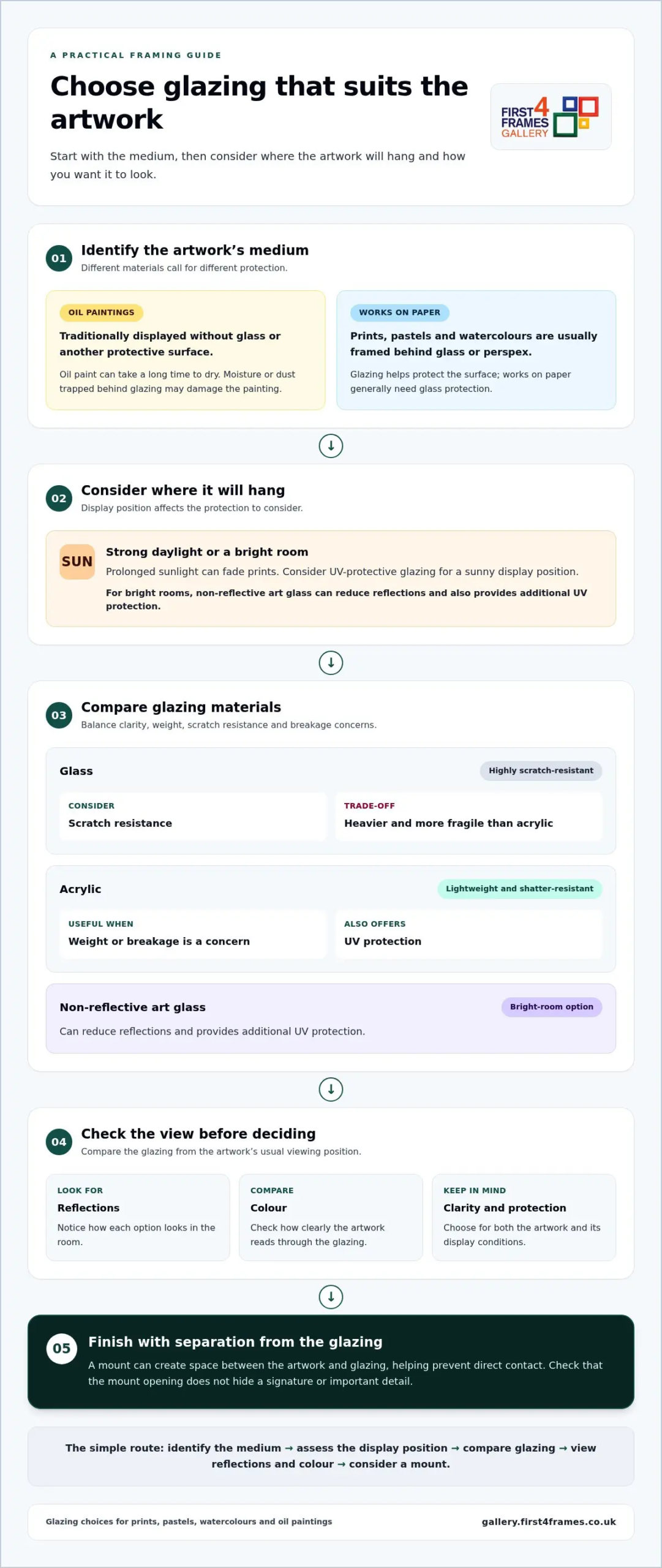
Choose glazing to suit the artwork’s medium, display position and your priorities for clarity, weight and protection. The right option can also reduce reflections while keeping the artwork clearly visible.
-
Compare glazing types and materials
Compare standard glass, acrylic and specialist art glass before choosing. Glass is highly scratch-resistant, but heavier and more fragile than acrylic. Acrylic is lightweight and shatter-resistant, and offers UV protection, making it useful when weight or breakage is a concern.
For a bright room, consider non-reflective art glass, which also provides additional UV protection. Check how each option affects reflections and colour when viewed from the artwork’s usual position. To see how different colours and compositions read as wall art, explore the fine art print gallery.
-
Match glazing to the artwork
Start by identifying the medium. Prints, pastels and watercolour paintings are usually framed behind glass or perspex to protect the surface. Works on paper generally need glass protection. For a sunny display position, consider UV-protective glazing, as prolonged sunlight can fade prints.
Oil paintings are traditionally displayed without glass or another protective surface. Oil paint can take a long time to dry, and moisture or dust trapped behind glazing may damage the painting. Avoid enclosing an oil painting behind glass until its condition and framing needs have been carefully considered.
Before choosing glazing, consider both the artwork and where it will hang. A print in strong daylight has different protection needs from one displayed away from direct sun. Pastels and watercolours benefit from glazing, while oil paintings are typically left unglazed. These distinctions help you choose protection to suit the artwork, rather than treating every original alike.

Selecting mount colours and widths
- Place a paper border around the artwork to test possible mount widths. Compare the visible space on each side, then choose a balanced border that gives the image room without overwhelming it. A wider mount can create visual separation and draw attention to the print. Keep the artwork’s proportions in mind as you decide.
- Test mount colours beside the artwork in the room where it will hang. A soft neutral can complement a muted watercolour, while a pure white border may create a sharper contrast. Choose coloured or pure white mounts only when that effect is intentional. A print’s white border may also provide space for the artist’s signature, so make sure it remains visible.
- Choose a window mount when you want a border around the artwork and space between it and the glazing. The opening frames the image, while the board helps prevent direct contact with the glass. Check that the opening won’t cover a signature or important detail. Matting can enhance the presentation and create separation from the glazing.
- Consider float-mounting if you want a print to appear suspended inside the frame. The artwork sits within the frame rather than behind a conventional window opening, leaving its edges visible. For a print with distinctive deckled edges, this can make the paper part of the display. Decide how much of the sheet you want to show.
- Think carefully before dry-mounting a print. The process bonds the artwork to a board with adhesive and is irreversible, so it isn’t suitable if you may want to remove the print later. Matting and dry-mounting together can help prevent a print from warping, but the permanent bond affects future conservation. Choose this approach only after weighing that trade-off.
- Preview the finished effect before committing: place the artwork beneath a mount, then view it with the frame and glazing. Check the border from several angles and make sure the artwork is centred. A restrained mount can let a colourful print lead, while a wider border can give a small image greater presence.
Archival and acid-free framing
- Choose acid-free materials, especially for works on paper. Acid-free matting helps avoid damage from materials that can affect the artwork over time. For conservation framing, specialist acid-free museum board sits behind the artwork instead of regular mat board or foam board. This makes the backing part of the protection, not just a support.
- Ask for Level 1 framing when reversibility is important. Its processes are intended to be reversible, assuming the artwork is not inherently unstable. Level 1 framing should also provide protection for at least 35 years in normal conditions. Reversibility means the framing can be removed without harming the artwork.
- Arrange a condition report before framing an existing piece to Level 1. The Fine Art Trade Guild recommends agreeing a Level 1 condition-of-artwork report prior to framing. It records the work’s condition before framing begins, giving you a reference if its appearance or condition changes later.
- Address deterioration before reframing. If a work shows signs of damage or decline, arrange appropriate remedial care first. Preserve existing labels, too: they can provide provenance and useful information about the artwork’s history. Keep labels attached where possible and accessible, rather than covering them during framing.
- Use conservation-minded choices for valuable or meaningful works, and keep a record of the materials and condition report with the artwork’s documentation. For a paper-based print, explore fine art prints to consider how a carefully presented image might suit your collection. A framing decision should protect the work while respecting its individual history.
First4Frames Gallery: Ready-to-Hang Framed Art
First4Frames Gallery offers Ready-to-Hang Framed Art for collectors seeking a finished piece, alongside Custom Picture Framing for artwork needing a tailored presentation. Each frame is made by hand to order from high-quality materials, with 2 mm float glass. This gives you a considered framing option when the artwork’s dimensions or style calls for a bespoke fit.
Explore the range of framed art, or choose Custom Picture Framing when you want a frame made for an individual artwork. Commercial Artwork Curation and Art Gifts offer further ways to bring art into a space or choose a thoughtful present.
Visit the online art gallery to explore the available artwork and framed pieces.
Give your artwork a place to grow
Let the artwork guide the room, then let the room help shape your final choice. A frame can connect a piece to its surroundings while leaving its character unmistakably its own. As your collection grows, a considered approach to framing original artwork in the UK can create a visual thread between pieces without making them all feel alike.
When you’re ready to find a work that speaks to your space, First4Frames Gallery offers Giclée Fine Art Prints alongside framed artwork. Explore the gallery to discover a piece that could become the starting point for your next display.
Explore the First4Frames Gallery and find inspiration for your walls. Let your chosen artwork lead the way.
Frequently Asked Questions
How much does it cost to frame original artwork in the UK?
There isn’t one fixed cost: the final specification shapes the price. A small, straightforward drawing needs different materials and work from a large or unusually shaped painting. The frame profile, glazing and mount design also affect the job. For a useful estimate, provide the artwork’s dimensions and medium, describe your preferred finish, and mention any details that need special care.
What types of frames are best for original paintings and drawings?
The best frame complements the artwork and suits its construction. For a drawing, consider whether the frame’s visible border competes with fine marks or delicate lines. For a canvas, check that its depth fits the frame securely. Compare frame samples beside the artwork rather than relying on a colour name alone, and consider how the finish relates to nearby pieces.
What is conservation framing and when is it recommended?
Conservation framing focuses on preservation and can be particularly useful for fragile, valuable or historically significant work. Consider it for a drawing with brittle paper, loose pastel or visible previous repairs. These details may affect how the piece should be handled during framing. If the artwork is deteriorating, arrange appropriate remedial care before reframing; a new frame won’t repair existing damage.
How should glazing be chosen for original artwork: glass, UV glass or acrylic?
Choose glazing by considering how the artwork will be displayed, moved and viewed. Lightweight acrylic may make a large framed piece easier to handle, while UV-protective glazing may help when it will be displayed near strong daylight. Think about reflections in the room, too. Glazing can help protect the surface, but it doesn’t replace careful placement away from harsh conditions.
What mount board and backing materials are safe for original artwork?
Choose materials that keep the artwork away from unsuitable adhesives and rough backing. For a valuable drawing, discuss how it will be secured before framing begins, especially if it may need to be removed later. Keep the artist’s signature, inscriptions and labels visible. These details can carry meaning and useful history beyond the image itself.
How do I choose the right frame size and mount for artwork?
Measure the entire sheet, including deckled edges or printed margins, then compare it with the frame’s internal space. The visible mount opening is smaller, so check that it won’t cover intentional details. For example, a drawing with a broad paper border may look better with more of the sheet visible. Mock up the proportions before making your final choice.