


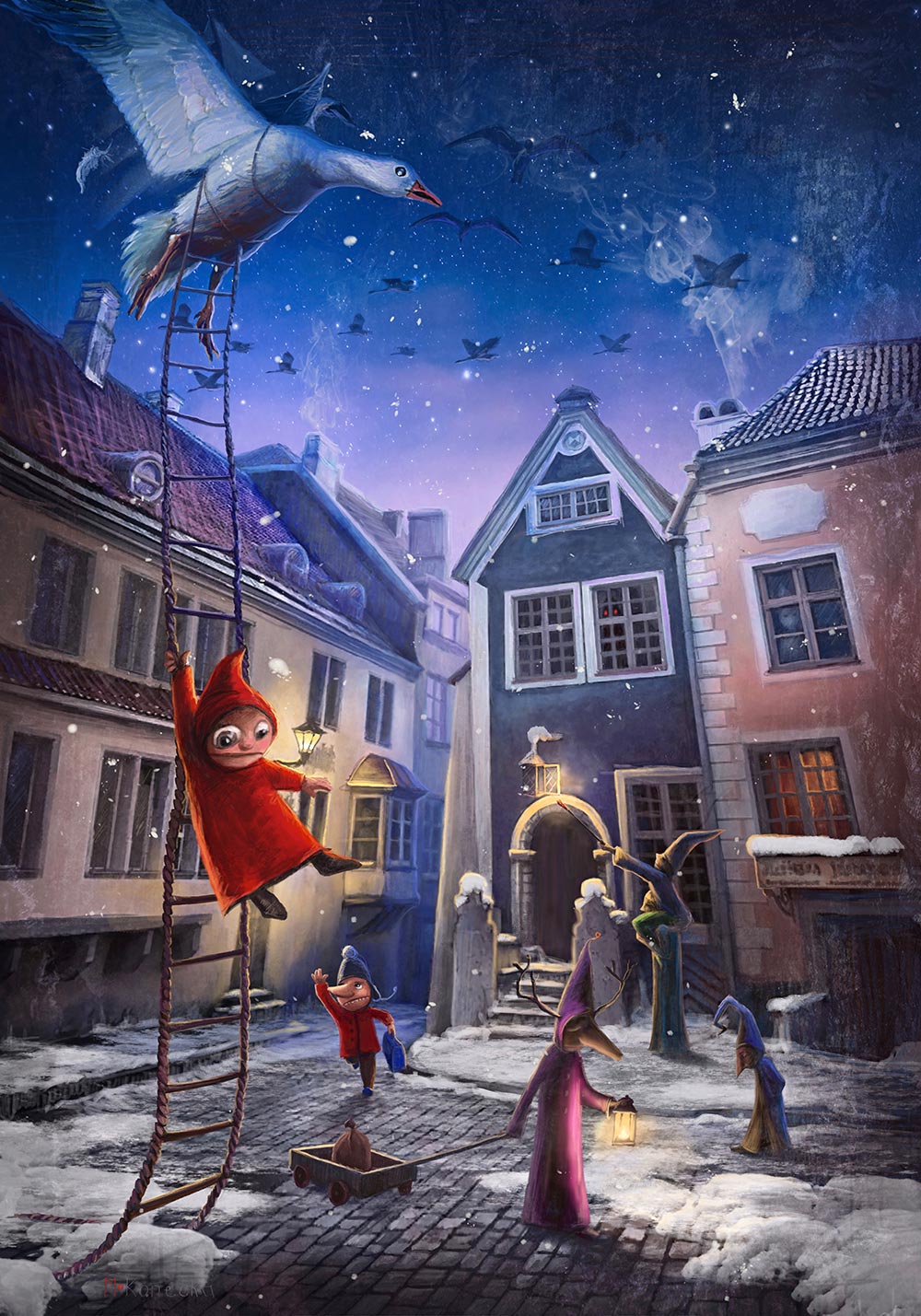
imaginative wall art for a children’s library should do more than fill a blank wall. It can give young readers a place to pause, notice details and invent a story before they open a book. All Aboard by Matylda Konecka presents a snowy town beneath a deep blue sky, where unusual travellers, birds and a towering ladder turn an ordinary street into an unfolding adventure. Nothing is explained too quickly, which makes the scene especially useful in a shared reading space.
Why a library benefits from art with an unfinished story
Recognisable book characters can create instant excitement, but they arrive with a story already attached. An independent image leaves more room for each child to decide what is happening. Who is climbing the ladder? Where are the winged figures going? Why does one traveller pull a small cart through the snow? Questions like these encourage observation without turning the artwork into a formal lesson.
The picture can also serve children of different ages. A younger visitor may follow the bright red coat and enormous bird. An older reader may notice the old buildings, changing scale and quieter figures in the distance. Staff can return to the same image for conversation, creative writing or a simple settling activity, yet the artwork still works when nobody is directing attention towards it.
How imaginative wall art for a children’s library supports reading
- Close looking: layered characters reward a second and third glance.
- Open questions: the scene invites ideas without requiring one correct answer.
- Visual vocabulary: children can describe scale, weather, movement, architecture and mood.
- Independent storytelling: an unfamiliar world gives every reader permission to invent.
- A calmer welcome: one substantial image creates focus more effectively than many small signs.
These benefits do not require the library to become a classroom. The print can simply establish an imaginative tone near a reading area. Occasional prompts on a removable card can suggest a question, while the frame and artwork remain free of permanent educational text. That keeps the display useful after a topic or school term has changed.
Choose a position children can actually explore
Hang the centre lower than you would in an adult-only corridor, but keep the frame safely clear of chair backs, book trolleys and busy corners. A wall beside a reading circle, low display shelf or small seating bay gives children enough time to look. Avoid placing the picture directly behind a service desk, where equipment and notices may hide its lower details.
Test the wall from a child’s seated height as well as from the entrance. The deep blue sky and pale snow need even light, not a narrow spotlight that produces glare. If the room has large windows, choose a position away from direct sun and check reflections at several points during the day. The scene should remain legible when the library is bright and when winter afternoons become darker.
Let the picture lead the colour scheme lightly
The indigo sky, warm windows and red coat offer useful accents, but they should not become a decorating formula. A blue seat cushion or one red book display can make a quiet connection. Neutral shelving and clear signage will prevent the area from feeling overstimulating. The print already contains movement, pattern and several small surprises, so it benefits from uncluttered wall around the frame.
A simple dark moulding can hold the night sky and define the busy composition. A warm timber frame may connect more naturally with wooden shelves and tables. A pale mount gives the characters breathing room and helps the scene remain distinct from a strongly painted wall. For a public setting, discuss suitable glazing, fixings and cleaning requirements as part of the framing decision.
Give the library an image that can grow with its readers
Matylda Konecka’s work combines detailed architecture, unusual characters and dreamlike narrative. Explore more on Matylda Konecka’s official website, or compare the wider Matylda Konecka collection at First 4 Frames.
First 4 Frames uses colour-managed Giclée production and completes bespoke framing in-house at its Falkirk workshop. That careful process keeps subtle figures visible within the dark sky and snowy street. Hand-finished presentation also gives a busy library a durable, coherent focal point rather than another temporary display.
Effective imaginative wall art for a children’s library makes curiosity feel welcome. View the framed All Aboard print for a winter scene that can prompt new observations and new stories each time young readers return.