


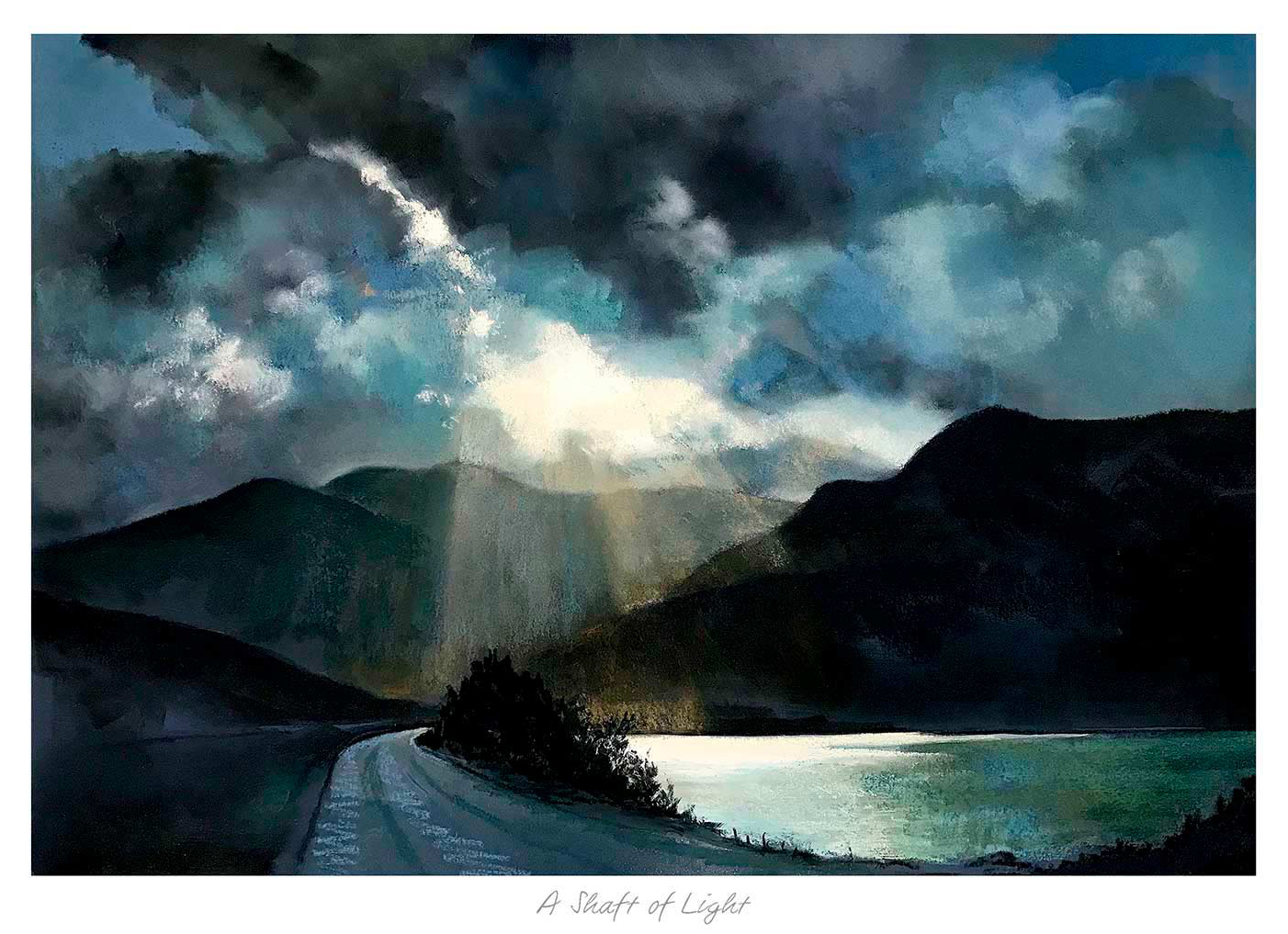
inspirational landscape wall art without words can make a room feel hopeful without telling anyone what to think. A Shaft of Light by Margaret Evans uses a road, reflective water and mountains beneath heavy cloud. A bright opening in the weather changes the scene from simply dramatic to quietly uplifting. The meaning comes from looking, so the picture can remain personal rather than reading like a permanent instruction on the wall.
Why an uplifting picture does not need a slogan
Words are immediate. They can be useful, but a familiar phrase often loses its impact once it has been seen every day. A landscape works more slowly. Different details become important with changes in mood, season and light. One viewer may notice the road continuing towards the mountains. Another may respond to the sun breaking through cloud or the still water holding the sky.
That openness makes the artwork easier to live with. It can encourage reflection without turning a sitting room, study or quiet office into a motivational display. The image also remains visually interesting when its symbolic meaning is not at the front of the viewer’s mind. It is a substantial landscape first, with optimism carried through composition and weather.
How inspirational landscape wall art without words creates meaning
The brightest area is most effective because it is surrounded by darker cloud. That contrast creates direction and gives the eye somewhere to travel. The road strengthens the idea of movement, while the mountain forms add permanence. Together, these elements suggest difficulty, possibility and continuation without reducing the picture to a single fixed message.
- Changing light introduces hope without making the scene unrealistically cheerful.
- The winding road creates a visual route rather than a static distant view.
- Reflective water gives the strong sky a calmer counterpart.
- Mountain scale adds perspective and keeps the mood grounded.
These qualities are especially useful when the artwork is intended to mark a transition. A new home, a return to work or the completion of a difficult project may all deserve recognition. The private story can be added in a card. The framed picture can then have a lasting role in the room without announcing the occasion to every visitor.
Choose a wall where the light can remain visible
The image needs enough viewing distance for the road, lake and opening in the clouds to read as one composition. Above a low sideboard or a sofa can work well. In a study, place it where it is visible when looking up from the desk. Avoid squeezing it between tall shelving, because narrow gaps can make an expansive subject feel confined.
Daylight should reach the wall indirectly. Strong sun can create glare and distract from the tonal changes in the cloud. In the evening, a broad, gentle picture light will reveal more than a tight spotlight. Check the proposed position from the chair that is used most often, not only from the doorway, and make sure a lamp shade does not hide the bright centre of the landscape.
Build a room around atmosphere, not matching colours
There is no need to repeat every grey, blue and ochre tone in the furnishings. Start with materials that suit the mood: natural timber, woven wool, dark metal or a quiet ceramic surface. One colour drawn from the landscape can appear in a cushion or throw, but several exact matches will make the arrangement feel too deliberate.
Keep nearby accessories low enough to preserve the view into the picture. A single lamp, a small stack of books or one sculptural object is usually enough on the furniture below. The landscape already contains strong contrasts and several layers of depth. Clear wall around the frame allows those elements to work without additional decoration competing for attention.
Frame dramatic light with restraint
A simple dark moulding can connect with the mountain silhouettes and give the bright sky a clear boundary. A warmer timber frame can soften the scene in a relaxed home. A measured pale mount adds breathing room between the changeable weather and the surrounding wall. An ornate or highly reflective finish may compete with the very light effect that gives the print its character.
Margaret Evans is a Scottish contemporary artist whose work is closely connected to landscape, weather and Highland Perthshire. See more through Margaret Evans’s official website, or compare the wider Margaret Evans collection at First 4 Frames.
First 4 Frames uses colour-managed Giclée production and completes bespoke framing in-house at its Falkirk workshop. Careful printing is important in a subject where small tonal differences separate cloud, mountain and reflected water. Hand-finished framing gives the landscape a durable, ready-to-hang presentation without overwhelming its quieter details.
Good inspirational landscape wall art without words leaves room for the viewer’s own experience. View the framed A Shaft of Light print for a dramatic Scottish landscape that finds optimism in light, distance and a road continuing through the scene.