


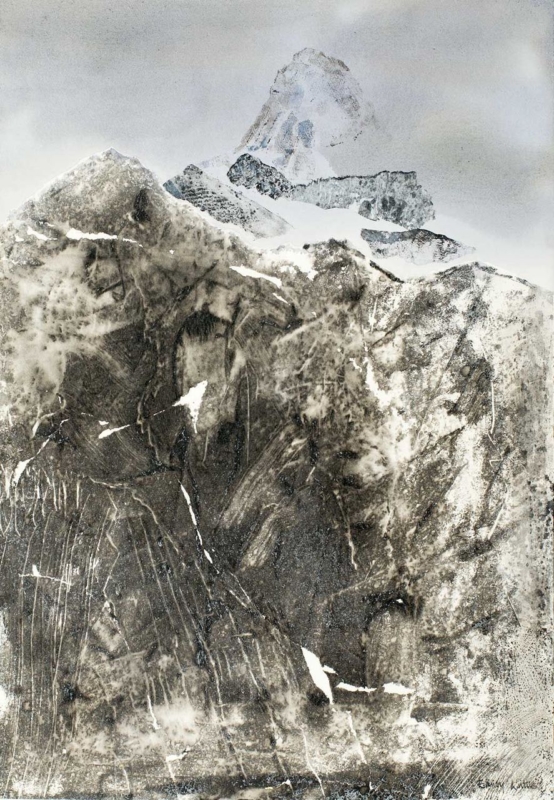
modern wall art should answer a specific need in the room or for the buyer. Monte Analogo is a useful example because its portrait proportions can answer the long horizontal lines of a low sofa, bench or sideboard without requiring a crowded picture group.
Use modern wall art to correct a horizontal room
Contemporary furniture often sits low and stretches across the room. That can make the wall above feel wider than it needs to. A portrait artwork introduces a vertical route, but it should still connect to the furniture below rather than float halfway towards the ceiling.
Run a proportion test
- Mark the 208 x 300 mm and 400 x 560 mm print outlines.
- Add realistic mount and moulding widths to both.
- Align each template with the occupied furniture group.
- View it from the entrance and the main seat.
- Keep switches, lamps and shelf edges outside the frame boundary.
The smaller size can reward a narrow return or close reading point. The larger portrait can balance a more substantial low cabinet. Resist adding a vertical stack of small objects beside it merely to fill height. Clear wall helps the artwork perform that job.
Vertical emphasis works when it grows from the furniture group, not when the artwork is hung high simply to occupy empty plaster.
Let a precise frame complete the geometry
Portrait art makes alignment and edge quality easy to see. Colour-managed printing retains the internal relationships in Emily Little’s work, while accurate mounting and hand-finished corners give the vertical composition a calm, stable boundary.
For a useful starting point on looking at non-representational work, see Tate’s introduction to abstract art. You can also browse the Emily Little collection or see the exact framed product.
Modern wall art can change the balance of a room before any furniture is replaced. Monte Analogo uses portrait scale to lift the eye, giving low contemporary pieces a stronger and more deliberate backdrop.