


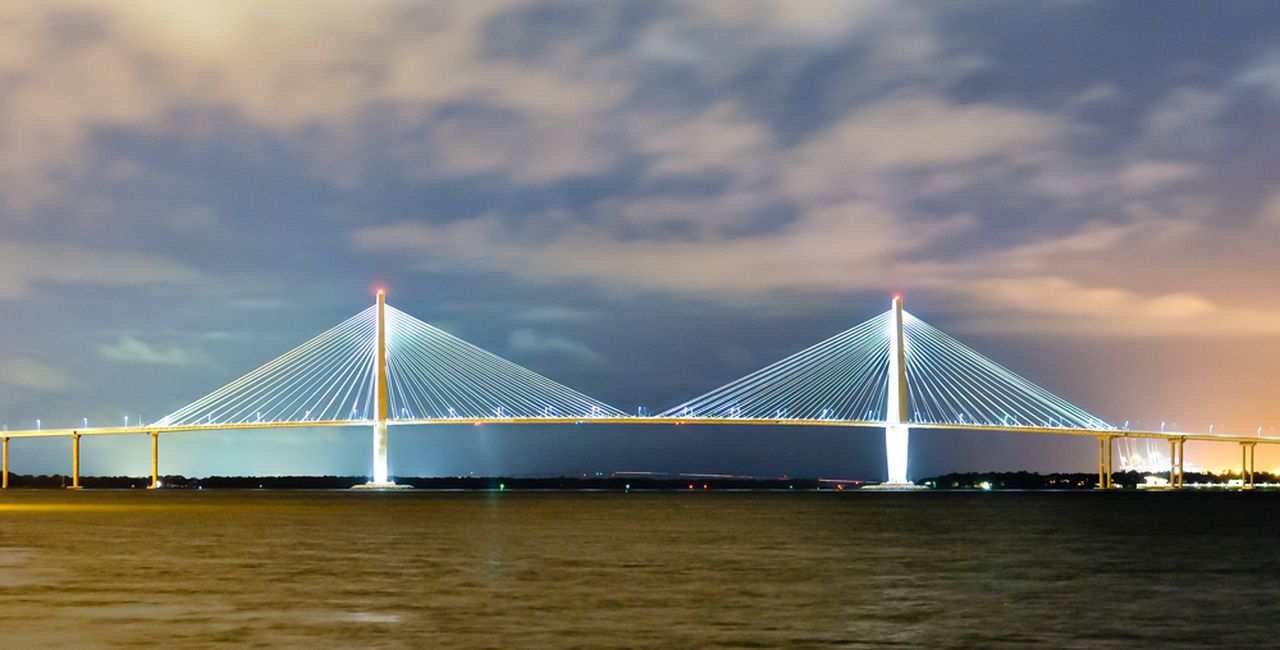
photography prints should answer a practical need in the room, not simply fill an empty wall. Illuminated suspension bridge in Charleston is a useful example because the two towers and illuminated cables create an ordered framework, while the wide water and cloudy sky prevent the architecture from feeling rigid.
Use photography prints to reinforce the room’s lines
Architectural images work well when their geometry relates to the furniture rather than fighting it. Here, the bridge deck establishes a strong horizontal line. The towers rise through it, and the lit cables repeat at measured intervals. Place the frame above a low cabinet or desk so those relationships can read clearly.
Three alignment checks
- Align the picture with the furniture group, not automatically with the whole wall.
- Leave enough space below the frame for the bridge deck to remain visually separate.
- Keep nearby lighting simple so it does not compete with the illuminated cables.
The night setting adds atmosphere, but the subject remains disciplined. That makes the photograph suitable for a modern living area, office or meeting room where a city image needs clarity rather than visual noise.
Keep architectural light crisp in the finished frame
Dark skies, bright cables and reflected light demand clear tonal separation. Colour-managed production helps preserve that contrast, while an accurately made frame keeps the long architectural lines level and gives the photograph a polished, hand-finished edge.
For factual background on the bridge, consult South Carolina’s information on the Ravenel Bridge. You can also browse the Photography collection or view the exact framed product.
Photography prints can shape an interior through composition, not only subject. Charleston Bridge at night uses symmetry, light and horizontal space to give a modern room a stronger visual framework.