


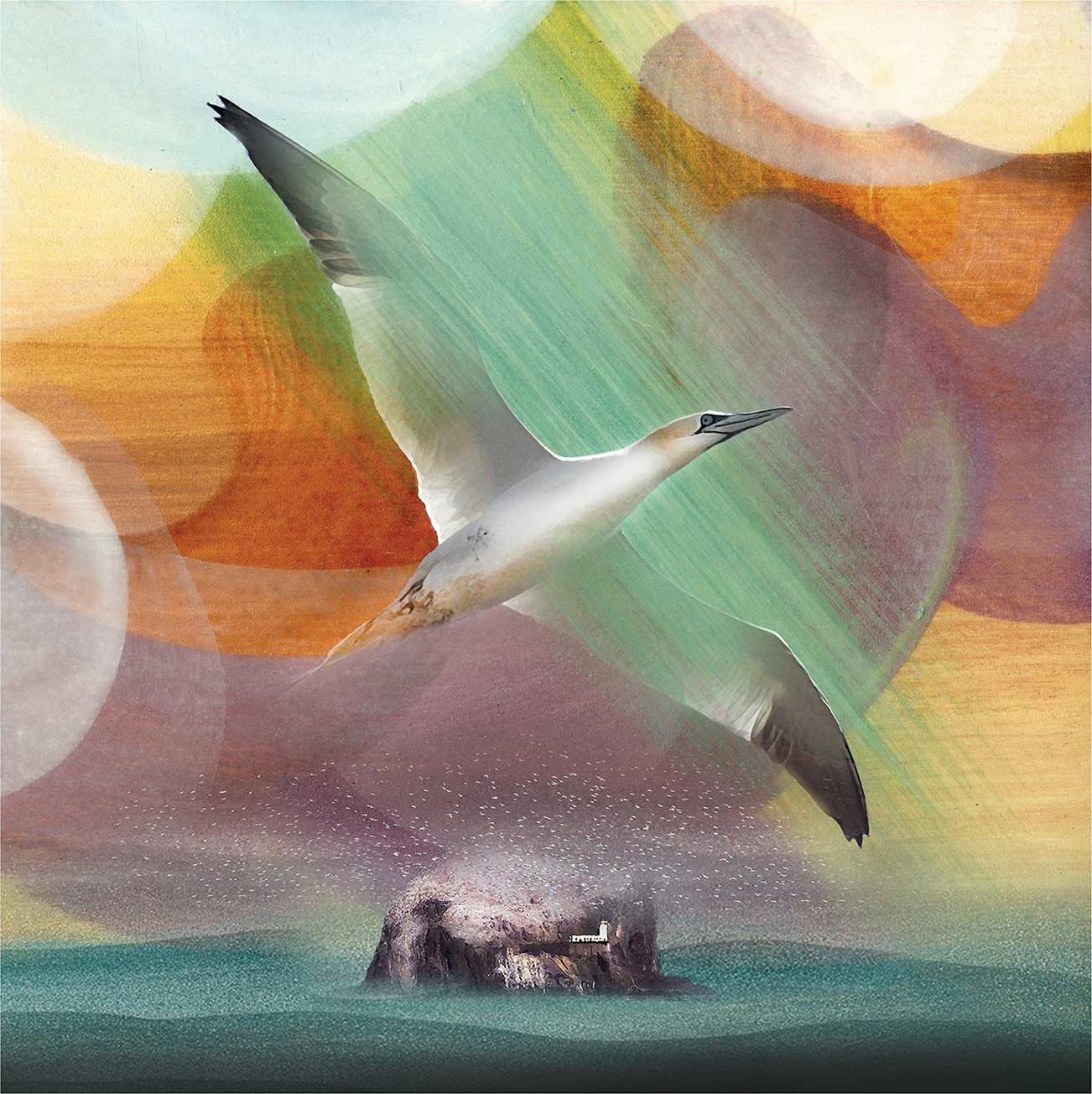
Scottish coastal art works best when the picture answers a practical question about the room. Canty Bay Bass Bird and Bass is useful because Esther Cohen combines an outstretched seabird, rocky island and dramatic light into a view distinct from planted scenery outside.
Give Scottish coastal art a stable garden-room wall
Start with the wall, not the view. A solid return beside glazing or behind seating offers more visual stability than a narrow pier surrounded by glass. Observe direct sun through the day and avoid any position where a moving beam falls on the finished piece.
| Feature | Response |
|---|---|
| Greenery | Let plants remain foliage; avoid shells and nautical ornaments. |
| Daylight | Check contrast in overcast, sunny and evening conditions. |
| Outdoor view | Make the art an alternative destination, not an imitation window. |
The flying bird adds direction, so leave room in front of it. A tall plant or pendant cutting into that route can make the composition feel cramped.
Protect the atmosphere in Scottish coastal art
Cloud light, collage detail and the distinction between bird, sea and rock rely on controlled colour. Giclée production and careful in-house framing help the atmosphere remain layered.
For useful context, visit the Scottish Seabird Centre’s Bass Rock guide. Browse the Esther Cohen collection, or inspect the exact product and framing choices.
Scottish coastal art can connect a garden room to the wider landscape without copying the view. Canty Bay introduces flight and coastal weather while careful placement protects the work.