


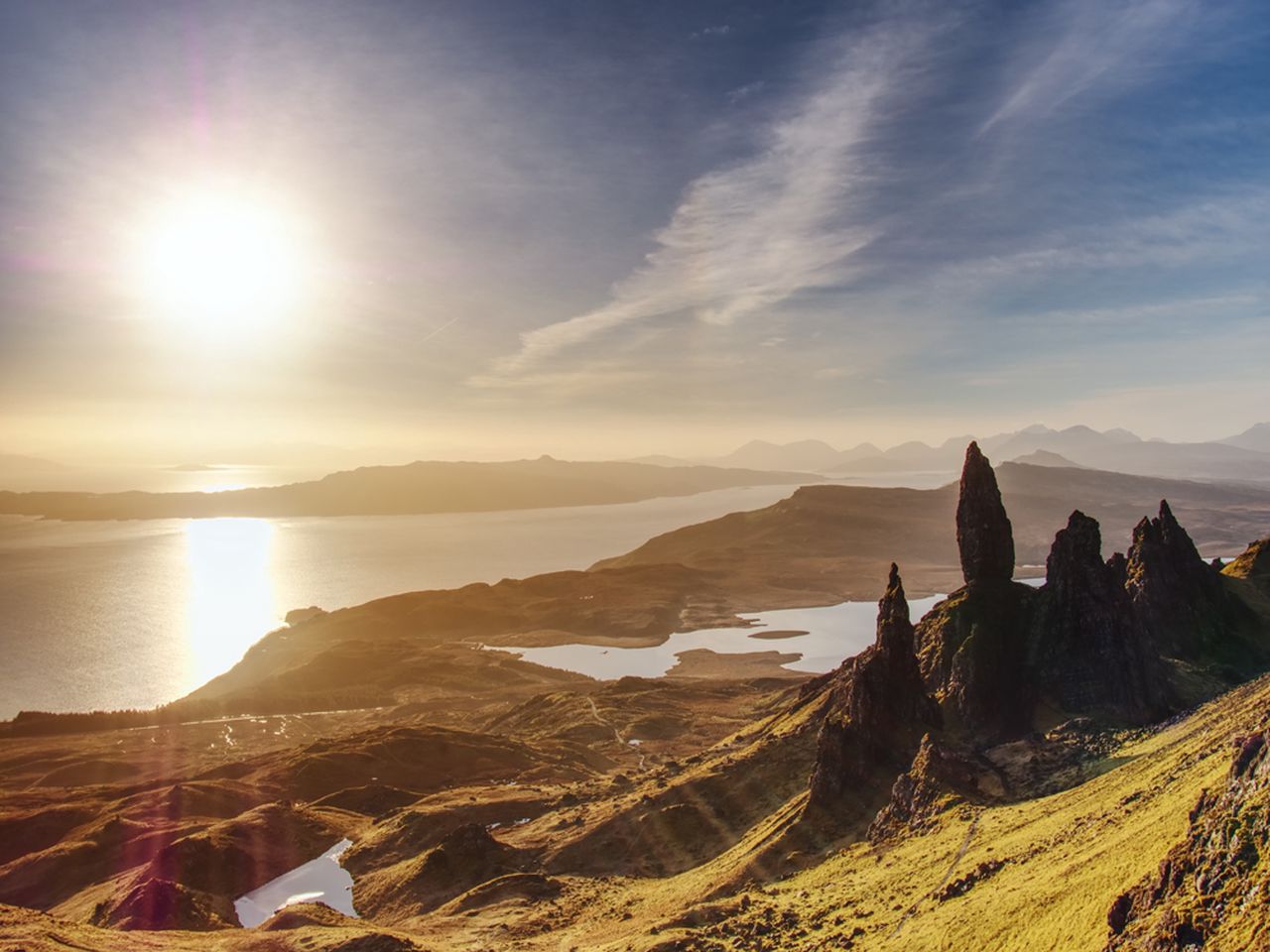
Scottish landscape art for a garden-facing room should respond to the room as well as the subject. Old Man of Storr offers a practical example because sunrise illuminates the rock formation above rolling green slopes, while calm water gives the broad landscape a quieter second layer.
Position Scottish landscape art for a garden-facing room
A room with garden views already contains movement, weather and seasonal colour. The artwork should not compete by imitating every leaf. Old Man of Storr introduces another scale: the recognisable formation creates a destination, while open land and water preserve a sense of space.
Face the glazing
Use a solid wall opposite or beside the windows. Check reflected daylight before choosing the hanging point.
Relate, do not match
Let one green or sunrise note connect with the room. Avoid repeating the full palette in cushions and planters.
Test the complete framed outline from the main chair and the route into the room. Keep tall plants outside the image edge. In winter, the photograph provides colour and distance. In summer, visible wall around the frame stops it disappearing into the garden.
The garden supplies the changing foreground. Let the artwork supply a lasting destination.
Frame the sunrise without closing down the landscape
The photograph depends on separation between bright sky, dark rock, green land and reflected light. Colour-managed Giclée production helps retain those relationships, while bespoke in-house framing gives the expansive scene a precise edge.
For walking information and background on this celebrated Skye landmark, read VisitScotland’s guide to the Old Man of Storr. Browse more work in the Photography collection, or view the exact product and framing choices.
Scottish landscape art for a garden-facing room works when it complements nature rather than copies it. Old Man of Storr adds place, scale and a steady horizon while the living view remains free to change.