


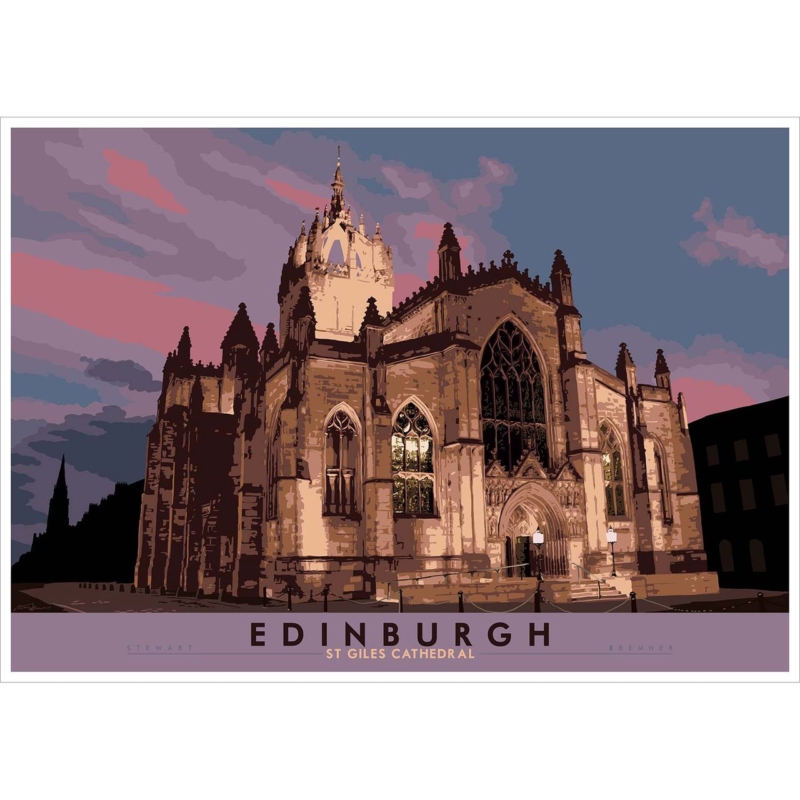
Scottish wall art can make the first view into a home feel rooted without filling the entrance with tartan, signs or souvenir motifs. Edinburgh: St Giles Cathedral gives the decision a real artwork, scale and setting to work from.
Let Scottish wall art establish the entrance sightline
Stand outside the room and note which section of wall is visible as the door opens. Stewart Bremner’s graphic view of St Giles should be seen as one complete landscape rather than through coat hooks, a tall plant or the edge of a mirror. Mark the finished frame, not only the printed sheet.
- Choose the wall from the arrival view.
- Check the frame above the console with keys and lamps in place.
- Open every nearby door to confirm clearance.
- Test ceiling and picture lights for glare.
- Leave enough clear wall for the cathedral silhouette to read quickly.
One recognisable Edinburgh landmark creates identity more effectively than a cluster of generic Scottish references.
The historic subject does not demand an ornate interior. A simple console, useful tray and clean frame can make the graphic shapes feel contemporary. If the hall already contains stone flooring or dark timber, compare a lighter framing boundary before adding more visual weight.
Frame Scottish wall art as a modern landmark
Bold shape and controlled colour need accurate separation. Colour-managed Giclée production preserves that graphic clarity, while bespoke framing completed in-house can be tested against the entrance’s flooring, furniture and changing light.
For visitor information and historical context about the landmark, see the official St Giles’ Cathedral website. Browse the Stewart Bremner collection, then view the exact product and framing choices.
Scottish wall art should tell visitors where they have arrived without turning the hall into a theme. St Giles supplies the place; disciplined framing keeps the welcome confident and current.