


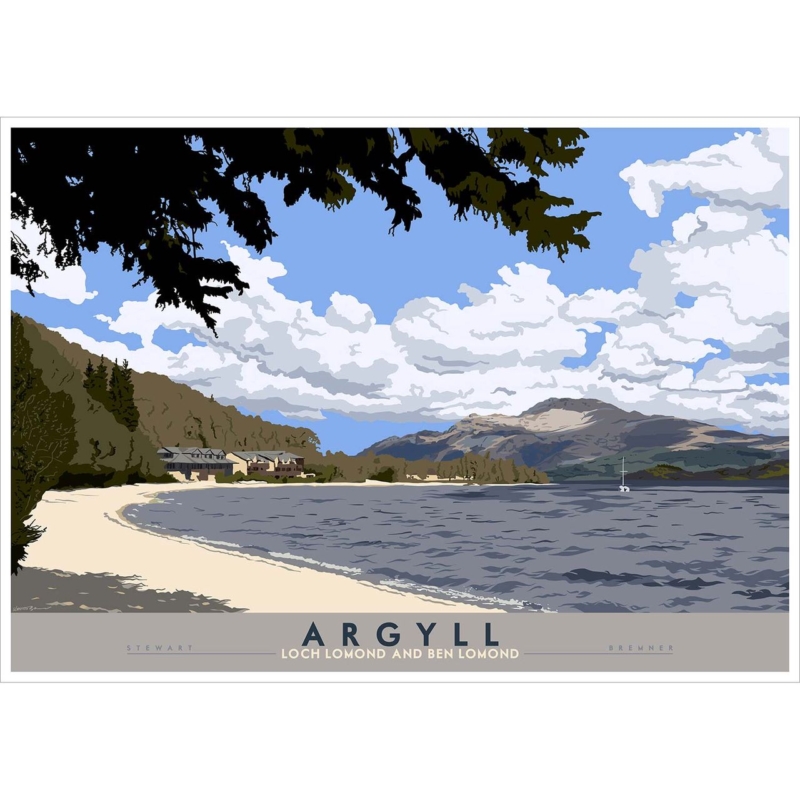
art for marble surfaces should add warmth and depth while allowing the stone’s veining and polished character to remain visible. Argyll: Loch Lomond and Ben Lomond gives the decision a specific subject and a professionally framed finish.
Choose art for marble surfaces by reading the stone first
Warm-veined marble
Test a quiet timber or warm neutral frame. Add wool, linen or woven upholstery so the landscape does not carry all the work of softening the room.
Cool grey marble
Use a defined edge that separates the print from the wall. Repeat one restrained landscape tone rather than extending grey across every surface.
Polished stone reflects lamps and windows. Inspect the position from seated and standing viewpoints. A pendant can cut across Ben Lomond even when no direct sun reaches the wall.
- Photograph the marble in daylight and evening light.
- Mark the complete framed outline.
- Compare the mountain from the main seat.
- Add one tactile textile before more accessories.
- Leave the stone around the frame quiet.
Marble supplies movement nearby; a framed horizon supplies distance across the room.
Give the graphic landscape a warm, precise boundary
Stewart Bremner’s bold composition makes the mountain and loch readable across a polished room. Colour-managed Giclée production keeps its shapes and colour stable. A bespoke frame made and hand-finished in Falkirk can answer the room’s undertones.
For responsible visitor information and landscape context, explore Loch Lomond & The Trossachs National Park. Browse the Stewart Bremner collection, or examine the exact product and framing options.
Art for marble surfaces should balance polish with depth. Loch Lomond and Ben Lomond provides a steady horizon, while texture and framing keep the room welcoming.