


aviation wall art for a heritage study should reward curiosity without turning the room into a display set. Handley Page Halifax provides a specific starting point rather than a generic decorating formula.
Position aviation wall art for a heritage study from the desk
- Sit in the working chair and find a wall visible beyond the monitor.
- Mark the complete framed outline, not only the print.
- Check whether a bookcase interrupts the aircraft from the doorway.
- Switch on task and ceiling lights to reveal reflections.
- Leave clear wall around the open sky and wing shape.
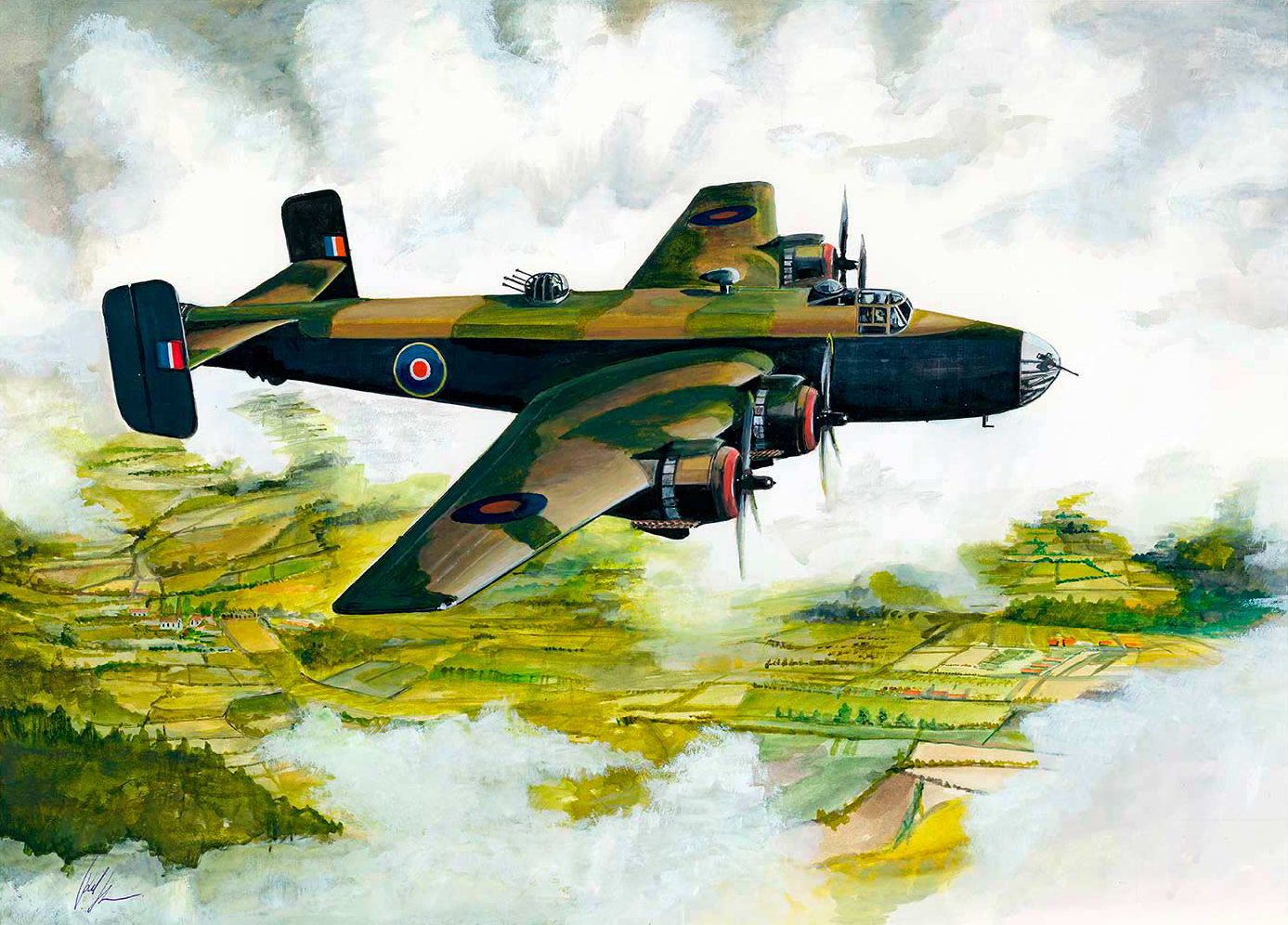
Rod Harrison shows the named aircraft above green fields with clouds partly masking the landscape. Its WWII camouflage and roundels provide real visual information. Do not repeat them through propeller clocks, squadron signs and rows of models on the same wall.
Connect with timber, not costume
An old desk or panelled door can support the subject. The frame need not imitate aged cockpit material. A clean moulding may separate the picture more effectively from surrounding wood.
The landscape keeps the image from reading as a technical diagram. Let the study remain a place to work and read, with a few carefully catalogued objects elsewhere rather than a crowded aviation wall.
Finish historical aircraft art with contemporary precision
Aircraft markings, cloud and terrain need dependable detail. Colour-managed Giclée production preserves those relationships, while bespoke framing allows scale, mount and moulding to be chosen for the actual study.
For background on the four-engined aircraft, read the Handley Page Halifax historical overview. Browse the Rod Harrison collection, then view the exact product.
Aviation wall art for a heritage study feels strongest when history is specific and the room remains usable. The Halifax supplies the story; measured placement gives it authority.