


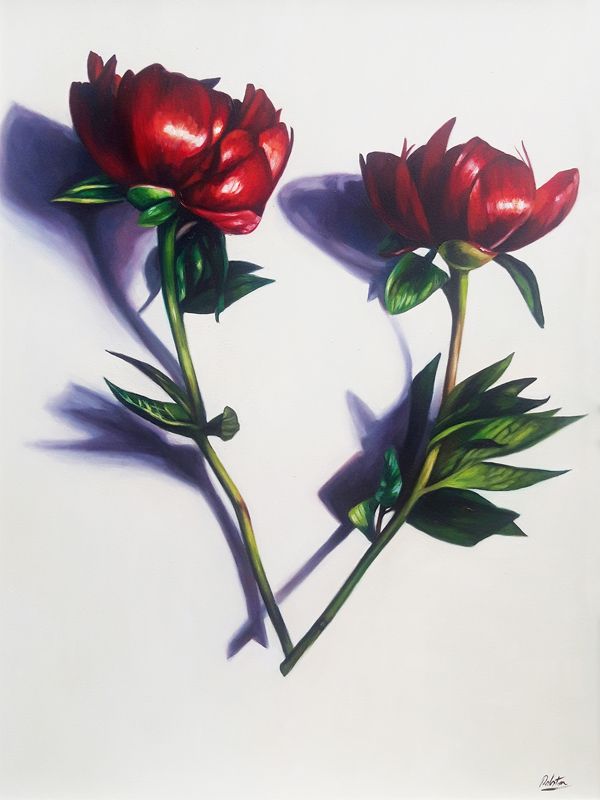
botanical wall art for a high ceiling hallway works best when the subject answers the room rather than simply filling a gap. Touch/ Peonies offers a useful example because two red peony blooms rise diagonally across a clean ground, creating vertical direction without filling the composition from edge to edge.
Hang botanical wall art for a high ceiling hallway at human height
A tall wall tempts people to hang art near the architectural centre. That usually disconnects it from the route below. Instead, establish the centre from normal standing eye level. Let the portrait composition create the upward movement; do not ask an excessive hanging height to do that work.
- Open nearby doors before marking the frame outline.
- Keep the lower edge clear of consoles and coat hooks.
- Check the view from both directions of travel.
- Leave quiet wall above the frame rather than trying to fill the full height.
The red flowers and purple shadows already have clear contrast. Neutral runners and simple storage will allow the print to act as a pause in the hallway. If another colour is repeated, choose the leaf green rather than adding several more floral patterns.
Think in vertical zones
Keep practical activity low, artwork in the middle viewing zone and open wall above. This makes ceiling height feel generous instead of unfinished.
Give sculptural flowers a crisp architectural edge
Greer Ralston treats peonies as individual floral portraits rather than domestic decoration. Colour-managed reproduction preserves the red blooms, green stems and purple shadows, while precise in-house framing connects the organic subject to the hallway’s architecture.
For more context on peonies as plants, see the Royal Horticultural Society’s peony guide. You can also browse the Greer Ralston collection and view the exact product.
Botanical wall art for a high ceiling hallway should remain easy to encounter as people pass. Touch/ Peonies supplies upward energy from a sensible viewing height and leaves the tall wall room to breathe.