


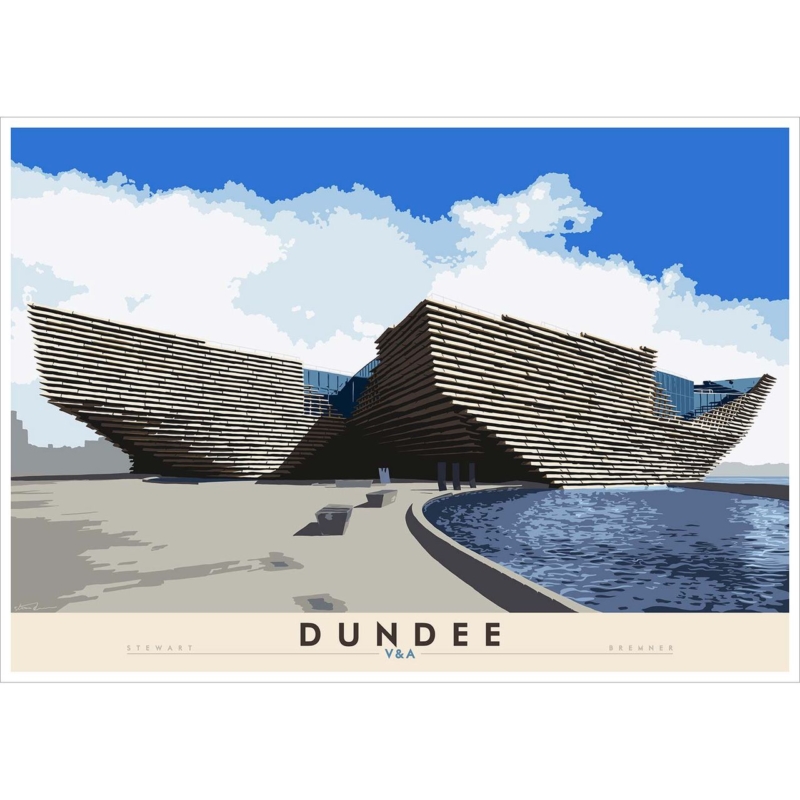
contemporary framed art prints should earn its place by answering a real question about the room or recipient. Dundee: V&A is a useful starting point because the building’s distinctive geometry can mark a transition between living, dining and circulation zones without putting another object on the floor.
Use contemporary framed art prints to define a transition
Walk the full route through the room and identify the wall visible at the change of use. It may face the dining table, sit beyond a sofa arm or appear at the turn toward the kitchen. Centre the artwork on that movement line, not automatically on the whole wall.
- Mark the finished frame with low-tack tape.
- Check it from each adjoining zone.
- Align one edge with a dependable architectural line.
- Keep tall furniture away from the strongest silhouette.
- Review the arrangement after dark.
The print can provide structure while softer furnishings handle comfort. Curved upholstery, a textured rug or warm timber prevents the architecture from making the room feel hard. Repeating the building shape in accessories would weaken its impact.
Give bold architecture a precise boundary
Geometric subjects need square mounting and a frame that feels intentional from several viewpoints. First 4 Frames combines colour-managed production with bespoke in-house framing, helping lines remain crisp and the final object feel coherent in a multi-use room.
For exhibitions, architecture and the design museum’s waterfront context, visit V&A Dundee’s official website. You can also browse the Stewart Bremner collection or see the exact framed product.
Contemporary framed art prints can organise open-plan space without closing it down. Dundee: V&A gives the eye a strong marker, while careful alignment lets people and daily activity continue to flow around it.