


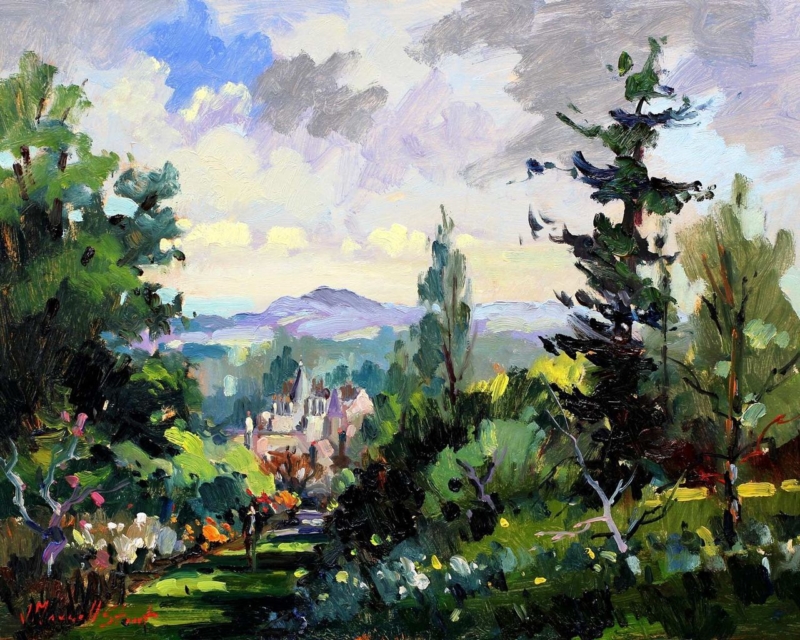
botanical wall art for an orangery should do more than repeat the planting visible through the glass. It needs to give the room a steady focal point when daylight changes and the garden moves through the seasons. Amongst the Azaleas by Joseph Maxwell Stuart offers that balance. Its layered garden subject brings colour and depth indoors, while the composition feels considered enough to stand apart from the view outside.
Why botanical wall art for an orangery needs visual structure
An orangery often contains several competing features: broad windows, strong sunlight, pots, patterned leaves, and routes into the garden. Artwork can disappear among those details if it is too pale or slight. At the other extreme, a very graphic piece may feel disconnected from the room’s softer purpose.
Amongst the Azaleas provides a useful middle ground. The azaleas relate naturally to a planted setting, yet the framed image creates its own boundary and sense of order. This makes it suitable for the solid wall above a console, between glazed doors, or near a dining table where the picture can be enjoyed at close range.
Choose the wall by watching the light
Before fixing the position, observe the room in the morning, at midday, and near dusk. Direct glare can hide colour and detail. A wall at right angles to the main glazing often gives a clearer view than one directly opposite it. If reflections remain a concern, discuss glazing and placement during the framing consultation.
Season matters too. A wall that seems quiet in summer may become much more prominent when leaves fall and daylight shortens. Place the artwork where it can hold the room during winter as well as complement abundant colour in spring. That year-round role is more valuable than matching one brief flowering period.
Build a restrained orangery palette
| Room element | Useful connection | Common mistake |
|---|---|---|
| Painted walls | Soft mineral or warm neutral colour | Matching the brightest flower exactly |
| Furniture | Natural timber, cane, or one painted piece | Adding several competing garden motifs |
| Textiles | Plain linen or a small-scale texture | Using a large floral pattern beside the print |
| Accessories | One ceramic drawn from a quieter picture tone | Repeating every colour around the room |
The artwork does not need exact colour partners. One or two quiet echoes will make it feel connected. Leaving some plain surfaces around the frame also helps separate the painted garden from real foliage. That breathing space is especially useful in a room where plants already provide texture.
Use scale to support the architecture
Measure the solid section of wall rather than the entire glazed elevation. A frame should relate to the furniture below it and retain a clear margin at each side. If the wall is narrow, the smaller available print size can create a deliberate pause. On a broader wall, the larger version can hold its own against tall windows and substantial seating.
A mount can give the detailed subject a calm transition into the frame. A warm timber may connect with natural furniture, while a refined painted or darker moulding can define the image more firmly. First 4 Frames produces colour-managed Giclée prints and completes bespoke framing in-house at its Falkirk workshop, allowing the presentation to respond to both the image and the room.
A garden subject that is not limited to one season
Joseph Maxwell Stuart studied drawing at the Ruskin School and fine art at Edinburgh College of Art, and now works in the Scottish Borders. Browse the wider Joseph Maxwell Stuart collection at First 4 Frames. For useful background on the plants that give this work its title, the Royal Horticultural Society guide to azaleas explains their forms and variety.
Well-chosen botanical wall art for an orangery should connect inside and outside while still giving the interior its own identity. View the framed Amongst the Azaleas print for a garden-led focal point that can remain rewarding through bright summer days and quieter winter light.