


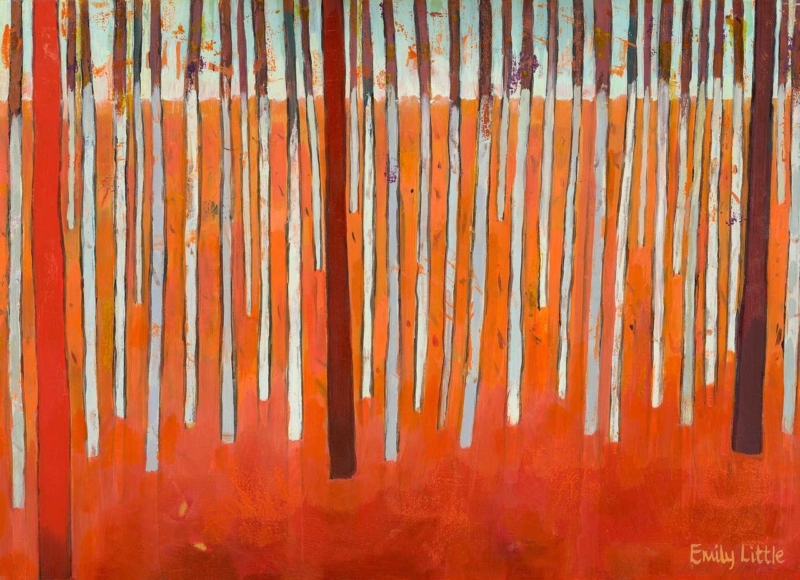
wall art for a windowless hallway can do more than fill an empty stretch between rooms. The right image can create a visual destination, suggest natural light, and make a narrow route feel less enclosed. Birch Forest by Emily Little offers that kind of lift. Its pale trunks and layered woodland space give the eye somewhere to travel, even when the hallway itself has no outside view.
What should wall art for a windowless hallway achieve?
A hall without daylight often feels flatter than the rooms around it. Painting every surface brilliant white does not always solve the problem. With no changing light to animate it, a pale corridor can still appear blank. Artwork introduces contrast and depth, giving the wall a point of interest that remains effective throughout the day.
A woodland subject is especially useful because paths, overlapping trunks, and changing tones imply distance. Birch Forest creates an opening rather than a hard visual stop. The effect is subtle, but it can make the walk from an entrance to the main rooms feel calmer and more intentional.
Place the image where it draws people forward
Start by standing at the entrance and noting the wall seen first. An artwork at the far end can act as a destination. On a longer side wall, the print can mark the midpoint and break up an uninterrupted run. Avoid squeezing it between several doors if a quieter section is available.
- Check the main sightline from the front door or staircase.
- Measure the clear wall after allowing for switches and door swings.
- Set the centre at a comfortable viewing height, rather than aligning it with door tops.
- Use one nearby light fitting to illuminate the picture evenly and avoid glare.
Let colour create light without looking washed out
Pale artwork needs enough tonal variation to remain visible in artificial light. The darker woodland notes in Birch Forest give the composition definition, while softer areas keep it open. This is more effective than choosing an image that is almost entirely white, which may disappear into the wall after sunset.
Warm bulbs can make cream, stone, and natural timber finishes feel welcoming. Cooler lighting can suit a crisp grey or blue scheme, but test it in the evening. The aim is to preserve the artwork’s quieter shifts rather than flood the glass with a bright hotspot.
Choose a frame that defines the view
A slim dark moulding can outline the woodland scene and give a pale hall useful contrast. A natural timber finish may connect it to flooring, a console, or stair details. In a narrow passage, a restrained profile is usually practical as well as visually tidy.
First 4 Frames produces colour-managed Giclée prints and completes framing in-house at the Falkirk workshop. This personal process helps customers compare moulding tones and finished scale, both of which matter when the viewing distance is short.
Explore the artist’s wider atmospheric work on Emily Little’s official website, or compare pieces in the Emily Little collection. For wall art for a windowless hallway that brings depth and a suggestion of daylight, view the framed Birch Forest print.