


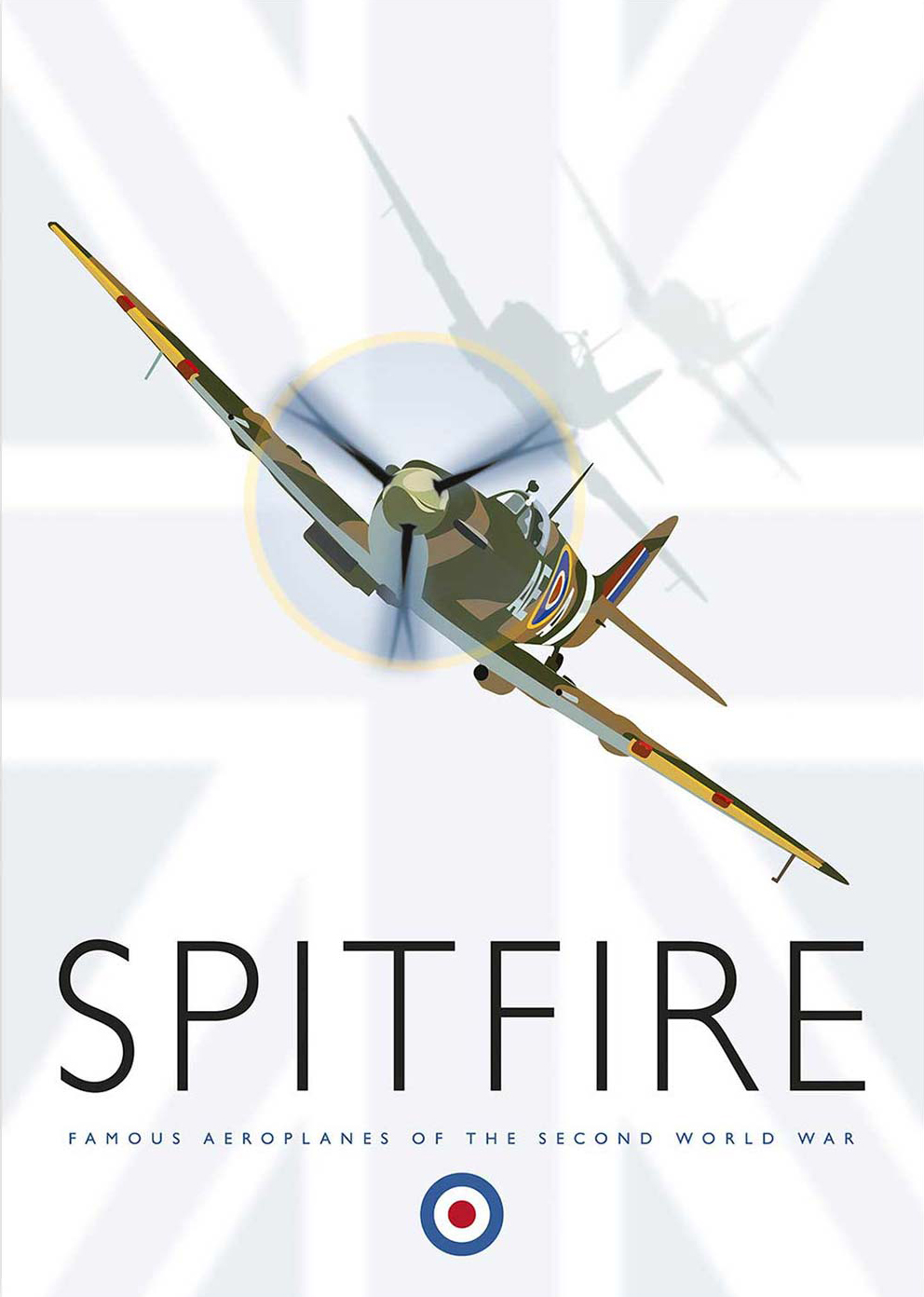
Vintage poster prints can bring history and forward motion to a study when they are treated as artwork rather than memorabilia. Spitfire places a stylised fighter aircraft above a faded Union Jack, with a second aircraft in shadow. The strong diagonal movement can energise a desk wall without needing a crowded display.
Balance vintage poster prints with quiet furniture lines
Above a desk
Set the picture slightly above the monitor line and leave room for the aircraft to appear to travel across the wall. Keep cables and tall desk accessories out of that visual route.
Above a low cabinet
Relate the framed width to the furniture below. One model or book stack is enough; a full row of aviation objects would turn the arrangement into a themed exhibit.
Does the room need red, white and blue accessories?
No. The faded flag already establishes that palette. Dark timber, leather, warm grey or muted blue can support the print without repeating every colour literally.
The subject also works on a video-call backdrop if it is offset from the sitter rather than centred behind the head. That placement keeps the aircraft readable and lets the image convey interest without distracting from conversation.
Frame graphic movement without making it heavier
The aircraft outline, shadow form and weathered flag require both crisp edges and controlled softer passages. Colour-managed Giclée production preserves that contrast. A hand-finished frame can then contain the diagonal energy while giving the print the polished finish expected in a working room.
For authoritative background on the aircraft and surviving examples, visit the Royal Air Force Museum’s Spitfire collection. Browse the Peter McDermott collection, or view the exact Spitfire product.
Among vintage poster prints, Spitfire offers a useful mix of graphic strength and aviation history, provided the surrounding study gives its movement room to breathe.