


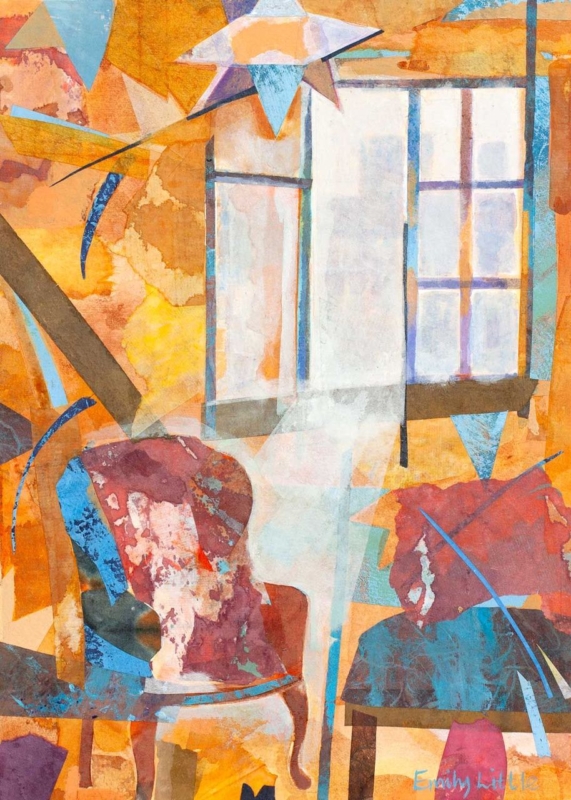
wall art for a narrow wall between windows should earn its place by answering a real question about the room or recipient. Open Window is a useful starting point because its portrait format follows the vertical space naturally, while the title creates a playful relationship with the real openings on either side.
Template wall art for a narrow wall between windows
Measure the solid wall from reveal to reveal, then repeat the measurement with curtains, shutters or blinds in their normal positions. The usable width is the smaller figure. A paper template should represent the finished frame, not only the 230 × 322 mm or 360 × 500 mm print.
- Mark the centre of the wall pier.
- Keep equal breathing space from both window reveals.
- Open curtains fully and check that fabric cannot cover the frame.
- Sit in the main viewing position and look for glare.
- Confirm that handles and blinds remain easy to use.
A narrow wall does not need a tiny picture. It needs a portrait shape whose complete framed width has been tested carefully.
Emily Little’s semi-abstract approach makes this position more interesting than a literal imitation of the outside view. Let daylight alter how the colour is perceived, but avoid prolonged direct sun. Keep nearby windowsills simple so the vertical picture remains the central pause.
Use precise framing to make an awkward gap feel deliberate
A narrow position exposes poor proportions quickly. Precise mounting and bespoke in-house framing can keep the portrait image balanced, while colour-managed Giclée production supports the shifts of colour and atmosphere that make semi-abstract work rewarding in changing daylight.
For a concise explanation of how abstract work can depart from visible reality, see Tate’s guide to abstract art. You can also browse the Emily Little collection or see the exact framed product.
Wall art for a narrow wall between windows should belong to the architecture instead of appearing squeezed into it. Open Window uses portrait scale, visual wit and a measured outline to make the gap purposeful.