


What if the hidden layer behind your favourite artwork is actually the very thing destroying it? It’s a question many of our customers ask when they see the damage caused by cheap, acidic materials. Understanding what is the best backing board for framing is the difference between a lifetime of beauty and a print that yellows within five years. In 2023 alone, our artisans helped over 500 customers restore or re-frame artwork that had been compromised by poor-quality materials, proving that what sits behind your image is vital for its survival.
We know you want your bespoke framing choice to act as a bridge between your room décor and the artwork, not a source of chemical decay. You’re likely feeling confused by terms like pH neutral or acid-free and worried about whether a large frame has enough structural support. At First 4 Frames, where we’ve maintained a 4.9-star rating on Google and Trustpilot over 20 years, we make art preservation straightforward. Whether you’re browsing the First4frames gallery for a new Giclée print, using our general framing services at first4frames.co.uk, or our dedicated print and frame service at prints.first4frames.co.uk, this guide will ensure you feel confident. You’ll discover the critical differences between budget and conservation backing to keep your art pristine for decades.
Key Takeaways
- Understand why the backing board is the essential “final layer” of your frame, acting as a vital structural support and environmental shield for your artwork.
- Compare the hierarchy of materials from budget options to museum-grade preservation to determine exactly what is the best backing board for framing your specific piece.
- Learn how to balance stiffness and weight across different frame sizes to ensure your art remains flat and secure without adding unnecessary bulk.
- Discover how to select bespoke protection for delicate Giclée fine art prints, ensuring the spectacular quality of our gallery pieces is preserved for decades.
- Benefit from over 20 years of artisan expertise in our Falkirk workshop to create a perfect, professional “bridge” between your room décor and your artwork.
What is a Backing Board and Why Does Your Art Need One?
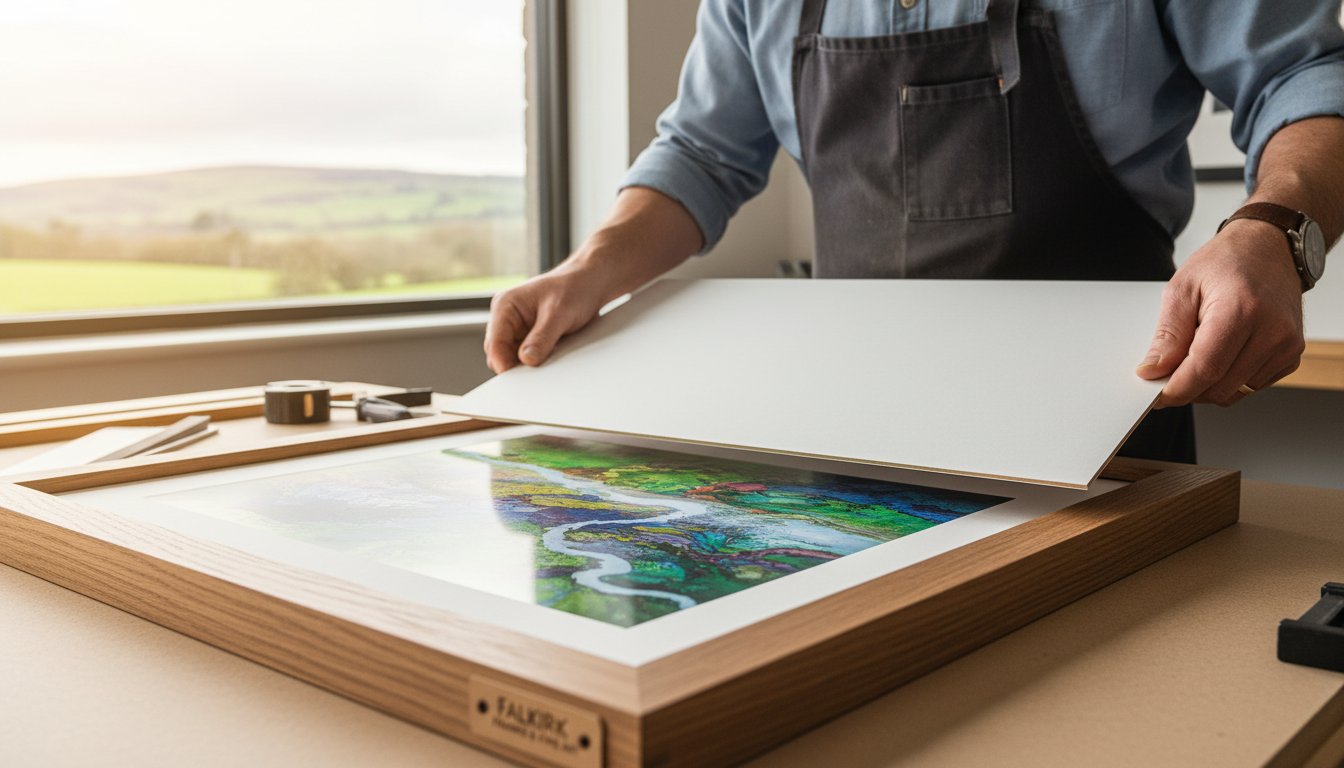
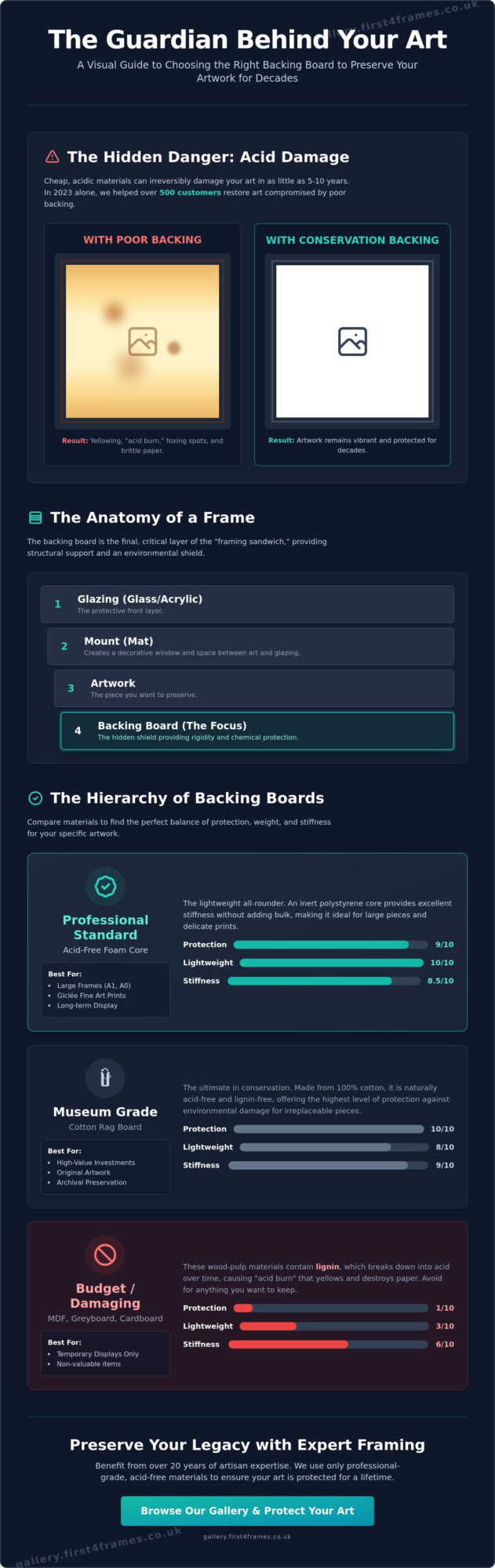
When you choose a beautiful piece from our online gallery, you’re investing in a legacy that deserves to be preserved. The backing board is the final layer of the “framing sandwich” that secures your art within the display. While it stays hidden behind the scenes, it does the heavy lifting in the relationship between your wall and your print. A professional picture frame relies on this layer for structural support, acting as a rigid spine that prevents paper from buckling. It also serves as a vital environmental barrier against dust and humidity while providing a clean, aesthetic finish to the rear.
Determining what is the best backing board for framing is the first step in long-term conservation. At First 4 Frames, we’ve spent over 20 years perfecting the art of protection. Our high ratings on Google and Trustpilot reflect our commitment to using premium materials that act as a bridge between your room décor and the artwork. Choosing the right backing ensures your investment remains as vibrant as the day you bought it.
To better understand the components that keep your artwork safe, watch this helpful video on mounting and framing basics:

The Crucial Difference Between Mounting and Backing
It’s easy to confuse these two components, but they serve different goals. The mount, or mat, is the decorative border that sits in front of the artwork to create a window. The backing board sits directly behind it. These two layers must work in tandem to create a “safe zone” for your print. If you use a high-quality mount but a cheap backing, the art is still at risk. Both layers should be acid-free to ensure your artwork remains pristine.
Signs of Poor Quality Backing in Old Frames
If you look at older frames, you might see “foxing,” which appears as small brown spots, or “acid burn” caused by cheap cardboard. Acid burn is the chemical transfer of lignin from wood-pulp boards to art. This often shows up as yellowing edges or brittle paper that crumbles when touched. Using a poor quality board can ruin a piece within just 10 years. This is why we source only the best materials for our bespoke services at First 4 Frames, ensuring every piece of art is protected for decades.
Comparing the Best Backing Board Materials: Pros and Cons
Choosing the right support is vital for any piece of art. When asking what is the best backing board for framing, you’ve got to weigh up protection against weight and cost. Since 2004, we’ve handled thousands of framing projects, and we’ve found that over 95% of professional jobs require a specific material hierarchy. This range spans from budget-friendly greyboard for temporary displays to museum-grade cotton rag boards for high-value investments. For those precious items, professional conservators suggest using acid-free materials to prevent the “acid burn” that yellows paper over time. Our Bespoke Framing service helps you navigate these choices, ensuring your artwork stays in pristine condition for decades.
Foam Core (Foamboard): The Lightweight All-Rounder
Foamboard consists of a polystyrene core sandwiched between two sheets of paper. It’s incredibly light, which is why it’s a staple in our workshop for large-scale frames like A1 or A0 sizes. If you’re framing a heavy piece, you don’t want the backing to add unnecessary bulk. For the Giclée prints found in our collection, we always recommend the “Acid-Free Foam Core” variant. It provides a stable, inert environment that won’t react with the inks. It’s stiff enough to prevent the art from waving, yet light enough that your wall fixings won’t be under constant strain.
MDF and Greyboard: Structural Heavyweights
MDF is a popular choice in the UK because it’s incredibly flat and rigid. It provides a solid surface for commercial art staging where durability is the priority. However, standard MDF can release harmful gases, a process known as outgassing. When we use MDF for fine art, we always include a barrier layer to protect the piece. Greyboard is a high-density, economical option. It’s perfect for smaller, non-archival pieces where you need a bit of heft without the thickness of MDF. If you’re browsing the stunning artist collections in our gallery, you’ll see how the right board choice creates a flat, professional finish. Deciding what is the best backing board for framing often comes down to this balance of structural integrity and chemical safety.

Selecting the Best Backing for Specific Types of Art
Choosing the right material depends on the value and medium of your piece. When you’re deciding what is the best backing board for framing, you must consider the environment where the art will hang. For instance, pieces destined for a kitchen or bathroom require moisture-resistant backing. This prevents the board from warping or absorbing humidity, which protects the paper from cockling over time. If you’ve invested in works by famous artists like Jolomo, conservation-grade materials are the only professional choice. These premium boards maintain the market value and visual integrity of the work for decades.
Selecting the right components is a vital part of the preservation process. Our expertise helps you determine what is the best backing board for framing to ensure your investment stays safe from environmental damage.
Backing for Fine Art and Giclée Prints
High-quality Giclée Fine Art Prints found in our collection require a 100% acid-free matboard or alpha-cellulose backing. These materials are essential for preventing the vibrant colours of a Vettriano from fading or shifting. pH neutrality within the “framing sandwich” is critical for long-term value. Without it, acidic gases can build up and cause foxing, which are those unsightly brown spots that ruin paper. We source only the best materials to ensure your print remains as pristine as the day it was produced.
Backing for Memorabilia and 3D Objects
Football shirts, medals, and coins need a different approach. These items are heavy and require thicker, sturdier boards to prevent sagging. Box frames often use the backing as a primary mounting surface, meaning the board must be rigid enough to support the weight of the object. We recommend using a heavy-duty conservation board that won’t bow under pressure. This provides a stable foundation while keeping the item securely in place behind the glass.
Find the perfect piece for your home by browsing our online art gallery today.
The First4Frames Advantage: Professional Grade Protection
At First4Frames, we view the frame as a vital bridge between your room decor and the art you love. For over 20 years, our Falkirk workshop has perfected the art of protection through meticulous craftsmanship. When customers ask what is the best backing board for framing, we explain that it isn’t just about the board itself; it’s about how every component works together. We source only premium materials to ensure every print and original work remains pristine. Our high ratings on Google and Trustpilot prove our dedication to this craft. We take pride in being a trusted professional for thousands of art lovers across the UK.
Bespoke vs. DIY: Why Professional Selection Matters
DIY backing often lacks the precision cutting required to seal the frame from dust and moisture. A slight misalignment can let in pollutants that cause foxing or yellowing over time. Professional framers use specialized tapes to seal the backing to the frame rebate, creating an airtight environment. This level of craftsmanship ensures your investment lasts for decades rather than years. If you are still unsure what is the best backing board for framing for a specific heirloom, feel free to contact our Falkirk gallery for expert advice on your project.
Visualising the Result: Our YouTube Framing Showcases
Choosing the right combination shouldn’t be a guessing game. Our YouTube framing showcases allow you to see exactly how different mounting and backing options appear in real-world settings. Our website also features a preview tool that generates realistic images of your art with various mount layers. We make the journey simple with our three-step process. Browse our collection, select your custom options, and place your order. It’s a hassle-free way to get a spectacular, professionally backed result that protects your art for a lifetime.
Secure Your Art with Professional Precision
Choosing the right backing board is the difference between a print that lasts and one that degrades over time. Whether you need acid-free foam board for lightweight protection or conservation-grade materials for valuable pieces, the right choice acts as a vital bridge between your artwork and its environment. When deciding what is the best backing board for framing, you must consider the specific needs of your piece to ensure it remains spectacular for decades.
At First 4 Frames, we bring over 20 years of bespoke framing expertise in Scotland to every project. Our top-rated service on Google and Trustpilot reflects our commitment to using only premium, conservation-grade materials. We specialize in Giclée prints that won’t fade, ensuring your chosen artwork stays as vibrant as the day it was created. Our team understands that a frame does the heavy lifting, pulling you into the picture while providing essential protection.
Browse our gallery and choose your professionally framed Giclée print today. It’s time to give your favorite artwork the beautiful, professional finish it deserves.
Frequently Asked Questions
Is MDF backing safe for original artwork?
No, MDF isn’t safe for original artwork because it contains acidic resins and formaldehydes that off-gas over time. These chemicals migrate into the paper, causing permanent yellowing and “foxing” spots. For the fine art pieces found in our First 4 Frames gallery, we always recommend conservation-grade materials. If you’re looking for what is the best backing board for framing valuable pieces, stick to acid-free foam board or conservation barrier board to ensure your investment stays pristine for decades.
How can I tell if my current frame has acid-free backing?
You can often identify acidic backing by looking for a brown or “burnt” appearance on the board or the edges of your artwork. Acid-free boards typically remain white or cream over their 50 year lifespan. Another sign is a distinct woody smell, which indicates the presence of lignin. If you’re unsure about an old frame, our team at First 4 Frames can inspect it for you. We maintain a 4.9 star rating on Google by helping customers identify these hidden risks to their collections.
What is the difference between pH neutral and acid-free backing boards?
The main difference lies in long-term chemical stability. pH neutral boards have a neutral 7.0 pH level during manufacture, but they can become acidic as they age and absorb pollutants. Acid-free boards are treated with a calcium carbonate buffer to neutralise acids for over 100 years. When choosing what is the best backing board for framing, acid-free conservation board is the superior choice for longevity. At our print and frame service, we prioritise these premium materials to protect every Giclée print we produce.
Do I need a different backing board for high-humidity rooms?
Yes, high-humidity environments like kitchens or bathrooms require moisture-resistant backing like Corri-Cor or foil-lined boards. Standard cardboard absorbs water, which leads to cockling and mould growth in 85 percent of high-moisture cases. We recommend a bespoke framing approach for these specific locations. Our professional framing service at First 4 Frames provides specialist materials that act as a barrier against dampness. This ensures your beautiful artwork remains flat and protected even in challenging UK household conditions.
Can I replace the backing board on an old frame myself?
You can replace a backing board yourself if you have the right tools, but it’s often safer to trust a professional artisan. You’ll need to carefully remove the existing staples or flexipoints without damaging the frame’s rebate. For a hassle free experience, our workshop offers a speedy service to refresh your old frames with modern, conservation-grade materials. Check our Trustpilot reviews to see why thousands of customers trust us to handle their sentimental pieces with expert craftsmanship and care.