


You’ve found the perfect piece of art, a spectacular print that speaks to you, and a bespoke frame that acts as the perfect bridge to your décor. But now you face a crucial, and often confusing, decision that can make or break your display: what type of glass for picture frames is the right choice? The fear of seeing your cherished memories fade, the frustration of distracting glare obscuring the view, or simply not knowing if a premium option like museum glass is worth the investment can be overwhelming. It’s the final, vital layer of protection and presentation for your artwork.
In this expert guide, we’ll demystify the options with professional clarity. We will walk you through the crucial differences between standard glazing, anti-reflective glass, vital UV-protective options, and the unparalleled quality of museum glass. By the end, you’ll feel knowledgeable and empowered to choose the perfect glazing that not only protects your precious art from damage and fading but showcases it with the spectacular, crystal-clear finish it truly deserves. Let’s ensure your art is seen exactly as the artist intended.
Why Your Choice of ‘Glass’ Matters More Than You Think
When you invest in a beautiful piece of art, the frame is the essential finishing touch. But within that frame lies an unsung hero: the glazing. More than just a transparent layer, the glazing performs two critical roles-protection and presentation. Making the right choice is a crucial step in preserving the beauty, value, and longevity of your artwork. Understanding what type of glass for picture frames to use ensures your cherished piece is both safe and seen in its best possible light.
To see these differences in action, this short video provides an excellent overview:
Protection: More Than Just a Dust Cover
The most immediate threat to your art isn’t dust or fingerprints-it’s invisible ultraviolet (UV) light. Sunlight and even some indoor lighting can cause colours to fade and paper to become brittle over time. Premium glazing with UV protection acts as a powerful shield, blocking up to 99% of harmful rays. It also provides a vital barrier against physical damage, humidity, and pollutants, preserving the life and integrity of your fine art prints and original works for decades to come.
This same principle of protecting valuables from UV damage is why high-performance glazing is also essential in modern windows and doors. If you’re considering how to protect your entire home’s interior from sun damage, you can learn more about Custom Trade Systems Ltd.
Presentation: Ensuring a Crystal-Clear View
There is nothing more frustrating than hanging a spectacular piece of art only to see a perfect reflection of your living room lamp. The primary goal of glazing is to be invisible, allowing the artwork to shine. Different types of Picture-framing glass offer varying levels of anti-reflective properties, from standard glass with noticeable glare to premium museum-grade options that are virtually reflection-free. The right choice ensures true colour accuracy and crisp detail, pulling you into the picture without distraction.
Glass vs. Acrylic (Plexiglass): The First Big Decision
Your first major choice in glazing comes down to two materials: traditional glass and modern acrylic (often known by the brand name Plexiglass). Each has distinct advantages that make it suitable for different needs.
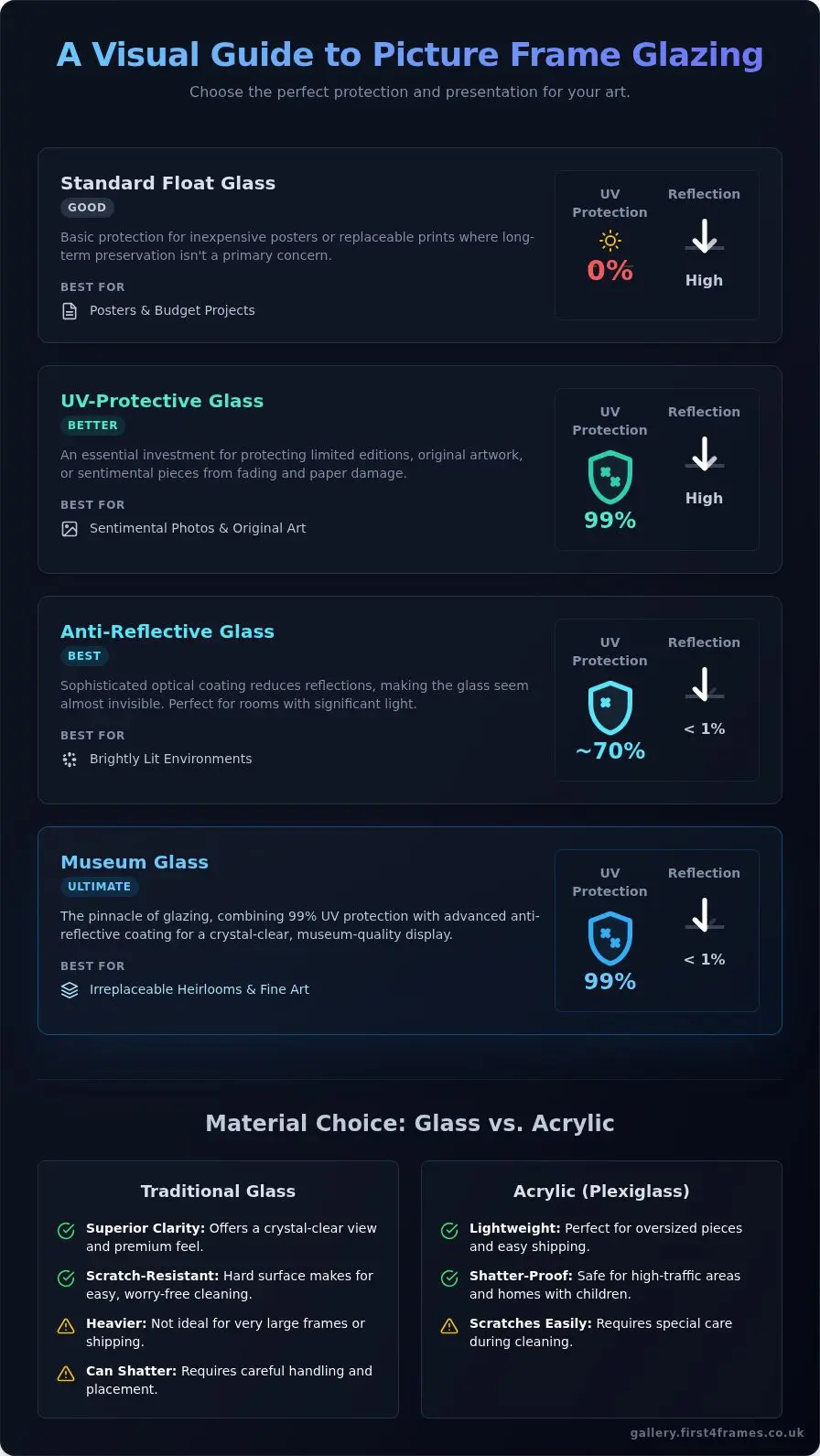
- Traditional Glass: Offers superior clarity and a satisfying, weighty feel that many associate with premium craftsmanship. Its hard surface is highly scratch-resistant, making it easy to clean and maintain over the years. However, it is heavier and can shatter upon impact.
- Acrylic (Plexiglass): Significantly lighter and virtually shatter-proof, making it the perfect choice for large-scale frames or pieces that will be shipped or hung in high-traffic areas. Its main drawback is a softer surface that can be more susceptible to scratching if not cared for properly.
The Main Types of PictureFrame Glazing Explained
When considering what type of glass for picture frames, the options can seem daunting. In the world of professional craftsmanship, we refer to this protective layer as ‘glazing’, and the right choice can elevate your artwork from simply being on the wall to being truly showcased. To simplify your decision, we’ve broken down the most common options from a professional framer into a ‘Good, Better, Best’ guide, focusing on the practical benefits for your treasured pieces.
Good: Standard Float Glass
This is the most common and budget-friendly option you’ll find in most ready-made frames. Standard float glass offers excellent basic protection from dust and handling. However, it provides no UV filtering to prevent fading and can have noticeable reflections. It’s a perfectly suitable choice for inexpensive posters or easily replaceable prints where long-term preservation isn’t the primary concern.
Better: UV-Protective / Conservation Glass
A significant step up, this premium glass is coated to block up to 99% of the harmful UV rays that cause colours to fade and paper to yellow. This is an essential investment for protecting limited edition prints, original artwork, or sentimental photographs. A deeper look into Choosing The Right Glazing confirms that for anything of monetary or sentimental value, UV protection is a non-negotiable part of true, long-term preservation.
Best: Anti-Reflective (AR) Glass
If you’ve ever been frustrated by glare obscuring your view, Anti-Reflective glass is the solution. It features a sophisticated optical coating that reduces reflections to less than 1%, providing spectacular clarity. This makes the glass seem almost invisible, allowing the true colours and beautiful details of your artwork to shine through. It’s the perfect choice for pieces displayed in rooms with significant natural or artificial light.
The Ultimate: Museum Glass
For the absolute pinnacle of protection and viewing pleasure, there is Museum Glass. This option combines the best of both worlds: it offers 99% UV protection to preserve your art for a lifetime, and it features the same advanced anti-reflective coating for crystal-clear, glare-free viewing. This is the ultimate choice for irreplaceable heirlooms, valuable fine art, and any piece that deserves a truly museum-quality display.
Picture Frame Glazing at a Glance
| Glazing Type | UV Protection | Reflection Level | Best For |
|---|---|---|---|
| Standard Float Glass | None | High | Posters, replaceable prints, budget projects |
| UV-Protective Glass | Up to 99% | High | Sentimental photos, limited editions, original art |
| Anti-Reflective Glass | ~70% (Standard) | Very Low (<1%) | Brightly lit rooms, dark artwork, maximum clarity |
| Museum Glass | Up to 99% | Very Low (<1%) | Valuable artwork, heirlooms, ultimate display |
A Closer Look at Acrylic Glazing (Perspex)
When our clients ask what type of glass for picture frames we recommend, many are surprised when we suggest acrylic. It’s time to move past the outdated idea of acrylic as a “cheap plastic” alternative. Today’s premium acrylic, often known by the brand name Perspex, is a high-performance glazing material used by galleries, museums, and professional framers for its outstanding clarity, light weight, and superior durability. It offers the same crystal-clear view as glass but with several practical advantages that make it the perfect choice for specific situations.
Far from being a compromise, modern acrylic glazing is a bespoke choice that enhances and protects your artwork. Like its glass counterpart, it is available in conservation grades that offer the highest level of protection, ensuring your beautiful art remains vibrant for a lifetime.
When to Choose Acrylic Over Glass
While traditional glass has its place, our twenty years of craftsmanship have shown us that acrylic is often the superior and safer option. We recommend choosing acrylic glazing in these key scenarios:
- For oversized pieces: Large panes of glass are incredibly heavy, putting significant stress on the frame and making the artwork difficult and dangerous to hang. Acrylic is significantly lighter, making it the only practical choice for large-scale art.
- In high-traffic areas or children’s rooms: Safety is paramount. Acrylic is shatter-resistant, meaning it won’t break into dangerous shards if knocked or dropped, providing peace of mind in busy homes, nurseries, or public spaces.
- When shipping framed artwork: As professionals who ship art across the UK, we almost exclusively use acrylic for transit. It virtually eliminates the risk of breakage, ensuring your precious piece arrives in perfect condition.
Specialty Acrylic Options
Just like glass, acrylic comes in several specialist varieties to meet specific conservation and display needs. This allows for a truly tailored approach to framing your fine art.
- UV-Filtering Acrylic: Offering up to 99% protection from harmful ultraviolet light, this is the conservation standard for protecting your prints and original artwork from fading and discolouration.
- Anti-Static Acrylic: An essential choice for framing loose-media art like charcoal, pastels, or chalk drawings. It prevents dust and media particles from clinging to the inside of the glazing.
- Scratch-Resistant Acrylic: For the ultimate in durability, a special hard coating is applied to make the surface more robust and less prone to fine scratches during cleaning.
How to Care for Acrylic Frames
Caring for acrylic is simple, but it requires a different approach than cleaning glass. To maintain its pristine finish, always use a soft, non-abrasive microfiber cloth. Never use standard glass cleaners, as the ammonia and alcohol they contain can damage and cloud the acrylic surface over time. For best results, use a cleaning solution specifically designed for acrylic, which will gently lift dust and dirt while reducing static charge.

How to Choose the Perfect Glazing for Your Artwork
Choosing the right glazing is more than a final touch; it’s an investment in the longevity and beauty of your artwork. The best way to answer the question of what type of glass for picture frames you need is to consider the piece itself-its monetary value, its sentimental worth, and where it will hang. Think of the glazing as the silent guardian of your art, protecting it for years to come.
Here’s a practical guide to help you make the perfect choice for your bespoke frame.
For Family Photos & Open-Edition Prints
For posters, digital prints, or family photos that can be easily and inexpensively replaced, our premium 2mm float glass is an excellent, cost-effective option. However, if you’re framing a cherished, irreplaceable family photograph, upgrading to a UV-protective glass is a wise decision. This small additional investment acts as a sunscreen, preventing the fading that can dull precious memories over time. Also, consider the location: if the frame will hang opposite a bright window, an anti-reflective glass will ensure you see the image, not your reflection.
For Limited Edition Prints & Original Art
When framing something of significant financial or artistic value, UV-protective glazing is the absolute minimum requirement. UV rays are the primary cause of fading and can irreversibly damage the pigments in original watercolours, drawings, and limited edition prints, diminishing their value. For pieces that deserve the very best, we highly recommend Museum Glass. It offers over 99% UV protection combined with incredible anti-reflective technology, providing a crystal-clear view that makes it seem as if there’s no glass there at all. It’s the ultimate way to both protect and display your investment.
For 3D Objects & Memorabilia (Box Frames)
For deeper box frames containing 3D items like sports shirts, medals, or other memorabilia, acrylic (often known by the brand name Perspex) is the superior choice. It is significantly lighter than glass, making larger frames safer to hang, and it is virtually shatterproof. For signed shirts or delicate fabrics, choosing a UV-protective acrylic is vital. The ink in signatures is notoriously susceptible to fading, and this glazing ensures your treasured items remain in pristine condition. Protecting these unique pieces is a craft we specialise in. See how we frame memorabilia at First4Frames.
Common Mistakes and Expert Framing Tips
Choosing the right glazing is a crucial step, but our twenty years of craftsmanship have taught us that a few insider tips can make the difference between a good result and a spectacular one. As passionate artisans, we want to help you avoid common pitfalls and ensure your artwork is displayed and protected perfectly.
The ‘Non-Glare’ vs. ‘Anti-Reflective’ Myth
This is one of the most frequent points of confusion. Inexpensive “non-glare” glass is typically acid-etched to scatter light. While this reduces reflections, it also softens the image, creating a fuzzy, slightly distorted look. True “anti-reflective” glass, however, uses a sophisticated optical coating-much like that on high-end camera lenses-to provide crystal-clear viewing with minimal reflection. For pristine clarity, always ask for anti-reflective glazing.
Why Your Artwork Shouldn’t Touch the Glass
A cardinal rule in professional framing is to create a small air gap between the artwork and the glass. This is the primary role of a mount board or spacers. Direct contact is a recipe for disaster, as temperature changes can cause condensation to form. This moisture can lead to mould, mildew, and permanent damage where the art physically bonds to the glass surface.
When to Upgrade the Glass in an Old Frame
Do you have a treasured piece in an old frame? Replacing its standard glass is one of the most impactful upgrades you can make. Many older frames contain thin, basic glass with no protective qualities. Swapping it for a modern UV-protective or anti-reflective option will not only breathe new life into the piece visually but also shield it from fading for decades to come. Knowing what type of glass for picture frames to choose for an upgrade is key to preserving your memories. Have a piece that needs an upgrade? Contact our framing experts.
The Perfect Finish: Choosing Your Picture Frame Glazing
Choosing the right glazing is the final, crucial step in protecting and showcasing your art. As we’ve explored, the decision goes far beyond simple glass; it involves balancing stunning clarity, essential UV protection, and the specific needs of your piece. Ultimately, the answer to what type of glass for picture frames you should choose depends on your unique artwork and its intended home.
Making that final decision can feel daunting, but you don’t have to do it alone. With over 20 years of bespoke framing experience, the team at First 4 Frames is passionate about finding the perfect solution. We use only premium, conservation-grade materials and are trusted by artists and collectors across Scotland to preserve their most treasured works.
Have a special piece to frame? Let our experts help you choose the perfect materials.
Let’s work together to give your art the beautiful, lasting presentation it deserves.
Frequently Asked Questions
What is the best glass for picture frames to reduce reflection?
For a truly uninterrupted view of your beautiful artwork, anti-reflective (AR) glass is the premium choice. This specialist glass features an optical coating that minimises reflections to less than 1%, ensuring spectacular clarity and colour vibrancy. While non-glare glass also reduces reflection by diffusing light, it can slightly soften the image details. For preserving every nuance of your piece, AR glass offers the most pristine and reflection-free experience, allowing the art to truly shine.
Is acrylic (Plexiglass) as good as real glass for picture frames?
Acrylic, often called Plexiglass, is an excellent alternative to traditional glass, with distinct benefits. It’s significantly lighter and virtually shatterproof, making it a perfect, safe choice for large frames or homes with children. Premium acrylic also offers superior UV protection. However, glass is more scratch-resistant and can offer a greater sense of weight and tradition. The choice often comes down to the specific needs of the artwork’s location, size, and your personal preference for safety and handling.
How much does UV-protective picture frame glass cost?
Investing in UV-protective glass is a wise choice to preserve your art. In the UK, you can expect to pay a premium over standard float glass. For a standard A4-sized frame, Conservation Clear glass, which blocks 99% of UV rays, might add £15 to £30 to the cost. For premium Museum Glass, which combines 99% UV protection with anti-reflective properties, the cost could be significantly higher. This investment is crucial for protecting irreplaceable or valuable pieces from long-term damage.
Will UV glass completely stop my artwork from fading?
While UV-protective glass is the single most effective defence against fading, it cannot stop the process entirely. It works by blocking up to 99% of harmful ultraviolet rays, which are the main cause of discolouration and damage. However, other environmental factors like intense visible light, heat, and humidity can still contribute to ageing over a very long period. Think of it as a powerful shield that dramatically slows down fading, preserving the vibrancy of your art for decades to come.
What is the difference between non-glare and anti-reflective glass?
The key difference lies in how they handle light. Non-glare glass has a micro-etched surface that diffuses light, scattering reflections. While effective, this process can slightly soften the image details, making it appear less sharp. In contrast, anti-reflective glass has a sophisticated optical coating that cancels out reflections, allowing over 98% of light to pass through. This provides a crystal-clear, almost invisible finish that preserves every detail and colour of your artwork without compromise.
Can I replace the glass in a frame I already own?
Absolutely! Replacing the glazing is a fantastic way to upgrade an existing frame, perhaps to add UV protection or reduce reflections. When considering what type of glass for picture frames you need for a replacement, precise measurements of the old glass or the frame’s rebate are essential. While it’s possible to do this yourself, we recommend a professional fitting to ensure the new glass is cut perfectly and installed safely, protecting both you and your precious artwork.