


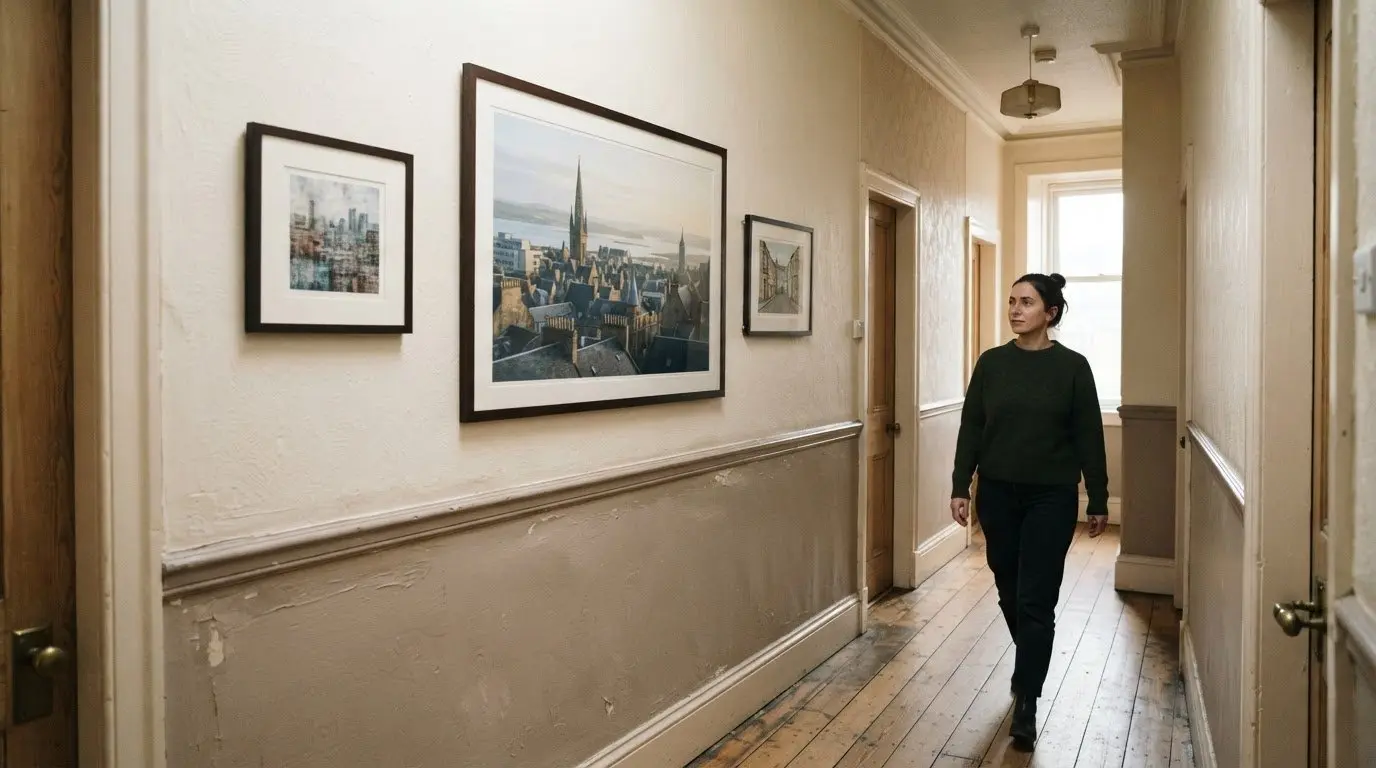
The best hallway picture size isn’t one fixed measurement: it depends on the wall, the artwork and how the space is used. For framing for a high-traffic hallway, a useful starting point is to place the centre of each picture 145 to 152 cm above the floor, then choose dimensions that suit the available wall space without making the passage feel crowded.
It’s natural to want artwork that makes a welcoming impression without obstructing the everyday flow through the hall. The right scale, coordinated frames and thoughtful placement can make a display feel balanced and purposeful.
This guide covers four practical ways to choose artwork and framing for a high-traffic hallway: sizing pieces to the wall, coordinating frame styles, planning placement and sharing clear measurements. These steps help you make decisions for a single statement piece or an arrangement of framed wall art.
Key Takeaways
- Choose picture dimensions to suit the hallway wall and the way people move through the space, rather than relying on a single size for every display.
- Professional advice on picture height and spacing can help artwork feel balanced and comfortable to view.
- Accurate wall and clearance measurements help a framer specify a layout that fits the hallway and its practical demands.
- Compare frame materials and finishes for the look you want, then consider bespoke framing when the artwork or setting calls for a tailored fit.
How a professional framer advises on picture height and eye-level placement
Start by measuring the hallway wall, noting the ceiling line, doorways and main sightline. Choose artwork and frame dimensions that feel proportionate to the space rather than defaulting to one standard format. A broad print can anchor an open wall, while a smaller piece may suit a narrow section beside a doorway. The artwork’s orientation also affects how comfortably it fits.
A useful starting point is to place the picture’s centre 145 to 152 cm above the floor. A professional can adjust that position to suit the hallway’s sightlines and the people using it. In a narrow corridor, the centre may sit 155-160 cm above the floor. The final height should make the image easy to take in without placing it in the path of everyday movement.
If the site has building or fire-safety requirements, use those stated requirements to guide picture placement and hanging specifications. The arrangement and fixings must meet the site-specific instructions; picture height alone cannot establish compliance.
Account for door swings, bags and the direction people move through the hall. Position frames away from likely impact points, and consider their edges and projection as well as viewing height. This helps keep artwork visible while respecting the practical demands of a busy passage.
Nearby furniture also shapes the placement. Above a console table, leave 15-25 cm between the furniture and the picture; the framer can centre the arrangement over the table so it reads as one composition. Where a radiator sits below the artwork, keep the frame at least 30 cm above its top. These reference points help turn an attractive idea into a considered position. A professional can then record the agreed centre height and placement for the installation plan.
Professional installation measurements for hallway artwork
A clear measurement brief helps a framer plan artwork that fits the wall and keeps the route usable. Record the wall’s width and height, then note doors, switches, radiators and furniture that interrupt the display area. Include the corridor’s narrowest point, since a frame that looks balanced on paper must still leave comfortable passage. In corridors under 1.2 m wide, 20×30 cm or 30×40 cm frames are suggested sizes to consider.
For a row or grid, allow 5 to 7.5 cm between frames. The framer can use the overall arrangement width, rather than each picture alone, to judge how it sits within the wall. Provide the intended number of pieces and whether they form a row, grid or looser grouping. A high-traffic hallway should retain at least 36 inches of clear corridor width, so the layout must not intrude on that passage.
Secure mounting depends on the frame’s weight, dimensions and wall construction. A professional can match the fixing method to those details and the hallway’s use. Frames larger than about 60×80 cm or with glass should be secured with a proper screw and wall plug, or two hooks. For frames heavier than about 3 kg in new-build homes, cavity wall fixings designed for plasterboard are recommended.
Share the frame’s full outside dimensions and weight, not only the artwork size. If these details are still being finalised, the framer can specify them alongside the proposed layout for procurement. This helps distinguish the visible artwork area from the frame’s total footprint. For a row, the total width includes every frame and each gap; for a grid, the same principle applies across both dimensions.
Once the wall measurements and artwork choices are clear, you can explore framed artwork options that suit the planned arrangement.


What framing materials can a professional specify for a high-traffic hallway?
Choose materials with the hallway’s exposure to knocks, frame size and artwork in mind. For high-impact locations, stainless steel or reinforced aluminium with laminated anti-reflective glass is recommended. Use this as a starting specification, then consider the wall, display setting and appearance you want.
Stainless steel and reinforced aluminium are recommended as robust choices for busy passageways. Profile matters too: a broad, heavy frame may project further into a narrow corridor, while a slimmer design can keep the artwork visible without dominating the wall. Compare the frame’s outside dimensions with the clear passage and likely contact points.
Glazing affects the specification as well. Laminated anti-reflective glass is recommended for high-impact locations and can reduce reflections, helping artwork remain easier to view under hallway lighting. Consider the glazing alongside frame size and installation conditions, rather than choosing by appearance alone.
For comparison, bespoke frames can also be made with 2 mm float glass. Float glass gives a clear view of the artwork, while laminated anti-reflective glazing is the suggested option for locations with greater pedestrian impact. These are distinct specifications, so the intended setting and priorities should guide the decision. A professional can explain which option matches the frame and display brief.
Consider the artwork, expected exposure, frame dimensions and finish together. For example, a prominent frame beside a busy entrance may suit the recommended stainless steel or reinforced aluminium with laminated anti-reflective glass. A quieter section of hallway may allow more emphasis on coordinating the frame with the artwork and interior. Clear material specifications help the finished frame suit its setting.
Stainless steel and reinforced aluminium are recommended as more robust choices for busy passageways.
What frame finishes can a professional recommend to resist scratches, scuffs and fingerprints?
In a busy hallway, the finish is part of the frame’s practical specification, not just its colour. For high-traffic lobby frames, powder-coated aluminium made from 6063-T6 or similar extrusions is recommended. A professional can discuss this finish alongside the frame profile and artwork, helping the finished piece feel considered within the interior.
Powder-coated aluminium provides a defined finish for spaces where frames may encounter regular contact. Consider how visible the frame will be, whether its surface works with the artwork and whether its profile suits the wall. A darker finish may make marks more noticeable than a lighter one, so weigh the intended appearance alongside everyday use.
For heavy-duty lobby framing, galvanised or stainless steel with a powder-coated finish is recommended. These combinations offer a clear specification to consider for a demanding setting. Make the final choice based on the display location and frame design, since wear patterns differ from one hallway to another.
Fingerprints and scuffs can affect a frame’s appearance, particularly near an entrance or tight turn. Identify likely contact areas from the hallway layout, then consider the finish alongside those positions and the surrounding décor. This matters for framing for a high-traffic hallway, where the surface needs to suit its setting as well as look right. Powder coating is a recommended finish, not a guarantee against marks.
When specifying a frame, discuss its material, coating and appearance together. For example, a lobby display could be specified in stainless steel with a powder-coated finish, while the colour is selected to complement the artwork and interior. That gives procurement a defined material and finish rather than a broad request for a durable frame. To explore artwork that could anchor the display, browse framed artwork styles.
First4Frames Gallery: Custom Picture Framing
First4Frames Gallery offers Custom Picture Framing for artwork that calls for a tailored fit. With online picture framing, you can choose your frame online and design your framed artwork around the image and hallway. This art print framing service can bring custom framed art prints and bespoke framed wall art together in a cohesive display.
Explore fine art and framed wall art, from contemporary art prints to photography prints. Whether you’re considering coastal wall art, landscape wall art or Scottish landscape art, choose work that suits your space and taste. Best-selling artists and famous artists may also inspire your selection. A wall art visualiser can help you visualise art on your wall and see artwork before you buy, if that tool is available to you.
For guidance on a bespoke frame for your hallway display, contact First4Frames Gallery.
Give your hallway artwork a considered next step
A hallway display can do more than fill a blank wall. It can set the tone for the home, welcome visitors and bring favourite images into everyday view. Decide what you want the display to express, then match the artwork and frame to that vision. Thoughtful framing for a high-traffic hallway balances practical needs with personal style.
First4Frames Gallery offers Ready-to-Hang Framed Art, Custom Picture Framing and Giclée Fine Art Prints, giving you different ways to develop a display. You might begin with a print you already own, choose a finished framed piece, or select fine art to suit the space. The right starting point depends on your artwork and the look you want to create.
Bring your hallway idea into focus with a little expert guidance. Contact First4Frames Gallery for frame advice and take the next step towards artwork that feels at home in your space.
Frequently Asked Questions
How can a framing professional help choose the right size for hallway pictures?
A framing professional relates the artwork’s dimensions and orientation to the wall and nearby features. They can assess whether a portrait print, panoramic landscape or group of smaller works will read clearly from the hallway entrance. For example, a narrow vertical image can fill a slim wall section without the visual weight of a broad piece. The artwork’s subject and intended focal point also guide the choice.
How can a framing professional advise on hanging frames at the right height in a hallway or on stairs?
A professional can plan a stairway arrangement so the frames follow the angle of the steps, rather than appearing level across the slope. They consider the approach and viewing direction, then position each image to create a flowing display. For staircase pictures weighing over about 1 kg, use two fixings to reduce the chance of a frame tilting if knocked.
What frame sizes and layouts can a professional recommend for a narrow hallway?
For corridors under 1.2 m wide, 20×30 cm or 30×40 cm frames are suggested options. A professional can arrange these in a slim vertical sequence or a compact grouping, depending on the uninterrupted wall space and artwork orientation. Picture ledges in narrow hallways should be less than 3 inches deep, helping keep the display from projecting too far into the passage.
What glazing is safest for hallway picture frames: acrylic, laminated glass or toughened glass?
For high-impact locations, laminated anti-reflective glass is recommended. The material does not compare it with acrylic or toughened glass.
How do metal, wood and plastic frames compare for durability and maintenance?
Stainless steel or reinforced aluminium are recommended as robust choices for busy passageways. The material does not compare them with wood or plastic frames.