


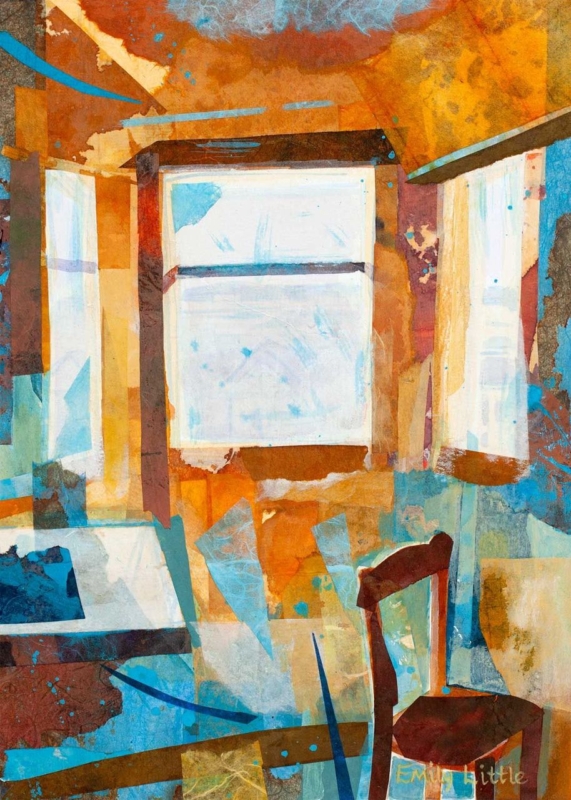
art size guide for every room becomes more useful when the artwork answers a real feature of the room. The Attic Room offers a clear example because its portrait proportions and 230 × 322 mm or 360 × 500 mm print options suit the kinds of vertical spaces that standard sofa-wall advice often overlooks.
An art size guide for every room starts with usable wall space
Do not measure only the total wall. Record the rectangle that remains after skirting, sloping ceiling, door swing and furniture are considered. That usable area determines whether the framed work can breathe and whether its centre will sit near a comfortable eye line.
- Measure the narrowest width along the intended hanging area.
- Mark the expected outer frame, not just the print dimensions.
- Open doors and drawers to check clearance.
- View the paper outline from the room entrance and usual seat.
- Confirm where a hook can be fixed safely before ordering.
The smaller print can suit a wall return or reading corner. The larger option needs more uninterrupted height, but it may feel better balanced beside a chest or low chair. A paper template makes that difference visible before the frame arrives.
Treat the finished frame as the true measurement
Bespoke framing adds mount, moulding and glazing around the listed print size. First 4 Frames can bring those elements together in-house, creating a proportioned outer edge that looks intentional even on a difficult wall.
For a general reminder to record dimensions accurately, consult RICS consumer guidance on measuring up. You can also browse the Emily Little collection or view the exact framed product.
A useful art size guide for every room must account for awkward architecture. The Attic Room offers portrait flexibility, but the final decision should always be based on the complete framed outline.