


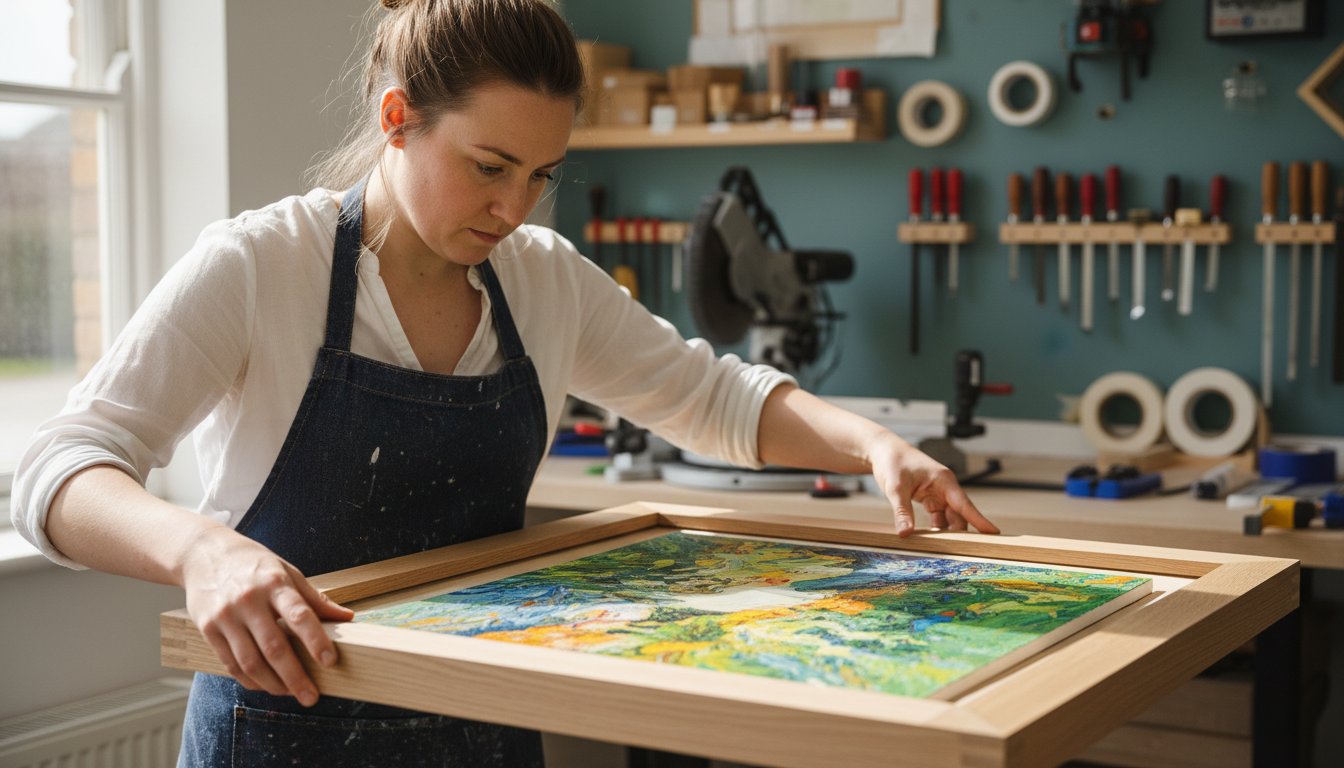
You’ve poured your heart and soul into creating a beautiful piece of art. Now for the final, crucial step: the frame. But this is often where the uncertainty creeps in. Will it be too expensive? What if you choose the wrong style and it cheapens your work? This is a common challenge, which is why we’ve created this professional guide. We believe the best framing advice for artists is both inspiring and practical, transforming a source of stress into a final, triumphant act of creation.
In this guide, we’ll demystify the entire process, where creativity meets craftsmanship. You will learn how to select the perfect bespoke frame that not only protects your original work for years to come but also enhances its beauty and increases its value. We’ll break down technical terms like mounts and glazing, show you how to budget for framing costs (and price them into your sales), and give you the confidence to present your art professionally to galleries and buyers. Let’s make your masterpiece truly shine.
Why Professional Framing is the Crucial Final Step for Every Artist
As an artist, you pour countless hours into your work, but the creative process doesn’t end with the final brushstroke. Professional framing is not merely decoration; it is the final, critical stage of your artistic statement. It’s the bridge between your creation and the viewer, transforming a piece of art into a finished product ready for sale. This is the most fundamental piece of framing advice for artists: treat the frame with the same care and intention as your artwork itself. A high-quality, bespoke frame instantly communicates professionalism and value, telling galleries and collectors that you are serious about your craft.
To see some of these core principles in action, watch this helpful video from a fellow artist:

Elevate Visual Impact and Perceived Value
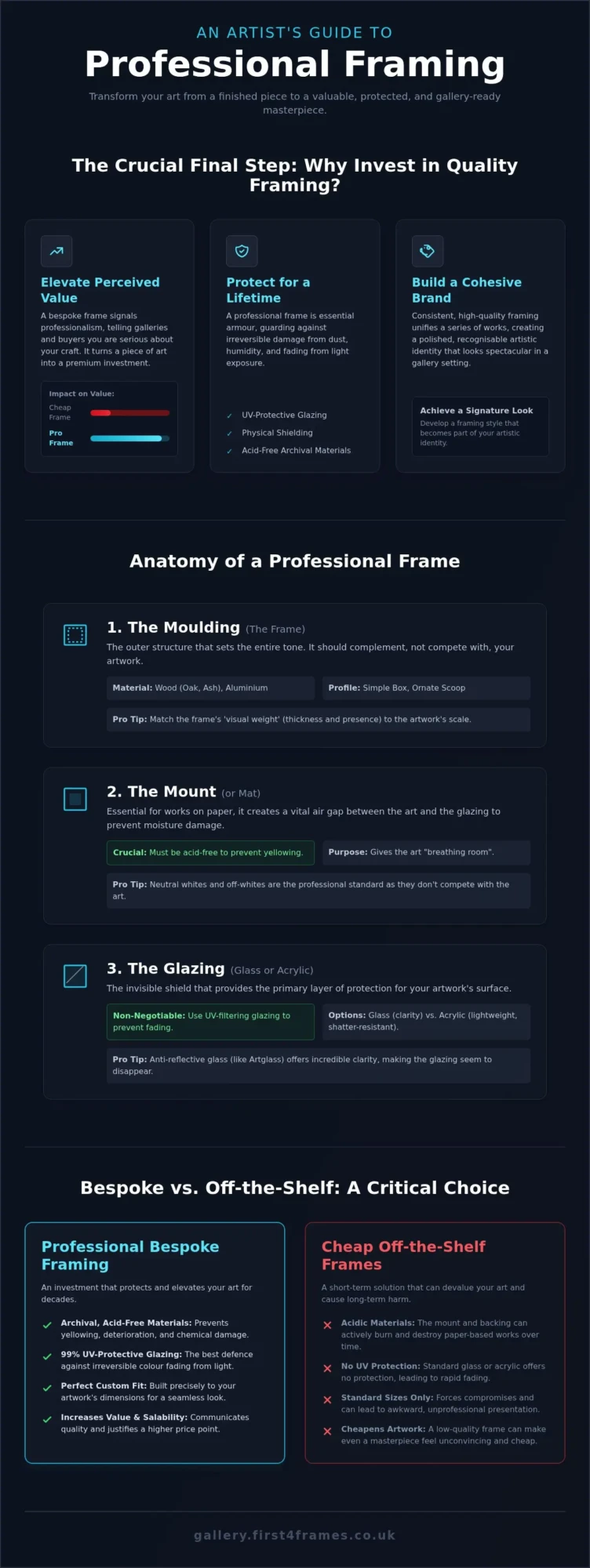
A well-chosen frame does the heavy lifting in the relationship between the art and its environment. It creates a dedicated ‘window’, leading the viewer’s eye directly into the piece and separating it from the distractions of the surrounding wall. This professional presentation directly influences an artwork’s perceived worth. A £500 painting in a cheap, off-the-shelf frame can feel unconvincing, whereas the same piece in a £150 bespoke frame feels like a premium investment. Bad framing can kill an artwork; good framing brings it to life.
Protect Your Artwork for a Lifetime
Beyond aesthetics, a frame serves as essential armour for your art. It provides critical, long-term protection that cheap alternatives simply cannot offer. Think of a premium frame as insurance for your investment of time and materials. Key protective elements include:
- Physical Shielding: Guards against irreversible damage from dust, humidity, and accidental knocks.
- UV-Protective Glazing: A must-have to prevent the vibrant colours in your work from fading over time due to light exposure.
- Archival Materials: Using acid-free mounts and backing boards is vital to prevent the yellowing and deterioration that can destroy paper-based works. Understanding the history and construction of picture frames reveals how these archival methods were developed to ensure art survives for centuries.
Build a Cohesive and Recognisable Brand
For artists looking to exhibit or sell a collection, consistent framing is a powerful tool. It unifies a series of works, creating a polished and professional presentation that looks spectacular in a gallery setting. Over time, you can develop a signature framing style-whether it’s a simple, natural wood or a specific profile-that becomes an integral part of your artistic identity. This tells gallery owners and buyers that you are a professional who understands that every detail of the presentation matters.
Deconstructing the Frame: A Simple Guide to the Key Components
A frame is far more than a decorative border; it’s a complete system designed to protect and present your art. A crucial piece of framing advice for artists is to move beyond just the ‘look’ and understand the function of each part. Learning the essential terminology not only empowers you to make better choices but also allows you to communicate your vision confidently with a professional framer. Let’s break down the key components that form the foundation of bespoke craftsmanship.
The Moulding: Choosing a Profile, Material, and Finish
The moulding is the outer structure of the frame itself, and your choice here sets the entire tone. Consider the material-natural woods like oak and ash offer warmth and tradition, while sleek aluminium provides a clean, contemporary feel. The profile shape, from a simple box frame to an ornate ‘scoop’ moulding, also plays a huge role. For a deeper dive into styles, MasterClass offers A Simple Guide to Framing Art which can help you visualise the options. A great tip is to match the frame’s ‘visual weight’-its thickness and presence-to the scale and impact of your artwork.
The Mount (Mat): Giving Your Art Space to Breathe
For any work on paper, a mount (or mat) is essential. It creates a small air gap between the artwork and the glazing, preventing moisture damage, mould, and the art sticking to the surface. Beyond this protective role, the mount’s width directs the viewer’s eye and gives the composition breathing room. While you can choose any colour, neutral whites and off-whites remain the professional standard for a reason: they don’t compete with the art. For added depth, consider a double mount or float mounting to make your piece truly stand out.
The Glazing: Your Artwork’s Invisible Shield
Glazing is the clear protective layer over your art. The main choice is between glass and acrylic (often known by brand names like Perspex). While glass can offer superior clarity, acrylic is lighter and shatter-resistant, making it ideal for large pieces or artwork that will be shipped. For any original artwork, UV-filtering glazing is non-negotiable; it’s the single best defence against fading from light damage. For ultimate clarity, premium anti-reflective options like Artglass make the glazing seem to disappear, offering an incredibly direct view of your work.
Aesthetic Decisions: How to Select the Perfect Frame Style
Once your masterpiece is complete, the next creative step is choosing the perfect frame. This is a crucial decision, and the most important piece of framing advice for artists is simple: the frame must always serve the artwork, never overpower it. Think of the frame as the final brushstroke, a bespoke element that enhances the viewing experience and bridges the art to its surroundings. It’s where your eye for detail truly shines, ensuring your work is presented with the professional craftsmanship it deserves.
Matching the Frame to Your Artwork’s Style
The character of the frame should harmonise with your art’s style and subject. A minimalist abstract piece, for example, is beautifully complemented by a simple, thin-profile black or natural wood frame. In contrast, a traditional oil portrait or a rich landscape can often handle a more substantial, classic moulding that adds weight and presence. Consider the colour palette within your work; a warm-toned wood can draw out earthy hues, while a crisp white frame can make vibrant colours pop. When in doubt, a simple, premium frame is a timeless and safe choice.
Specific Advice for Different Mediums
Different mediums require different framing solutions to ensure both premium presentation and long-term preservation. Here are a few practical tips:
- Works on Paper (prints, drawings, watercolours): It is essential to use a mount (or mat board) to separate the artwork from the glass. Always opt for UV-protective glass to prevent fading and preserve the delicate paper and pigments.
- Canvas Paintings: For a contemporary, gallery-ready look, explore tray frames (also known as float frames). This style creates the illusion that the canvas is floating within the frame, showcasing the entire artwork, including its edges.
- Photography: The image should be the hero. Simple, clean-lined frames in black, white, or grey often work best, ensuring nothing distracts the viewer’s eye from your photograph.
- Textiles or 3D Pieces: For works with depth, a box frame is the perfect solution. It provides the necessary space to house the object without compressing it, turning it into a spectacular display piece.
Framing for the Sale vs. For Yourself
Balancing your personal taste with what appeals to buyers is a key part of professional practice. When framing for an exhibition or sale, the goal is to present your work in a way that is both professional and widely appealing. As many working artists will attest, understanding how to frame your artwork for a commercial audience can significantly impact its saleability. Opt for neutral, high-quality choices that won’t clash with a potential buyer’s home decor. Avoid overly eccentric frames that might narrow your market. Remember, the frame is part of the product you are selling, and making the right choice is a vital final step. Need an expert opinion? Bring your art to our Falkirk gallery for a free consultation.

The Artist’s Practical Workflow: From Studio to Framer
Transforming a finished piece from a studio creation into a gallery-ready artwork involves a clear, practical process. The final step, framing, is where your art truly comes to life, bridging the gap between your vision and the viewer’s experience. Following a structured workflow ensures the craftsmanship of the frame matches the quality of your art. This section offers essential framing advice for artists, guiding you through preparation, consultation, and budgeting for a professional finish every time.
Preparing Your Art for the Framer
Before you even step into a framing studio, proper preparation is key to achieving a flawless result. This simple checklist ensures your artwork is protected and ready for its bespoke housing:
- Ensure it’s ready: Your artwork must be completely dry, clean, and as flat as possible. For works on paper, allow them to acclimatise outside of any plastic wrapping to prevent moisture from being trapped.
- Sign your work: Always sign your piece before the framing process begins, especially if it is being mounted, as your signature could be covered.
- Create a record: Photograph your art in high resolution without the frame or glass. This digital copy is vital for your portfolio, prints, and online sales listings.
- Make notes: Document any delicate areas, specific textures, or handling requirements to share with your framer.
Working with a Professional Framer
The consultation is a creative collaboration. To make it successful, bring your artwork with you-viewing a digital photo is never a substitute for seeing the real piece. Discuss the artwork’s destination: is it for a competitive gallery show, a client’s home with specific decor, or for selling online? A professional framer has years of experience and can suggest materials and styles you may not have considered. Be open to their expertise, but always ask for a clear, itemised quote and an estimated completion time before you commit.
Budgeting and Pricing Your Framed Work
Professional framing is an investment that enhances the value and appeal of your art. To price your work correctly, always get framing quotes before you set a final price for a piece. A good rule of thumb is that the retail price should comfortably cover the cost of your artwork, the cost of the frame, and your profit margin. For an exhibition, don’t hesitate to ask your framer about potential discounts for framing an entire series. Remember, a premium, well-chosen frame doesn’t just protect your work; it signals quality and professionalism to potential buyers.
To see beautiful examples of how bespoke framing elevates fine art, we invite you to view our gallery.
Your Masterpiece, Perfectly Presented
Framing is more than just a final step; it’s an extension of your artistic vision. By understanding the core components of a frame and making deliberate aesthetic choices, you ensure your work is not just protected, but truly complete. This guide has provided essential framing advice for artists, empowering you to present your creations with the professionalism they command.
Putting this knowledge into practice requires a partner who shares your passion for quality and craftsmanship. At First4Frames Gallery, our team of Guild Certified Framers brings over 20 years of experience to every project. As the trusted choice for many of Scotland’s leading artists, we offer bespoke solutions that honour your unique style and elevate your art.
Ready to give your art the professional finish it deserves? Explore our bespoke framing services. Let us help you create the perfect presentation, ensuring your masterpiece captivates its audience from the very first glance.
Frequently Asked Questions About Framing Your Art
Should I frame my art myself to save money?
While DIY framing might seem cost-effective, it often lacks the professional finish that makes art sellable. Poorly joined corners, dust under the glass, or an ill-fitting mount can detract from your work’s value. Investing in professional framing ensures a premium, bespoke presentation that honours your craftsmanship. It shows buyers you value your own art, encouraging them to do the same, and is an investment in your artistic reputation.
What is the biggest framing mistake artists commonly make?
The most common mistake is choosing a frame that competes with the artwork instead of complementing it. A frame should act as a beautiful bridge between the art and its surroundings, drawing the viewer’s eye inward. Overly ornate or brightly coloured frames can distract from your piece. The goal is to enhance, not overwhelm. Always let your artwork be the star of the show, with the frame providing quiet, elegant support.
How do I frame a canvas painting? What is a float frame?
A stretched canvas can be placed into a traditional frame without glazing. However, for a contemporary gallery finish, consider a “float frame.” This style creates the illusion that the canvas is levitating within the frame, leaving a small, shadowed gap around the edges. This technique beautifully showcases the entire artwork, including the painted sides of a gallery-wrapped canvas, adding a spectacular, three-dimensional effect that looks exceptionally professional.
Is it better to use glass or acrylic (Perspex) for glazing my artwork?
Both have their merits. Traditional glass offers excellent clarity, but acrylic (often known as Perspex in the UK) is a superb modern alternative. It is significantly lighter, shatter-resistant, and often provides superior UV protection to prevent fading. For larger pieces or any art that will be shipped or displayed in a high-traffic area, we almost always recommend the safety and protective qualities of premium acrylic glazing.
How should I price my artwork to include the cost of the frame?
A straightforward method is to add the full cost of the framing directly to the price of the artwork. For example, if your painting is priced at £250 and the bespoke framing costs £90, the final retail price becomes £340. Be transparent with buyers by listing the price as “£340 (framed)” and be prepared to offer an “unframed” price if requested. This approach ensures your material costs are covered while presenting a complete, ready-to-hang product.
Should the frame’s style match the room it will hang in?
This is a common question, and our best framing advice for artists is to always prioritise the artwork. The frame’s primary role is to complement and enhance the piece it holds, creating a single, cohesive unit. While considering general decor is helpful, a frame that perfectly suits the art will look intentional and beautiful in almost any setting. It acts as the perfect transition from the world of the painting to the room itself.
What is conservation framing and is it worth the cost?
Conservation framing uses archival, acid-free materials to protect your artwork from long-term damage caused by light, humidity, and pollutants. This includes using acid-free mount boards, backing boards, and UV-protective glazing. For original artwork, limited edition prints, or any piece you want to preserve for decades, it is absolutely worth the investment. It safeguards the artwork’s integrity and monetary value, ensuring your creative legacy remains vibrant and protected.