


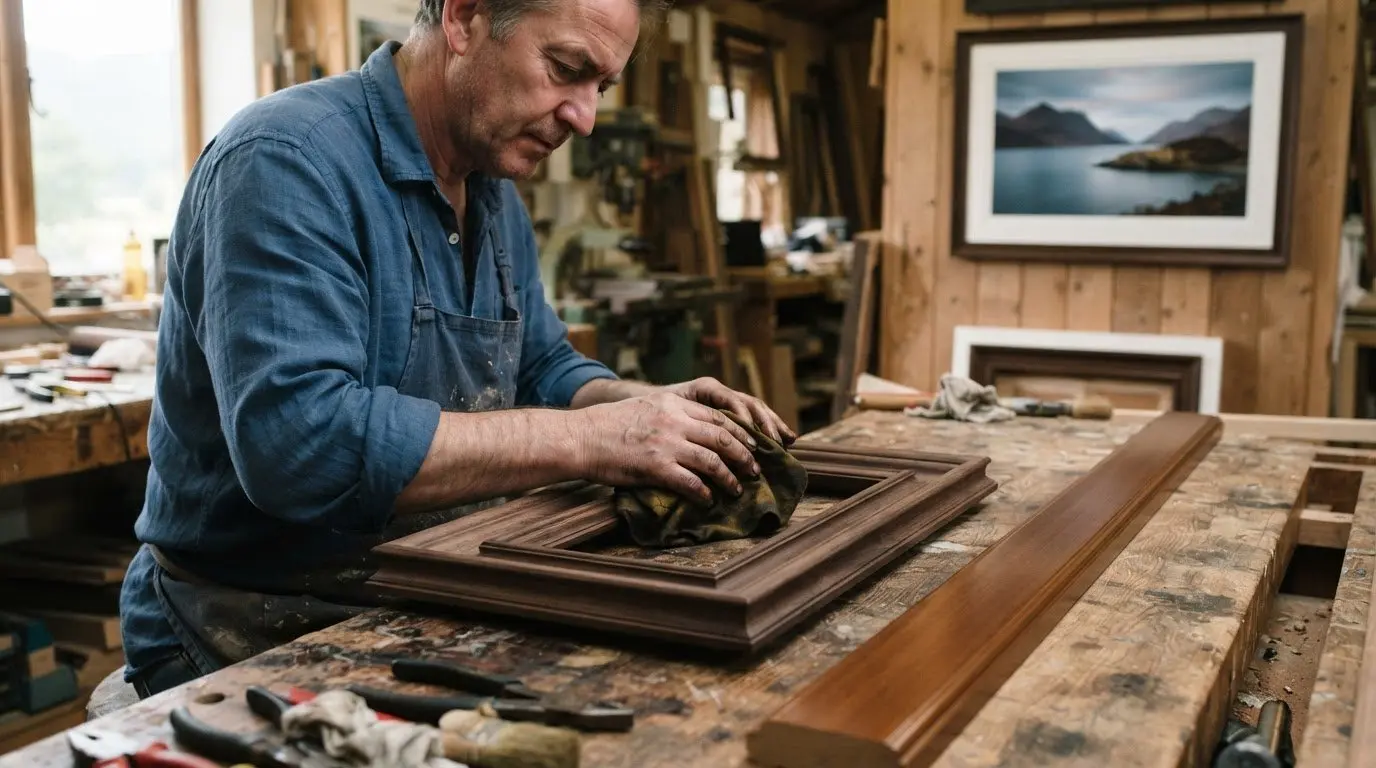
A frame’s finish affects its appearance and production time. In the hand-finished vs factory-finished frames comparison, standard hand-finished profiles typically require 2-6 weeks, while highly customised designs typically require 6-12 weeks. Factory-finished profiles can simplify production and coordination.
Choosing a frame also shapes how you experience the artwork. Explore fine art, photography prints, contemporary art prints and work by famous or best-selling artists. Themes such as coastal wall art, landscape wall art and Scottish landscape art can help set the mood of a room.
With Online picture framing, you can Choose your frame online and Design your framed artwork around the image. Consider Custom framed art prints, an Art print framing service or Bespoke framed wall art as you compare finishes. Whether you use a Wall art visualiser to Visualise art on your wall or prefer to See artwork before you buy in person, the guide ahead explains how finish, materials, labour and production stages influence your choice of Framed wall art.
Key Takeaways
- Choose a factory finish when a simpler, quicker production route suits your priorities; consider hand-finishing for more individual surface detail.
- Compare the materials and finishing steps involved to understand what shapes the work and upfront cost.
- Follow the frame-making stages to see where preparation, applied finishes and final assembly contribute to the finished piece.
- Match the frame’s appearance and finish to the artwork, then explore bespoke framing when you want a more tailored fit.
Time and labour required for finishing
Factory-finished mouldings arrive with their surface treatment already applied, so frame production can begin with a ready-finished profile. Using prefinished profiles and readily available mouldings shortens lead times and simplifies coordination. This route suits projects where a consistent finish and a more straightforward production sequence matter more than individually applied surface effects.
Hand-finishing adds separate stages, and each affects the calendar differently. Surface preparation and base coats take 2-7 days, including conditioning. Multiple hand-applied finish layers, with drying and curing, take 1-3 weeks, depending on technique. Final burnishing, patina and sealing take 3-7 days. These are stages of the process, not a single continuous stretch of hands-on labour: drying and curing add elapsed time between applications.
For planning, standard hand-finished frame profiles typically require 2-6 weeks. Highly customised frames, including designs with unique metallic or aged finishes, typically require 6-12 weeks. The finish itself helps determine the workload. A straightforward painted surface involves different steps from a layered effect that needs careful application, drying and detailed finishing. More individual treatments therefore take longer to complete.
- Factory-finished: a prefinished profile streamlines the finishing stage and production coordination.
- Hand-finished: preparation, applied layers and final detailing each add work and elapsed time.
- Highly customised: unique metallic or aged effects usually extend the production window.
When scheduling an artisanal finish alongside international shipping, a contingency window equal to 10 to 20 % of estimated production time is recommended. That allowance helps account for the additional planning involved. For a UK project, the useful comparison is not simply which frame is faster: it is whether the finish’s production sequence suits the artwork, the desired appearance and the deadline. A standard profile can make coordination simpler; a bespoke surface requires more stages and patient, careful work.
Upfront cost and finishing materials
The frame profile is only one part of the decision. The finish affects the materials and hands-on work involved. Compare what each finish entails rather than treating factory-applied and hand-applied surfaces as equivalent.
Upfront Cost
A factory-finished profile arrives with its surface treatment complete, which can simplify the work required before assembly. A hand-finished frame involves additional preparation and finishing, so its cost may reflect the materials and skilled labour. The difference depends on the design, not simply the label “hand-finished”. When comparing options, consider the profile, finish, number of applied layers and any detailed effects.
A simple painted surface and a carefully built-up patina involve different processes. A bespoke effect can require extra stages and precise application, affecting the work involved. Consider whether the artwork would benefit from an individual finish that complements its colours, or whether a ready-finished profile gives you the look you want.
Finishing Materials
Material choices shape both appearance and finishing process. Options can include stain and wax, antique gold, shabby chic, verdigris and crackle glazing. Each creates a different character: stain lets the wood’s appearance remain part of the design, while metallic or aged effects add more pronounced surface detail. The chosen effect determines the materials and application steps involved.
For a useful comparison, separate the frame profile from its surface treatment. A factory finish offers a prepared surface; a hand-applied finish can involve materials such as paint, wax or metallic detailing. Consider the intended appearance and how the layers create it. This helps you decide whether the added craft and materials suit the artwork’s style.
Artwork can guide the decision: a restrained finish may let a fine art print take centre stage, while an aged or metallic detail can echo tones within the image. Explore artwork and framed styles to consider which visual direction feels right before settling on a finish.


Hand-finished frame production stages
A hand-finished frame takes shape through a sequence of surface and assembly stages. Each step builds on the last, from preparing the frame to protecting the artwork behind it.
- Prepare the frame. Once the wooden frame has been made, its surface is prepared for the chosen treatment. Gesso can be applied to create a base before painting. This foundation helps create a consistent surface for a flat colour or a more specific finish.
- Apply the chosen finish. Paint may provide a clean, even colour, while layered techniques create more individual effects. A frame designed to echo gold in an artwork, for example, needs its finish planned around those tones. Matching the frame to the image makes the relationship feel considered rather than incidental.
- Build and cure layers. Where the design uses multiple applications, each layer needs to be applied with care and allowed to dry or cure before the next stage. That sequence helps preserve the intended appearance. A painted frame with metallic detailing, for instance, combines distinct surface treatments rather than one single coat.
- Complete the frame. After finishing, the frame moves to final assembly, glazing and cushioning for shipping. These stages take 3-7 days. Assembly brings the components together, glazing protects the artwork, and cushioning prepares the finished piece for transport.
Examples show how a finish can be planned around the artwork. Frames made for Ollie Tuck’s Bumble artworks used different colours, sometimes matching gold to the background. Some dark grey examples had a gesso base and gilded edges; others combined paint, wax and metallic gold paint. These details call for decisions about colour and application order.
A one-off frame reflecting the harlequin pattern of a wedding invitation is another example. The pattern guides the design, while preparation, surface treatment and assembly bring it to life. Bespoke effects add purposeful stages: the artwork or invitation informs the finish, and the finish shapes how the frame is built and completed.
Hand-finished vs Factory-finished Frame Quality & Look
Neither finish guarantees better quality on its own. A hand-finished surface allows colour and detail to be tailored to an artwork, while a factory finish generally gives profiles a more uniform appearance. The useful comparison is how well the finish suits the image and how carefully the frame is made.
Consider a cool-toned Scottish landscape print. A subdued frame can support its atmosphere without distracting from the scene. Hand-finishing can create a specific colour or character; a factory-finished profile can also suit the print if its ready-made appearance complements the artwork. The right choice depends on the visual relationship, not the production label.
Look beyond the front surface. Clean corners, tidy joins and an even finish all contribute to the frame’s presentation. Check how its proportions relate to the artwork, too. A frame that overwhelms a delicate image or looks undersized beside a bold composition can distract, even if the finish looks neat.
- Surface character: Hand-applied treatments can create individual variation; factory finishes tend towards a consistent look.
- Design fit: Compare the frame’s colour and profile with the artwork’s palette, scale and mood.
- Construction: Examine corners, joins and edges alongside the visible finish.
For a series of prints, a consistent factory finish can help the pieces feel coordinated. For an artwork with distinctive colours, a tailored hand finish can connect the frame more closely to its subject. Neither approach is automatically more durable: material quality, preparation and application all matter. Judge the complete frame, not just its surface.
Explore framed artwork and print styles to see how different frame profiles change the presentation of an image.
First4Frames Gallery
First4Frames Gallery helps you match a frame’s finish and profile to the artwork it will hold. Its frames are handmade to order using high-quality materials, with 2 mm float glass fitted as standard. Custom Picture Framing gives you a bespoke option, while Ready-to-Hang Framed Art and Giclée Fine Art Prints offer other ways to bring art into your space.
Use the differences in this guide to decide what matters most: an individual finish, a consistent look or a frame tailored to your artwork. The frame should support the image and feel at home in its setting.
For help choosing a framing option for your artwork, contact First4Frames Gallery.
Choose a frame that brings your artwork together
The best choice is the one that gives your artwork the presence you want. Choosing between hand-finished and factory-finished frames is easier when you picture the finished piece in its intended setting. Decide whether the frame should quietly support the image or add distinctive character.
First4Frames Gallery brings together Ready-to-Hang Framed Art, Custom Picture Framing and Giclée Fine Art Prints, helping you consider artwork and framing as parts of one design. Whether you’re selecting a print or shaping a more personal look, let the image guide the frame rather than choosing a finish in isolation.
Take the next step by exploring the available artwork and framing possibilities. Explore framed art and print options, then choose a direction that feels right for your space. The right frame can give a favourite image a place to belong, and your next design decision can start with the artwork you love.
Frequently Asked Questions
What does hand-finished mean for frames?
The terms describe how the visible surface is completed, not the frame’s shape or how the artwork is mounted. The practical difference is the opportunity to choose a finish that relates closely to the image. Consider whether the frame should echo a colour in the artwork or create a deliberate contrast, then assess the overall balance.
How do the prices of hand-finished and factory-finished frames compare in the UK?
There is no single price comparison that applies to every frame in the UK. For a like-for-like assessment, compare frames with the same dimensions, profile and glazing, and similar finish complexity. Check that the quoted amount covers the complete framed piece, not just the visible frame profile. Differences in specification can make apparently similar options difficult to compare directly.
What materials and finishing techniques are used for each type of frame?
Materials and treatment depend on the frame design, so the finish label alone does not describe the full specification. Compare the surface’s colour, sheen and texture, and consider how they sit beside the artwork. A sample under the room’s lighting may look different from a small online image, so keep the intended setting in mind.
How long does it take to make or finish each type of frame?
Factory-finished profiles generally allow production to proceed without waiting for an individual surface treatment, while custom finishing can add time. If the frame is needed for a move, exhibition or room refresh, plan backwards from when it must be in place. Allow time for the complete order and delivery, not just the finishing stage.
Can hand-finished frames be customised or repaired more easily?
Customisation is easiest to plan while the frame is being made, so its appearance can be considered alongside the artwork. Repair is different: matching an existing surface may be difficult, especially if it has aged or developed individual variation. A hand-finished label alone does not make repair easier; the damage and the possibility of recreating the original appearance both matter.
What should buyers check when comparing frame finishes and warranties?
Compare the finish’s materials and applied layers, how its colour and profile suit the artwork, and the frame’s corners, joins and edges. Check the finish and construction quality; no warranty details are provided.