


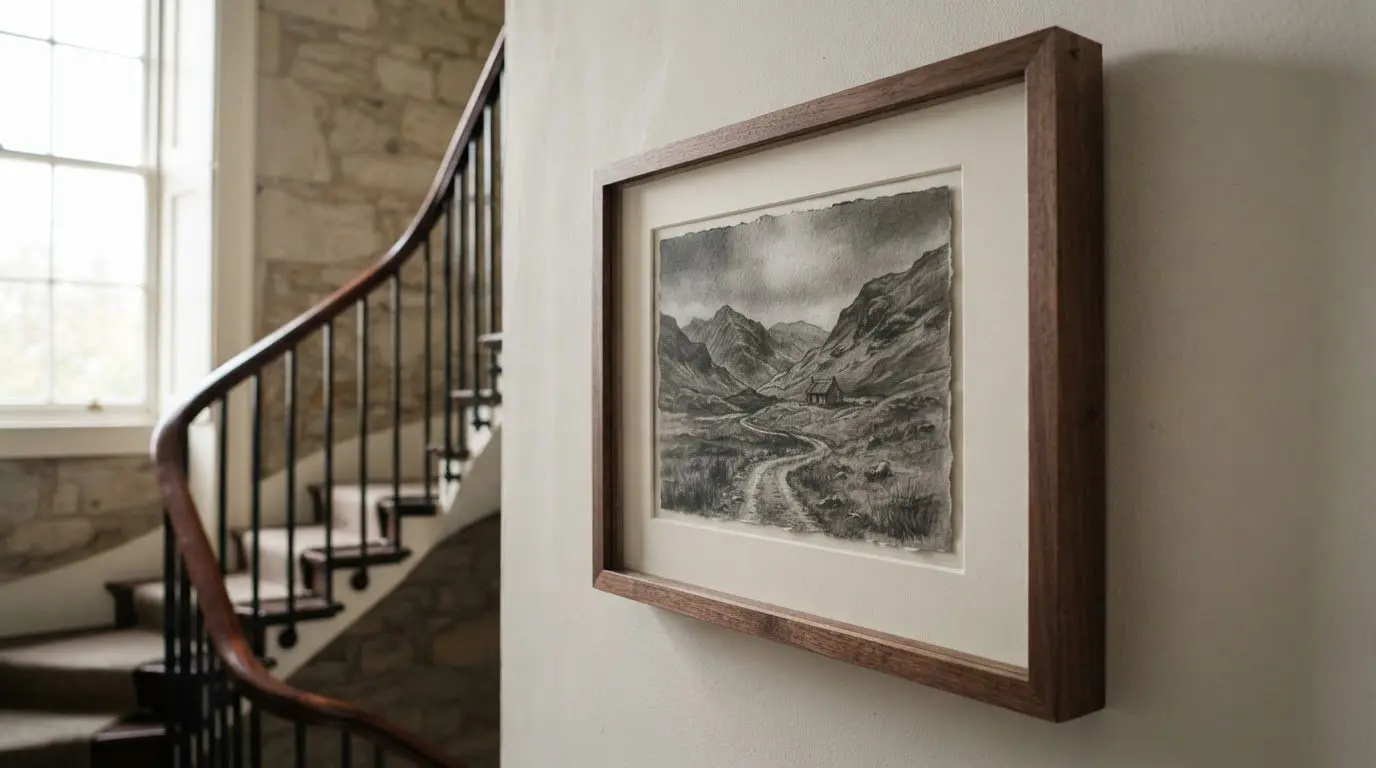
Glass can protect a charcoal drawing, but it shouldn’t touch the artwork. The key to how to choose a frame for a charcoal drawing is creating a clear gap between paper and glazing, using a mount or spacers within a deep frame. This helps keep loose charcoal away from the glass.
It’s natural to want protection from dust, fingerprints and accidental smudges. With Online picture framing, choices such as Custom framed art prints and Bespoke framed wall art can help you consider how a frame complements delicate artwork. Choose your frame online with its profile and finish in mind, and Design your framed artwork around the drawing’s character.
Visualise art on your wall by considering how framed work might sit in your space. A Wall art visualiser can help you See artwork before you buy, while an Art print framing service may offer inspiration beyond charcoal. Explore ideas from Fine art and Photography prints to Contemporary art prints, Coastal wall art and Landscape wall art, including Scottish landscape art, Best-selling artists, Famous artists and Framed wall art.
Key Takeaways
- Frame charcoal with glazing for protection, but keep the drawing separated from the glass to help prevent contact with loose particles.
- Look for a deep frame that can accommodate a mount or spacers, creating room between the artwork and glazing.
- Choose a frame size that allows the drawing, mount and protective materials to fit together without crowding the artwork.
- For a made-to-measure finish, consider bespoke framing that can be tailored to the drawing’s dimensions and presentation.
Should Charcoal Drawings Be Framed with Glass?
In the UK, framing cost depends on the drawing’s dimensions, frame, mount and glazing. A bespoke design using specialist materials differs from a simpler frame, so these choices determine the final price.
-
How a professional chooses glass or acrylic glazing for a charcoal drawing
Choose glazing that protects the delicate surface without touching it. Glass creates a clear barrier against dust, fingerprints and accidental smudging. Acrylic is lighter, but static can attract loose charcoal particles. Avoid placing acrylic directly against the drawing, as removing it could smear the image. The right option depends on the artwork and the space available inside the frame.
-
How a professional selects UV-filtering glazing for a charcoal drawing
Select UV-filtering glazing if the display may receive sunlight. UV protection can reduce the drawing’s exposure, but it doesn’t make direct sunlight harmless, so placement still matters. Available glazing products vary: some offer UV blocking from 40% to 95%, while true conservation-standard glass is described as deflecting 99% of UV. Match the level of protection to the display conditions and framing requirements.
-
How professional framing keeps charcoal away from the glazing
Create a physical gap between the charcoal and glazing. A mount or spacers can hold the surface away from the glass, while a deep frame accommodates the added depth. This separation gives loose particles space to fall into a concealed area instead of collecting against the image. Check that the frame depth accommodates the glazing, mount and artwork together.
-
How a professional selects a mount and safely mounts a charcoal drawing
Use a mount to separate the image from the glazing and create a neat border. A professional can secure the drawing with T-hinges, V-hinges or acid-free photo corners, rather than permanent methods such as dry mounting. Suitable protective materials include acid-free mat board, archival backing board and conservation tape. These support the paper while keeping adhesive away from the delicate charcoal surface.
How a professional chooses a deep frame to create a gap between glass and artwork
- Assess the complete frame depth. A charcoal drawing needs room for its paper, mount, spacers, backing and glazing. A professional considers these layers together, rather than choosing a frame based only on the artwork’s dimensions. A shallow profile may compress the assembly and bring the glass too close to the charcoal. A deeper profile gives the framing more room to protect the work.
- Plan the separation behind the mount. Spacers beneath a mount create a gap between the drawing and glazing. Loose charcoal dust can fall into this concealed space instead of sitting on the image or pressing against the glass. Choose spacer depth to suit the artwork and assembled frame, rather than adding bulk without a protective purpose.
- Consider a dust-collecting mount arrangement. A double-mat dust trough uses a bottom mat with smaller borders and a top mat with larger borders. This leaves a space between the mats where loose particles can collect. The arrangement may suit delicate dry media, provided it fits comfortably within the chosen frame.
- Balance protection with visual effect. Frame depth affects how far the artwork sits behind its front edge. Choose a profile that accommodates protective layers and complements the drawing’s scale and finish. A restrained finish can keep attention on charcoal’s tonal range, while a well-proportioned mount gives the image breathing room without making the display feel crowded.
- Review the assembled design. The professional checks that the glazing, mount, spacers and backing fit together without pressing against the artwork. For ideas on how frame profiles and finishes shape a display, browse framed artwork designs before settling on the final effect.


Protecting and displaying fragile dry-media work
Charcoal particles rest on the paper’s surface, so professional framing should support the sheet and protect it on display. Careful handling and appropriate materials help protect its delicate marks from damage.
- Choose a stable backing board. Acid-free backing helps prevent the drawing from resting against acidic materials that can harm paper over time. A professional selects a board that supports the sheet evenly and helps reduce the risk of warping. It also provides a stable base for the frame’s protective layers.
- Avoid permanent mounting. Dry mounting fixes artwork to a board with adhesive and should not be used for charcoal. Instead, a professional can attach the drawing using a suitable reversible method that keeps adhesive away from the image. This matters because pressure can shift or smear loose charcoal particles.
- Use conservation materials throughout. Acid-free mat board, archival backing boards and conservation tape help create a considered framing package. Together, these materials support the paper and limit contact with unsuitable components. For a fragile charcoal sheet, a professional considers every layer, not just the visible mount or frame finish.
- Choose a safe display position. Hang the framed work indoors in a dry space, away from direct sunlight, excessive humidity, fireplaces and heating vents. Moisture can build up inside a frame in a damp room and contribute to mould. A hallway away from a radiator, for example, may be a more suitable spot.
- Clean only the outside surfaces. Wipe the frame and glass with a soft microfibre cloth. Don’t open the frame or touch the drawing. This keeps routine dusting separate from the charcoal. In a gallery or busy room, gently cleaning the exterior helps maintain a clear view without disturbing the artwork.
How a professional chooses the right frame size for a charcoal drawing
- Measure the sheet and image separately. A charcoal drawing may occupy only part of a larger sheet, so the paper dimensions and visible image area can differ. Record both before planning the mount opening. This keeps important marks visible while allowing the surrounding paper to remain part of the presentation where appropriate.
- Allow room for a balanced mount. A standard minimum mount width is about 5 cm or 2.5 inches on each side. That border gives the drawing visual breathing space and helps separate it from the glazing. The best proportion depends on the artwork’s shape, the available paper margin and the overall display effect.
- Use proportions as a guide, not a rule. The Golden Ratio is given as 1.64 for the relationship between a mount and the artwork. A professional can use it as a starting point when judging the balance between image and border, then adjust the design to suit the drawing. A narrow portrait and a broad landscape may call for different visual proportions.
- Include every framing layer in the finished dimensions. The frame must accommodate the drawing, mount, backing board, spacers and glazing. These components affect the internal space, while the frame profile determines the external size. Plan the complete assembly so the paper isn’t squeezed and each protective layer fits correctly.
- Consider where the framed work will hang. A frame that suits a small study wall may feel out of scale above a large piece of furniture. The drawing’s orientation, mount width and frame finish all contribute to its presence. To explore framed artwork styles before deciding on the final presentation, browse the gallery.
First4Frames Gallery: Ready-to-Hang Framed Art
First4Frames Gallery offers Custom Picture Framing for charcoal drawings that need a carefully planned fit. Each frame is made by hand for the individual order, using high-quality materials and 2 mm float glass. For charcoal, the design can account for the mount and spacing needed to keep the drawing away from the glazing.
Choose bespoke framing when a standard frame doesn’t suit the drawing’s dimensions or the depth needed for protection. Ready-to-Hang Framed Art is another option if you’re selecting a finished artwork that is already framed. The right choice depends on whether you’re framing your own drawing or choosing framed art.
For help with a framing choice or a made-to-measure design, contact First4Frames Gallery.
Give Your Drawing a Thoughtful Place to Shine
Knowing how to choose a frame for a charcoal drawing gives you a useful starting point for displaying it with care. Next, consider how the piece will sit alongside the art and photographs already in your home. A considered frame can help it fit into a collection while keeping the drawing’s character at the centre.
First4Frames Gallery offers Custom Picture Framing for individual artwork, Ready-to-Hang Framed Art, and Giclée Fine Art Prints. These options can support different projects, from framing a charcoal drawing to choosing a print for another wall. Select the route that suits the artwork you want to enjoy, and let its presentation reflect your space and personal taste.
Contact First4Frames Gallery to discuss the next step for your artwork. Your drawing deserves a setting that lets its expressive marks take their place on the wall.
Frequently Asked Questions
Why do frames matter?
Frames give artwork a finished boundary and help it sit cohesively within a room. They can also connect separate pieces when displayed together. A consistent frame finish, for example, can bring several drawings together in a gallery wall, while distinct profiles let each work retain its character. Consider the whole display, not just the individual sheet.
What type of frame is best for a charcoal drawing?
The best frame suits the drawing’s character and intended display. A restrained profile can keep attention on subtle tonal changes, while a more pronounced finish may complement bold, high-contrast marks. For a group of artworks, consider how the frame relates to neighbouring pieces. Bespoke framing offers a made-to-measure presentation.
What glazing is best for framing charcoal artwork?
Choose glazing by balancing the view of the artwork with the display’s practical needs. Float glass offers a clear view of fine tonal transitions, while acrylic is lighter and may suit situations where reducing weight matters. Consider how each presents the charcoal’s soft shading and crisp edges, which are central to the drawing’s visual effect.
How much space should be left between charcoal paper and the glass?
Measure clearance from the highest charcoal marks, not just from the back of the paper. Charcoal can sit unevenly across a sheet, so the most prominent strokes determine the closest point to the glazing. Leave those marks clear of the glass throughout the frame, including at the edges where the paper may not lie perfectly flat.
How can you prevent charcoal from smudging or fading in a frame?
Tell the framer whether the artist applied fixative and which product they used. Fixative can change charcoal’s appearance by darkening or dulling its tones, and spraying it may blur or smear the image. Hairspray isn’t a suitable substitute because it can contribute to yellowing. Knowing how the drawing was treated helps the framer plan its handling and presentation without altering the surface.