


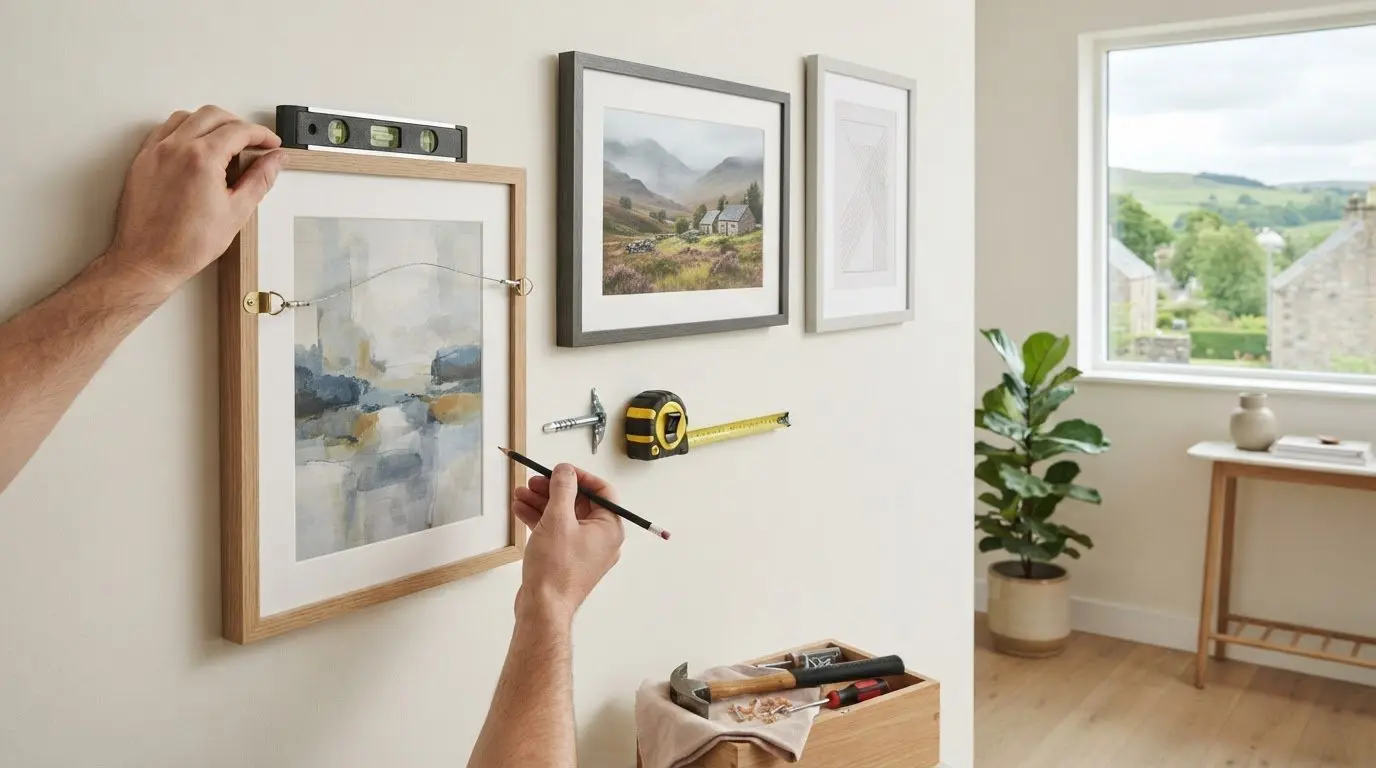
What if the right fixing matters more than the hook itself? If you’re unsure what’s behind your plasterboard, conflicting advice can make a simple job feel risky. Learning how to hang pictures on plasterboard walls starts with the wall structure and the frame’s weight, not guesswork.
This guide explains how to choose a suitable hanging position, check for a stud and match a fixing to your picture. You’ll also learn how to hang the frame neatly and check that it feels secure. Before drilling, take care around hidden pipes and wiring. Once the wall fixing is in place, the right frame hardware makes hanging simpler: First4Frames Gallery professionally framed artwork comes ready to hang with D-rings and high-quality framing wire attached.
Key Takeaways
- When working out how to hang pictures on plasterboard walls, assess the wall structure and the framed picture before choosing a fixing.
- Compare fixings by their intended use and support method. A stated load capacity isn’t a guarantee for every wall or installation.
- Mark the hanging position carefully, then follow the fixing manufacturer’s fitting directions and tool requirements.
- Match the wall fixing to the frame’s hanging hardware, then check that the finished picture is straight and secure.
How to Hang Pictures on Plasterboard Walls Without Guesswork
Identify both the wall and the frame before choosing a fixing. Plasterboard is a sheet material, as explained in this overview of Drywall (Plasterboard) Composition and History, but the space behind it can vary. Your intended fixing point may open onto a hollow cavity, meet a timber stud or be affected by another part of the wall structure.
That difference matters. A fixing designed to grip behind a hollow board works differently from a screw secured into a stud. The right option also depends on the framed picture’s weight, its attached hanging hardware and the fixing manufacturer’s instructions. Assess the whole setup instead of choosing a hook based only on its advertised capacity.
What should you check before hanging a picture?
Weigh the complete framed picture, not just the artwork, and check the back to see what hanging hardware is fitted and where it sits. Then inspect the planned position. Cracks, crumbling plaster, damp patches or a board that feels loose are reasons to choose another spot or address the wall before hanging anything.
How can you tell what is behind the plasterboard?
A hollow section has an open space behind the board; a stud is a supporting timber member. Use an appropriate wall detector to locate support and check for hidden services, following the device’s instructions carefully. Detector results can help you assess the position, but don’t assume that every point on a wall has the same structure.
Before making a hole, establish:
- The framed picture’s total weight and the location of its hanging hardware.
- Whether the chosen spot is sound, and whether a stud or hollow section is behind it.
- Whether the position needs checking for concealed pipes or wiring.
- Which fixing suits the wall and frame, and what its manufacturer specifies for fitting.
This quick assessment helps you choose a fixing that matches the wall and frame, rather than relying on guesswork.
Choose a Plasterboard Picture Fixing for the Wall and Frame
Once you know what is behind the board, match the fixing to that support, the frame’s weight and the hardware on its back. The fixing must suit both the wall and the way the frame hangs. For example, a hook that works with a sawtooth hanger may not suit picture wire. Check that the fixing and frame hardware connect securely, without forcing or bending either part.
The right picture fixing depends on the wall, the frame and the installation. Keep this in mind when deciding how to hang pictures on plasterboard walls, especially if the frame is heavy or valuable. If you can’t establish that the fixing is suitable for the wall and load, don’t guess.
When does a plasterboard fixing need extra support?
A fixing made for hollow walls may suit a position without a stud, provided its instructions cover your board and the frame’s weight. These fixings grip or spread their support behind the board instead of relying only on the surface. If you locate a suitable timber stud, a compatible screw secured into it provides another support option. Use the detector’s directions and the fixing manufacturer’s guidance to choose the approach.
How should you interpret a fixing’s weight rating?
Read the rating and fitting instructions for the exact fixing you’re using. A stated capacity applies to the product under the conditions described by its manufacturer, not automatically to every plasterboard wall, frame or installation. Ratings from different fixings aren’t interchangeable. Board condition, fixing position and correct installation can all affect whether the setup is appropriate, so don’t treat a product figure as a universal guarantee.
For a ready-to-hang framed picture, check how its attached hardware engages with the chosen fixing before lifting it into place. First4Frames frames have D-rings and high-quality framing wire attached for straight wall mounting. If you’re choosing artwork for a wall you’re preparing, browse the framed art gallery and include the finished frame in your hanging plan.

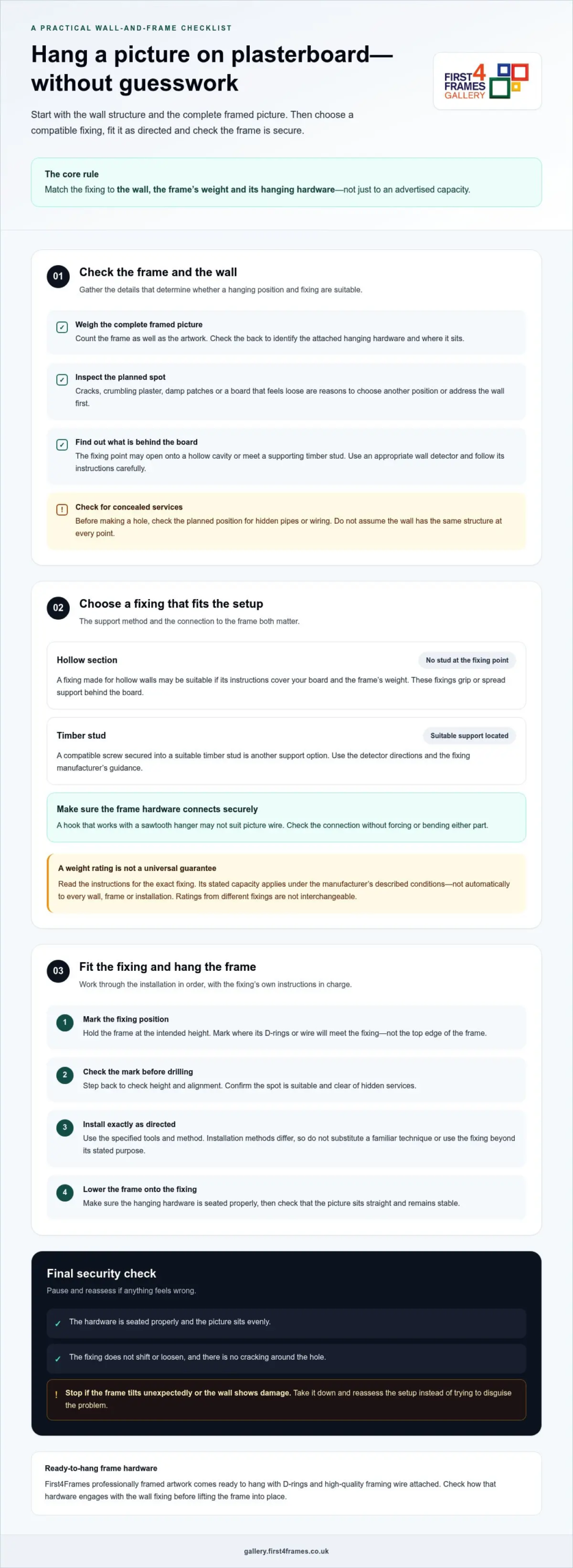
How to Fit a Picture Fixing and Hang the Frame Step by Step
Careful marking and patient fitting help protect both the wall and your frame. Follow the selected fixing’s own instructions, including its tool requirements. Installation methods differ, so don’t substitute a familiar technique or use the fixing beyond its stated purpose. If you’re unsure about the position or support, pause before making a hole.
How do you position and fit the fixing?
Hold the frame at the intended height and mark where its hanging hardware will meet the fixing. Account for the position of the D-rings or wire instead of marking the frame’s top edge as the fixing point. Step back to check the height and alignment, then confirm the spot is clear of hidden services before drilling. Fit the fixing exactly as directed.
How do you check the picture is hanging securely?
Lower the frame gently onto its intended hanging point and make sure the hardware is seated properly. Check that the picture sits straight and that the fixing doesn’t shift, loosen or cause cracking around the hole. If the frame tilts unexpectedly or the wall shows damage, take it down and reassess the setup rather than trying to disguise the problem.
- Mark the fixing position, taking the frame’s hanging hardware and desired height into account.
- Check the mark for alignment and confirm it’s a suitable, clear location.
- Install the fixing with the specified tools and method, following its instructions throughout.
- Lift the frame onto the fixing, then check that it sits evenly and remains stable.
Stop if the wall or fixing doesn’t feel secure. A neat finish matters, but a frame should only stay in place if its support feels sound. This step-by-step approach makes how to hang pictures on plasterboard walls clearer while leaving the fixing’s instructions in charge of the installation details.
Once your hanging point is ready, explore framed art for your wall and choose a finish that suits your space.
Make Plasterboard Walls Ready for Framed Art
A finished display brings together the wall fixing, frame and artwork. Once you’ve chosen a fixing that suits your wall and frame, think about the look you want in the room. Bespoke framing gives the artwork a considered fit, while a standard frame may not suit its proportions. First4Frames individually crafts each frame to order using high-quality materials.
What hanging hardware comes with First4Frames framed art?
The frame’s attached hardware and the wall fixing have separate roles: one connects the picture to the fixing, while the other supports it in the wall. First4Frames frames are fitted with 2mm float glass, selected for its clarity compared with the perspex used by many competitors. The glazing is part of the finished frame, but it doesn’t change the need to choose a suitable wall fixing for the frame’s weight.
First4Frames can print and frame your digital photographs, with print quality chosen to complement the bespoke frame. Finished frames are fully packaged to help prevent damage and shipped via professional couriers. The ready-to-hang finish makes it easier to plan how your artwork will sit in your home.
How can a framed print complete a room?
Choose a print to suit the room’s character and the display you have in mind. A landscape can create a calming focal point in a living room, while a carefully chosen photograph may bring a more personal feel to a hallway or reading nook. Bespoke framing brings the image and its presentation together, helping your chosen piece feel at home in the space.
With your display planned, explore ready-to-hang framed art and find artwork to suit your room.
Choose Artwork That Feels at Home on Your Wall
Choose artwork to suit the room’s mood, from Coastal wall art and Scottish landscape art to Photography prints and Contemporary art prints. Explore Fine art by best-selling artists and famous artists, then consider how the image and frame will work together as Bespoke framed wall art.
Online picture framing lets you choose your frame online and design your framed artwork around the piece. A wall art visualiser can help you visualise art on your wall and see artwork before you buy. Custom framed art prints give a favourite image a considered finish, while an art print framing service brings the print and presentation together.
Explore ready-to-hang framed art and find a piece that feels right for your wall.
Frequently Asked Questions
Can you hang a heavy picture on a plasterboard wall?
Yes, but the fixing needs to suit the picture’s full weight and the wall behind it. For a heavier frame, securing a compatible screw into a timber stud can provide support without relying on the board alone. If you can’t locate suitable support or aren’t sure the fixing is appropriate, don’t guess. To hang pictures on plasterboard walls safely, consider the weight and wall support together.
Do you need to find a stud to hang a picture on plasterboard?
No, a stud isn’t essential for every picture. A fixing designed for hollow walls may suit a lighter frame when used exactly as directed. A stud can be a useful support point for heavier pieces, but first confirm its position with an appropriate detector and check for hidden services. If the frame has two hanging points, make sure the layout supports both sides as intended.
Can you hang a picture on plasterboard without drilling?
Sometimes, adhesive picture strips or hooks can be used, but only if their manufacturer says they’re suitable for your wall surface and the frame’s weight. Surface condition matters: dust, loose paint or damaged paper facing can affect how well an adhesive holds. Follow the product’s preparation, application and waiting instructions, and don’t use adhesive as a substitute for a mechanical fixing if the frame exceeds its stated limits.
How do you stop a picture frame from leaning forward on plasterboard?
Check that the frame’s hanging points are correctly engaged and that its back sits evenly against the wall. If picture wire allows the frame to tip, suitable frame bumpers near the lower corners can help steady it, provided they fit without marking the wall. Don’t change the wall fixing to correct a frame-balance issue. For a large or valuable piece, get help lifting and positioning it.
What should you do if a plasterboard picture fixing feels loose?
Take the frame down straight away and don’t keep tightening the fixing in the same opening. Check whether the hole has widened or the board is cracked or crumbling. A damaged spot may no longer provide reliable support; choose a sound position and a fixing suited to that location, or secure it to a suitable stud. Repair the old hole separately before rehanging the picture.
Browse First4Frames’ ready-to-hang framed art to find a print and frame for your wall.