


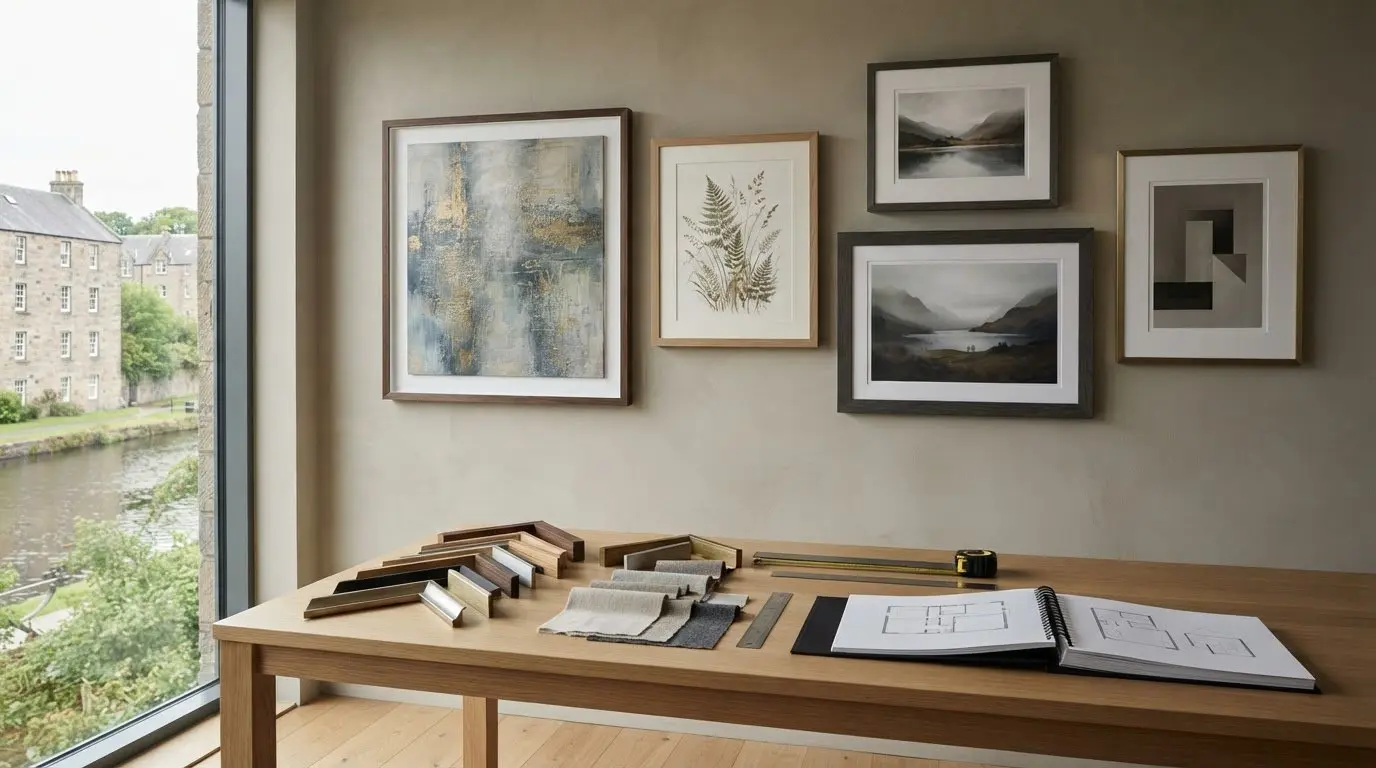
A development’s artwork can bring its interiors together or leave each space feeling disconnected. Contract framing for new property developments starts with a cohesive art scheme, then gives every piece a frame suited to its artwork and setting. The aim is not to make every room identical, but to create a considered visual thread throughout the property.
Coordinating choices across rooms or multiple properties takes planning. You need a clear picture of the finished scheme and confidence in the framing quality. First4Frames combines commercial artwork curation with bespoke picture framing, bringing together artwork selection and made-to-order frames. Each frame is individually crafted for its order using high-quality materials. The 2mm float glass offers clarity compared with the perspex used by many competitors.
This guide explains how to create a consistent scheme while choosing artwork and frame details that work in each space. It also covers practical ways to plan specifications and coordinate decisions, from selecting artwork to receiving professionally finished, carefully packaged pieces.
Key Takeaways
- Contract framing for new property developments means planning and supplying framed artwork for a commercial project, not building contracts or public procurement.
- Map room functions, wall areas and interior finishes first to shape an art scheme that feels cohesive and suits each space.
- Choose artwork before specifying frames, so each frame complements the individual piece and the development’s visual direction.
- Commercial artwork curation and a broad online selection of artwork and frames can help bring a project from initial choices to a finished scheme.
What Contract Framing for New Property Developments Involves
Contract framing for new property developments means planning and supplying framed artwork for a commercial project. It brings art selection and presentation into the wider interior design, helping entrances, show homes and shared spaces feel considered and welcoming. In this context, “contract framing” is about presenting artwork, not building contracts or public procurement.
The distinction matters because “framing” can describe different kinds of work. Framing (construction) concerns a building’s structural framework; artwork framing is about presenting pictures for interior spaces. A well-planned art scheme considers where each piece will hang, how it relates to the room and the impression it creates.
Where framed artwork can shape a development
Begin with the spaces people encounter and use. An entrance may need a clear visual welcome, while artwork in a show home can complement the furnishings and help visitors imagine the space as lived in. In shared areas, consider the room’s purpose and character before selecting pieces. Check usable wall area, sightlines, finishes and the scale of the artwork. These details help each piece feel purposeful rather than added as an afterthought.
A cohesive scheme without a one-size-fits-all look
Consistency does not mean hanging the same picture in every room or property. Carry a few visual cues through the scheme, such as a related palette, subject matter or framing approach, then vary the artwork to suit each interior. A quieter room might suit fine art, while a more expressive space could feature photography prints or contemporary art prints. Explore a broad choice of framed wall art to find pieces that support the overall direction while allowing individual rooms to retain their character.
How Bespoke Framing Builds a Consistent Art Specification
A useful art specification covers the picture and its presentation together. Each frame is individually crafted for its order using high-quality materials, with proportions and finishes selected to suit the artwork. Cheap, standard frames may not fit a piece properly, leaving an awkward border or an unbalanced result. Bespoke framed wall art gives each piece a considered finish while helping maintain a consistent scheme across the development.
| Consideration | Bespoke framing | Standard framing |
|---|---|---|
| Fit | Individually made to suit the order and artwork | Set sizes may not fit the artwork properly |
| Finish | Chosen to complement the piece and interior | Less tailored to the artwork or room |
| Glazing clarity | 2mm float glass, selected for its clarity | Perspex used by many competitors can appear less clear |
Choose artwork and finishes as one specification
Coordinate frame finishes with the artwork, room palette and development’s interior direction. Coastal wall art may suit a light, relaxed setting, while Landscape wall art or Scottish landscape art can bring a stronger sense of place. Photography prints offer another route to a personal or contemporary feel. Keep a simple schedule listing each artwork, its frame finish and its intended room. This makes it easier to review the scheme as a whole without making every piece identical.
From online selection to visualising the finished piece
Choose your frame online and Design your framed artwork with the picture’s colours and proportions in mind. A Wall art visualiser can help you Visualise art on your wall and See artwork before you buy, making it easier to assess scale and placement within the wider scheme. For further inspiration, browse the gallery’s framed artwork selection and compare options for each space.

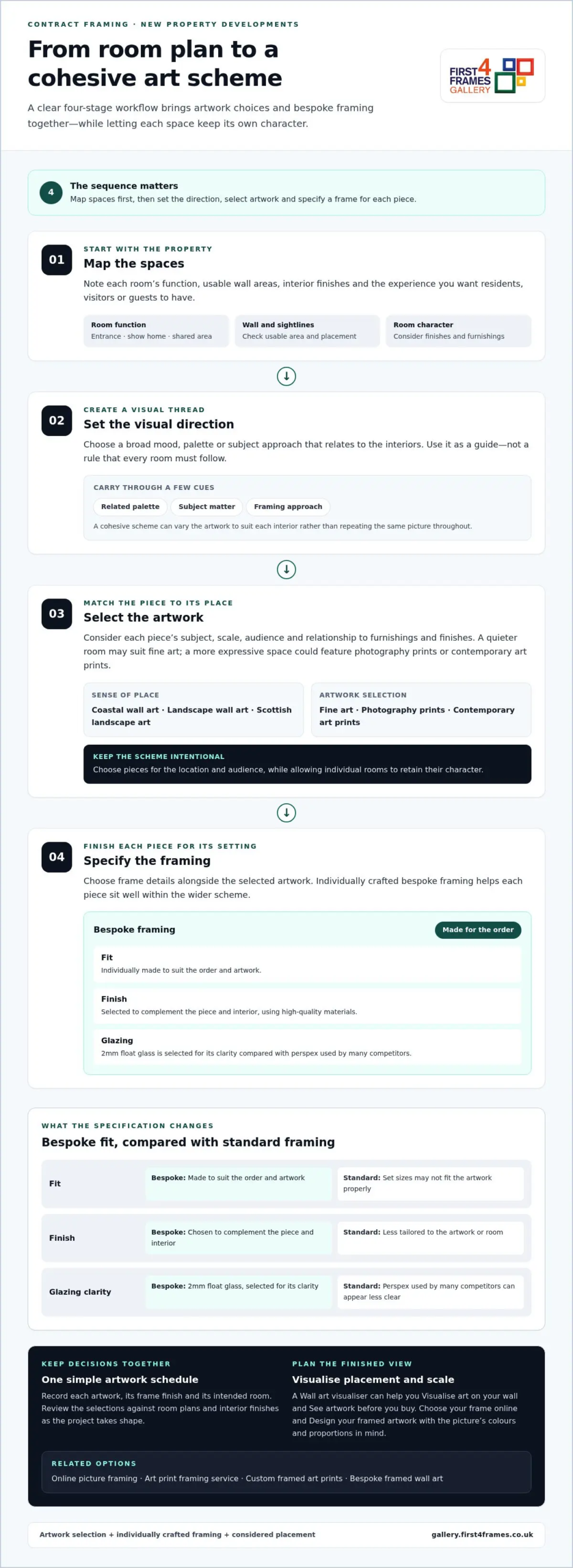
How to Plan Contract Framing for a New Development
A clear workflow makes decisions easier to manage and helps the finished artwork feel intentional throughout the property. For contract framing for new property developments, record choices as the project takes shape. Keep the artwork and framing details together so the team can review selections against room plans and interior finishes.
- Map the spaces. Note each room’s function, usable wall areas, interior finishes and the experience you want residents, visitors or guests to have. This gives you a practical starting point for selecting artwork.
- Set the visual direction. Choose a broad mood, palette or subject approach that relates to the interiors. Treat it as a guide, not a rule that every space must follow.
- Select the artwork. Match each piece to its location and audience. Consider its subject, scale and relationship to furnishings and finishes.
- Specify the framing. Choose frame details alongside the selected artwork, so the presentation suits each piece and contributes to the overall scheme.
Selecting art that suits the property and its audience
A coordinated scheme can include framed wall art, fine art and works by best-selling or famous artists while still giving each room its own character. Consider whether a shared space needs a calm focal point or whether a show home would benefit from a more personal touch. A guide to choosing picture frames can help you assess how a frame supports the artwork and its display.
Preparing digital photographs for a framed scheme
Digital photographs can become finished display pieces through a print-and-frame service. High-quality printing helps the image sit well with its bespoke frame, making personal or place-related photographs a considered part of the interior rather than an afterthought. Custom framed art prints can form part of the scheme, with an art print framing service or online picture framing bringing selection and presentation together.
Start exploring artwork options for your project in the online art gallery.
Bring a New Development’s Art Scheme Together with First4Frames
Commercial artwork curation and bespoke framing work best as connected parts of a project. First4Frames Gallery brings artwork selection and made-to-order framing together, with a broad online choice of artwork and frames to help shape a scheme for development interiors. This joined-up service supports contract framing for new property developments, from discussing the spaces and selecting artwork to creating finished framed pieces.
What to bring to an initial art-scheme discussion
Start with a clear picture of the development and the experience you want its interiors to create. Share the interior direction, room uses, artwork preferences and project information. Plans, room lists or notes on finishes can help focus the discussion. You do not need every decision settled: a clear sense of priorities gives the curation and framing process a practical foundation and helps guide the next choices.
Choosing framed artwork for the finished spaces
Explore framed wall art across landscape, coastal and contemporary styles, considering how each piece relates to its intended room and the broader interior. A striking landscape might provide a focal point, while coastal imagery could reinforce a lighter atmosphere. For more guidance on selecting artwork and its presentation, explore this fine art sourcing and framing guide.
Once selected, finished frames are fully packaged to help prevent damage and shipped via professional couriers. This supports a straightforward handover from framing to project coordination. Explore framed artwork and prints to begin shaping an art scheme for your development.
Give Your Development a Distinctive Art Direction
A new development’s art scheme can do more than fill walls. It can give each interior a sense of place and make the whole project feel thoughtfully considered. Start with a clear idea of how you want residents and visitors to experience the property. Let artwork express that character, with enough variety for each room to feel individual. That balance is at the heart of contract framing for new property developments: creating a distinctive identity through considered choices rather than repetition. Keep a shortlist of artwork and styles that suit the project to make later decisions easier and more focused.
Explore the gallery at your own pace, noting which subjects and moods feel right for the development. A well-chosen piece can become a memorable detail, welcoming people into a space and giving its interior personality. Explore framed artwork and prints to start shaping an art direction for your project.
Frequently Asked Questions
What does contract framing mean for a new property development?
It means including framed artwork in the planning of a commercial development’s interiors. Treat it as part of the interior-finish process by connecting art decisions to room schedules, design intent and handover priorities. This keeps artwork visible alongside other interior selections instead of leaving it until rooms are otherwise complete. The scope is artwork presentation, not construction work or public procurement.
Can framed artwork be coordinated across multiple properties or rooms?
Yes. For a multi-property project, create a simple reference system that identifies each location and its artwork decisions. This makes it easier to compare selections across the development and see where a shared visual cue is working, while still allowing local variations. Keep the references with the project’s interior documentation so the team can follow the scheme as decisions progress.
What is the difference between bespoke framing and a standard frame?
Bespoke framing allows the frame specification to be tailored to an individual artwork, while standard frames follow set formats. Before approving a piece, compare its overall framed dimensions with the available wall area and nearby furnishings. Record the selected finish alongside the artwork reference so project notes show which framing choice is intended for each location.
Can digital photographs be printed and framed for a development?
Yes. Digital photographs can be considered alongside other artwork in a development’s scheme. Select images that support the property’s character, then review their orientation, colours and intended placement before deciding how to present them. For instance, a place-focused image might help tell a local story, while a more abstract photograph could complement a contemporary interior without dominating it.
How are framed artworks protected during delivery?
Finished frames are fully packaged to help prevent damage and shipped via professional couriers. For site handling, plan a designated receiving point and identify who will log each piece on arrival. Match artwork references to room or location labels, then store the frames appropriately until they are needed. This gives the project team a clear handover process and makes it easier to locate each work.