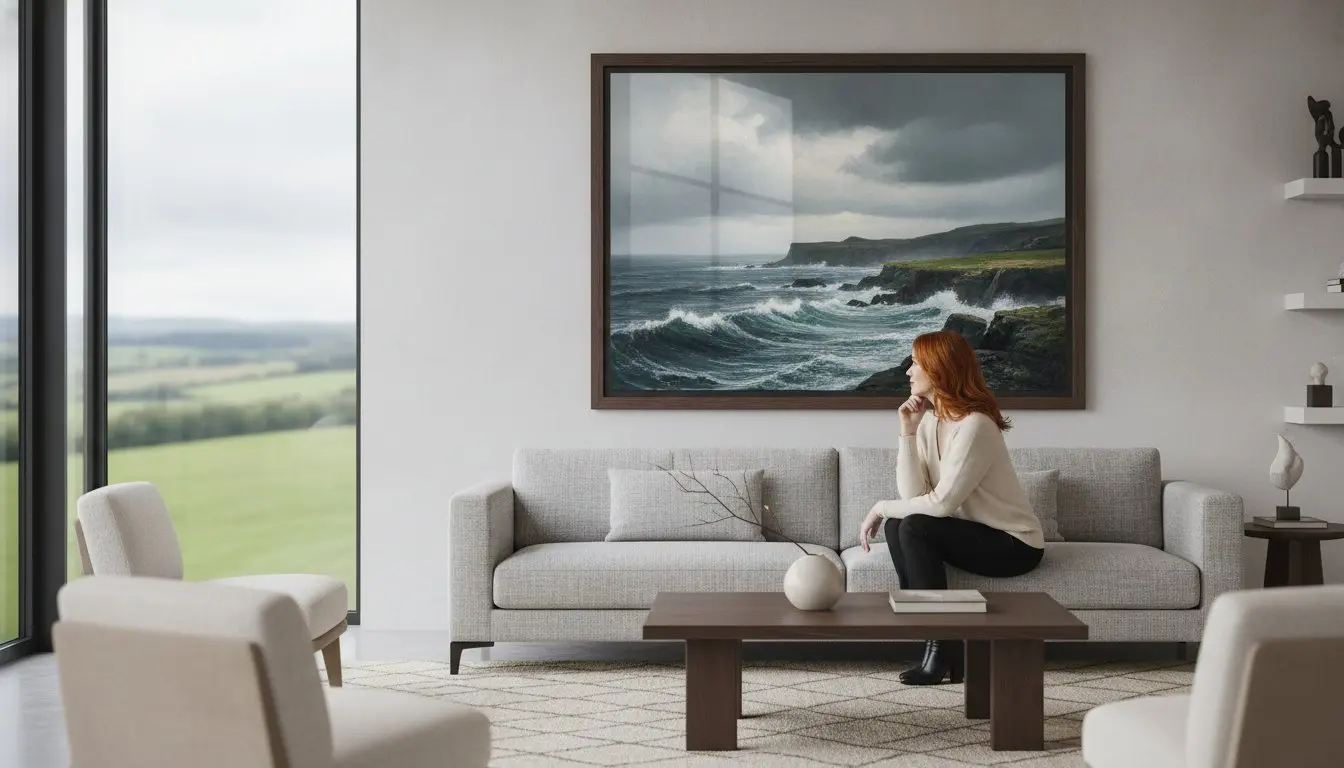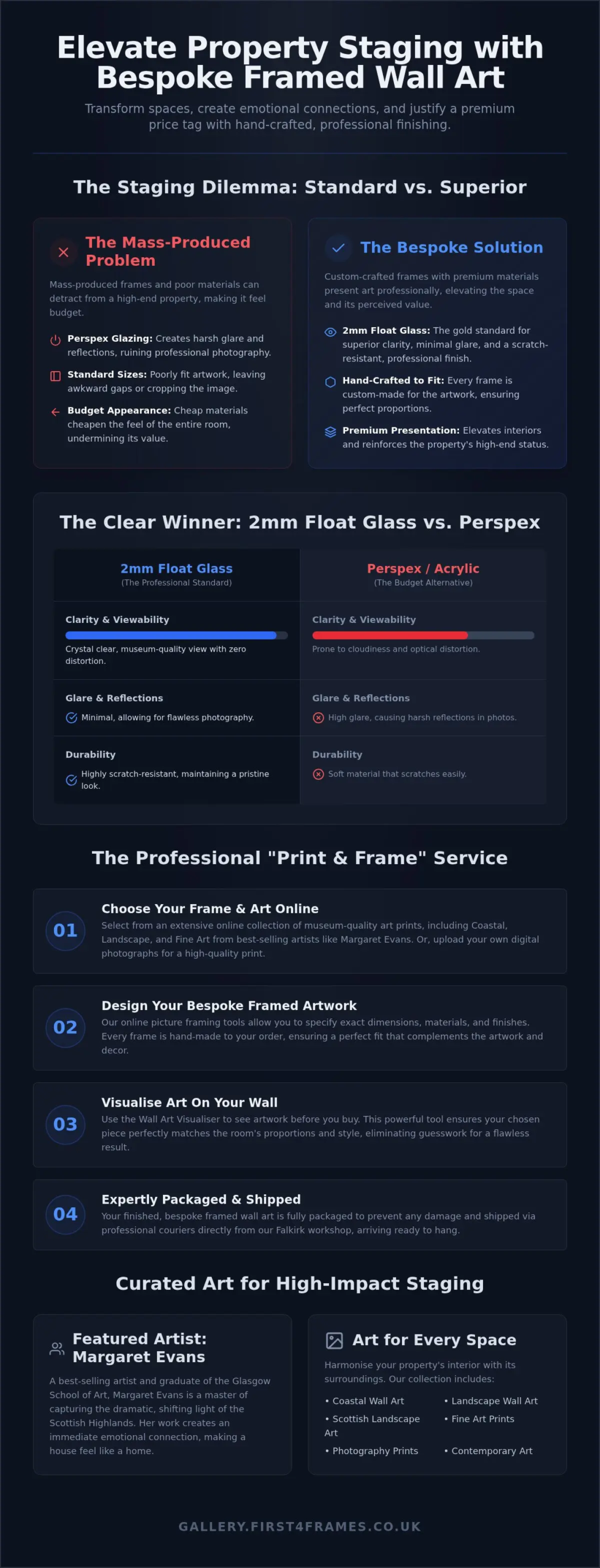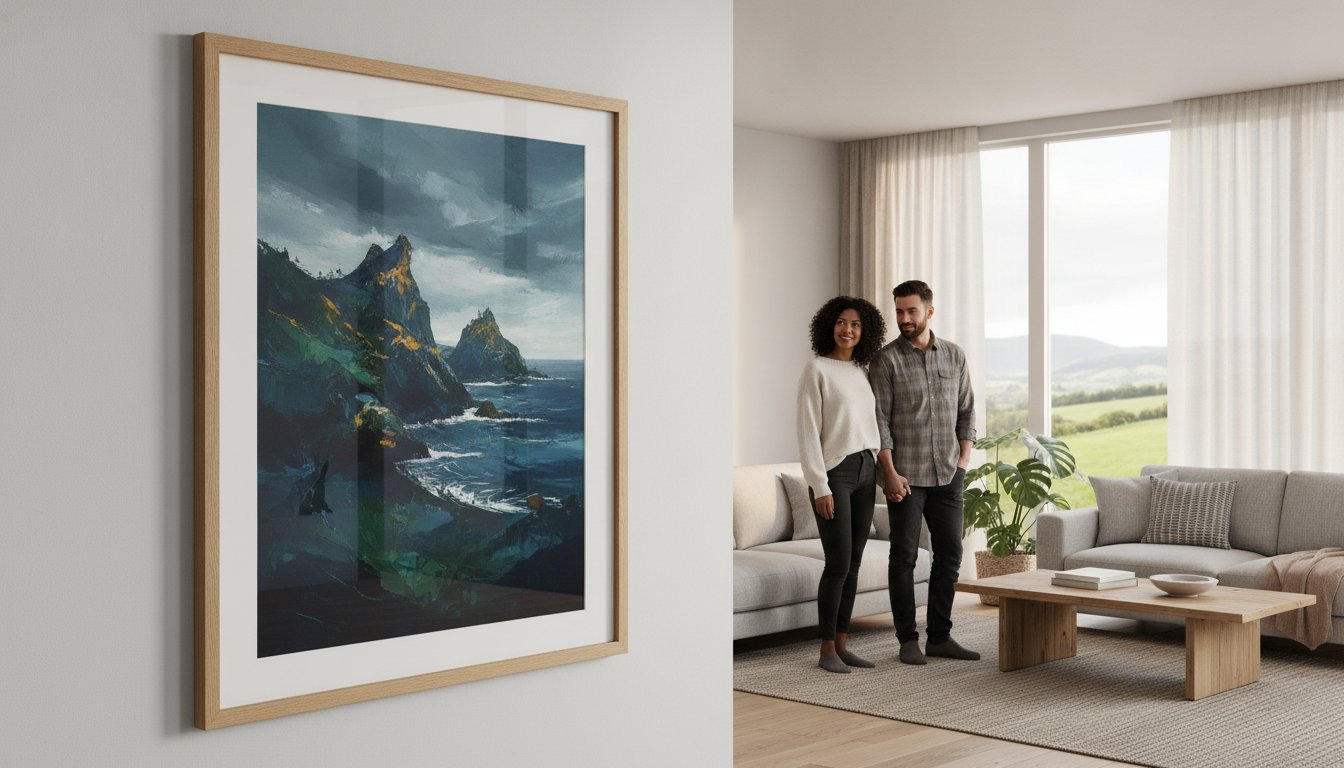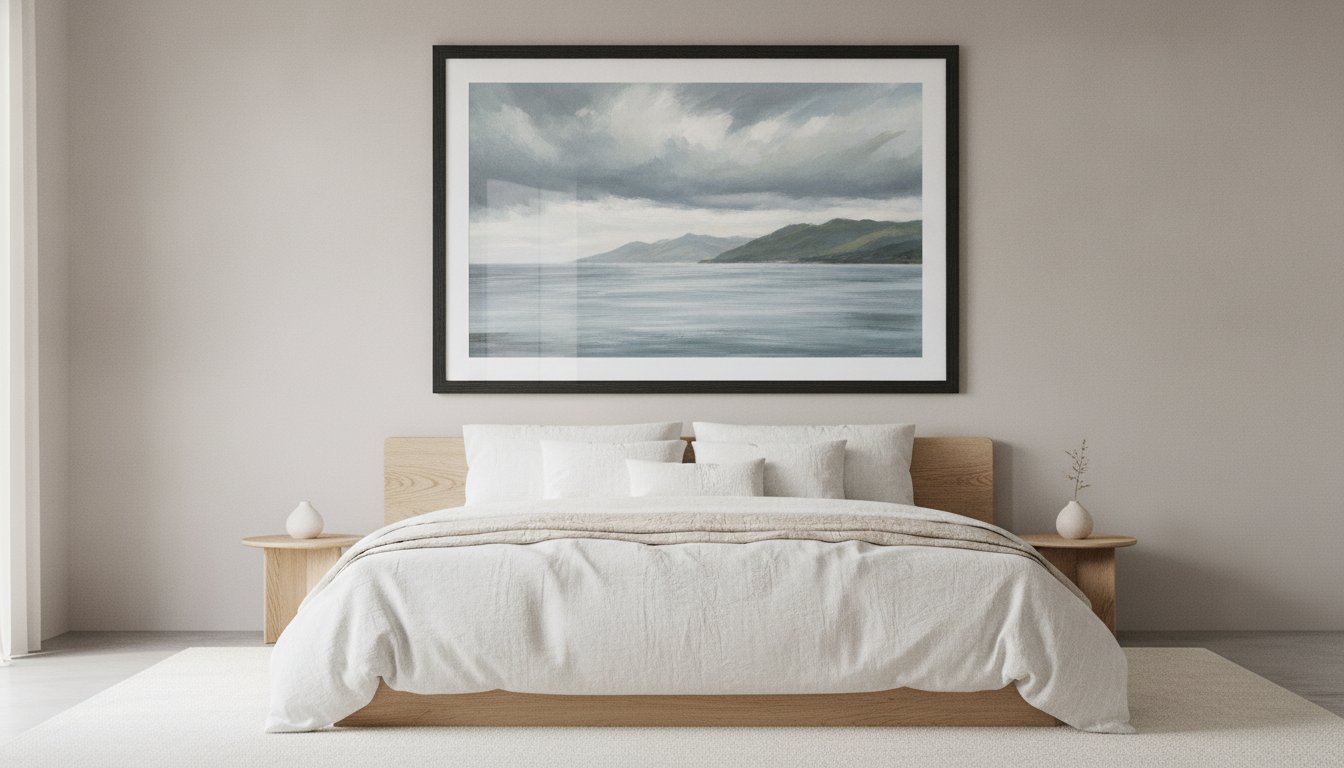

A heavy, bespoke frame is more than just a decoration; it’s a handcrafted investment that deserves a secure foundation. Many people assume a standard shop-bought hook is enough, but when you’re dealing with the weight of professional 2mm float glass and solid wood, the stakes are much higher. We understand the worry that comes with holding a large piece of Scottish landscape art and wondering if your wall can actually support it. You don’t want to risk a beautiful frame falling because of a confusing wall plug or a flimsy wire.
In this guide, you’ll learn exactly how to hang a large framed picture using professional-grade techniques that guarantee a level, secure finish. We’ll walk you through the best hardware for your specific wall type, from masonry to plasterboard, so you can display your bespoke framed wall art with total confidence. Whether you used our wall art visualiser to plan your space or you’re hanging a cherished family heirloom, these expert steps will ensure your display is as sturdy as it is stunning.
Key Takeaways
- Identify whether your wall is plasterboard or masonry to select the correct heavy-duty fixings that prevent large frames from falling.
- Master the professional method of how to hang a large framed picture by calculating the “drop” of hanging wires and using a spirit level for a perfectly straight finish.
- Choose between a minimalist wire system for easy height adjustments or a structural gallery wall to turn your bespoke framed wall art into a striking focal point.
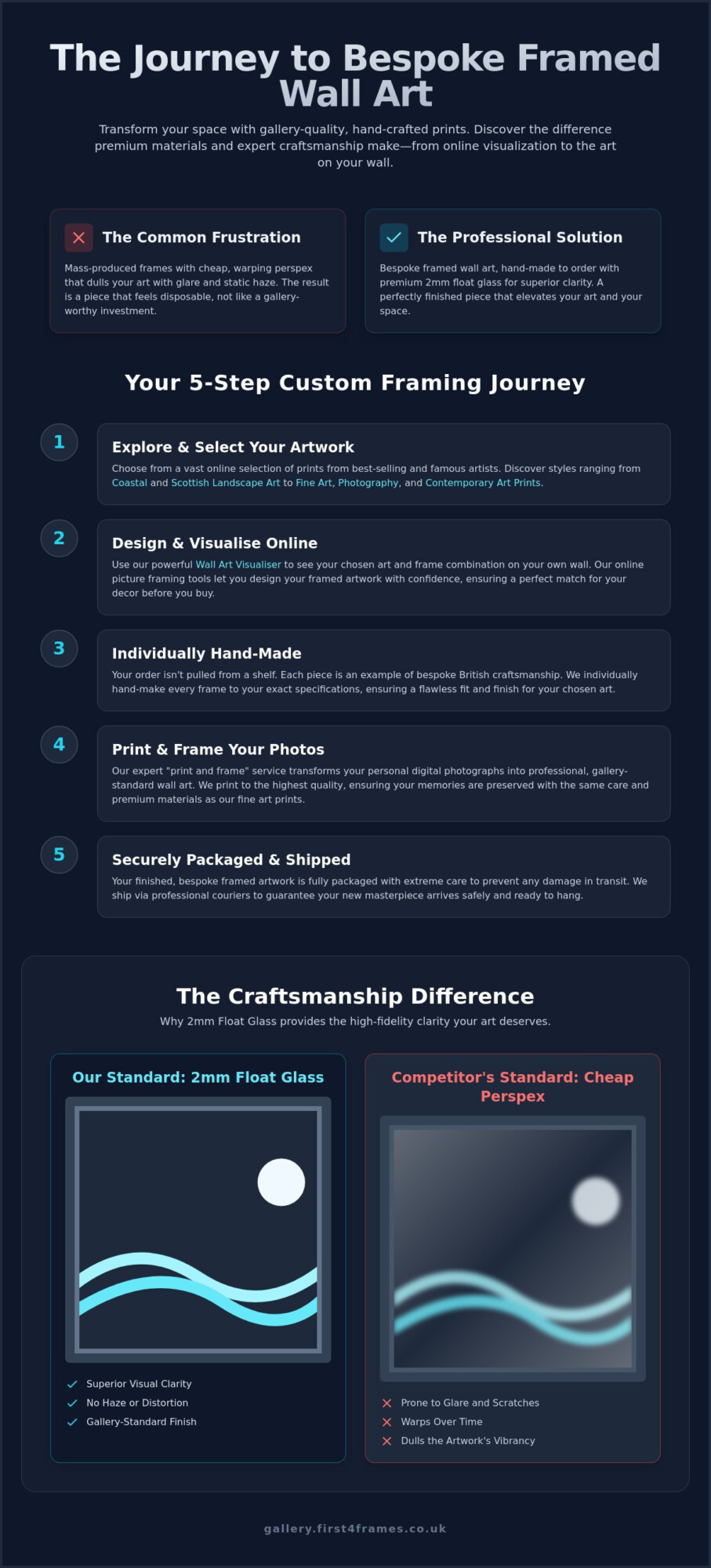
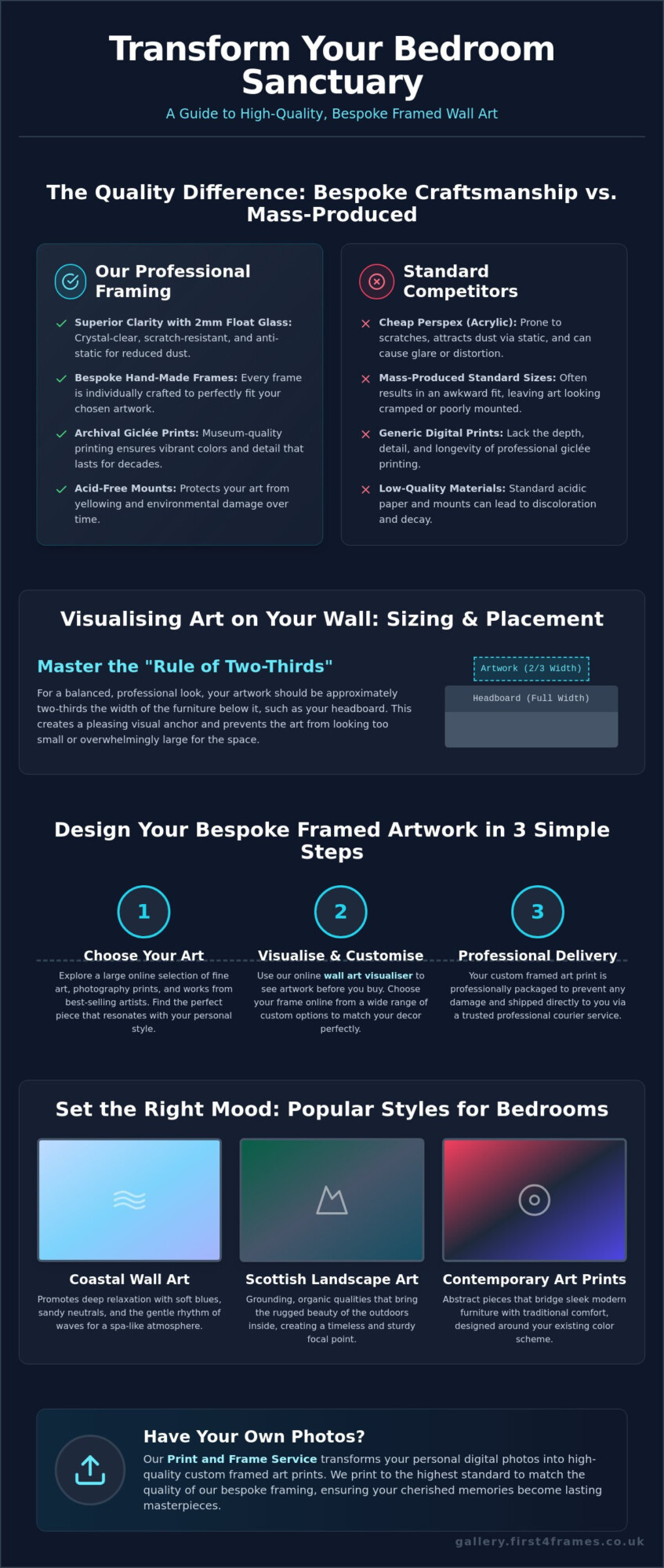
- Learn why individually crafted frames with 2mm float glass offer superior structural integrity and clarity compared to mass-produced alternatives using cheap perspex.
Assessing the Structural Requirements for Large Framed Artworks
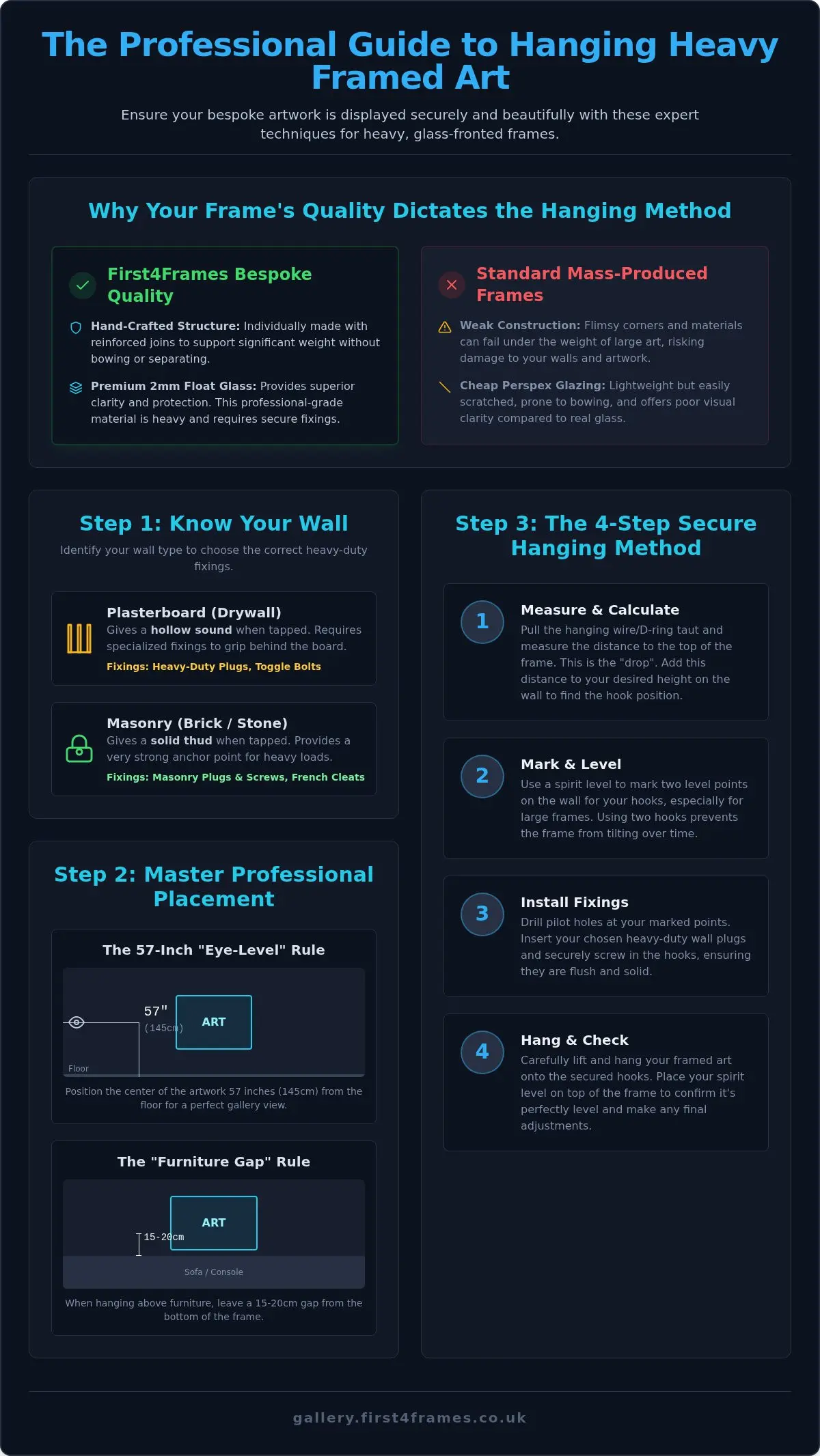
Weight is the most critical factor when learning how to hang a large framed picture. Plasterboard walls have significantly lower load-bearing limits than solid masonry, so understanding your surface is the first step. A standard nail might hold 4kg in drywall, but a heavy piece of picture frame art can easily exceed 15kg. You can identify your wall type with a simple tap; a hollow sound indicates plasterboard, while a dull thud suggests brick or stone.
Bespoke framed wall art is designed specifically to withstand this weight. Unlike mass-produced frames that often bow or pull apart at the corners under pressure, our hand-made frames use reinforced joins to maintain their shape. You can explore these structural nuances further in our guide on Mastering Custom Picture Framing.
Hardware Essentials for Heavy Lifting
Choosing the right hardware is non-negotiable for safety. While wires are popular for smaller items, heavy-duty D-rings or a French cleat system provide far better stability for oversized pieces. We always recommend specific heavy-duty fixings for our frames to support the weight of premium 2mm float glass. This glass offers incredible clarity but adds more mass than the cheap, scratch-prone perspex found in standard shop-bought frames. This structural integrity is vital when displaying large-scale Scottish landscape art or heavy photography prints.
Calculating Your Hanging Height
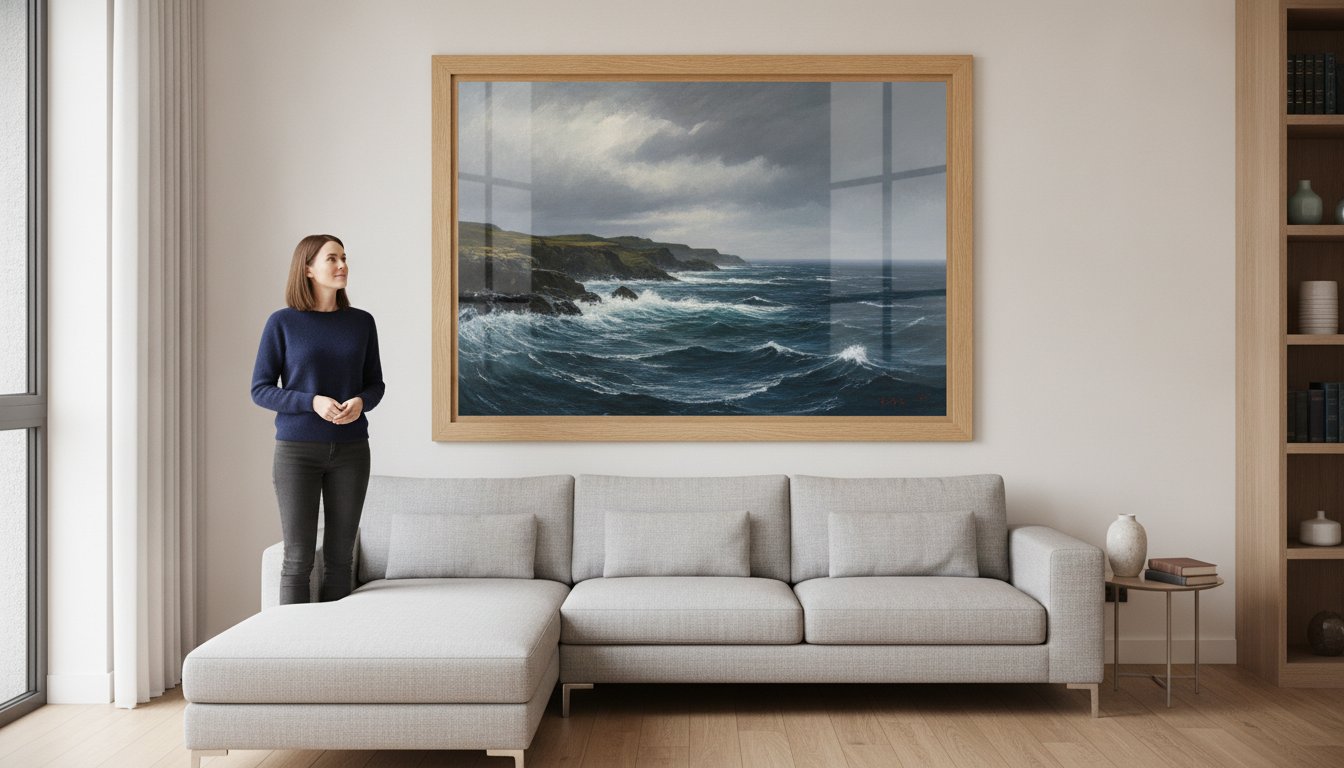
To achieve a professional gallery look, use the “57-inch rule.” This involves positioning the centre of the artwork 57 inches (roughly 145cm) from the floor, which is the standard eye level for most viewers. If you’re hanging art above a sofa or sideboard, maintain a gap of 15cm to 20cm between the bottom of the frame and the furniture. This ensures the piece feels anchored to the room’s design rather than floating awkwardly on its own.
Displaying Photos on a Wire vs. a Gallery Wall
Deciding how to present your art depends on both the room’s architecture and the specific style of the piece. If you have limited wall space or very high ceilings, a minimalist wire system offers a sleek solution for modern Landscape wall art. This method is particularly effective when researching how to hang a large framed picture without committing to a permanent spot, as it allows for effortless height adjustments. Conversely, a gallery wall creates a rich narrative by clustering smaller prints around a central anchor. This approach works perfectly for Coastal wall art collections where you want to evoke a sense of the seaside through multiple perspectives. Our online picture framing options make it simple to coordinate these layouts.
Pros and Cons of Wire Hanging Systems
Wire systems are ideal for contemporary art prints where you might want to refresh your collection frequently. They lend an industrial aesthetic that works beautifully in modern UK homes. However, because the fixings are often visible, they may not suit traditional decors where hidden brackets are preferred. Before you pick up a drill, use our wall art visualiser to visualise art on your wall. This tool allows you to see artwork before you buy and ensures your statement piece doesn’t overwhelm the room’s proportions.
Designing a Cohesive Gallery Wall Around Large Art
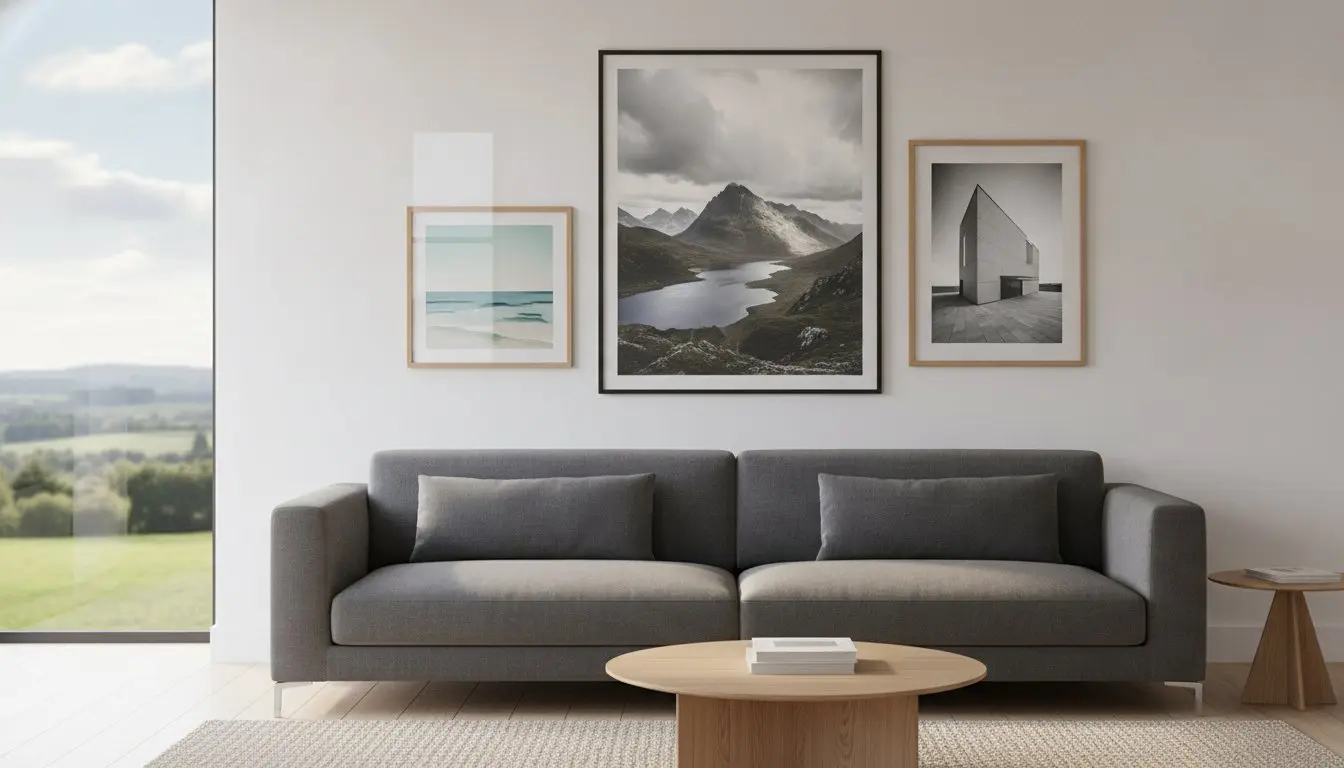
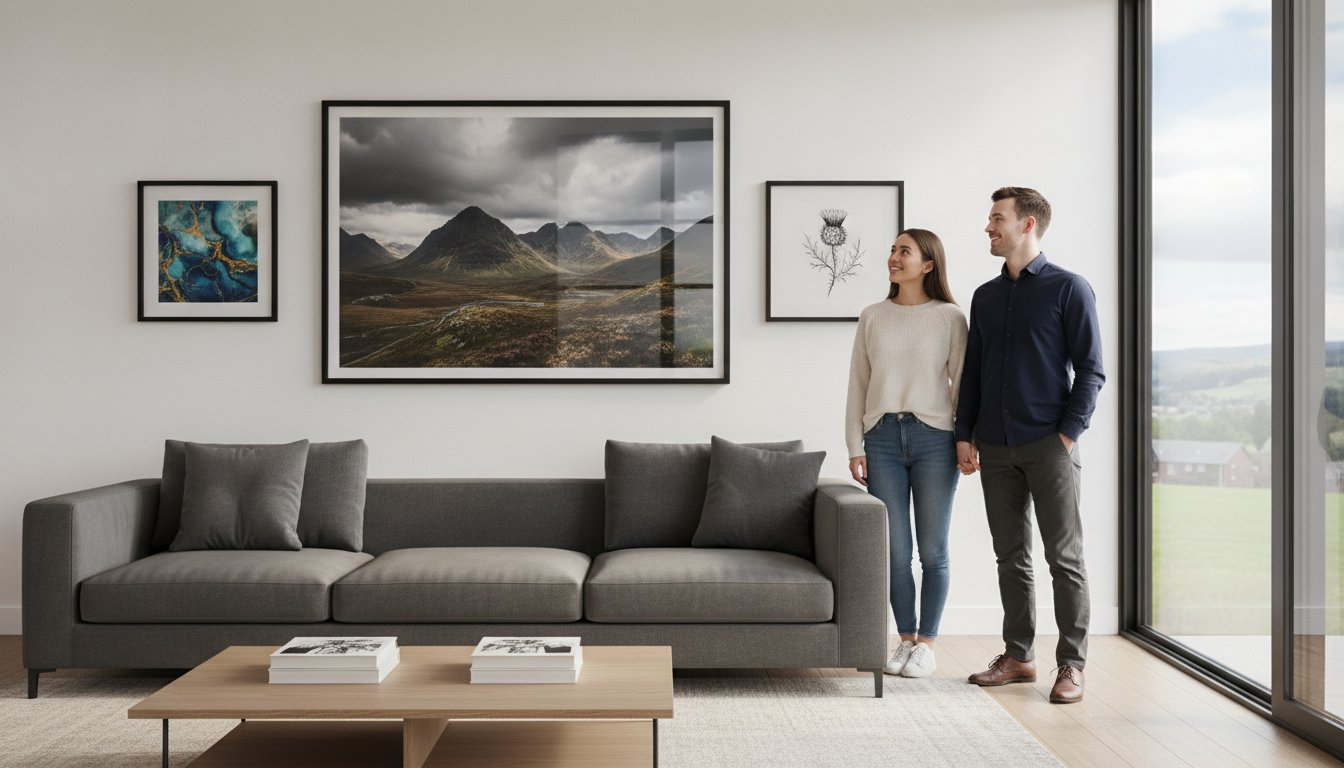
When creating a gallery wall, a single piece of large bespoke framed wall art often serves as the gravitational centre. This anchor piece dictates the placement of surrounding items, such as custom framed art prints or smaller photography. To maintain a professional standard, we recommend a spacing of 5cm to 7.5cm between each frame. This breathing room prevents the display from feeling cluttered. You can choose your frame online to ensure every element of your display meets our hand-made quality standards. This art print framing service ensures that even smaller items in your collection are protected by our premium 2mm float glass.

Step-by-Step: How to Hang a Large Framed Picture Securely
Learning how to hang a large framed picture securely is a process that begins with the right preparation. Before you reach for the drill, gather a spirit level, masking tape, and heavy-duty wall plugs suited to your specific wall type. If you’re unsure about the hardware required for heavy loads, our Ultimate Guide to Choosing and Hanging Art provides deeper technical insights into display safety and structural stability.
One often overlooked step when researching how to hang a large framed picture is measuring the “drop.” Pull the hanging wire taut towards the top of the frame and measure the distance from the wire’s highest point to the top edge of the frame moulding. This measurement tells you exactly where to place your hook so the top of your Scottish landscape art sits exactly where you planned. To avoid unnecessary pencil marks on your paint, use masking tape to mark the intended corners and the centre point first.
The Two-Person Technique
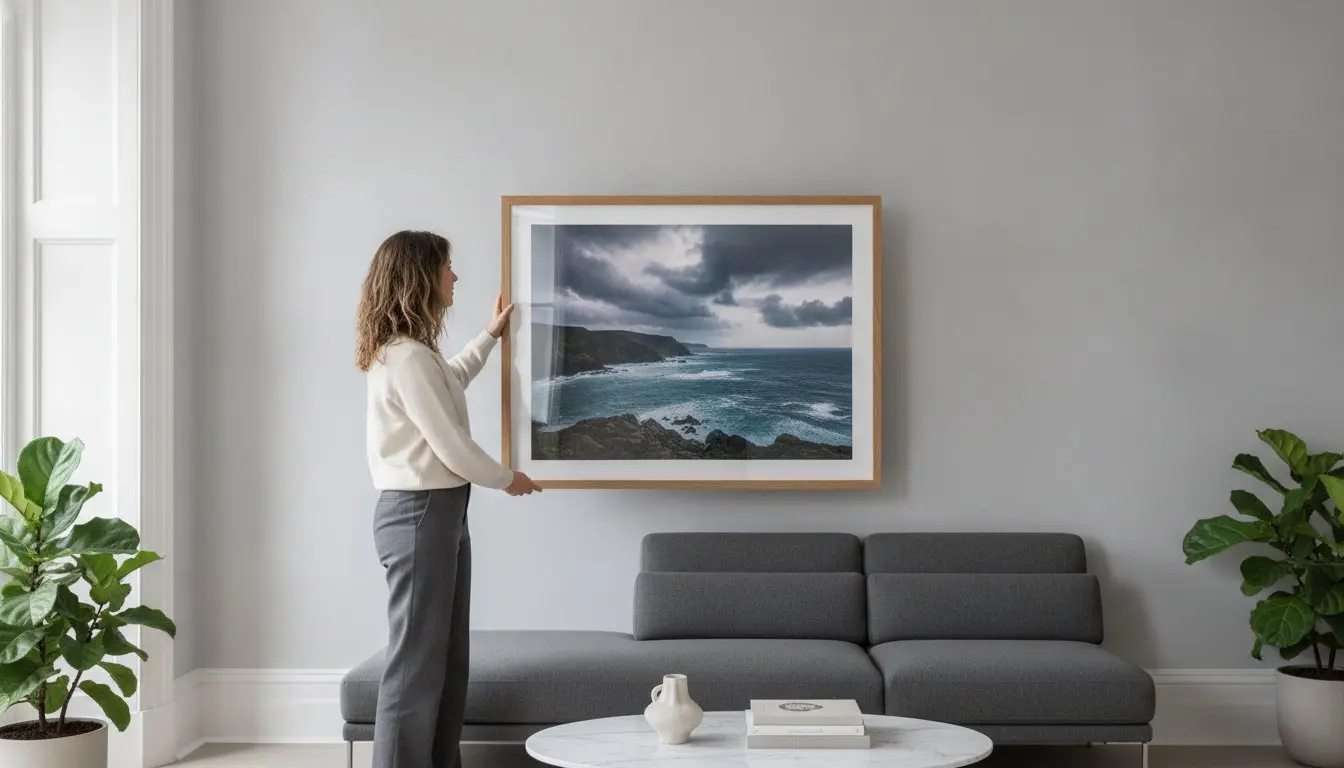
Large-scale art print framing service items are cumbersome and heavy. We strongly advise against hanging these solo. One person should focus on supporting the weight and positioning the frame, while the second person stands back to check the alignment and guide the frame onto the fixings. Clear communication is essential to prevent accidental drops or wall scuffs during the process.
Final Levelling and Buffing
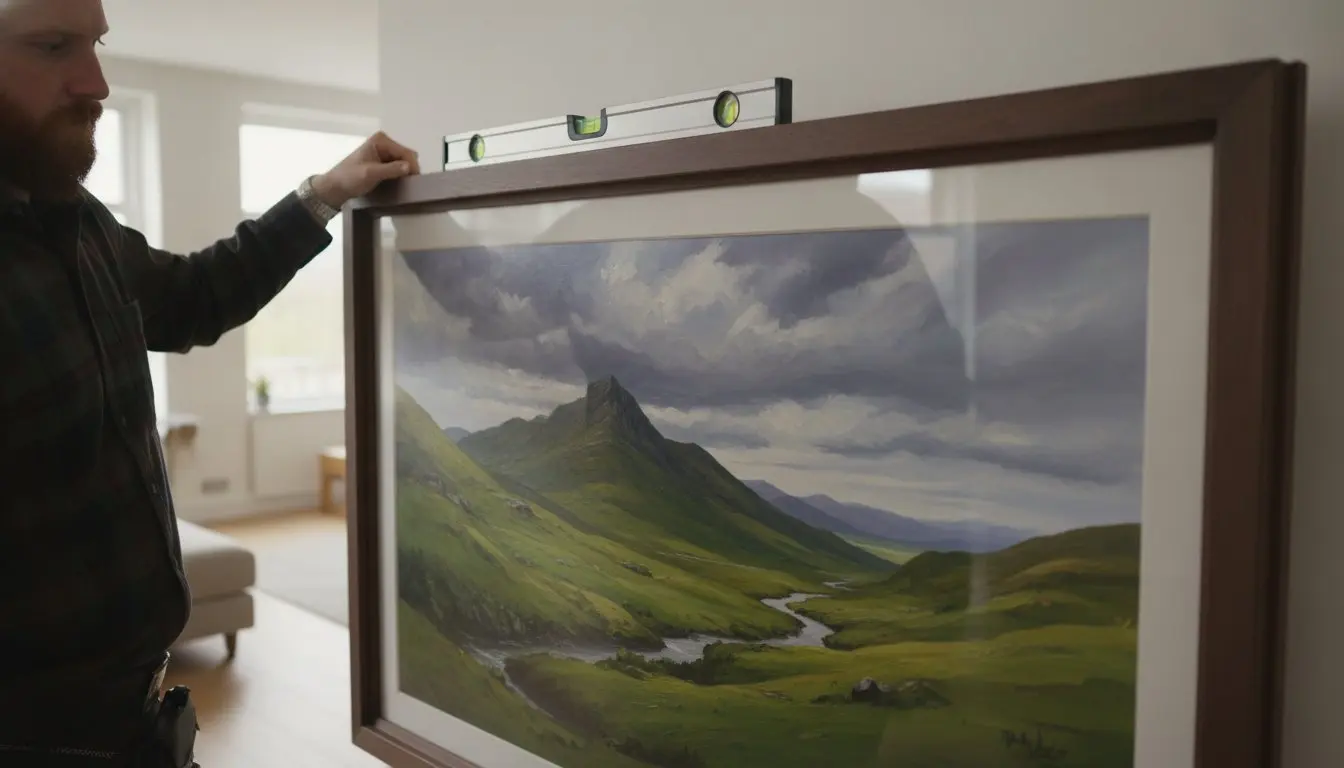
Once the frame is on the wall, place your spirit level directly on the top edge of the frame moulding. Avoid using the artwork itself as a guide, as internal mounts vary. Finally, give your display the finish it deserves. Because we use premium 2mm float glass rather than static-heavy perspex, a quick wipe with a lint-free cloth removes fingerprints. This ensures the clarity of your bespoke framed wall art is immediately visible.
The First4Frames Gallery Advantage: Bespoke Quality and Secure Delivery
First4Frames Gallery provides a structural foundation that mass-produced frames simply cannot offer. When you are determining how to hang a large framed picture, the integrity of the frame itself is paramount. Unlike standard, shop-bought options that may not fit your artwork properly, every frame from our Falkirk-based workshop is individually crafted for each order. This bespoke construction ensures your display is safe and secure, specifically designed to handle the weight of larger dimensions without bowing or failing over time.
We prioritize premium components, such as our 2mm float glass, which provides superior clarity compared to the dull, scratch-prone perspex used by many competitors. For those looking to coordinate their decor from home, our Online picture framing service provides extensive choice and expert advice. Whether you are framing a personal photograph or a piece of Fine art, our high-quality materials ensure your work is presented with professional fidelity and the traditional craftsmanship that defines our brand.
Custom Framing Options for Large Art
Our gallery features an expansive selection of framed wall art, including works by Best-selling artists and Famous artists. You can easily Design your framed artwork using our custom options, ensuring that even the largest pieces are tailored to your specific aesthetic. From Contemporary art prints to traditional subjects, our artisans treat every piece with a deep appreciation for the creative process, making specialized framing feel accessible and straightforward.
Preserving Your Art for Generations
We also offer a specialized print and frame service for digital photographs, ensuring they are printed to the highest quality to match our bespoke framing. To ensure your investment arrives in perfect condition, all finished frames are fully packaged to prevent damage and shipped via professional couriers. This secure logistical process means your Bespoke framed wall art is ready to hang the moment it reaches your door, preserved with high-quality materials to last for generations.
Elevate Your Home with Secure Art Displays
Hanging a significant piece of art shouldn’t be a source of stress. By understanding your wall’s structural limits and mastering the “drop” measurement, you’ve learned exactly how to hang a large framed picture with professional precision. The safety of your display starts with the frame’s construction. A bespoke, hand-made frame offers the reinforced strength that mass-produced alternatives simply can’t match, ensuring your artwork remains a stable focal point for years to come.
Every piece we create is hand-crafted in the UK and features superior 2mm float glass as standard for unmatched clarity. We guarantee your investment arrives safely through our secure courier shipping, fully packaged to prevent damage. Ready to find the perfect focal point for your room? Design your bespoke framed artwork and see it on your wall today using our digital visualiser tool. We’re here to help you turn your creative vision into a stunning, secure reality that you’ll be proud to display.
Frequently Asked Questions
How high should I hang a large framed picture?
Position the centre of your artwork at eye level, which is roughly 145cm from the floor. This “57-inch rule” creates a balanced look across your home. If you’re learning how to hang a large framed picture above a sofa or sideboard, maintain a gap of 15cm to 20cm. This ensures the frame feels connected to the furniture rather than floating awkwardly, creating a harmonious relationship between the art and your interior design.
Can I hang a heavy frame on a plasterboard wall?
Yes, you can hang heavy artwork on plasterboard by using specialized hollow wall fixings like toggle bolts or molly bolts. These anchors expand behind the board to distribute weight across a larger area. For maximum security, always try to locate a wooden stud using a stud finder. Screwing directly into the timber provides the most stable foundation for bespoke framed wall art, preventing the hardware from pulling through the relatively soft plasterboard surface.
Is it better to use a wire or D-rings for large art?
D-rings are the preferred choice for heavy artwork because they distribute weight directly to the wall fixings. While wires are convenient for smaller items, they can put significant inward stress on the frame’s corners and often cause the piece to lean forward. Using two D-rings ensures your display remains level and secure. This is vital for our hand-made frames, which utilize heavy 2mm float glass for clarity rather than lightweight, scratch-prone perspex.
How do I stop a large picture from tilting forward?
Forward tilt occurs when the hanging points are positioned too low on the frame. If you are struggling with how to hang a large framed picture so it sits flat, ensure your D-rings are mounted in the top third of the frame. Additionally, placing adhesive rubber bumpers on the bottom corners of the frame moulding provides extra grip. This creates a professional finish and prevents the frame from shifting or leaning away from the wall.
What is the best way to clean 2mm float glass on a large frame?
Clean your 2mm float glass using a soft, lint-free microfibre cloth and a mild, ammonia-free glass cleaner. Always spray the cloth first to avoid moisture entering the frame joins. This professional method preserves the exceptional clarity our glass provides, which is far superior to the dull, static-prone finish of perspex. Regular light dusting will keep your fine art prints looking pristine, ensuring the vibrant colours and details remain sharp for generations to come.