


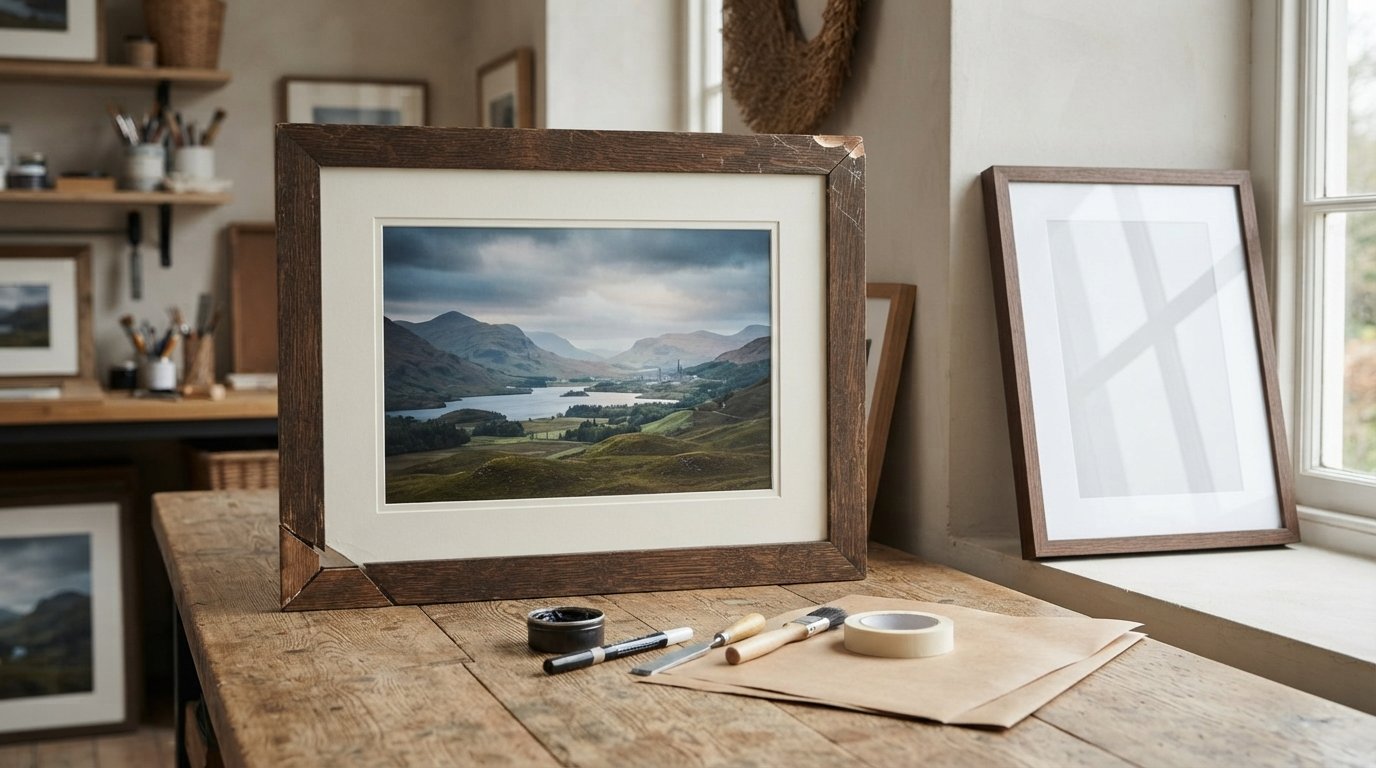
Imagine walking into your hallway and noticing that your favourite Scottish landscape print is hanging slightly askew. Upon closer inspection, you see a wobbly corner joint that looks like it might give way at any moment. Understanding when to replace a damaged picture frame is vital to protecting your collection, as it’s truly frustrating when a cherished piece starts to show its age or suffers an accidental knock.
You want to preserve the art inside, but you’re likely worried that a DIY fix might do more harm than good to a valuable Giclée print. A frame is a protective seal, and if that seal is broken, your art is at risk. We will help you distinguish between minor cosmetic chips you can fix at home and structural damage that requires a professional bespoke replacement.
This guide provides practical steps to address unsightly scratches while explaining how to spot serious safety hazards. You will gain the confidence to choose high-quality materials, like 2mm float glass, that offer the superior clarity and protection your fine art deserves.
Key Takeaways
- Identify the difference between minor cosmetic marks and structural hazards, such as separating mitred corners, to ensure your artwork remains safe and secure.
- Use our expert decision framework to understand exactly when to replace a damaged picture frame rather than attempting a home repair that could risk your Giclée prints.
- Master simple at-home restoration techniques using wax filler sticks and furniture pens to seamlessly mask surface scratches and small chips on your wooden frames.
- Discover why bespoke framing with 2mm float glass offers a superior, hand-made alternative to cheap Perspex options, providing lasting clarity for your favourite art.
The Anatomy of Damage: Assessing Your Picture Frame
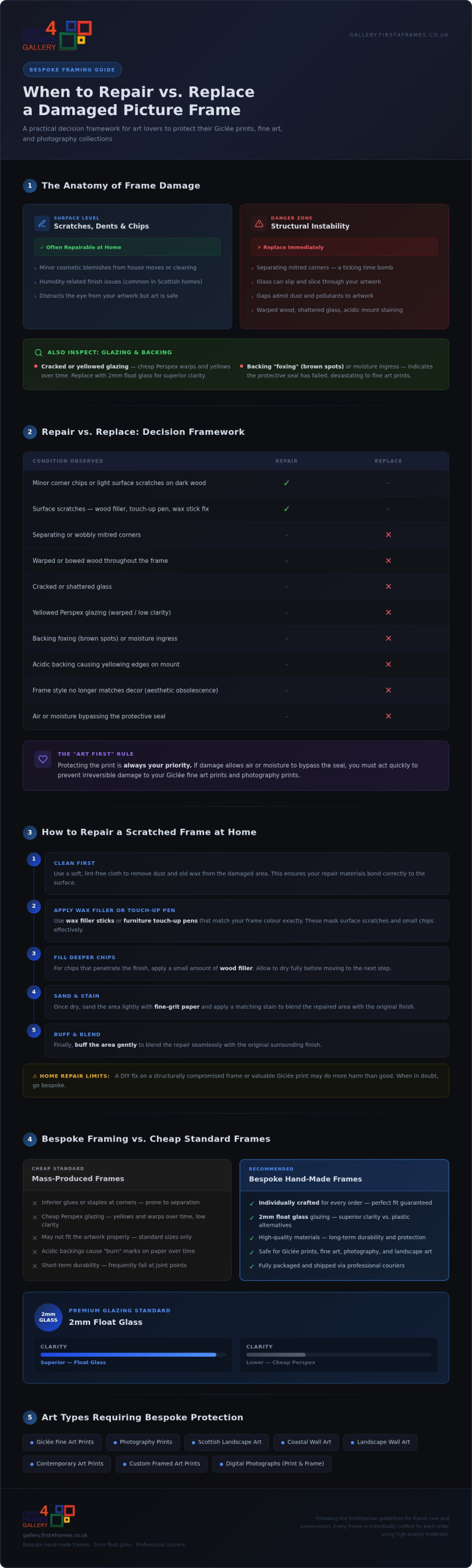
Knowing when to replace a damaged picture frame starts with understanding picture frame construction and materials. You need to distinguish between a minor surface flaw and a structural failure. While a small chip is often just an eyesore, a separating mitred corner is a signal of instability. Cheap standard frames frequently fail at these joints because they’re mass-produced with inferior glues or staples. In contrast, a bespoke, hand-made frame is individually crafted for every order, ensuring a perfect fit and long-term durability.
Check your glazing carefully. Is it cracked, or perhaps it’s cheap Perspex that has yellowed and warped over time? We always recommend 2mm float glass for its superior clarity compared to plastic alternatives. Also, inspect the backing for “foxing” (brown spots) or moisture ingress. These signs indicate that the protective seal has failed, which can devastate fine art prints and delicate photography prints.
Surface Level: Scratches, Dents, and Chips
Scratches and dents often occur during house moves or cleaning accidents. In many Scottish homes, fluctuating humidity can also affect the wood’s finish. These blemishes are distracting. When light hits a deep scratch, it draws the eye away from the focal point of your contemporary art prints. It’s often at this point owners wonder when to replace a damaged picture frame to restore the piece’s visual impact and aesthetic perfection.
The Danger Zone: Structural Instability
A wobbly frame is a ticking time bomb. If the corners are separating, the 2mm float glass could slip, potentially slicing your artwork or falling entirely. This gap also lets in dust and pollutants. When the structural integrity is compromised, the frame is no longer a protective seal. At this stage, a bespoke replacement is the only way to ensure your artwork remains secure. You can use a wall art visualiser to see how a professional replacement transforms your space.
Repair vs. Replace: A Decision Framework for Art Lovers
Deciding when to replace a damaged picture frame involves weighing the value of your artwork against the condition of its housing. If your frame has minor corner chips or light surface scratches on dark wood, a simple home touch-up often restores its charm. However, warped wood, shattered glass, or acidic mount staining are clear signs that the frame’s life has ended. Following the Smithsonian guidelines for frame care and preservation is essential, as maintaining the physical integrity of the housing is critical for long-term art safety.
Investing in bespoke framed wall art ensures your Scottish landscape art or contemporary art prints are protected by high-quality materials. Cheap, standard frames often use acidic backings that cause “burn” marks on the paper over time. If you notice yellowing edges on your mount, it’s time to upgrade to a professional solution that preserves your investment.
The “Art First” Rule of Replacement
Protecting the print is always your priority. If damage allows air or moisture to bypass the seal, you must act quickly to prevent irreversible damage. Our guide on Mastering Custom Picture Framing explains how a bespoke fit creates a perfect environment for your art. Replacing a compromised frame with one featuring 2mm float glass provides the clarity and protection necessary for Giclée fine art prints.
Aesthetic Obsolescence: When Style No Longer Matches
Sometimes, damage is simply the push you need to refresh your home’s look. A frame that once suited your decor might now clash with a new colour scheme or a modern interior. Upgrading to a bespoke frame allows you to choose your frame online to find a style that truly complements your photography prints. You can even use a wall art visualiser to see how a new bespoke frame transforms your cherished piece before you commit.

How to Repair a Chipped or Scratched Frame at Home
Maintaining the aesthetic appeal of your collection doesn’t always require a full replacement. For minor cosmetic issues, a methodical home repair can breathe new life into your display. Start by cleaning the damaged area with a soft, lint-free cloth to remove any dust or old wax. This ensures your repair materials bond correctly to the surface.
Next, use wax filler sticks or furniture touch-up pens that match your frame colour exactly. For deeper chips that penetrate the finish, apply a small amount of wood filler. Once dry, sand the area lightly with fine-grit paper and apply a matching stain. Finally, buff the area gently to blend the repair with the original finish. This process works well for surface-level wear, but knowing when to replace a damaged picture frame is crucial if the damage is structural.
Fixing Scratched Glass or Perspex?
You might be tempted to polish out a scratch on the glazing, but you should never try this with glass. It creates distortion and risks breakage. Many high-street frames use cheap Perspex which scratches easily and loses its clarity. At First4Frames Gallery, we use 2mm float glass in our bespoke framing to provide a crystal-clear view of your art prints. If your glass is shattered or badly scratched, a professional replacement is the safest choice.
Re-securing Loose Backing and Hardware
Loose D-rings or slack wires can cause your frame to sit unevenly on the wall. Tighten these components carefully, ensuring you don’t strip the wood. However, if the frame feels wobbly at the corners, it indicates a failure in the original joinery. A professional framer in Falkirk can often re-join these mitres, but if the wood is split, it’s time to choose your frame online for a more reliable, hand-made solution.
Upgrading to Bespoke: Why a Professional Replacement Wins
Deciding when to replace a damaged picture frame is the perfect time to choose our professional art print framing service. Unlike mass-produced alternatives that often fail at the joints, our bespoke frames are individually crafted to the exact millimetre. We use 2mm float glass for all glazing because it offers superior clarity and protection compared to the Perspex used by many competitors. This standard ensures your Giclée prints remain vibrant and safe for years to come.
Our online picture framing platform allows you to create custom framed art prints from your own digital files or our extensive gallery. If your original artwork was damaged alongside the frame, our “print and frame” service refreshes your display with high-quality Giclée printing. We ensure every finished piece is fully packaged and shipped via professional couriers to prevent any new damage during transit.
Design Your Framed Artwork Online
Use the wall art visualiser to see artwork before you buy. This tool is perfect for matching styles like Coastal wall art, Scottish landscape art, or Contemporary art prints to your home decor. You can easily design your framed artwork and choose your frame online with absolute confidence.
The Value of Professional Curation
A high-quality frame acts as a style statement, turning a simple photography print into a “Best-selling” gallery piece. Whether you are searching for landscape wall art or works by famous artists, our collection offers endless inspiration. Use our tools to visualise art on your wall and ensure your new bespoke framed wall art perfectly complements your living space.
Give Your Artwork the Protection it Deserves
Your art is more than just a decoration; it’s a window into a creative moment that deserves a secure and beautiful home. By learning how to spot structural instability and the warning signs of moisture ingress, you now know exactly when to replace a damaged picture frame to prevent long-term damage. While minor scratches can be buffed away at home, a bespoke, hand-made replacement is the only way to ensure your Giclée prints stay protected behind 2mm float glass.
Every frame we create is hand-made in the UK, providing a snug fit that standard, mass-produced alternatives simply can’t match. We take the stress out of the process with safe courier delivery nationwide, ensuring your new display arrives in perfect condition. It’s time to give your Scottish landscape art or photography prints the high-quality finish they’ve been waiting for.
Browse our gallery to find the perfect bespoke replacement for your damaged frame and rediscover the beauty of your collection today.
Frequently Asked Questions
Can a cracked picture frame be fixed?
Yes, minor surface cracks can be filled with professional wax sticks to restore the finish. However, if the crack goes through the wood or causes the corner joints to separate, the frame’s structural integrity is gone. Knowing when to replace a damaged picture frame is vital here, as a failing structure can drop the glass or allow pollutants to reach your valuable artwork.
Is it cheaper to repair a frame or buy a new one?
Simple DIY fixes for surface scratches are inexpensive. Professional restoration for structural damage is often more costly than ordering a new hand-made frame. A bespoke replacement offers better value because it is individually crafted with high-quality materials like 2mm float glass. This ensures your artwork is properly protected, preventing the need for future repairs that often plague mass-produced, cheap standard frames found on the high street.
What is the best way to hide scratches on a black picture frame?
Use a specialised black furniture touch-up pen or wax filler stick to mask light surface marks. Apply the pigment carefully and buff the area with a soft cloth to blend the repair. If the damage is extensive, it is a clear indicator of when to replace a damaged picture frame. A fresh bespoke frame will restore the crisp, professional look that a scratched focal point piece has lost.
How do I know if my frame glass needs replacing?
Replace your glazing immediately if it shows any cracks, chips, or cloudiness. Many older frames use Perspex, which is prone to yellowing and scratching over time. Upgrading to 2mm float glass is a smart choice because it provides superior clarity and protection for your Giclée prints. If the glass no longer sits snugly against the mount, it’s failing to act as a proper protective seal for your artwork.
Will a damaged frame devalue my art print?
While the frame doesn’t dictate the print’s market value, its condition directly impacts the art’s physical state. A failing frame allows moisture and dust to enter, which causes irreversible damage like foxing or fading. By choosing a high-quality bespoke frame, you create a safe environment for your fine art prints. This preservation is vital for maintaining the longevity and visual fidelity of your contemporary art collection for years to come.