


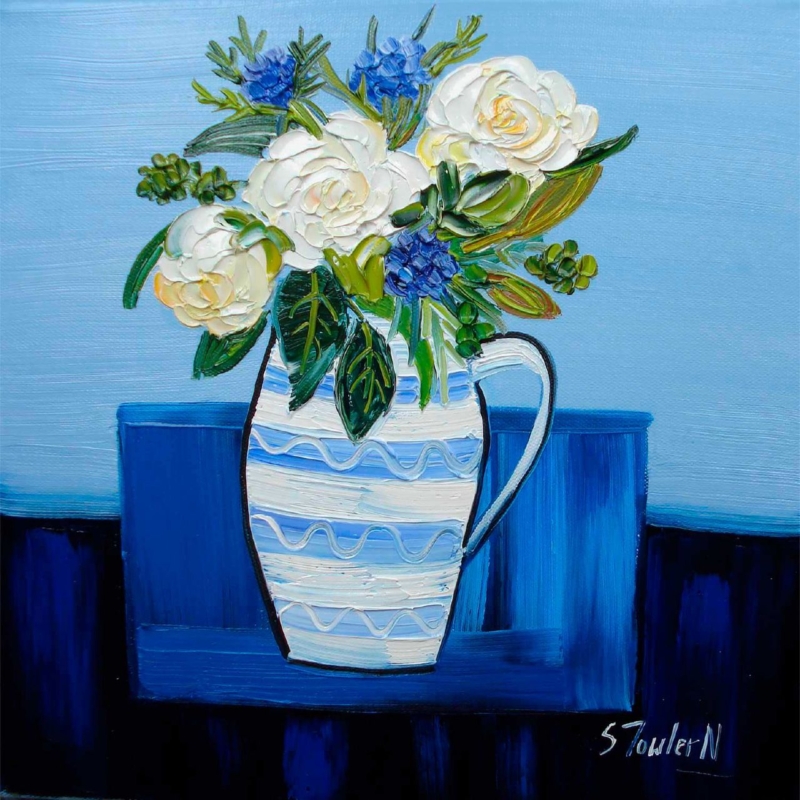
floral wall art for open shelving works best when the artwork answers a practical need rather than merely filling a gap. Roses in an Orkney Jug offers a useful example because the roses and distinctive vessel can lead a still-life arrangement without asking every shelf to carry flowers or patterned ceramics.
Balance floral wall art for open shelving
Begin by clearing the shelves rather than adding to them. Return only objects used or genuinely valued, then leave gaps around the proposed frame. The artwork should be read as one complete still life. It should not disappear into a row of vases, plant pots and floral book jackets.
At 265 x 265 mm
Use the smaller print on a short wall return or in a defined gap beside shelving. Keep shelf edges outside the finished frame.
At 500 x 500 mm
Let the larger square anchor a broader bank of shelves. Test it from the room entrance as well as close range.
An Orkney-made or handmade ceramic can make a quiet connection, but it need not copy the painted jug. One object with a related material is stronger than a fully coordinated shelf. Keep trailing plants clear of the frame and confirm that adjustable shelves will not interrupt the artwork later.
Separate petals, pottery and shelf detail
Expressive flowers and a characterful jug depend on clear colour and texture. Colour-managed Giclée production helps retain those distinctions. A hand-finished frame then gives the square image a calm edge beside changing shelf displays.
For more floral paintings and Scottish landscapes by the artist, visit Sheila Fowler’s official website. Browse the Sheila Fowler collection, or view the exact product and framing choices.
Floral wall art for open shelving should create focus, not another layer of clutter. Roses in an Orkney Jug can organise the display when objects are edited and the complete framed square is given clear space.