


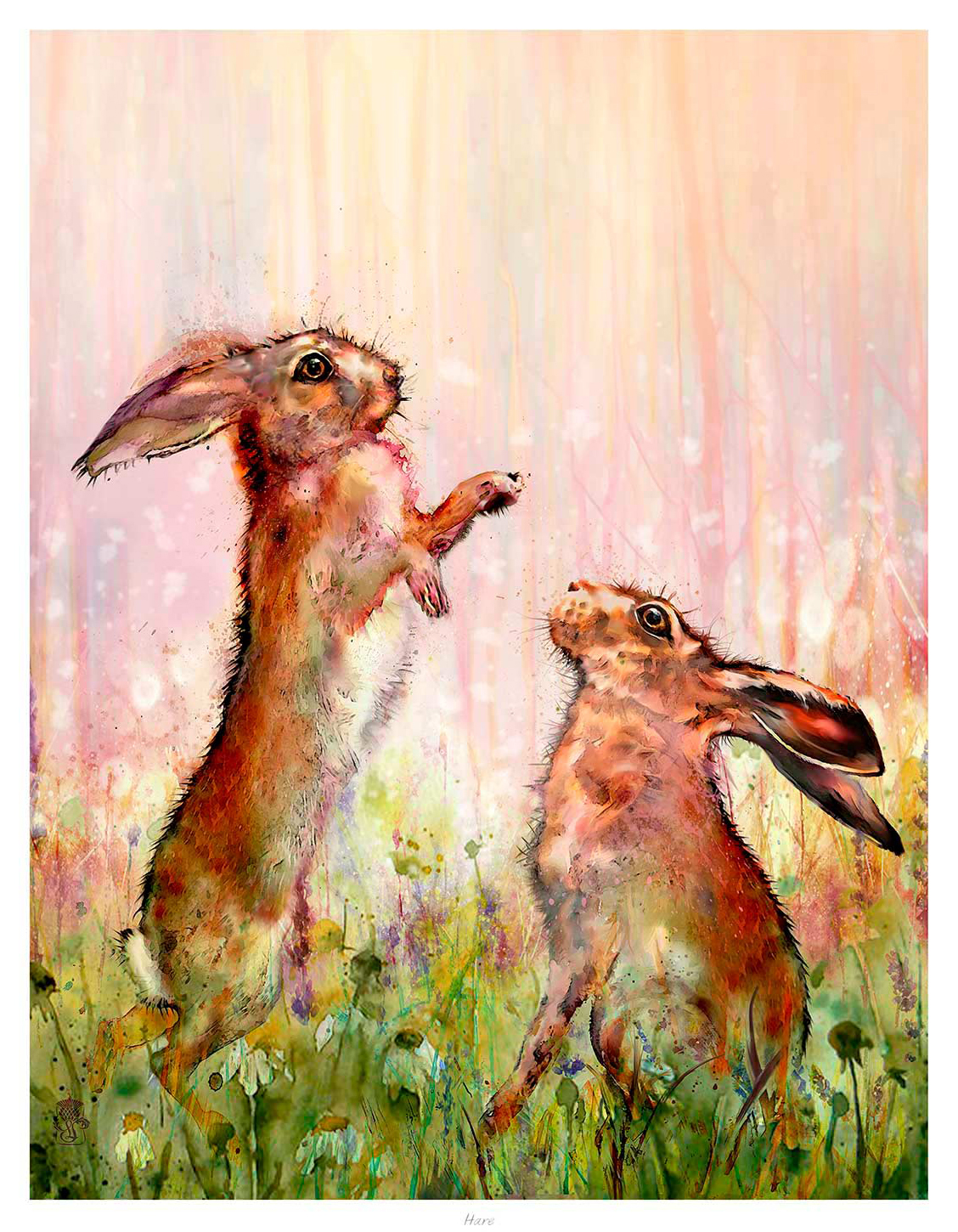
Choosing wall art for a narrow wall between windows is mainly a question of proportion. Hare uses a portrait format and an upward-moving subject, so it can give a slim section of wall purpose without making the windows feel hemmed in. The two alert hares also add energy while the meadow colours keep the effect soft.
Measure wall art for a narrow wall between windows carefully
Measure the solid wall rather than the distance from one curtain edge to the other. Then leave a visible margin on both sides of the frame. That breathing room prevents the artwork from looking trapped between architraves, blinds, or curtain folds. It also lets the vertical composition read clearly from across the room.
Check the width
A frame that uses roughly half to two-thirds of the solid wall often feels balanced. Mark its outline with removable tape before deciding.
Check the height
Align the picture with the room, not necessarily the window tops. Keep the visual centre comfortable at normal standing or seated eye level.
Hare is more useful here than a busy panoramic scene. Its vertical rhythm follows the shape of the available wall, while the paired animals create a clear focal point. Repeat one meadow colour in a cushion or nearby accessory if you want a connection, but avoid filling the sill with competing ornaments.
First 4 Frames produces the colour-managed Giclée print and bespoke frame in-house in Falkirk. A carefully judged frame can give the narrow space definition without adding unnecessary visual weight. The hand-finished presentation also means the solution feels deliberate rather than improvised.
Learn more about the subject through The Wildlife Trusts’ guide to the brown hare. You can also explore more work by Lee Scammacca or view the exact Hare print.
As wall art for a narrow wall between windows, Hare turns a difficult gap into a light, characterful pause between views.