Posted on

Art for Dental Waiting Rooms: A Practical Buying Guide

Art for Dental Waiting Rooms: A Practical Buying Guide

What if the artwork on your waiting-room walls could make the whole practice feel more considered? Selecting art for a dental practice waiting room isn’t simply about filling a blank space. The right subjects, colours and proportions can create a welcoming first impression and reflect your practice’s identity without making the room feel overly personal or visually busy.

This guide explains how to choose artwork for the room and its visitors, assess size and placement, and finish each piece with a suitable frame. Compare options such as coastal wall art, Scottish landscape art, photography prints and contemporary art prints, then consider how the frame relates to the image and the rest of the room. First4Frames Gallery offers Giclée fine art prints, bespoke framing and commercial artwork curation. Use the steps below to plan a cohesive display and make confident choices for your practice.

Key Takeaways

  • Start selecting art for a dental practice waiting room by deciding what impression the space should create, such as warm, professional or locally connected.
  • Compare landscapes, coastal scenes, photography and contemporary art by subject, colour and visual contrast to find a style that fits the room.
  • Measure usable wall space, consider viewing distance and test the layout before choosing a focal piece or a coordinated group.
  • Choose ready-to-hang framed art or bespoke framing, and check that the frame suits the artwork for a cohesive finish.

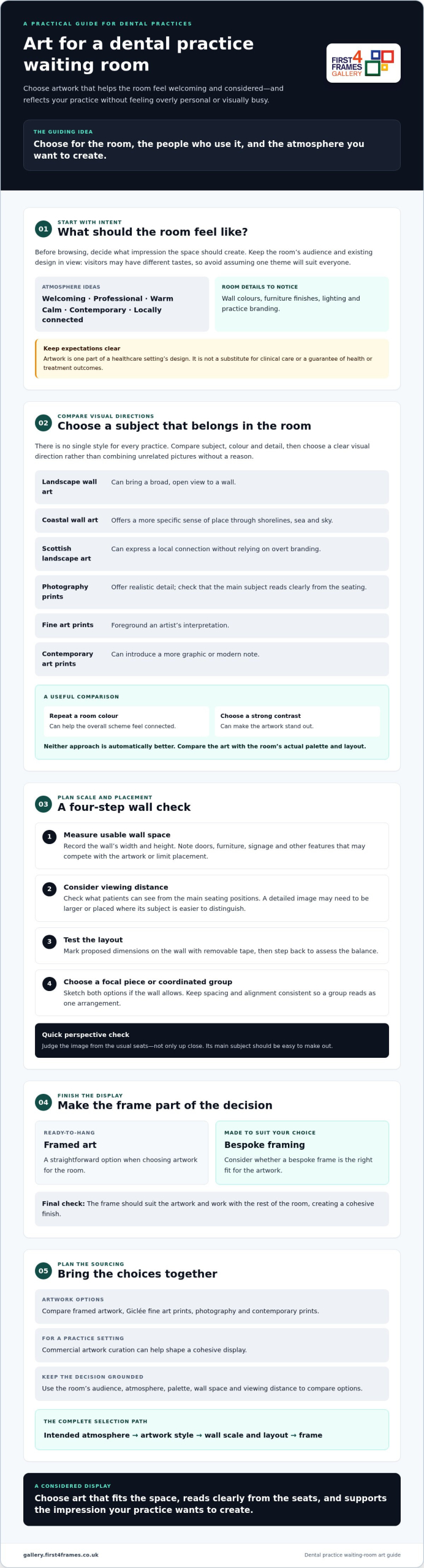
What Should Art for a Dental Practice Waiting Room Achieve?

Waiting-room art is a design choice, not a substitute for clinical care. It helps shape a practice’s first impression. You might want the room to feel calm, professional, warm, contemporary or connected to its local setting. Selecting art for a dental practice waiting room means considering that intended impression alongside the space, rather than choosing a picture in isolation.

Evidence-based design (EBD) is a broader approach to planning environments with research in mind. It can inform thoughtful decisions about a healthcare setting, but artwork is one part of the room’s design. It is not a guarantee of changes to health or treatment outcomes.

Start with the people and the room

Consider who uses the waiting room, how long they may wait and what the space already communicates. Children, adults and other visitors may have different tastes, so avoid assuming that one theme will suit everyone. Look for artwork that feels welcoming and considered for a varied audience. Comfort is a design aim, not a promised clinical result.

Define the atmosphere before browsing

Write down a few words that describe the atmosphere you want, such as composed, welcoming or contemporary. Then note the wall colours, furniture finishes, lighting and practice branding. These details give you a practical basis for comparing artwork: a print might repeat a colour already in the room, complement its overall mood or provide a deliberate focal point. Explore art in the frame and compare how different prints and frames work together.

Decision rule: Consider the room, its audience and the atmosphere you want to create before choosing a subject. This keeps your shortlist connected to the practice’s identity and gives you a clear basis for comparing style, colour and scale.

Which Art Styles and Subjects Suit a Dental Waiting Room?

There’s no single style that suits every practice. Choose artwork that fits the room’s character and the impression you want to create, while remaining easy to view from the seats where patients spend their time. A consistent visual direction usually feels more considered than a group of unrelated pictures.

Compare landscapes, photography and contemporary art

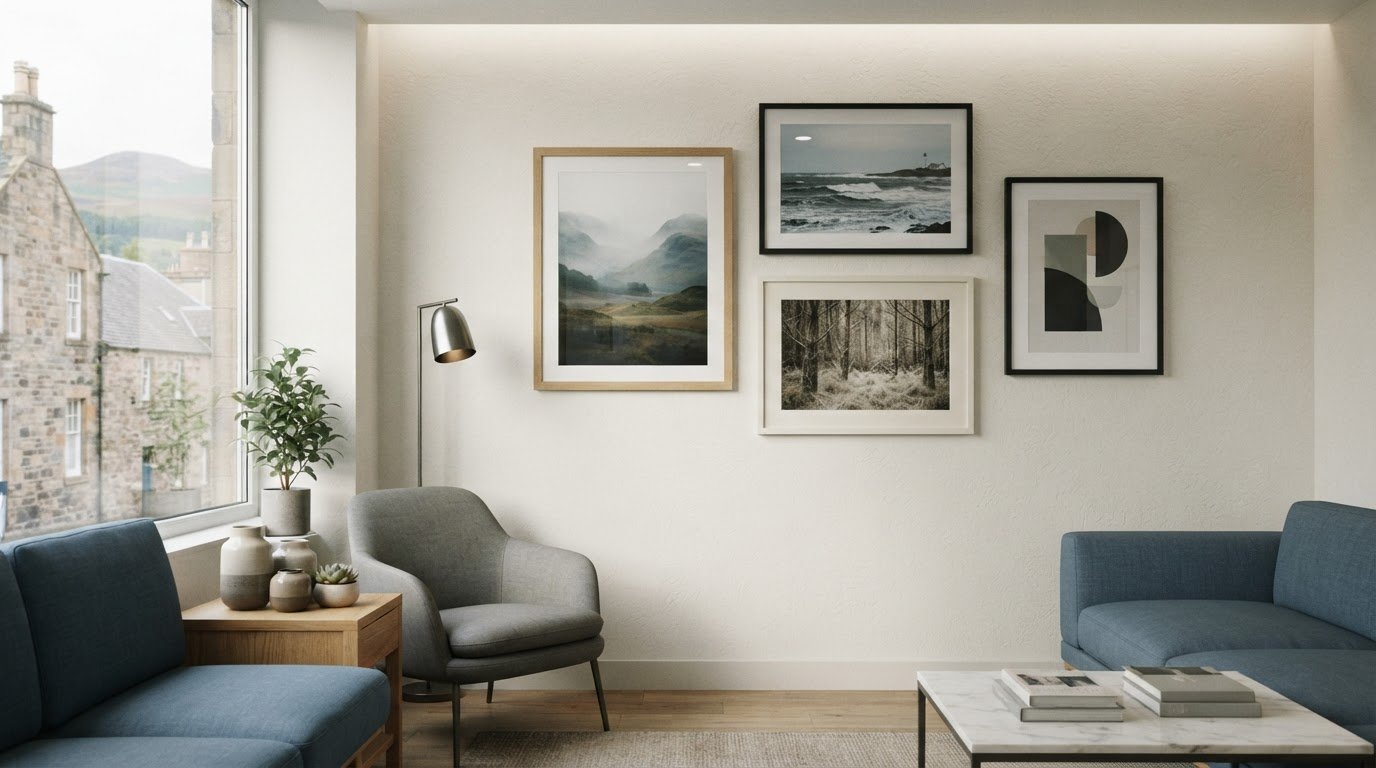
Landscape wall art can bring a broad, open view to a wall. Coastal wall art offers a more specific sense of place through shorelines, sea and sky. For a practice with a Scottish connection, Scottish landscape art can express local identity without relying on overt branding. Photography prints offer realistic detail, fine art prints foreground an artist’s interpretation, and contemporary art prints can introduce a more graphic or modern note.

Choose landscape art for a spacious, natural feel, coastal imagery for a place-led palette, photography for recognisable detail, or contemporary prints for a modern character. Treat these as starting points, not fixed rules. When selecting art for a dental practice waiting room, choose a clear visual direction, such as nature-led, locally connected or contemporary, rather than mixing subjects without a reason.

Use colour and subject with intention

Compare each print’s colours with the wall paint, seating and other finishes. A piece that picks up an existing colour can help the scheme feel connected; a strong contrast can make the artwork stand out. Neither approach is automatically better. Consider the image’s level of detail, too. Ask whether its main subject is easy to make out from the usual seating positions, not just when viewed close up.

Before deciding, compare your shortlist with the room’s actual palette and layout. The gallery’s selection of framed artwork can help you explore different visual directions. Choose pieces whose mood, palette and scale feel at home in your practice.

How Do You Choose the Right Size, Layout and Frame?

Good proportions help artwork feel intentional rather than lost on a wall or crowded by its surroundings. Before selecting art for a dental practice waiting room, map the usable space and account for how people move through and use the room.

Plan artwork scale and placement

Use this sequence to make a considered choice:

  1. Measure the usable wall space. Record its width and height, noting doors, furniture, signage and other features that may compete with the artwork or limit where it can go.
  2. Consider viewing distance. Check what patients can see from the main seating positions. A detailed image may need to be larger or placed where its subject is easier to distinguish.
  3. Test the layout. Mark the proposed dimensions on the wall with removable tape, then step back and assess the balance. Sketch a single focal piece and, if the wall allows, a coordinated group. Keep spacing and alignment consistent so a group reads as one arrangement.
  4. Select the frame and glazing. Compare the frame’s profile and colour with the artwork and the room’s finishes. Consider how the framed piece will look from the seating area, including whether reflections affect the view.

Assess frame finish and glazing

A frame should be made to fit the artwork, not simply approximate its dimensions. First4Frames frames are individually crafted for each order using high-quality materials. When comparing framed options, look at the frame’s proportions and finish alongside the print, then check the glazing choices for the piece. The aim is to keep the image clear and create a finish that suits the room.

Once you’ve settled on the size, layout and finish, browse framed artwork and print options to compare pieces for your planned space.

How Can a Practice Source and Finish Waiting-Room Art?

Once you’ve settled on the room’s style and layout, choose the sourcing route that suits your project. Ready-to-hang framed art offers a straightforward way to select a finished piece. Bespoke framing lets you bring a particular print, artwork or photograph and choose a frame to suit its dimensions and the room.

Choose an online, bespoke or print-and-frame route

Online picture framing lets you compare artwork and frame options. As you choose a frame and design your framed artwork, check the finished dimensions and how the frame relates to the image. Custom framed art prints can be a useful route when you have a specific wall or brief in mind. First4Frames Gallery offers fine art prints that customers can pair with a selected frame, as well as bespoke framing for prints, paintings and photographs.

If you’re looking for a wall art visualiser to preview artwork on your wall, confirm whether a preview tool is available before relying on it. A mock-up made to the artwork’s intended dimensions can also help you judge scale and placement. First4Frames frames are individually crafted for each order using high-quality materials, so compare the available frame options with the size and style of the piece you have chosen.

Make the next step straightforward

First4Frames Gallery offers Giclée prints from a range of artists, primarily from Scotland, alongside a selection of frames. Check the current artwork and framing choices before selecting particular pieces. If you’re furnishing several areas, consider whether a shared palette or subject will help the rooms feel connected. First4Frames also provides commercial artwork curation and custom framing for businesses.

Explore the framed art gallery to compare artwork and frame options, or contact First4Frames Gallery about commercial artwork curation and custom framing for a more tailored approach.

Make Your Waiting Room Feel Considered

Thoughtful artwork can help your practice make a polished first impression. Choose subjects and colours that suit the room, its visitors and the atmosphere you want to create, then check the scale and layout before ordering. Selecting art for a dental practice waiting room is a practical design decision: each piece should feel at home in the space and contribute to a cohesive whole.

Finishing matters, too. A frame made to fit the artwork can bring the print and its surroundings together. First4Frames Gallery offers bespoke framing and ready-to-hang framed art, so you can compare a finished piece with options tailored to your chosen print or photograph.

Start with a clear plan, then compare artwork and frames against the room itself. Browse framed artwork for your practice and contact First4Frames Gallery to discuss commercial artwork curation or custom framing.

Frequently Asked Questions

What art is suitable for a dental practice waiting room?

Suitable art reflects the room, its audience and the atmosphere the practice wants to create. Landscapes and coastal imagery can offer a natural or place-led direction, while photography prints and contemporary art create different visual characters. When selecting art for a dental practice waiting room, compare each piece with the wall colours, furniture and available space. No single subject or style will suit every practice or visitor.

How do I choose the right size artwork for a waiting room?

Measure the usable wall area before choosing a piece, and note nearby furniture, doors and signage that affect placement. Consider how the artwork will appear from the main seating positions as well as up close. A paper template or simple layout mock-up helps you compare dimensions and arrangements on the actual wall before ordering framed art.

Can framed art help make a dental waiting room feel more welcoming?

Artwork can contribute to a room’s appearance and support the impression created by its colours, furnishings and practice identity. It is one part of the overall design, not a guarantee of how patients will feel or a clinical outcome. Review the complete room, including how the art relates to seating and other finishes, rather than selecting a piece in isolation.

What should I look for in a frame for dental practice artwork?

Choose a frame that suits the artwork and room, and check that it is made to fit the piece properly. First4Frames Gallery individually crafts frames for each order using high-quality materials. Compare the available frame and glazing options with the artwork and the way it will be viewed in the room.

Can I order custom framed art prints for a dental practice online?

You can compare artwork and framing options online, then check that your chosen dimensions and frame suit the intended wall. First4Frames Gallery offers ready-to-hang framed art, bespoke picture framing and Giclée fine art prints that customers can pair with a frame. Review the current artwork selection and framing options before placing an order for your practice.

Posted on

Framing for Care Homes: A Complete Guide to Safe & Inspiring Spaces

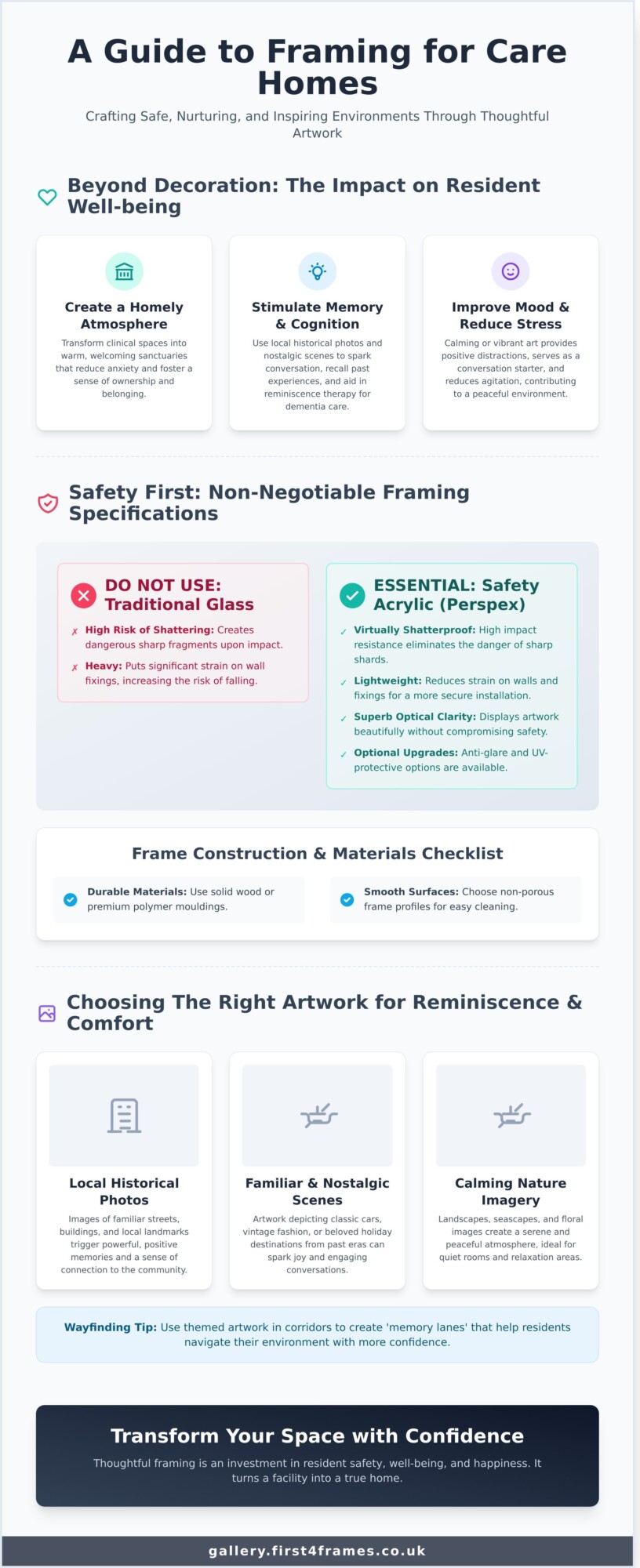
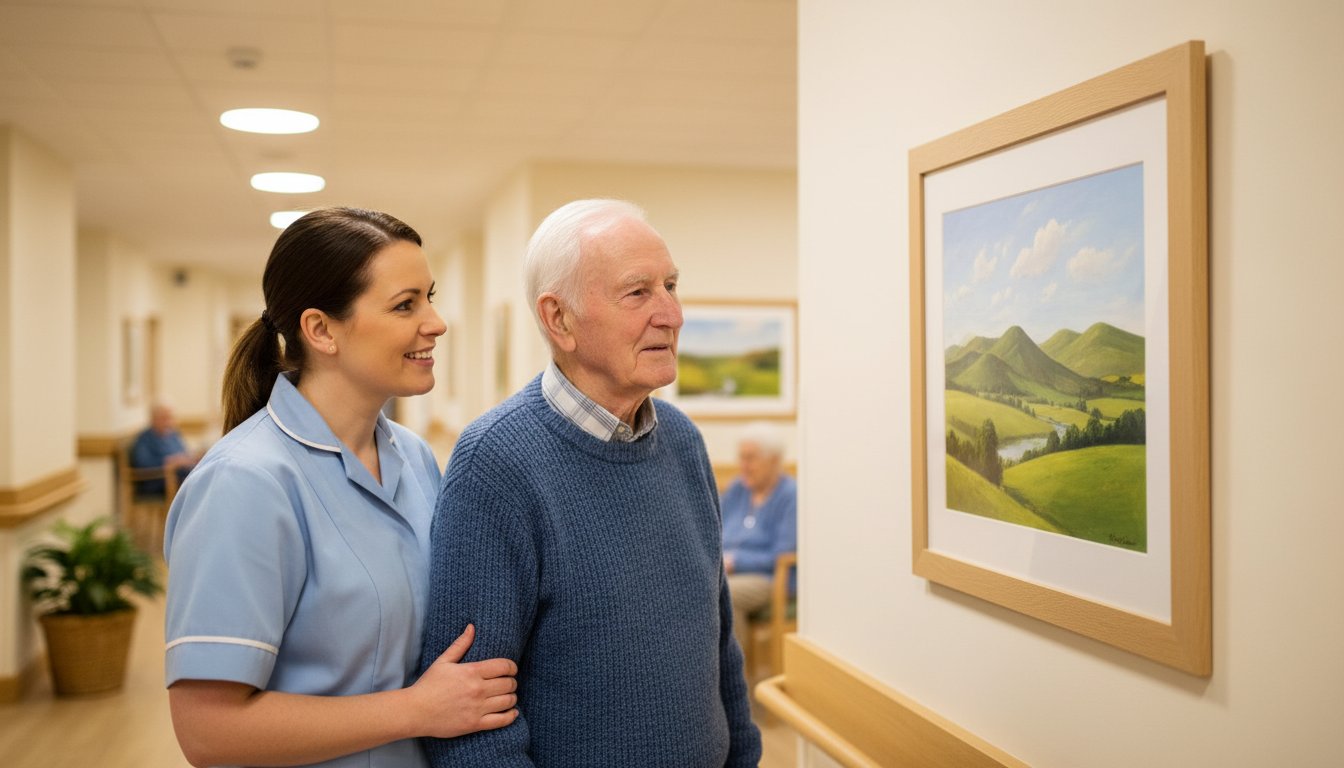
Creating a true ‘home’ in a care setting is a beautiful ambition, but it comes with unique challenges. How do you fill walls with inspiring art while ensuring resident safety, managing tight budgets, and choosing images that soothe, not confuse? These are the critical questions at the heart of selecting the perfect framing for care homes. It’s about much more than decoration; it’s about crafting an environment that nurtures, protects, and uplifts with premium, bespoke solutions that are built to last.

In this complete guide, we share our expertise to help you make confident decisions. We’ll explore everything from shatterproof glazing and durable, easy-to-clean materials to choosing artwork that genuinely enhances resident well-being and promotes reminiscence. Consider this your roadmap to transforming clinical spaces into warm, welcoming, and truly inspiring sanctuaries that feel just like home for the people who matter most.

Key Takeaways

  • Learn how thoughtfully chosen art moves beyond simple decoration to actively improve resident mood, reduce stress, and stimulate memory.
  • Resident safety is paramount; discover the essential specifications for framing for care homes, including shatterproof glazing and secure wall fixings.
  • Gain clear guidance on selecting appropriate artwork themes, such as nostalgic local scenes or calming nature imagery, to create a comforting environment.
  • Understand the key factors that influence project costs, helping you budget effectively for a beautiful and compliant art installation.

Why Thoughtful Framing is Essential in Care Homes

In a care home, the pictures on the wall are far more than simple decoration; they are a vital component of the living environment. Moving beyond aesthetics, thoughtful artwork and professional framing can profoundly enhance the daily lives of residents. The right pieces can reduce stress, stimulate cognitive function, and transform clinical spaces into warm, welcoming, and personalised homes. This is where art transitions from a decorative item to an essential element of a holistic care strategy.

To understand how the physical structure of a care environment is created, this video offers some valuable insights:

Beyond Decoration: The Impact on Resident Well-being

Beautifully framed art can be a calming presence, helping to reduce anxiety and agitation among residents. It provides positive distractions and serves as a wonderful conversation starter for residents, staff, and visiting family members. Engaging with different scenes, colours, and subjects offers gentle visual stimulation, which is crucial for helping to maintain cognitive function and offering moments of joy and reflection throughout the day.

Creating a Homely, Non-Institutional Atmosphere

The right artwork is a powerful tool for transforming a clinical setting into a genuine home. Bespoke art can be used to define the purpose of different spaces-calm landscapes for a quiet room, vibrant social scenes for a lounge, or appetising still-life images for a dining area. Familiarity and comfort are paramount. By selecting pieces that resonate with residents, you create a greater sense of ownership and belonging. Thoughtful framing for care homes is key to achieving this welcoming, non-institutional feel.

This holistic approach to creating a comforting environment naturally extends beyond the walls to include essential furnishings. The bedroom, in particular, is a sanctuary for residents, and ensuring it is outfitted with safe, comfortable, and appropriate furniture is just as crucial. Companies like Bennetts Bedrooms, for instance, specialise in beds and bedroom furniture designed for such environments, providing a great example of how specialised suppliers contribute to overall resident well-being.

This comprehensive view of well-being also includes proactive physical healthcare. Ensuring residents have access to specialized musculoskeletal support is crucial for maintaining mobility and preventing falls. For instance, specialist providers such as GB Clinic demonstrate the importance of integrating expert MSK services into a holistic care plan, helping residents stay active and independent.

The Role of Art in Reminiscence & Dementia Care

For residents living with dementia, art becomes an invaluable communication and memory tool. This is the core of reminiscence therapy, where specific images are used to spark conversations and recall past experiences. Consider using:

  • Local historical photos: Images of familiar streets or landmarks can trigger powerful, positive memories.
  • Familiar scenes: Artwork depicting classic cars, fashion from a specific era, or beloved holiday destinations.

This approach, rooted in Evidence-based design principles, also extends to wayfinding. Themed artwork in corridors can create ‘memory lanes’ that help residents navigate their environment with more confidence and independence.

Safety First: Key Framing Specifications for Care Environments

When selecting artwork, the primary consideration for any care manager is the safety and well-being of residents. The right frame does more than just complement a picture; it becomes an integral part of a safe, comfortable, and hygienic environment. Every choice, from the glazing to the wall fixings, must be made with care and expertise. Adhering to high standards, such as those outlined by regulatory bodies like the Care Inspectorate (Scotland) and the Health and Safety Executive (UK), ensures that the art contributes positively to the space without introducing unnecessary risks. At First4Frames Gallery, we understand that proper, professional framing for care homes is not a luxury-it’s an essential aspect of resident safety.

Glazing Options: Why Safety Glazing is Non-Negotiable

Traditional glass is simply not suitable for care environments due to the significant risk of shattering. Instead, high-quality acrylic, such as Perspex, is the essential choice. It offers superior safety without compromising on aesthetics. The benefits are clear:

  • High Impact Resistance: Acrylic is virtually shatterproof, eliminating the danger of sharp fragments in case of an accident.
  • Lightweight: Being significantly lighter than glass, acrylic puts less strain on wall fixings, making installations more secure and longer-lasting.
  • Superb Clarity: Modern acrylic offers optical clarity that is just as good as glass, ensuring the artwork is beautifully displayed.

For enhanced viewing comfort, especially in well-lit corridors or rooms, consider anti-glare and UV-protective acrylic options. These reduce reflections and prevent artwork from fading over time.

Frame Construction & Materials

The frame itself must be robust, durable, and easy to maintain. We recommend materials like solid wood or premium polymer mouldings that can withstand the demands of a busy environment. Crucially, the frame profile should have a smooth, non-porous surface. This makes it simple to wipe clean, supporting stringent infection control protocols. Avoid ornate or intricately carved frames, as they can trap dust and microbes and may present sharp edges.

Secure Fixings and Professional Installation

A beautifully crafted, safe frame is only effective if installed correctly. Standard picture hooks are inadequate. We always use security fixings-specialised fittings that lock the frame securely to the wall, preventing it from being knocked askew, accidentally removed, or tampered with. A professional installation ensures these fixings are correctly fitted into the appropriate wall type. Furthermore, we ensure frames sit flush against the wall, eliminating gaps that could be a snagging hazard for residents, staff, clothing, or mobile equipment. This attention to detail is a cornerstone of safe framing for care homes.

Choosing the Right Artwork: A Guide for Care Home Managers

A beautiful frame is only half the story. The artwork it holds has the power to soothe, inspire, and connect with your residents on a deeply personal level. While the physical specifications of framing for care homes are vital for safety, the content of the images is just as crucial for creating a welcoming and therapeutic environment. This guide will help you select art that not only looks spectacular but also supports the emotional well-being of everyone in your care.

Dementia-Friendly Art: What to Look For

For residents living with dementia, the wrong image can be disorienting or even distressing. It’s vital to choose artwork that is clear, simple, and easy to interpret. Abstract pieces or scenes with ambiguous figures can be confusing, so opt for high-contrast images with well-defined subjects. The goal is to create a positive and safe atmosphere; selecting appropriate art is an important aspect of the holistic approach to Health and safety in care homes. Focus on:

  • Uplifting subjects: Joyful family scenes, calm landscapes, or gentle animals.
  • High visibility: Bright, clear colours that are easy for ageing eyes to see.
  • Simplicity: Avoid overly complex or cluttered compositions.

Themes that Resonate: Local History, Nature, and Nostalgia

The most effective artwork sparks conversation and connection. Tapping into familiar themes can help residents feel grounded, engaged, and at home. Consider curating collections based on:

  • Local History: Photographs of local landmarks, familiar streets, or historical events from your town can foster a strong sense of place and identity.
  • Nature: The calming effect of nature is well-documented. Beautiful prints of gardens, British wildlife, or serene seascapes bring the tranquillity of the outdoors in.
  • Nostalgia: Images from the 1940s, 50s, and 60s-from vintage cars to classic film stars-can evoke cherished memories and provide wonderful talking points.

Sourcing Artwork: The Benefits of Giclée Prints

When furnishing multiple rooms, quality and consistency are key. This is where Giclée prints excel. A Giclée (pronounced “zhee-clay”) is a premium, fine art digital print made with archival-quality inks on high-grade paper. Unlike standard posters, they offer spectacular colour accuracy and are fade-resistant for decades, ensuring your investment looks perfect for years to come. For large-scale projects, this method guarantees that every print is an identical, high-quality copy, creating a professional and cohesive look throughout your facility. Explore our gallery of prints perfect for care settings.

The Commercial Framing Process: From Consultation to Installation

Undertaking a large-scale art and framing project for a care environment can feel complex, but with an expert partner, it becomes a seamless and rewarding experience. At First4Frames, we have refined our commercial service to manage every detail, ensuring your vision is brought to life beautifully and efficiently. Our process is designed to provide complete peace of mind, transforming your spaces with minimal disruption.

We act as your dedicated project manager, guiding you through a simple, four-step journey from initial concept to final installation. This structured approach ensures clarity, quality, and a final result that enhances the well-being of your residents.

Step 1: Free Consultation and Curation

Every great project starts with a conversation. We begin with a complimentary consultation to understand your vision, resident needs, key themes, and budget. Our experts can help you curate the perfect collection from our extensive gallery or work with your own images. For new builds or refurbishments, we can even work from your floor plans to map out an art strategy that complements your interior design.

Step 2: Bespoke Quoting for Volume Orders

Transparency is key. Following our consultation, you will receive a clear, itemised quote with no hidden costs. We offer highly competitive rates for commercial and bulk orders, providing exceptional value. Our quotes for framing for care homes always prioritise safety, presenting options like shatter-resistant acrylic glazing to meet CQC guidelines without compromising on a premium, professional finish.

Step 3: In-House Production and Quality Assurance

All your frames are built to specification by our skilled team in our Falkirk workshop. Overseeing production in-house allows us to maintain the highest standards of craftsmanship and durability. This meticulous quality control process guarantees that every single piece, from the first to the last, is perfectly consistent and built to withstand the demands of a commercial environment.

Step 4: Secure Delivery and Installation Support

Once your order is complete, each frame is carefully packaged and prepared for transit. We coordinate directly with your site manager or project team to arrange a secure, scheduled delivery at your convenience. This ensures a smooth handover, and we are always available to provide guidance and support for a professional and efficient installation process.

Budgeting for Your Care Home Art Project

We understand that for any care home manager, the budget is a primary consideration. Embarking on an art project can seem like a significant expense, but it’s more accurately an investment in the wellbeing of your residents and the quality of your environment. A well-planned budget ensures you can achieve a beautiful, safe, and lasting result without financial strain. The key is to look beyond the initial price and consider the long-term value.

Understanding the Cost Factors

The final cost of your project is influenced by several key choices. Our bespoke service allows you to tailor every element to your needs and budget. Factors include:

  • Frame Size and Material: Larger pieces and premium materials like solid oak will naturally have a higher per-unit cost than smaller frames or simpler mouldings.
  • Glazing Type: While our standard is high-quality safety acrylic, specialist options like anti-glare or UV-protective glazing can affect the price.
  • Order Volume: A larger order for multiple rooms or an entire wing often allows for better value per frame.
  • Artwork Source: You can choose from our beautiful gallery of fine art prints or use our service to frame your existing artwork and photographs.

The Hidden Costs of ‘Cheap’ Retail Frames

Opting for off-the-shelf retail frames is often a false economy. These products are not designed for the demands of a care environment. They frequently use thin, breakable glass, posing a significant safety risk. Their flimsy construction cannot withstand regular cleaning or accidental knocks, leading to constant replacement costs that quickly add up. This approach to framing for care homes fails to meet the necessary standards for durability, safety, and hygiene, ultimately costing more in the long run.

Planning for a Phased Installation

A complete facility-wide art refresh doesn’t have to happen all at once. We specialise in helping care homes manage their budgets through a phased approach. You could start by revitalising a single high-impact area, such as a main lounge or a specific residential wing. This allows you to manage cash flow while demonstrating the positive impact to residents and stakeholders. Over time, we can help you roll out the project across the entire home. Talk to our team about creating a phased plan that works for you.

Your Partner in Creating Safe and Inspiring Spaces

As we’ve explored, thoughtful framing is a powerful tool for transforming care environments. It goes far beyond simple decoration, playing a vital role in the safety, comfort, and daily well-being of residents. By prioritising key safety specifications, such as shatter-resistant glazing, and carefully selecting artwork that resonates, you can create spaces that are not only beautiful but also truly feel like home.

At First4Frames Gallery, we understand the unique requirements of framing for care homes. With over 20 years of bespoke framing experience, our team are specialists in managing large-scale commercial projects from our dedicated workshop in Falkirk, Scotland. We are passionate about helping you navigate the entire process, from initial concept to professional installation, ensuring a seamless and hassle-free result.

Ready to enhance your space with premium, safety-conscious artwork? Request a Free Consultation for Your Care Home Project. Let’s work together to create an environment that inspires and uplifts everyone in your care.

Frequently Asked Questions

What is the best type of ‘glass’ for picture frames in a care home?

For complete resident safety, we strongly recommend high-quality acrylic glazing instead of traditional glass. This premium material is shatterproof, removing the risk of injury from broken shards. It’s also significantly lighter, making frames easier and safer to hang, while offering perfect optical clarity to beautifully display the artwork. This ensures a safe, durable, and visually spectacular result for any care environment.

How do you hang pictures securely to prevent residents from removing them?

To ensure pictures remain securely on the wall, we advise using specialist security fixings. These tamper-proof systems, such as T-screw plates, lock the frame to the wall and require a unique tool for removal. This simple and effective method prevents frames from being knocked down or removed by residents, providing complete peace of mind for staff and ensuring the safety of everyone in your facility.

Can you frame our residents’ own artwork or historical photographs?

Absolutely. We would be honoured to provide our bespoke framing service for your residents’ personal artwork or treasured photographs. Transforming these unique pieces into professionally framed art is a wonderful way to personalise residents’ rooms and communal spaces. Our expert craftsmanship will ensure these precious memories are beautifully preserved and displayed, adding a deeply personal and comforting touch to the environment.

Do you offer discounts for large, multi-room orders for care facilities?

Yes, we are delighted to offer preferential pricing for large commercial orders for care facilities. We understand the importance of managing budgets while creating a beautiful environment for your residents. Please contact our team directly to discuss your project requirements. We will provide a bespoke, no-obligation quote tailored to the scale of your order, ensuring you receive exceptional value and our dedicated, professional service.

What kind of images are most suitable for residents with dementia?

For residents living with dementia, we recommend clear, high-contrast images with familiar and positive themes. Pictures of local landmarks, recognisable nature scenes, animals, or nostalgic photographs from the 1950s and 60s can be particularly comforting. The goal is to select artwork that is easy to interpret and can spark joyful memories or conversations, helping to create a calm and reassuring atmosphere within the home.

How long does a typical commercial framing project take from order to delivery?

A typical commercial framing project, from finalising your order to delivery, usually takes between 2 to 4 weeks. This allows for our meticulous craftsmanship in creating your bespoke frames and preparing the artwork. For very large or complex orders, this timeline may be extended slightly. We pride ourselves on a speedy, hassle-free service and will always provide a clear, estimated delivery date when you place your order.

Are your frames and materials easy to clean and compliant with infection control?

Yes, all our materials are chosen with practicality in mind. The acrylic glazing and our durable frame finishes are non-porous and can be easily wiped down with standard, non-abrasive cleaning products, fully supporting your infection control procedures. Our approach to framing for care homes prioritises safety, hygiene, and lasting quality in every beautiful piece, ensuring the artwork is simple to maintain.

Posted on

Framing for Care Homes: A Complete Guide to Safe & Inspiring Spaces

Creating a true ‘home’ in a care setting is a beautiful ambition, but it comes with unique challenges. How do you fill walls with inspiring art while ensuring resident safety, managing tight budgets, and choosing images that soothe, not confuse? These are the critical questions at the heart of selecting the perfect framing for care homes. It’s about much more than decoration; it’s about crafting an environment that nurtures, protects, and uplifts with premium, bespoke solutions that are built to last.

In this complete guide, we share our expertise to help you make confident decisions. We’ll explore everything from shatterproof glazing and durable, easy-to-clean materials to choosing artwork that genuinely enhances resident well-being and promotes reminiscence. Consider this your roadmap to transforming clinical spaces into warm, welcoming, and truly inspiring sanctuaries that feel just like home for the people who matter most.

Key Takeaways

  • Learn how thoughtfully chosen art moves beyond simple decoration to actively improve resident mood, reduce stress, and stimulate memory.
  • Resident safety is paramount; discover the essential specifications for framing for care homes, including shatterproof glazing and secure wall fixings.
  • Gain clear guidance on selecting appropriate artwork themes, such as nostalgic local scenes or calming nature imagery, to create a comforting environment.
  • Understand the key factors that influence project costs, helping you budget effectively for a beautiful and compliant art installation.

Why Thoughtful Framing is Essential in Care Homes

In a care home, the pictures on the wall are far more than simple decoration; they are a vital component of the living environment. Moving beyond aesthetics, thoughtful artwork and professional framing can profoundly enhance the daily lives of residents. The right pieces can reduce stress, stimulate cognitive function, and transform clinical spaces into warm, welcoming, and personalised homes. This is where art transitions from a decorative item to an essential element of a holistic care strategy.

To understand how the physical structure of a care environment is created, this video offers some valuable insights:

Beyond Decoration: The Impact on Resident Well-being

Beautifully framed art can be a calming presence, helping to reduce anxiety and agitation among residents. It provides positive distractions and serves as a wonderful conversation starter for residents, staff, and visiting family members. Engaging with different scenes, colours, and subjects offers gentle visual stimulation, which is crucial for helping to maintain cognitive function and offering moments of joy and reflection throughout the day.

Creating a Homely, Non-Institutional Atmosphere

The right artwork is a powerful tool for transforming a clinical setting into a genuine home. Bespoke art can be used to define the purpose of different spaces-calm landscapes for a quiet room, vibrant social scenes for a lounge, or appetising still-life images for a dining area. Familiarity and comfort are paramount. By selecting pieces that resonate with residents, you create a greater sense of ownership and belonging. Thoughtful framing for care homes is key to achieving this welcoming, non-institutional feel.

This holistic approach to creating a comforting environment naturally extends beyond the walls to include essential furnishings. The bedroom, in particular, is a sanctuary for residents, and ensuring it is outfitted with safe, comfortable, and appropriate furniture is just as crucial. Companies like Bennetts Bedrooms, for instance, specialise in beds and bedroom furniture designed for such environments, providing a great example of how specialised suppliers contribute to overall resident well-being.

This comprehensive view of well-being also includes proactive physical healthcare. Ensuring residents have access to specialized musculoskeletal support is crucial for maintaining mobility and preventing falls. For instance, specialist providers such as GB Clinic demonstrate the importance of integrating expert MSK services into a holistic care plan, helping residents stay active and independent.

The Role of Art in Reminiscence & Dementia Care

For residents living with dementia, art becomes an invaluable communication and memory tool. This is the core of reminiscence therapy, where specific images are used to spark conversations and recall past experiences. Consider using:

  • Local historical photos: Images of familiar streets or landmarks can trigger powerful, positive memories.
  • Familiar scenes: Artwork depicting classic cars, fashion from a specific era, or beloved holiday destinations.

This approach, rooted in Evidence-based design principles, also extends to wayfinding. Themed artwork in corridors can create ‘memory lanes’ that help residents navigate their environment with more confidence and independence.

Safety First: Key Framing Specifications for Care Environments

When selecting artwork, the primary consideration for any care manager is the safety and well-being of residents. The right frame does more than just complement a picture; it becomes an integral part of a safe, comfortable, and hygienic environment. Every choice, from the glazing to the wall fixings, must be made with care and expertise. Adhering to high standards, such as those outlined by regulatory bodies like the Care Inspectorate (Scotland) and the Health and Safety Executive (UK), ensures that the art contributes positively to the space without introducing unnecessary risks. At First4Frames Gallery, we understand that proper, professional framing for care homes is not a luxury-it’s an essential aspect of resident safety.

Glazing Options: Why Safety Glazing is Non-Negotiable

Traditional glass is simply not suitable for care environments due to the significant risk of shattering. Instead, high-quality acrylic, such as Perspex, is the essential choice. It offers superior safety without compromising on aesthetics. The benefits are clear:

  • High Impact Resistance: Acrylic is virtually shatterproof, eliminating the danger of sharp fragments in case of an accident.
  • Lightweight: Being significantly lighter than glass, acrylic puts less strain on wall fixings, making installations more secure and longer-lasting.
  • Superb Clarity: Modern acrylic offers optical clarity that is just as good as glass, ensuring the artwork is beautifully displayed.

For enhanced viewing comfort, especially in well-lit corridors or rooms, consider anti-glare and UV-protective acrylic options. These reduce reflections and prevent artwork from fading over time.

Frame Construction & Materials

The frame itself must be robust, durable, and easy to maintain. We recommend materials like solid wood or premium polymer mouldings that can withstand the demands of a busy environment. Crucially, the frame profile should have a smooth, non-porous surface. This makes it simple to wipe clean, supporting stringent infection control protocols. Avoid ornate or intricately carved frames, as they can trap dust and microbes and may present sharp edges.

Secure Fixings and Professional Installation

A beautifully crafted, safe frame is only effective if installed correctly. Standard picture hooks are inadequate. We always use security fixings-specialised fittings that lock the frame securely to the wall, preventing it from being knocked askew, accidentally removed, or tampered with. A professional installation ensures these fixings are correctly fitted into the appropriate wall type. Furthermore, we ensure frames sit flush against the wall, eliminating gaps that could be a snagging hazard for residents, staff, clothing, or mobile equipment. This attention to detail is a cornerstone of safe framing for care homes.

Choosing the Right Artwork: A Guide for Care Home Managers

A beautiful frame is only half the story. The artwork it holds has the power to soothe, inspire, and connect with your residents on a deeply personal level. While the physical specifications of framing for care homes are vital for safety, the content of the images is just as crucial for creating a welcoming and therapeutic environment. This guide will help you select art that not only looks spectacular but also supports the emotional well-being of everyone in your care.

Dementia-Friendly Art: What to Look For

For residents living with dementia, the wrong image can be disorienting or even distressing. It’s vital to choose artwork that is clear, simple, and easy to interpret. Abstract pieces or scenes with ambiguous figures can be confusing, so opt for high-contrast images with well-defined subjects. The goal is to create a positive and safe atmosphere; selecting appropriate art is an important aspect of the holistic approach to Health and safety in care homes. Focus on:

  • Uplifting subjects: Joyful family scenes, calm landscapes, or gentle animals.
  • High visibility: Bright, clear colours that are easy for ageing eyes to see.
  • Simplicity: Avoid overly complex or cluttered compositions.

Themes that Resonate: Local History, Nature, and Nostalgia

The most effective artwork sparks conversation and connection. Tapping into familiar themes can help residents feel grounded, engaged, and at home. Consider curating collections based on:

  • Local History: Photographs of local landmarks, familiar streets, or historical events from your town can foster a strong sense of place and identity.
  • Nature: The calming effect of nature is well-documented. Beautiful prints of gardens, British wildlife, or serene seascapes bring the tranquillity of the outdoors in.
  • Nostalgia: Images from the 1940s, 50s, and 60s-from vintage cars to classic film stars-can evoke cherished memories and provide wonderful talking points.

Sourcing Artwork: The Benefits of Giclée Prints

When furnishing multiple rooms, quality and consistency are key. This is where Giclée prints excel. A Giclée (pronounced “zhee-clay”) is a premium, fine art digital print made with archival-quality inks on high-grade paper. Unlike standard posters, they offer spectacular colour accuracy and are fade-resistant for decades, ensuring your investment looks perfect for years to come. For large-scale projects, this method guarantees that every print is an identical, high-quality copy, creating a professional and cohesive look throughout your facility. Explore our gallery of prints perfect for care settings.

The Commercial Framing Process: From Consultation to Installation

Undertaking a large-scale art and framing project for a care environment can feel complex, but with an expert partner, it becomes a seamless and rewarding experience. At First4Frames, we have refined our commercial service to manage every detail, ensuring your vision is brought to life beautifully and efficiently. Our process is designed to provide complete peace of mind, transforming your spaces with minimal disruption.

We act as your dedicated project manager, guiding you through a simple, four-step journey from initial concept to final installation. This structured approach ensures clarity, quality, and a final result that enhances the well-being of your residents.

Step 1: Free Consultation and Curation

Every great project starts with a conversation. We begin with a complimentary consultation to understand your vision, resident needs, key themes, and budget. Our experts can help you curate the perfect collection from our extensive gallery or work with your own images. For new builds or refurbishments, we can even work from your floor plans to map out an art strategy that complements your interior design.

Step 2: Bespoke Quoting for Volume Orders

Transparency is key. Following our consultation, you will receive a clear, itemised quote with no hidden costs. We offer highly competitive rates for commercial and bulk orders, providing exceptional value. Our quotes for framing for care homes always prioritise safety, presenting options like shatter-resistant acrylic glazing to meet CQC guidelines without compromising on a premium, professional finish.

Step 3: In-House Production and Quality Assurance

All your frames are built to specification by our skilled team in our Falkirk workshop. Overseeing production in-house allows us to maintain the highest standards of craftsmanship and durability. This meticulous quality control process guarantees that every single piece, from the first to the last, is perfectly consistent and built to withstand the demands of a commercial environment.

Step 4: Secure Delivery and Installation Support

Once your order is complete, each frame is carefully packaged and prepared for transit. We coordinate directly with your site manager or project team to arrange a secure, scheduled delivery at your convenience. This ensures a smooth handover, and we are always available to provide guidance and support for a professional and efficient installation process.

Budgeting for Your Care Home Art Project

We understand that for any care home manager, the budget is a primary consideration. Embarking on an art project can seem like a significant expense, but it’s more accurately an investment in the wellbeing of your residents and the quality of your environment. A well-planned budget ensures you can achieve a beautiful, safe, and lasting result without financial strain. The key is to look beyond the initial price and consider the long-term value.

Understanding the Cost Factors

The final cost of your project is influenced by several key choices. Our bespoke service allows you to tailor every element to your needs and budget. Factors include:

  • Frame Size and Material: Larger pieces and premium materials like solid oak will naturally have a higher per-unit cost than smaller frames or simpler mouldings.
  • Glazing Type: While our standard is high-quality safety acrylic, specialist options like anti-glare or UV-protective glazing can affect the price.
  • Order Volume: A larger order for multiple rooms or an entire wing often allows for better value per frame.
  • Artwork Source: You can choose from our beautiful gallery of fine art prints or use our service to frame your existing artwork and photographs.

The Hidden Costs of ‘Cheap’ Retail Frames

Opting for off-the-shelf retail frames is often a false economy. These products are not designed for the demands of a care environment. They frequently use thin, breakable glass, posing a significant safety risk. Their flimsy construction cannot withstand regular cleaning or accidental knocks, leading to constant replacement costs that quickly add up. This approach to framing for care homes fails to meet the necessary standards for durability, safety, and hygiene, ultimately costing more in the long run.

Planning for a Phased Installation

A complete facility-wide art refresh doesn’t have to happen all at once. We specialise in helping care homes manage their budgets through a phased approach. You could start by revitalising a single high-impact area, such as a main lounge or a specific residential wing. This allows you to manage cash flow while demonstrating the positive impact to residents and stakeholders. Over time, we can help you roll out the project across the entire home. Talk to our team about creating a phased plan that works for you.

Your Partner in Creating Safe and Inspiring Spaces

As we’ve explored, thoughtful framing is a powerful tool for transforming care environments. It goes far beyond simple decoration, playing a vital role in the safety, comfort, and daily well-being of residents. By prioritising key safety specifications, such as shatter-resistant glazing, and carefully selecting artwork that resonates, you can create spaces that are not only beautiful but also truly feel like home.

At First4Frames Gallery, we understand the unique requirements of framing for care homes. With over 20 years of bespoke framing experience, our team are specialists in managing large-scale commercial projects from our dedicated workshop in Falkirk, Scotland. We are passionate about helping you navigate the entire process, from initial concept to professional installation, ensuring a seamless and hassle-free result.

Ready to enhance your space with premium, safety-conscious artwork? Request a Free Consultation for Your Care Home Project. Let’s work together to create an environment that inspires and uplifts everyone in your care.

Frequently Asked Questions

What is the best type of ‘glass’ for picture frames in a care home?

For complete resident safety, we strongly recommend high-quality acrylic glazing instead of traditional glass. This premium material is shatterproof, removing the risk of injury from broken shards. It’s also significantly lighter, making frames easier and safer to hang, while offering perfect optical clarity to beautifully display the artwork. This ensures a safe, durable, and visually spectacular result for any care environment.

How do you hang pictures securely to prevent residents from removing them?

To ensure pictures remain securely on the wall, we advise using specialist security fixings. These tamper-proof systems, such as T-screw plates, lock the frame to the wall and require a unique tool for removal. This simple and effective method prevents frames from being knocked down or removed by residents, providing complete peace of mind for staff and ensuring the safety of everyone in your facility.

Can you frame our residents’ own artwork or historical photographs?

Absolutely. We would be honoured to provide our bespoke framing service for your residents’ personal artwork or treasured photographs. Transforming these unique pieces into professionally framed art is a wonderful way to personalise residents’ rooms and communal spaces. Our expert craftsmanship will ensure these precious memories are beautifully preserved and displayed, adding a deeply personal and comforting touch to the environment.

Do you offer discounts for large, multi-room orders for care facilities?

Yes, we are delighted to offer preferential pricing for large commercial orders for care facilities. We understand the importance of managing budgets while creating a beautiful environment for your residents. Please contact our team directly to discuss your project requirements. We will provide a bespoke, no-obligation quote tailored to the scale of your order, ensuring you receive exceptional value and our dedicated, professional service.

What kind of images are most suitable for residents with dementia?

For residents living with dementia, we recommend clear, high-contrast images with familiar and positive themes. Pictures of local landmarks, recognisable nature scenes, animals, or nostalgic photographs from the 1950s and 60s can be particularly comforting. The goal is to select artwork that is easy to interpret and can spark joyful memories or conversations, helping to create a calm and reassuring atmosphere within the home.

How long does a typical commercial framing project take from order to delivery?

A typical commercial framing project, from finalising your order to delivery, usually takes between 2 to 4 weeks. This allows for our meticulous craftsmanship in creating your bespoke frames and preparing the artwork. For very large or complex orders, this timeline may be extended slightly. We pride ourselves on a speedy, hassle-free service and will always provide a clear, estimated delivery date when you place your order.

Are your frames and materials easy to clean and compliant with infection control?

Yes, all our materials are chosen with practicality in mind. The acrylic glazing and our durable frame finishes are non-porous and can be easily wiped down with standard, non-abrasive cleaning products, fully supporting your infection control procedures. Our approach to framing for care homes prioritises safety, hygiene, and lasting quality in every beautiful piece, ensuring the artwork is simple to maintain.