


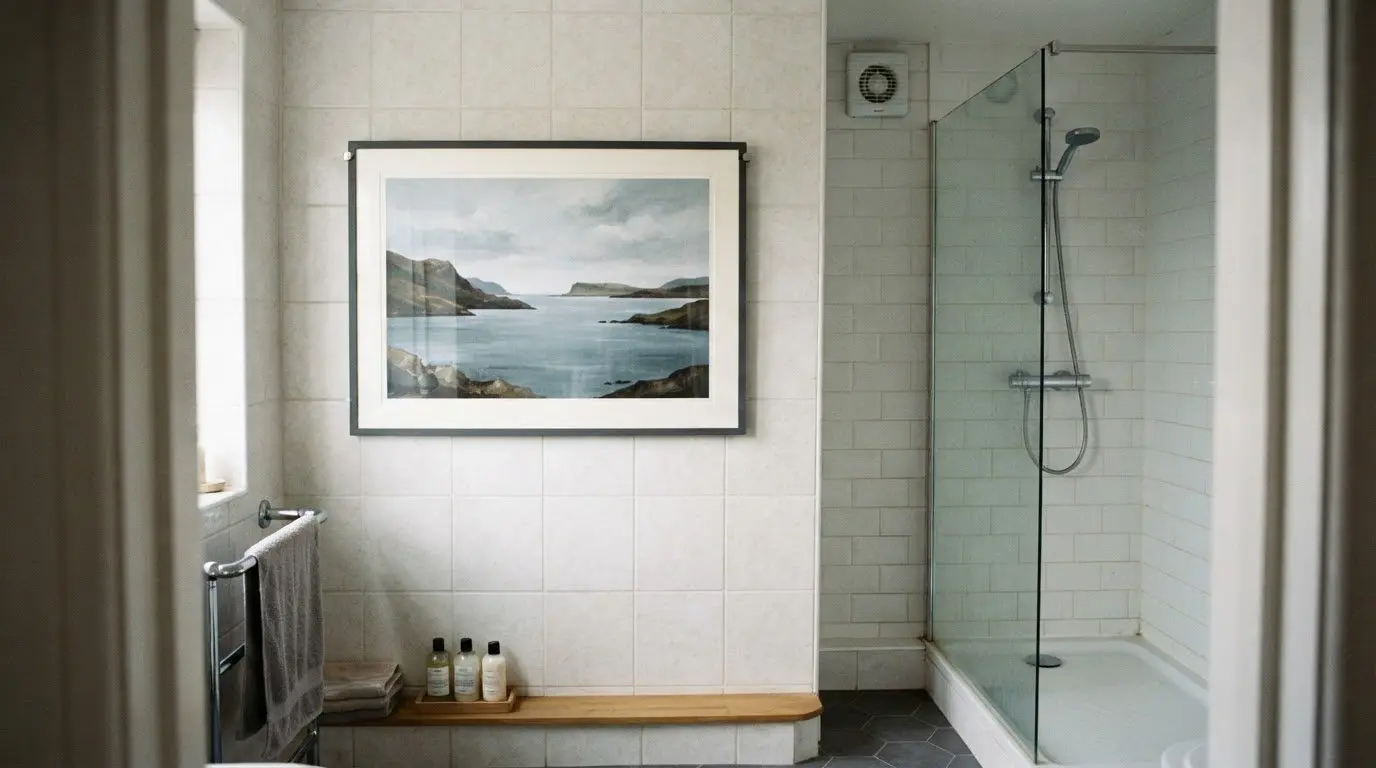
A frame can resist moisture without making the artwork inside immune to humidity. For framing for rooms with high humidity, sealed wood or powder-coated metal, suitable backing and careful placement can help protect a piece. Keeping it away from direct shower spray also limits exposure to water.
Humidity can affect paper prints and canvas, even when the frame resists moisture. When ordering bespoke framed wall art, consider the artwork, glazing, mount and backing together. Whether you’re choosing coastal wall art, landscape wall art, Scottish landscape art, fine art, photography prints or contemporary art prints, select framing to suit the piece and its display conditions. With online picture framing, you can choose a frame online and design the finished artwork around your space. Use a wall art visualiser to Visualise art on your wall and See artwork before you buy. If you have a specific work in mind, look for custom framed art prints or an art print framing service. You can also browse best-selling artists or famous artists for inspiration. Thoughtful choices help framed wall art feel at home while accounting for the room’s humidity.
Key Takeaways
- Consider ventilation and the artwork’s exposure to moisture when planning where a framed print or canvas will hang.
- Compare sealed wood and treated metal as frame options, keeping in mind that the frame alone can’t shield artwork from every source of humidity.
- Discuss glazing, mount board, backing and suitable adhesives or sealants as part of the complete framing specification.
- For metal studs in humid environments, distinguish the building structure from the picture frame and consider corrosion protection as a separate part of the project.
How Can a Professional Handle High-Humidity Art Framing in a Bathroom?
Bathroom humidity can affect paper prints and canvas, even when the frame itself resists moisture. A framer considers the complete piece, including the artwork, glazing, mount and backing. Placement matters too: keeping a frame away from direct shower spray reduces water exposure. Ventilation helps manage damp air after bathing, while a powder room without a shower generally needs less specialised framing than a full bathroom.
Aluminium frames resist high moisture and won’t warp like standard wood, but they can’t stop moisture entering the frame. Sealed wood and powder-coated metal are other suitable options for humid rooms. First4Frames frames come with 2 mm float glass, so the framing plan should also account for room ventilation and exposure. Moisture-resistant, acid-free mat board can help reduce rippling and staining, while sealed backing helps limit moisture reaching the artwork.
UK building regulations address bathroom construction and ventilation, rather than setting material rules for picture frames. For artwork, choose suitable framing materials and keep the piece away from direct shower spray.
There is no single price for moisture-resistant framing. The cost depends on the artwork’s size and the selected frame, mount and backing materials.
To reduce condensation and mould risks in wall construction, the room needs effective ventilation and a wall build-up suited to its moisture exposure. Sauna or shower-room walls require careful design of the layers and vapour control. A picture frame’s sealed backing cannot replace sound wall construction.
Common framing mistakes include using untreated wood, leaving the backing unsealed, or assuming aluminium makes artwork waterproof. A water-repellent spray may help prevent water pooling on the frame’s back cover, but it does not make the frame water-resistant. Treat sprays as an extra measure, not a substitute for suitable materials, sealed backing and sensible placement.
2. Sealed woods and treated metals
Sealed timber moulding may suit a bathroom if its finish helps limit moisture absorption. Ordinary wood can absorb damp air and swell, crack or warp over time. A framer should consider the finish across the entire moulding, including edges and joins. A good-looking front alone will not protect exposed timber at the joints. The seal should remain intact around the frame’s corners and rear edges.
Powder-coated metal is another option for humid interiors. Its coating creates a finished surface, and metal does not move in the same way as moisture-sensitive wood. However, a chip or scratch can expose the metal beneath. For a bathroom frame, sound assembly and an intact finish matter as much as the material itself.
Choose materials for the room’s actual conditions. A small cloakroom without a shower differs from a bathroom where steam builds up regularly. A framer can consider the frame’s position, ventilation and splash exposure when recommending sealed timber or treated metal. Neither material makes artwork waterproof, so the backing and other framing components also need attention.
Construction details matter too. Neat joints and adhesives or sealants suited to humid environments help maintain bonding and reduce the risk of detachment. On timber, the finish should cover vulnerable areas, not just the visible face. With coated metal, avoid damaging the coating during assembly, handling or hanging. These details help the finished frame cope with humid indoor conditions.
For an order, describe whether the picture will hang near a shower, basin or steamy bath, and mention the room’s ventilation. Those details help guide the choice between sealed wood and treated metal, alongside the artwork’s size and appearance. If you’re still choosing a piece for the room, browse artwork for your space and consider how its colours and frame will sit together.

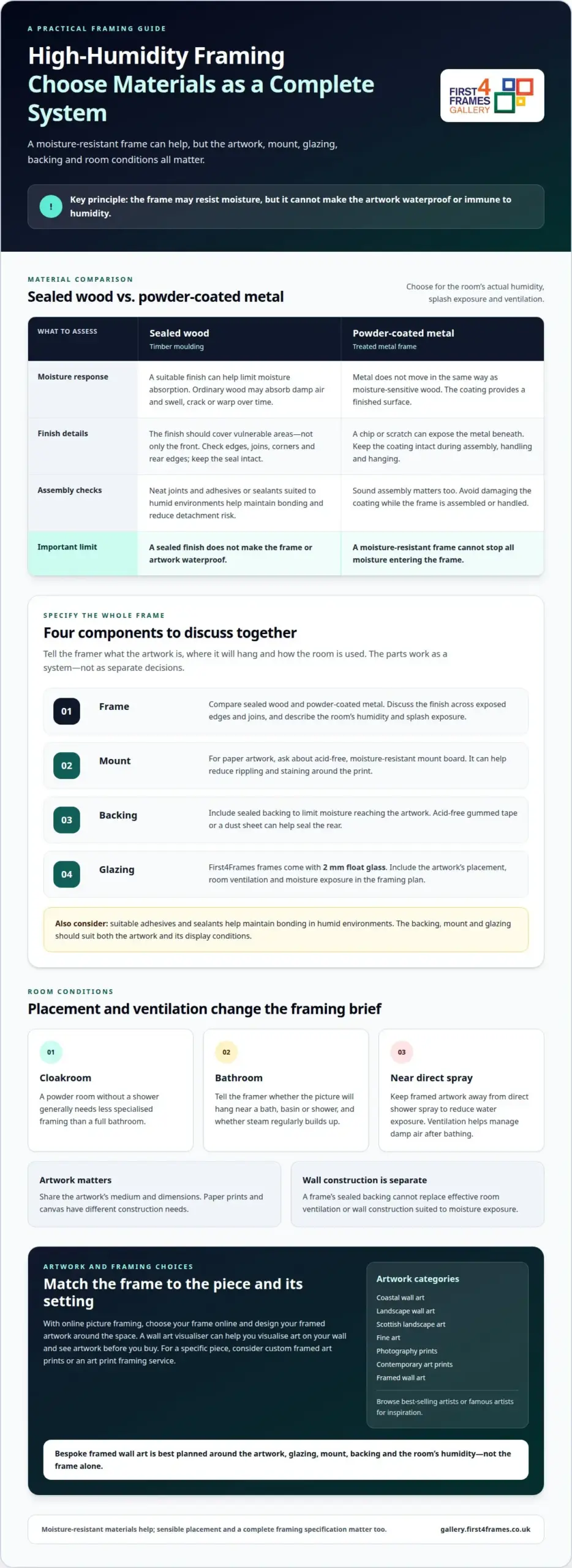
Specifying Materials for a High-Humidity Framing Order
Tell the framer the artwork’s medium, dimensions and intended position. Paper prints and canvas have different construction needs, and a frame near a shower faces more splash exposure than one in a ventilated cloakroom. Explain how the room is used and whether steam regularly builds up. This information helps the framer specify materials for both the artwork and its display environment.
Discuss the framing components together:
- Frame: State whether you prefer sealed wood or powder-coated metal, and discuss the finish across exposed edges and joints.
- Mount: Ask about acid-free, moisture-resistant board to help reduce rippling and staining around paper artwork.
- Backing: Include sealed backing to limit moisture entering behind the artwork. Acid-free gummed tape or a dust sheet can help seal the rear.
- Glazing: Specify the standard 2 mm float glass, then discuss the artwork’s placement and the room’s ventilation as part of the framing plan.
Suitable adhesives and sealants are important in the finished assembly. In humid environments, they help maintain bonding and reduce the risk of components detaching. The framer should consider how all the selected materials work together, rather than treating the moulding as the only protective layer. The backing, mount and glazing should suit the artwork and the room’s expected exposure.
When ordering, describe the bathroom clearly: say whether the artwork will hang near a bath, basin or shower, and mention the ventilation. A powder room without a shower may need less specialised framing than a full bathroom. Also explain whether the piece is original artwork, a print or canvas, so the materials can be specified accordingly.
Before production, review the proposed frame finish, mount colour, glazing and backing as a complete design. This keeps the visual choices in step with both the room and the artwork. A clear specification gives the framer practical guidance and helps the finished piece sit comfortably in its surroundings.
4. What corrosion protection is needed for metal studs in humid environments?
Metal studs support a wall; they are not the same as metal picture-frame mouldings. Their corrosion protection must suit conditions inside the wall and in the room. A shower enclosure, a frequently steamed bathroom and a well-ventilated cloakroom all present different moisture exposures. The wall professional should specify a stud system and protective finish for the actual conditions, rather than assume every metal component suits every space.
Before installation, the building professional considers where moisture may collect, including concealed cavities and areas near plumbing. Ventilation matters because recurring condensation can keep surfaces damp. Protection should follow the stud system manufacturer’s instructions for its intended conditions. No single coating can be specified for every bathroom without knowing the wall design and moisture exposure.
Keep the protective finish intact during handling and assembly. Cut edges, scratched surfaces, fixings and connections should be addressed in line with the chosen system’s installation guidance. Compatible materials at joins help avoid weak points in the assembly. The wall professional should also consider how the completed build-up manages moisture, rather than relying on the stud coating alone.
For an artwork order, distinguish the wall structure from the frame. Explain whether the picture will hang in a shower room, near a bath or in a space with less steam. This context helps the framer specify the moulding, glazing and backing. Corrosion protection for studs is part of wall construction; protecting framed art involves different materials and decisions.
Once the wall is complete, its position and exposure help guide the framed piece’s material choices. A bathroom may call for a different frame finish from a dry hallway, while artwork and room style still shape the final look. Explore framed artwork for your space and consider how the finished piece will sit within the room.
First4Frames Gallery: Custom Picture Framing
First4Frames Gallery’s Custom Picture Framing gives you a bespoke frame made for your individual artwork. If you’re commissioning a piece for a bathroom or another humid space, share where it will hang and how the room is ventilated. These details help shape the conversation about suitable materials and the balance between practical protection and the look you want.
Each frame is handmade from high-quality materials and glazed with 2 mm float glass. As acrylic can resist fogging better in regularly humid conditions, discuss the glazing choice alongside the room’s exposure. You can also consider the frame’s finish and how it complements the artwork, rather than choosing a standard size that may not suit its proportions.
Bring your artwork and room requirements together for a considered framing choice. Contact First4Frames Gallery to discuss your custom picture framing.
Choose a Frame That Belongs in Your Space
Let the room guide the choices, while keeping the artwork at their heart. With framing for rooms with high humidity, a discussion with a professional can turn details about the space, display position and artwork into a considered design. The aim is a frame that feels at home on the wall and takes the surrounding conditions into account.
Whether you’re framing a treasured print or selecting something new, First4Frames Gallery offers Custom Picture Framing, Ready-to-Hang Framed Art and Giclée Fine Art Prints. Each gives you a different starting point: bring a piece for bespoke framing, choose framed art, or select a print to shape your room’s look. The right option depends on the artwork you love and how you want it to live in your home.
Take the next step at your own pace. Explore framed artwork from First4Frames Gallery and find inspiration for a thoughtful addition to your space.
Frequently Asked Questions
How Do You Handle High-Humidity Art Framing in a Bathroom?
A framer considers the artwork and the complete frame assembly, including less visible rear edges. A paper print needs a mount and backing chosen with the paper in mind, while canvas has different construction needs. Explain whether the piece is original, printed or canvas so the materials and finish can be tailored to it.
What framing materials are best for rooms with high humidity?
PS framing moulding absorbs little water and generally keeps its shape in humid indoor conditions. For painted or film-coated PS, a moisture-resistant finish is recommended. It still needs to be kept away from direct, constant water exposure, so it isn’t a solution for a frame that will be regularly splashed. The room’s use and the artwork’s position help guide material selection.
How Can a Professional Protect Framing Around Showers and Baths?
A framer can position the frame away from direct shower spray and use spacer bumpers to hold it a small distance from the plaster. This gap separates the frame from the wall. With PS moulding, sealing the joints during installation can help prevent water entering behind the trim and collecting there. These steps complement, but do not replace, suitable room ventilation.