


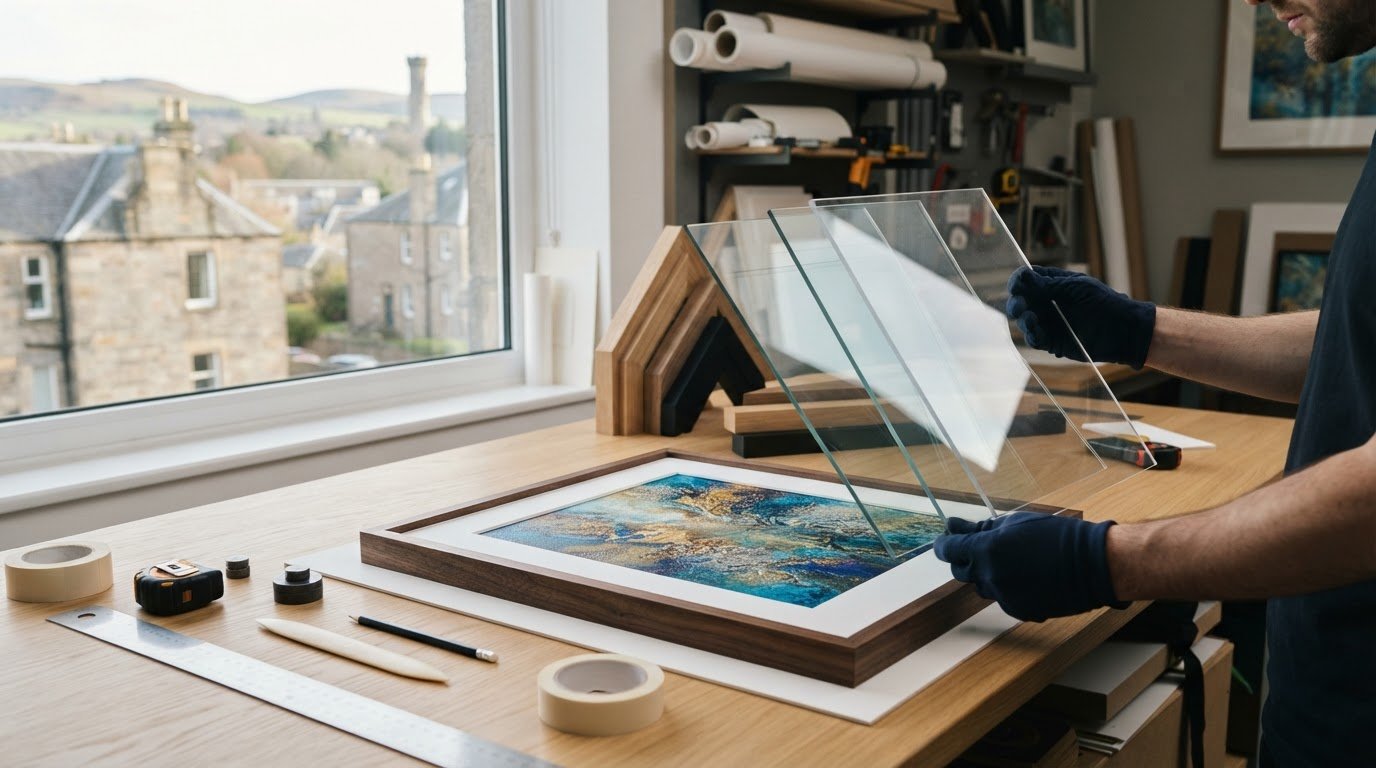
What if your frame can stay, but its glazing needs to change? If you’re asking, “can I get my existing frame re-glazed with UV glass”, the answer may be yes. A framer first needs to check whether the frame can safely accommodate the new glazing and whether it is suitable for the artwork.
It makes sense to check before replacing a frame you already love. UV protection varies between glazing options, and filtering UV light is not the same as reducing reflections or improving clarity. First4Frames Gallery specifies 2mm float glass for its framing, but standard float glass should not be mistaken for UV-protective glazing. Whether First4Frames Gallery offers UV-glass reglazing is not confirmed, so check directly before making plans.
This guide explains what a framer needs to assess, what to ask about UV performance, and how glass and acrylic differ. You’ll also learn when bespoke reframing may be a better fit, so you can make an informed choice for your artwork.
Key Takeaways
- Wondering “can I get my existing frame re-glazed with UV glass”? A framer needs to assess the frame and artwork before confirming whether they’re suitable.
- Compare glazing by its documented UV specification, clarity, reflections and handling needs. Don’t rely on the label “UV glass” alone.
- Photograph your frame and describe the artwork, then ask about glazing availability, fit and whether the mount needs review.
- If the frame is unsuitable, bespoke picture framing may provide a better fit, with each frame individually crafted for the artwork.
Can an Existing Picture Frame Be Re-Glazed with UV Glass?
Yes, an existing frame may be suitable for UV-protective glass, but a framer needs to check the frame and artwork before confirming. The glazing must fit securely without pressing against the artwork or mount. The frame’s condition, internal depth, rebate (the channel that holds the glazing and artwork) and fixing method all affect whether it can be reused. There is no universal fit.
If you’re asking, “can I get my existing frame re-glazed with UV glass”, treat UV protection as a specification to verify, not an automatic feature of replacement glass. Ask which product is proposed and request its documented UV performance. This is separate from whether the glass is anti-reflective or offers a clear view. UV filtering can help reduce one source of deterioration, but it cannot prevent every cause of fading or damage.
What needs checking before replacing the glazing?
Ask a framer to inspect the frame, rebate depth, fixings and existing glazing. They should also check how the artwork and mount sit inside the frame. If the replacement glazing is thicker than the original, or the frame is worn or unusually constructed, it may not fit securely. An assessment can establish whether reglazing is practical or bespoke reframing would be more suitable.
What does UV-protective glass mean for framed art?
The term “UV glass” alone does not tell you how much UV the product filters. Check the manufacturer’s documented specification and ask the framer to explain what it means for your artwork. A picture frame brings together several components, including protective glazing, but glazing cannot preserve artwork on its own. Light exposure, the artwork’s materials and its surroundings matter too.
UV filtering and anti-reflective treatment are different features. One concerns UV performance, while the other reduces reflections. Ordinary glass clarity is another consideration. First4Frames specifies 2mm float glass and describes its clarity as superior to perspex used by many competitors, but this is not a claim of UV protection. Its available information confirms bespoke framing, not UV-glass reglazing, so check availability directly.
UV Glass, Standard Glass, and Perspex: What Should You Compare?
The label “UV glass” is not enough to judge whether glazing suits your artwork or frame. Compare the documented UV specification alongside appearance, handling and fit. UV filtering, anti-reflective treatment and glass clarity are separate considerations.
| Glazing | UV specification | Clarity and reflections | Handling and compatibility |
|---|---|---|---|
| Standard glass | Check the product details. Don’t assume it has a UV-protective specification. | Appearance and reflections depend on the glass and any coatings. | Heavier than acrylic and can break. Confirm that its thickness and weight suit the frame and fixings. |
| UV-specified glass | Ask for the manufacturer’s documented UV performance. | UV filtering does not necessarily reduce reflections. Ask whether the glazing has an anti-reflective treatment. | Check the chosen product’s thickness and weight against the frame’s rebate and construction. |
| Perspex or acrylic | UV performance varies by product, so request its specification. | Check the product’s appearance against your artwork and lighting. | Lighter and shatter-resistant compared with glass, but more prone to scratching and static. Confirm it can be fitted securely. |
First4Frames specifies 2mm float glass and describes it as clearer than perspex used by many competitors. This detail concerns clarity, not UV protection, and should not be treated as a UV specification.
Which glazing questions should you ask a framer?
Ask what UV performance is documented for the proposed glazing, whether its thickness and weight suit your frame, and how it may affect reflections and the artwork’s appearance. Check any handling or cleaning requirements as well. If you’re considering whether can I get my existing frame re-glazed with UV glass is practical, these details will help the framer assess your specific frame.
Does UV glass protect artwork from all fading?
No glazing can prevent every kind of fading or damage. Tell the framer where the piece will hang, particularly if it may receive direct sunlight, and seek advice tailored to valuable or delicate work. If reframing is a better fit, you can browse framed artwork for inspiration.

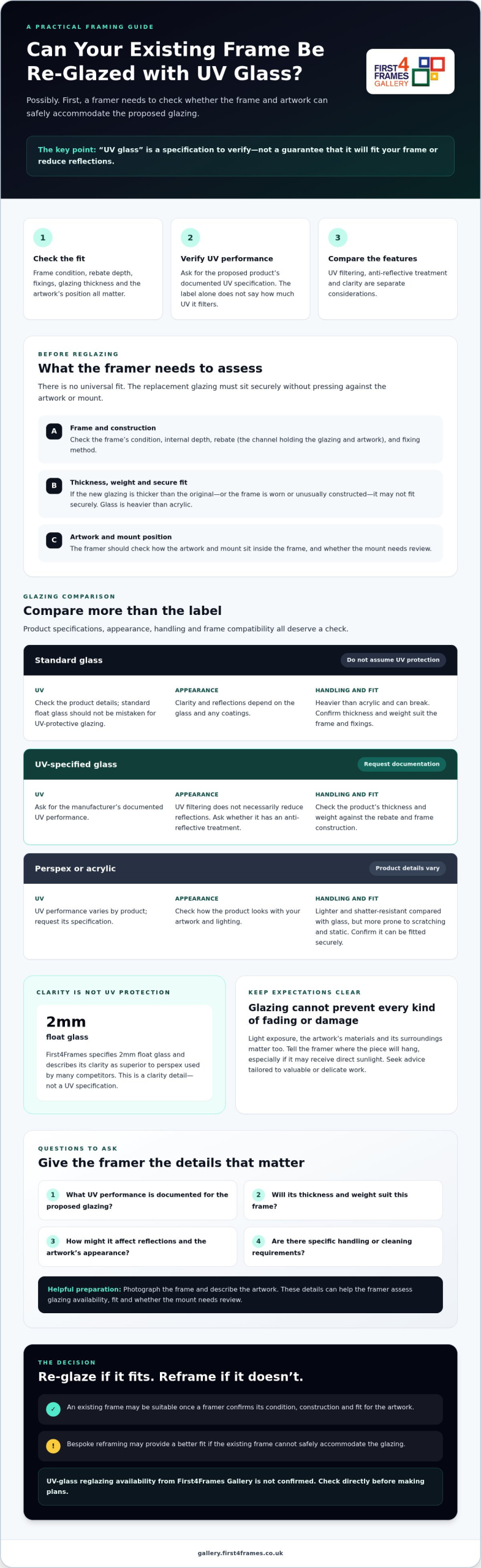
How to Decide Whether to Re-Glaze or Reframe Your Artwork
A careful assessment helps protect both the artwork and the frame. Before approving new glazing, give a framer enough information to check the frame’s condition, construction and fit.
- Photograph the frame. Share clear images of the front, back, corners and fixings. Include a side view so the framer can see the frame’s depth.
- Describe the artwork. Explain what it is made from, whether it has a mount and where it is displayed. Mention any concerns about its condition or sensitivity.
- Ask for an assessment. Confirm whether the requested glazing is available, whether it will fit securely and what handling it needs. Ask whether removing and refitting the artwork could affect the mount or frame construction.
- Agree the next step. Proceed with reglazing only after a professional confirms that the frame can safely accommodate the chosen material.
When might keeping the existing frame make sense?
Reusing a frame may be practical if it is in good condition and the framer confirms that the replacement glazing fits the rebate and fixings. Even then, changing the glazing means taking the frame apart. Ask whether removing and refitting the artwork could affect it or the mount. The answer depends on the individual frame, so don’t assume it will be a straightforward swap.
When should you consider bespoke reframing?
If the frame cannot safely hold your preferred glazing, a new frame made for the artwork may be more suitable. First4Frames offers bespoke picture framing, with each frame individually crafted for the order using quality materials. Its available information does not confirm whether it accepts reglazing jobs, so check service availability before making arrangements.
For more on framing decisions, read a custom picture framing guide and a picture frame selection guide. If a new piece is the right direction, explore framed artwork for inspiration.
Your Next Step: Get the Right Framing Advice for Your Artwork
Before authorising work, ask a framer to confirm the UV specification, check that the glazing fits your frame and establish whether it is suitable for the artwork. Preparing clear details will help them assess your options.
What information should you prepare for a framing enquiry?
Gather these details before speaking to a framer:
- Measurements: Record the outside frame dimensions and, if accessible, the artwork and rebate dimensions.
- Photographs: Take clear pictures of the front, back and edges, including any visible damage.
- Artwork and glazing: Describe the artwork, current glazing, display location and the UV-protection outcome you want. If you have a digital photograph, ask about print and frame options. First4Frames sells Giclée fine art prints that customers can pair with a custom frame.
First4Frames offers bespoke framing, but whether it provides UV-glass reglazing is not confirmed. If a new piece better suits your needs, explore its selection of fine art prints and ready-to-hang framed art, with a choice of frames. You can also consider bespoke framed art for your home or commercial space. Browse the framed art gallery for inspiration.
Choose the Right Next Step for Your Artwork
The answer to “can I get my existing frame re-glazed with UV glass” depends on the frame’s construction, the glazing available and what suits the artwork. Before authorising a change, ask a framer to confirm the UV specification, check the frame’s fit and consider how the artwork and mount will sit behind the replacement glazing.
Clear details make that conversation easier. Share the frame’s measurements and photographs, describe the artwork and its display location, and explain what you want UV protection to achieve. First4Frames specifies 2mm float glass for its clarity compared with perspex, but this is not a UV-protection claim. If a new frame is a better solution, First4Frames offers bespoke picture framing, with each frame individually crafted for the order.
Looking for a fresh piece instead? Explore framed art in the First4Frames Gallery for inspiration. Ask a framer to assess your existing frame, or browse the gallery to find artwork that you can pair with a frame.
Frequently Asked Questions
Can I replace the glass in my existing picture frame with UV glass?
Possibly, but a framer needs to inspect the frame and confirm that the required glazing is available. The frame’s depth, condition and fixings must suit the replacement, and the artwork must sit safely behind it. If you’re asking, “can I get my existing frame re-glazed with UV glass”, request the product’s documented UV specification and a fit assessment before approving any work.
Will UV glass fit any existing picture frame?
No, there is no universal fit. A framer needs to check the frame’s depth and rebate, its condition, and whether the fixings can hold the new glazing securely. They should also make sure the artwork and mount have enough clearance and will not press against the glass. The answer depends on the specific frame and glazing, so arrange an assessment before choosing a replacement.
Does UV glass stop artwork from fading completely?
No. UV-filtering glazing can help reduce exposure to UV radiation, but it cannot prevent every cause of fading or damage. Other light and environmental conditions matter too, including display location and direct sunlight. Ask a framer how the proposed glazing’s documented specification relates to your artwork and where it will hang. For valuable or delicate work, seek advice tailored to the piece.
Is UV glass better than perspex for picture framing?
Neither is automatically better for every artwork or frame. Compare the specific product’s documented UV performance, appearance, thickness and handling needs. Glass is generally more scratch-resistant but can break. Acrylic, often called perspex, is lighter and shatter-resistant but can scratch and attract dust through static. First4Frames specifies 2mm float glass and highlights its clarity compared with perspex, but this is not a UV-protection claim.
Can a picture framer reglaze a frame without replacing the artwork or mount?
It may be possible, but the framer should inspect the specific frame construction first. They need to consider how the glazing is held in place and whether the artwork and mount can be removed and refitted safely. The mount may need review if the replacement affects the available clearance. Don’t assume the artwork can remain untouched or that the mount will suit the new glazing.