



For acrylic vs glass frames for safety, acrylic is generally the safer glazing choice where impact is a concern, while glass can break if knocked or dropped. Acrylic needs gentler handling to avoid scratches, so the right option depends on the artwork and where it will hang.
Glazing affects how a picture looks and feels on your wall. Whether you’re considering coastal wall art, photography prints or custom framed art prints, think about the room’s light, how the piece will be displayed and how often it may be handled. Online picture framing lets you consider these choices before settling on a finish.
This guide compares acrylic, glass and styrene for safety, breakage and durability. You’ll learn how the materials differ and how to weigh their practical trade-offs. A wall art visualiser may help you picture the finished display, while the glazing comparison can guide your frame choice.
Key Takeaways
- See why acrylic can reduce the risk of dangerous shards, while its surface needs gentler care to avoid scratches.
- Compare the clear finish of glass with acrylic’s practical advantages to find the right balance for your artwork.
- Understand how glazing choice affects handling and durability, especially for larger framed pieces.
- Use the decision guide to weigh glass, acrylic and styrene against where and how you plan to display your frame.
Can Acrylic Photo Frames Break?
Acrylic resists impact and shattering, but it isn’t immune to damage. Compared with standard glass, it’s less likely to break into sharp shards after an impact. That difference can matter in a busy hallway or family room, although scratches are acrylic’s more common drawback.
Acrylic scratches more easily than glass, so grit, rough cloths and careless handling can mark its surface. Lift it by the edges and keep it away from abrasive materials during framing. If dust settles on it, use a slightly damp, soft, non-abrasive cloth. Avoid glass cleaner, which isn’t recommended for acrylic.
Some acrylic scratches can be removed at home, but prevention helps keep the view clear. Clean gently rather than rubbing a dry, dusty surface. Glass is more scratch-resistant in everyday handling, although it can still break if knocked or dropped.
How do acrylic and glass compare for fire safety and heat resistance? Impact and shatter resistance don’t show how either material performs in a fire or under sustained heat. Don’t treat ordinary picture glazing as fire protection. Heat performance is a separate consideration from breakage.
How do safety glass options compare with acrylic for framed pictures? Tempered glass can break into blunt, pebble-like pieces rather than the sharp shards associated with standard glass. Acrylic still has a safety advantage because it resists shattering, while tempered glass remains glass and can break.
| Glazing option | Scratch resistance | Impact and breakage | Handling |
|---|---|---|---|
| Acrylic | Scratches more easily | Shatter-resistant | Lighter than glass |
| Standard glass | More scratch-resistant | Can shatter into sharp pieces | Heavier than acrylic |
| Tempered glass | Glass-like surface | Can break into blunt, pebble-like pieces | Heavier than acrylic |
Choose acrylic when lower weight and reduced shatter risk matter most, or glass when scratch resistance is the priority.
Glass vs Acrylic – What’s Best for Framing?
Choosing glass or acrylic affects how a print looks in its room. Glass can show more glare, while acrylic is available in a non-glare version. The right fit depends on the artwork’s detail, the surrounding light and the viewing angle. Opposite a bright window, reflections may compete with the image; in a quieter spot, clear glazing can keep attention on the artwork.
Good-quality acrylic can be as optically clear as glass, so either material can present fine detail and colour faithfully. Clarity depends on the glazing grade, not just the material. Look at subtle transitions, such as pale skies in a landscape print or fine lines in an illustration, to judge whether the glazing preserves the qualities that make the artwork appealing.
Non-glare glazing can soften reflections, but it isn’t necessary for every display. A framed piece viewed straight on in a room with controlled light may not need it, while a picture near a window or light source may benefit more. The acrylic vs glass frames for safety decision should account for the display setting as well as the image: reflection control and impact resistance are separate considerations.
Acrylic weighs about half as much as glass picture glazing, which can make larger framed artwork easier to handle. The lighter weight helps when positioning a substantial piece, while glass offers a familiar option with a scratch-resistant surface. These practical differences matter beyond appearance.
Use the acrylic vs glass frames for safety comparison to clarify your priorities: consider handling and potential impact, then judge clarity and reflections in the intended room. If the artwork’s colours and detail are central, choose glazing that lets them remain the focus without distracting glare. Explore the framed artwork gallery to find pieces whose presentation suits your space.

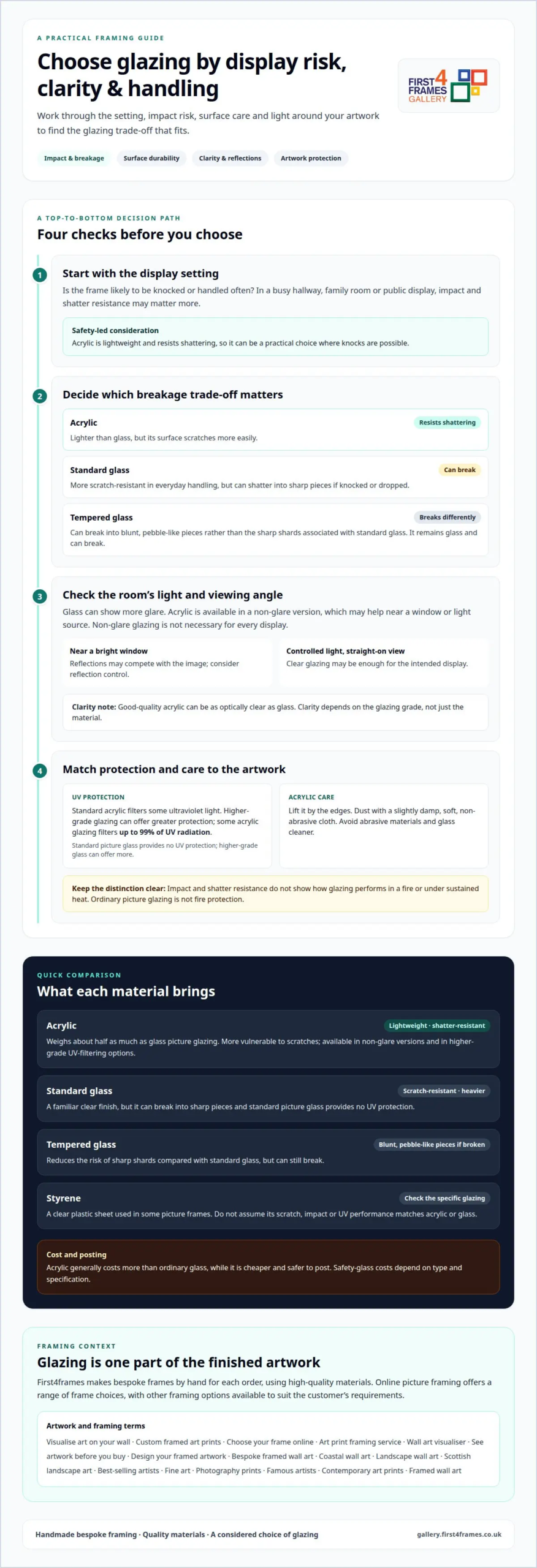
Choosing between styrene, acrylic and glass glazing
Choose glazing by considering the display setting, impact risk and the protection the artwork needs. In homes and public spaces, lightweight, shatter-resistant acrylic can be a practical safety-focused option.
Styrene Glazing
Styrene is a clear plastic sheet used as glazing in some picture frames. Don’t assume its scratch, impact or UV performance matches acrylic or glass. For a picture in a busy hallway or public display, consider the likelihood of knocks and glazing’s role in protecting the artwork. Mounts and finishes complete the presentation, but don’t change the glazing material’s properties.
Acrylic Glazing
Acrylic is light and shatter-resistant, making it a practical choice for homes and public spaces where impact is a concern. Standard acrylic filters some ultraviolet light, while higher-grade glazing can offer greater protection. Some acrylic glazing filters up to 99% of UV radiation. Museum-grade UV-filtering acrylic is also available for valuable artwork, including in acrylic display boxes. Match the protection to the artwork’s exposure and display conditions.
Glass Glazing
Standard picture glass gives a clear finish but provides no UV protection; higher-grade glass can offer more. Tempered safety glass can break into blunt, pebble-like pieces rather than the sharp shards associated with standard glass. Acrylic generally costs more than ordinary glass and is cheaper and safer to post. Safety-glass costs depend on its type and specification, so compare the glazing selected rather than assuming all glass has the same price.
Is acrylic or glass safer for picture frames in UK homes? Acrylic is generally the safer choice where knocks are possible because it is lightweight and resists shattering. Tempered glass reduces the risk of sharp shards compared with standard glass.
Are there UK safety standards or regulations for glazing in picture frames? Choose glazing for the frame’s display setting and impact risk. Don’t assume ordinary picture glass is safety glass or suitable for every building-glazing application.
In a home with children or a shared public display, prioritise impact and shatter resistance. For valuable artwork, consider UV-filtering grades and the room’s light exposure.
Acrylic and glass frame durability
Acrylic glazing weighs about half as much as glass, reducing the load a framed picture places on its wall fixings. A lighter frame may be easier to lift and hang, but secure hanging still depends on the frame, fixings and wall.
Acrylic Frame Durability and Weight
Acrylic is plastic glazing, valued for its lower weight and resistance to shattering. It’s described as 10 times stronger than traditional glass frames, but that doesn’t make its surface immune to scratches. For a large picture, lighter glazing can make carrying and positioning easier, while careful handling helps prevent marks. Durability means considering both impact and surface wear.
Glass Frame Durability and Weight
Glass has a hard surface that resists everyday scratches, but it weighs more than acrylic. That extra weight makes a large framed picture harder to carry and hang and can put more strain on its fixings over time. If glass breaks after a knock or fall, standard glazing can form sharp pieces; tempered glass breaks into blunt, pebble-like pieces.
With either material, secure hanging matters as much as glazing choice. A heavier glass frame places more load on its supports, so consider the picture’s total weight and the wall where it will hang. Take particular care with positioning and fixings above a busy walkway.
Consider durability in everyday use, not just at the moment of impact. A picture in a frequently used hallway may get bumped as people pass, while a frame moved between rooms may face more knocks. Acrylic’s shatter resistance suits settings where impact is a concern; glass offers greater resistance to surface scratches.
The practical answer to falling risk is that lighter acrylic reduces the load compared with glass, but neither glazing choice alone makes a frame secure. Match the fixings to the complete frame and wall, then choose the picture’s position carefully.
Explore framed artwork for your space and consider its size and display position before choosing a glazing material.
First4Frames Gallery
First4Frames Gallery helps you bring artwork together with framing made to suit its individual dimensions and presentation. If you’re weighing glazing choices, its bespoke frames are made with high-quality materials and come glazed with 2 mm float glass. That detail matters if you’ve decided acrylic is essential for your display: the framing service uses glass.
For artwork that suits glass glazing, Custom Picture Framing can help create a considered finish, while Ready-to-Hang Framed Art offers a finished option. The right choice depends on your artwork, where you plan to display it and the qualities you value most. Contact First4Frames Gallery to discuss your framing needs.
Choose the Finish That Feels Right for Your Space
Your decision about acrylic vs glass frames for safety can also shape where you place the artwork at home. Consider who uses the room, how the picture will be displayed and what you want it to bring to the space. The right framing choice should feel considered, not like an afterthought.
First4Frames Gallery offers Ready-to-Hang Framed Art, Custom Picture Framing and Giclée Fine Art Prints, bringing artwork and framing together in a considered presentation. Whether you’re selecting a finished piece or planning a frame around artwork you already own, take time to imagine how it will sit among your colours, furnishings and light.
Contact First4Frames Gallery for help as you plan your next framed piece. A thoughtful choice can give the artwork a place to feel at home.
Frequently Asked Questions
Are There Any Disadvantages to Acrylic?
Yes. Acrylic is more vulnerable to surface scratches, and static can attract dust unless the glazing has an anti-static finish. Careful handling may be needed to keep the view clear. In a dusty room, static-attracting glazing may make dust more noticeable. Weigh these care considerations against acrylic’s lighter weight and impact resistance when choosing glazing.
Can acrylic glazing still cause injuries or break into sharp pieces?
Acrylic resists shattering, so it’s less likely than standard glass to create sharp shards after an impact. If acrylic is damaged or breaks, handle it carefully rather than assuming it’s harmless: broken edges can still pose a contact risk. Keep damaged glazing away from children and replace it before displaying the picture again.
Which is safer for frames in children’s rooms, schools and public spaces?
Acrylic is generally the safer glazing choice where a picture could be knocked, such as a child’s room or a busy school corridor. Its lighter weight and resistance to shattering can reduce risks associated with breakage. Tempered glass is another option if you prefer glass, as it breaks into blunt, pebble-like pieces rather than the sharp shards of standard glass.
How do acrylic and glass compare for fire safety and heat resistance?
Impact and shatter resistance don’t establish performance in a fire or under sustained heat, so ordinary picture glazing should not be treated as fire protection.
What are the cost differences between acrylic, standard glass and safety glass in the UK?
Acrylic generally costs more than ordinary glass. Safety-glass costs depend on type and specification, so compare the selected glazing.