Posted on

Acrylic or Glass Frames: Compare Safety and Breakage

Acrylic or Glass Frames: Compare Safety and Breakage

For acrylic vs glass frames for safety, acrylic is generally the safer glazing choice where impact is a concern, while glass can break if knocked or dropped. Acrylic needs gentler handling to avoid scratches, so the right option depends on the artwork and where it will hang.

Glazing affects how a picture looks and feels on your wall. Whether you’re considering coastal wall art, photography prints or custom framed art prints, think about the room’s light, how the piece will be displayed and how often it may be handled. Online picture framing lets you consider these choices before settling on a finish.

This guide compares acrylic, glass and styrene for safety, breakage and durability. You’ll learn how the materials differ and how to weigh their practical trade-offs. A wall art visualiser may help you picture the finished display, while the glazing comparison can guide your frame choice.

Key Takeaways

  • See why acrylic can reduce the risk of dangerous shards, while its surface needs gentler care to avoid scratches.
  • Compare the clear finish of glass with acrylic’s practical advantages to find the right balance for your artwork.
  • Understand how glazing choice affects handling and durability, especially for larger framed pieces.
  • Use the decision guide to weigh glass, acrylic and styrene against where and how you plan to display your frame.

Can Acrylic Photo Frames Break?

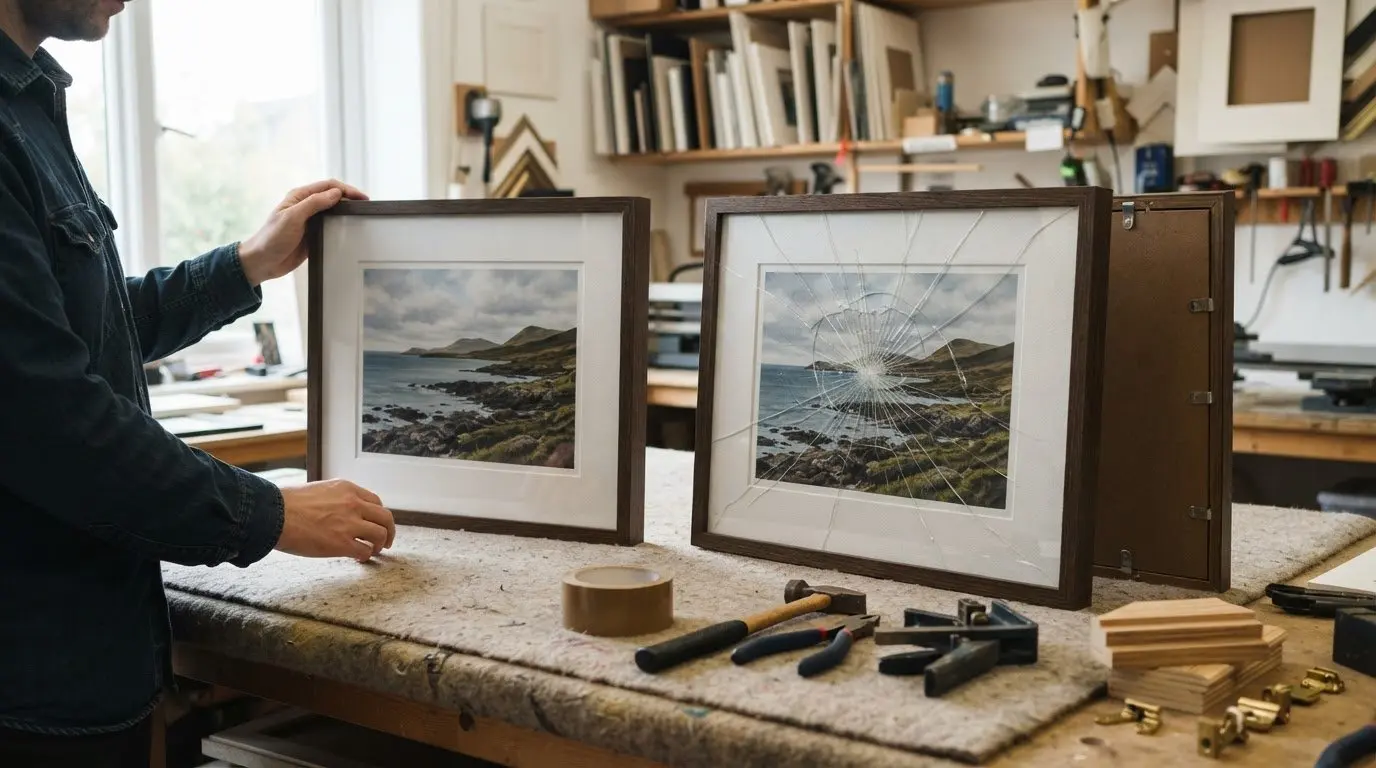
Acrylic resists impact and shattering, but it isn’t immune to damage. Compared with standard glass, it’s less likely to break into sharp shards after an impact. That difference can matter in a busy hallway or family room, although scratches are acrylic’s more common drawback.

Acrylic scratches more easily than glass, so grit, rough cloths and careless handling can mark its surface. Lift it by the edges and keep it away from abrasive materials during framing. If dust settles on it, use a slightly damp, soft, non-abrasive cloth. Avoid glass cleaner, which isn’t recommended for acrylic.

Some acrylic scratches can be removed at home, but prevention helps keep the view clear. Clean gently rather than rubbing a dry, dusty surface. Glass is more scratch-resistant in everyday handling, although it can still break if knocked or dropped.

How do acrylic and glass compare for fire safety and heat resistance? Impact and shatter resistance don’t show how either material performs in a fire or under sustained heat. Don’t treat ordinary picture glazing as fire protection. Heat performance is a separate consideration from breakage.

How do safety glass options compare with acrylic for framed pictures? Tempered glass can break into blunt, pebble-like pieces rather than the sharp shards associated with standard glass. Acrylic still has a safety advantage because it resists shattering, while tempered glass remains glass and can break.

Glazing option Scratch resistance Impact and breakage Handling
Acrylic Scratches more easily Shatter-resistant Lighter than glass
Standard glass More scratch-resistant Can shatter into sharp pieces Heavier than acrylic
Tempered glass Glass-like surface Can break into blunt, pebble-like pieces Heavier than acrylic

Choose acrylic when lower weight and reduced shatter risk matter most, or glass when scratch resistance is the priority.

Glass vs Acrylic – What’s Best for Framing?

Choosing glass or acrylic affects how a print looks in its room. Glass can show more glare, while acrylic is available in a non-glare version. The right fit depends on the artwork’s detail, the surrounding light and the viewing angle. Opposite a bright window, reflections may compete with the image; in a quieter spot, clear glazing can keep attention on the artwork.

Good-quality acrylic can be as optically clear as glass, so either material can present fine detail and colour faithfully. Clarity depends on the glazing grade, not just the material. Look at subtle transitions, such as pale skies in a landscape print or fine lines in an illustration, to judge whether the glazing preserves the qualities that make the artwork appealing.

Non-glare glazing can soften reflections, but it isn’t necessary for every display. A framed piece viewed straight on in a room with controlled light may not need it, while a picture near a window or light source may benefit more. The acrylic vs glass frames for safety decision should account for the display setting as well as the image: reflection control and impact resistance are separate considerations.

Acrylic weighs about half as much as glass picture glazing, which can make larger framed artwork easier to handle. The lighter weight helps when positioning a substantial piece, while glass offers a familiar option with a scratch-resistant surface. These practical differences matter beyond appearance.

Use the acrylic vs glass frames for safety comparison to clarify your priorities: consider handling and potential impact, then judge clarity and reflections in the intended room. If the artwork’s colours and detail are central, choose glazing that lets them remain the focus without distracting glare. Explore the framed artwork gallery to find pieces whose presentation suits your space.


Choosing between styrene, acrylic and glass glazing

Choose glazing by considering the display setting, impact risk and the protection the artwork needs. In homes and public spaces, lightweight, shatter-resistant acrylic can be a practical safety-focused option.

Styrene Glazing

Styrene is a clear plastic sheet used as glazing in some picture frames. Don’t assume its scratch, impact or UV performance matches acrylic or glass. For a picture in a busy hallway or public display, consider the likelihood of knocks and glazing’s role in protecting the artwork. Mounts and finishes complete the presentation, but don’t change the glazing material’s properties.

Acrylic Glazing

Acrylic is light and shatter-resistant, making it a practical choice for homes and public spaces where impact is a concern. Standard acrylic filters some ultraviolet light, while higher-grade glazing can offer greater protection. Some acrylic glazing filters up to 99% of UV radiation. Museum-grade UV-filtering acrylic is also available for valuable artwork, including in acrylic display boxes. Match the protection to the artwork’s exposure and display conditions.

Glass Glazing

Standard picture glass gives a clear finish but provides no UV protection; higher-grade glass can offer more. Tempered safety glass can break into blunt, pebble-like pieces rather than the sharp shards associated with standard glass. Acrylic generally costs more than ordinary glass and is cheaper and safer to post. Safety-glass costs depend on its type and specification, so compare the glazing selected rather than assuming all glass has the same price.

Is acrylic or glass safer for picture frames in UK homes? Acrylic is generally the safer choice where knocks are possible because it is lightweight and resists shattering. Tempered glass reduces the risk of sharp shards compared with standard glass.

Are there UK safety standards or regulations for glazing in picture frames? Choose glazing for the frame’s display setting and impact risk. Don’t assume ordinary picture glass is safety glass or suitable for every building-glazing application.

In a home with children or a shared public display, prioritise impact and shatter resistance. For valuable artwork, consider UV-filtering grades and the room’s light exposure.

Acrylic and glass frame durability

Acrylic glazing weighs about half as much as glass, reducing the load a framed picture places on its wall fixings. A lighter frame may be easier to lift and hang, but secure hanging still depends on the frame, fixings and wall.

Acrylic Frame Durability and Weight

Acrylic is plastic glazing, valued for its lower weight and resistance to shattering. It’s described as 10 times stronger than traditional glass frames, but that doesn’t make its surface immune to scratches. For a large picture, lighter glazing can make carrying and positioning easier, while careful handling helps prevent marks. Durability means considering both impact and surface wear.

Glass Frame Durability and Weight

Glass has a hard surface that resists everyday scratches, but it weighs more than acrylic. That extra weight makes a large framed picture harder to carry and hang and can put more strain on its fixings over time. If glass breaks after a knock or fall, standard glazing can form sharp pieces; tempered glass breaks into blunt, pebble-like pieces.

With either material, secure hanging matters as much as glazing choice. A heavier glass frame places more load on its supports, so consider the picture’s total weight and the wall where it will hang. Take particular care with positioning and fixings above a busy walkway.

Consider durability in everyday use, not just at the moment of impact. A picture in a frequently used hallway may get bumped as people pass, while a frame moved between rooms may face more knocks. Acrylic’s shatter resistance suits settings where impact is a concern; glass offers greater resistance to surface scratches.

The practical answer to falling risk is that lighter acrylic reduces the load compared with glass, but neither glazing choice alone makes a frame secure. Match the fixings to the complete frame and wall, then choose the picture’s position carefully.

Explore framed artwork for your space and consider its size and display position before choosing a glazing material.

First4Frames Gallery helps you bring artwork together with framing made to suit its individual dimensions and presentation. If you’re weighing glazing choices, its bespoke frames are made with high-quality materials and come glazed with 2 mm float glass. That detail matters if you’ve decided acrylic is essential for your display: the framing service uses glass.

For artwork that suits glass glazing, Custom Picture Framing can help create a considered finish, while Ready-to-Hang Framed Art offers a finished option. The right choice depends on your artwork, where you plan to display it and the qualities you value most. Contact First4Frames Gallery to discuss your framing needs.

Choose the Finish That Feels Right for Your Space

Your decision about acrylic vs glass frames for safety can also shape where you place the artwork at home. Consider who uses the room, how the picture will be displayed and what you want it to bring to the space. The right framing choice should feel considered, not like an afterthought.

First4Frames Gallery offers Ready-to-Hang Framed Art, Custom Picture Framing and Giclée Fine Art Prints, bringing artwork and framing together in a considered presentation. Whether you’re selecting a finished piece or planning a frame around artwork you already own, take time to imagine how it will sit among your colours, furnishings and light.

Contact First4Frames Gallery for help as you plan your next framed piece. A thoughtful choice can give the artwork a place to feel at home.

Frequently Asked Questions

Are There Any Disadvantages to Acrylic?

Yes. Acrylic is more vulnerable to surface scratches, and static can attract dust unless the glazing has an anti-static finish. Careful handling may be needed to keep the view clear. In a dusty room, static-attracting glazing may make dust more noticeable. Weigh these care considerations against acrylic’s lighter weight and impact resistance when choosing glazing.

Can acrylic glazing still cause injuries or break into sharp pieces?

Acrylic resists shattering, so it’s less likely than standard glass to create sharp shards after an impact. If acrylic is damaged or breaks, handle it carefully rather than assuming it’s harmless: broken edges can still pose a contact risk. Keep damaged glazing away from children and replace it before displaying the picture again.

Which is safer for frames in children’s rooms, schools and public spaces?

Acrylic is generally the safer glazing choice where a picture could be knocked, such as a child’s room or a busy school corridor. Its lighter weight and resistance to shattering can reduce risks associated with breakage. Tempered glass is another option if you prefer glass, as it breaks into blunt, pebble-like pieces rather than the sharp shards of standard glass.

How do acrylic and glass compare for fire safety and heat resistance?

Impact and shatter resistance don’t establish performance in a fire or under sustained heat, so ordinary picture glazing should not be treated as fire protection.

What are the cost differences between acrylic, standard glass and safety glass in the UK?

Acrylic generally costs more than ordinary glass. Safety-glass costs depend on type and specification, so compare the selected glazing.

Posted on

Custom Acrylic Photo Frames: The Complete Guide to a Modern Display

Your most treasured photographs and spectacular art prints deserve to be the centre of attention. But choosing the right frame can feel overwhelming. You’re drawn to a sleek, modern look, but perhaps you’re wary of acrylic, questioning if it can truly match the quality of glass or if it will stand the test of time. We’re here to put those concerns to rest. Far from being a simple substitute, premium custom acrylic photo frames are the secret behind many of the most breathtaking gallery displays, celebrated for their crystal clarity and remarkable durability.

This complete guide is your journey into the world of modern framing. We’ll uncover the real benefits of high-quality acrylic, from its surprising strength and lightweight nature to its UV-protective qualities. You’ll learn how it compares to glass, discover simple care tips to keep it looking pristine for years, and gain the confidence to select a beautiful, bespoke frame that truly elevates your art and transforms your space.

Key Takeaways

  • Understand the key differences between acrylic and glass to confidently choose the best material for displaying your artwork.
  • Discover how different styles of custom acrylic photo frames create a stunning, frameless ‘floating’ effect that makes your art the true centrepiece.
  • Learn the simple, step-by-step process for ordering a bespoke piece, ensuring your display is crafted perfectly to your specifications.
  • Master the correct techniques for cleaning and caring for your acrylic frame to maintain its crystal-clear brilliance for years to come.

What Are Custom Acrylic Photo Frames?

Imagine your most cherished photograph suspended in mid-air, its colours appearing more vibrant and its details sharper than ever before. This is the spectacular effect of custom acrylic photo frames. A truly modern alternative to traditional framing, this method sandwiches your print between two panels of premium acrylic, creating a sleek, frameless presentation that makes your artwork the undeniable star of the show. The polished, crystal-clear material acts as a window, enhancing the depth and richness of your image and pulling you directly into the picture.

To see this beautiful effect in action, take a look at this short video:

This contemporary style is exceptionally versatile, making it a perfect fit for modern homes, sophisticated office spaces, and professional art galleries. By eliminating the visual weight of a traditional border, an acrylic frame ensures your art seamlessly integrates with your décor while making a bold, minimalist statement. It’s a professional choice for displaying photography with unparalleled clarity and impact.

The Allure of the ‘Frameless’ Look

The magic of an acrylic frame lies in its minimalist, ‘frameless’ aesthetic. This clean, borderless presentation removes all distractions, allowing the viewer’s eye to focus entirely on the image itself. Without a traditional frame competing for attention, every detail, texture, and colour in your photograph or fine art print can be fully appreciated. This versatile display style is not just for photos; it offers a sophisticated way to present fine art prints, posters, and even important documents and certificates with a professional, gallery-worthy finish.

Beyond Plastic: Understanding Gallery-Quality Acrylic

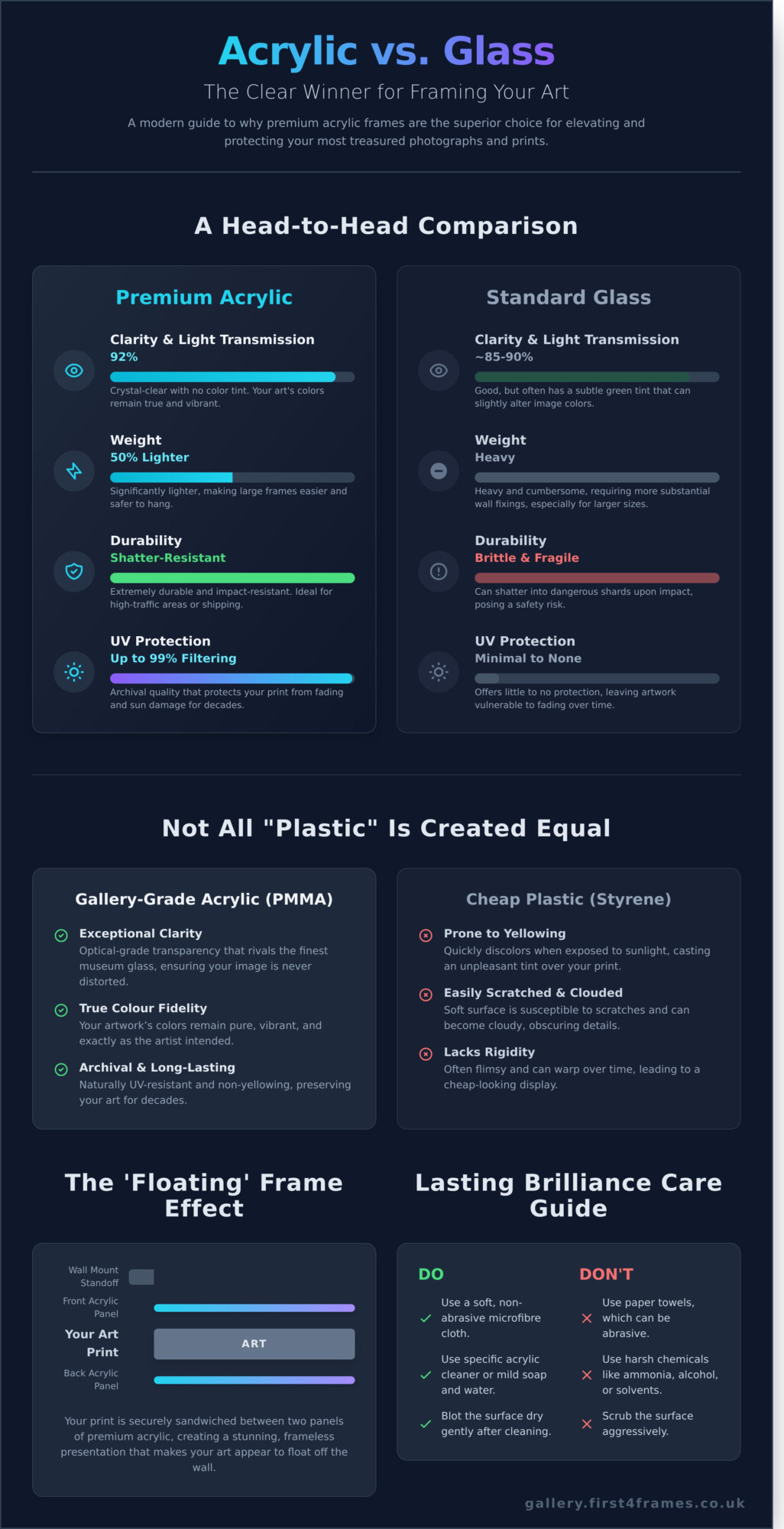
It’s crucial to understand that not all “plastic” frames are created equal. Cheaper options often use flimsy styrene, which can quickly yellow, scratch, and cloud over time. We are committed to craftsmanship and longevity, which is why we use only premium, museum-grade acrylic. This material, a type of Poly(methyl methacrylate) (PMMA), offers superior benefits:

  • Exceptional Clarity: It provides crystal-clear, optical-grade transparency that won’t distort your image.
  • Colour Fidelity: Your artwork’s colours remain true, vibrant, and exactly as the artist intended.
  • Archival Quality: It is naturally UV-resistant, protecting your print from fading and ensuring it remains beautiful for decades to come.

Acrylic vs. Glass: A Head-to-Head Comparison for Your Artwork

When investing in a bespoke frame, one of the first and most important decisions is the glazing-the protective front layer. For years, glass was the traditional choice, but modern advancements have made acrylic (often known by brand names like Perspex®) a superior option in almost every key area. Understanding the difference is crucial to giving your artwork the presentation and protection it deserves.

To help you decide, here is a simple head-to-head comparison:

Feature Premium Acrylic Standard Glass
Clarity Exceptional (up to 92% light transmission) Good (can have a green tint)
Weight Lightweight (up to 50% lighter) Heavy
Durability Shatter-resistant and highly durable Brittle and shatters easily
UV Protection Excellent (up to 99% filtering) Minimal to none

Superior Optical Clarity and Lightness

Your artwork deserves to be seen in its true, vibrant colours. Our premium acrylic offers spectacular optical clarity, transmitting more light than glass without the subtle green tint that can dull your image. This means your photo or print appears brighter and more lifelike. Furthermore, acrylic is up to 50% lighter than glass, making our custom acrylic photo frames easier and safer to hang, especially for large-scale pieces that command attention on your wall.

Durability and Shatter-Resistance

Accidents happen, but with acrylic, they don’t have to result in disaster. Acrylic is significantly more impact-resistant than glass, making it the perfect, safe choice for high-traffic areas, public galleries, or homes with children and pets. While incredibly tough, it is a softer material and requires gentle handling to avoid scratches. As experts note when discussing Caring for Acrylic surfaces, using the correct cleaning methods is essential to maintaining its pristine finish for years to come.

Essential UV Protection to Preserve Your Art

Sunlight is one of the greatest threats to your cherished memories and valuable prints, as harmful ultraviolet (UV) rays can cause colours to fade dramatically over time. This damage is irreversible. Our high-quality acrylic glazing comes with up to 99% UV protection built-in, acting as a powerful shield for your artwork. Choosing a frame with this feature is not a luxury; it’s a crucial investment in preserving the beauty and value of your piece for a lifetime.

For large artwork, pieces in bright rooms, or simply for the peace of mind that comes with superior protection and clarity, custom acrylic photo frames are the clear, professional choice.

This principle of using specialized materials for protection extends to other valuable investments as well. For instance, for enthusiasts looking to maintain their watercraft against the harsh marine environment, it’s equally important to explore Boat Building & Repair Materials that offer similar durability and protection.

Exploring Styles: Which Custom Acrylic Frame is Right for You?

The true beauty of acrylic lies in its remarkable versatility. It’s not a single look, but a spectrum of styles designed to elevate your chosen image and act as the perfect bridge between your artwork and your room’s décor. Finding the right style is key to making your photo or art piece truly shine. Let’s explore which of our custom acrylic photo frames is the perfect match for your vision.

The Floating Sandwich Frame

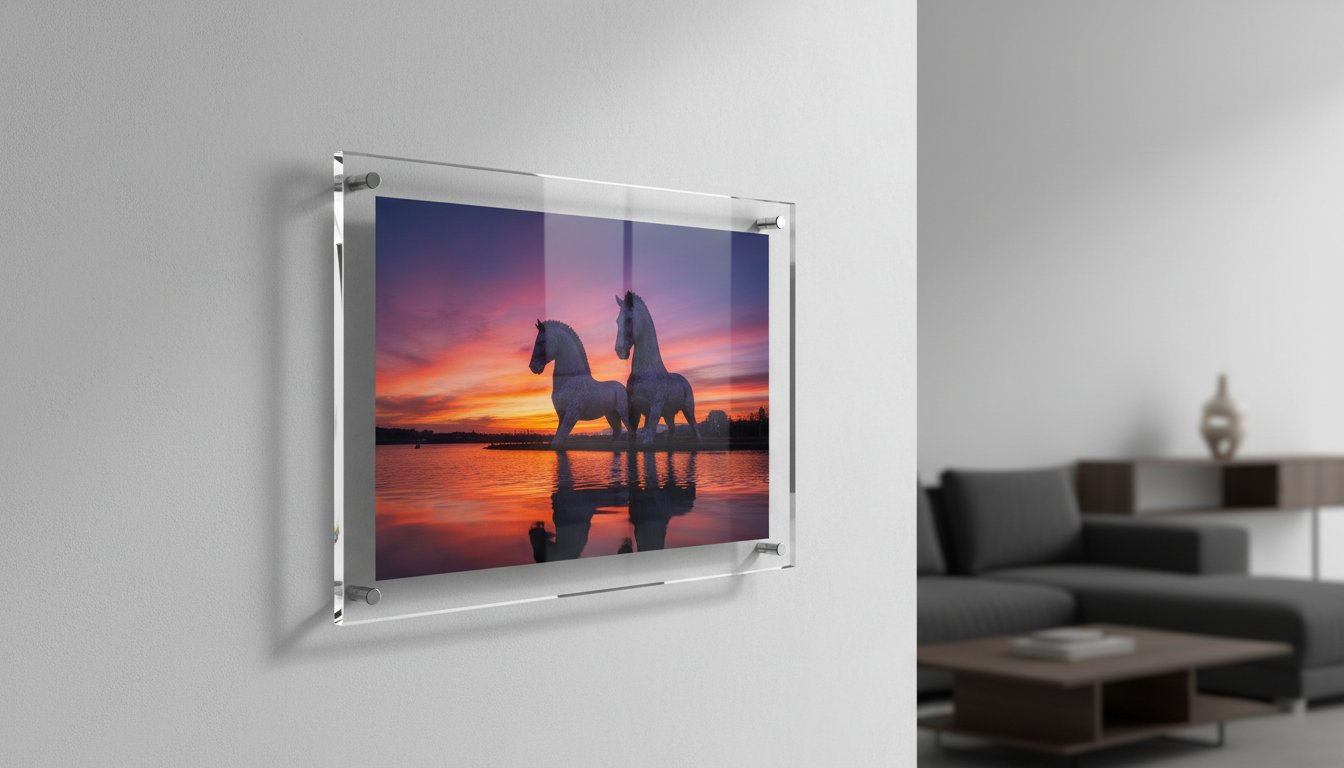
This is one of our most popular and visually striking options. Your image is expertly printed and sandwiched between two sheets of premium, polished acrylic. The frame is then mounted using four metal standoffs at the corners, which hold the panels away from the wall. This creates a subtle shadow and a sophisticated illusion that your artwork is floating effortlessly in space.

Best for: Making a spectacular statement with contemporary art, large-format photography, or creating a modern focal point on a feature wall.

Contemporary Acrylic Photo Blocks

For a more substantial, three-dimensional presence, an acrylic photo block is an exceptional choice. These thick, freestanding pieces are crafted from a solid block of crystal-clear acrylic, giving your photo incredible depth and vibrancy. They are stable, durable, and catch the light beautifully from every angle, making the colours pop with life. Their weight and polished finish convey pure quality.

Best for: Desks, bookshelves, and mantelpieces where they can be admired up close. They also make an unforgettable, high-end gift for weddings or anniversaries.

Traditional Frames with Acrylic Glazing

Do you love the classic look of a traditional frame but want the modern benefits of acrylic? This is the perfect solution. You can select a beautiful wood or metal frame from our collection, and we’ll fit it with premium acrylic glazing instead of conventional glass. This gives you the best of both worlds-timeless style combined with superior performance.

  • Safety & Durability: Shatter-resistant acrylic is ideal for high-traffic areas, public spaces, or children’s rooms.
  • Lightweight Design: Using acrylic makes hanging very large pieces much safer and easier on your walls.
  • Enhanced UV Protection: It offers superior protection from sunlight, preserving the colours of your art for years to come.

This bespoke approach ensures your art is both beautifully presented and perfectly protected. Explore our bespoke framing options today.

The Bespoke Process: Crafting Your Perfect Acrylic Display

Transforming your cherished photograph or artwork into a stunning display should be an exciting journey, not a complex task. At First4Frames Gallery, we believe in a partnership with our clients, guiding you through each stage of creation. We’ve refined our process to make ordering bespoke custom acrylic photo frames a simple and rewarding experience, combining your vision with our two decades of craftsmanship.

Follow our three simple steps to bring your perfect piece to life.

Step 1: Your Art, Your Size, Your Style

Everything begins with your image. Whether you have a physical print or a digital file, precision is key. For existing prints, measure the height and width carefully to the nearest millimetre. If you’re uploading a photo for us to print directly onto the acrylic, ensure it’s a high-resolution file for the best results. Next, consider the style that best complements your art:

  • Floating Frames: Your image is sandwiched between two acrylic panels, creating a sleek, borderless effect that makes your art appear to float on the wall.
  • Acrylic Blocks: A thick, substantial block of crystal-clear acrylic gives your photo depth and a modern, freestanding presence perfect for desks and shelves.

Step 2: Choosing Your Fittings and Finishes

The small details are what elevate a good frame to a spectacular one. We provide a curated selection of premium fittings to match your décor and personal taste. You can choose the finish of your wall standoffs, with popular options including polished chrome for a bright, contemporary look or satin black for a subtle, sophisticated touch. Every single one of our custom acrylic photo frames comes with professionally diamond-polished edges as standard, ensuring a flawless, glass-like clarity that beautifully refracts light.

Step 3: Our Master Framers at Work

Once you’ve made your selections, your order is passed into the expert hands of our framing team. This is where craftsmanship truly shines. Your artwork is mounted with meticulous care, and the frame is assembled with precision. Before being securely packaged for dispatch, every piece undergoes a rigorous quality check to ensure it meets our exacting standards. We treat every project with the passion it deserves, guaranteeing your art is protected and presented perfectly. Our team is always here to help. Have a question? Talk to our framing experts.

Caring for Your Acrylic Frame: A Simple Guide to Lasting Brilliance

Your new custom acrylic photo frame delivers a spectacular, gallery-quality finish that makes your art the centre of attention. We understand that its crystal-clear surface might seem delicate, but maintaining that pristine look is remarkably straightforward. As your trusted partner in displaying art, we want to ensure your investment continues to shine for years to come. This simple guide will help you preserve the flawless beauty of your frame with minimal effort.

The Right Way to Clean Acrylic

To keep your frame looking its best, always start with the right tools. A soft, clean microfibre cloth is your best friend-it’s gentle and won’t leave behind lint. For routine dusting, a light pass with a dry microfibre cloth is perfect. For fingerprints or smudges, slightly dampen the cloth with a solution of lukewarm water and a drop of mild washing-up liquid. Gently wipe the surface in light, even strokes, avoiding any scrubbing or heavy pressure.

Common Mistakes to Avoid

The greatest risk to acrylic’s clarity comes from using the wrong cleaning supplies. Never use paper towels, kitchen roll, or any abrasive cloths, as their wood-based fibres can create a network of fine scratches on the surface. It is also crucial to avoid all ammonia-based cleaners (such as Windex) or solvents, as these harsh chemicals can permanently cloud and damage the acrylic. Wiping with a dry, non-microfibre cloth should also be avoided, as this can build static and attract more dust.

A Quick Reference Guide: Do’s and Don’ts

  • Do: Use a clean, soft microfibre cloth for all cleaning and dusting.
  • Do: Use a mild solution of soap and water or a specialised acrylic cleaning fluid.
  • Do: Blot the surface dry with a separate, clean and dry microfibre cloth to prevent water spots.
  • Don’t: Use paper towels, sponges, or any cloth that feels abrasive.
  • Don’t: Use window cleaner, ammonia, bleach, or other harsh chemical solvents.
  • Don’t: Apply heavy pressure or scrub the surface when cleaning.

By following these simple steps, you will ensure your custom acrylic photo frames retain their stunning, modern brilliance. Our commitment to craftsmanship extends beyond the workshop; we want you to enjoy a perfect, uninterrupted view of your cherished photos and art for a lifetime. For more inspiration on how these beautiful frames can transform a space, we invite you to explore our gallery.

Your Masterpiece Awaits Its Perfect Frame

As we’ve discovered, the journey to a spectacular display is made brilliantly clear with acrylic. These modern frames offer a superior alternative to traditional glass, providing unparalleled clarity, UV protection, and lightweight durability that makes your artwork the true centrepiece. From sleek, minimalist float frames to vibrant, dimensional photo blocks, the perfect style exists to complement both your art and your décor. And with simple care, their pristine finish is guaranteed to last for years to come, preserving the moments that matter most.

Choosing the right frame is the final, crucial step in honouring your cherished memories. At First 4 Frames, we bring over 20 years of expert framing experience to every single project. Based in our Falkirk workshop and serving passionate clients across Scotland and the entire UK, we are dedicated to exceptional craftsmanship. We source only the best materials to create gallery-quality custom acrylic photo frames that transform your images into the timeless masterpieces they deserve to be.

Ready to create your stunning acrylic display? Get started with our bespoke framing service.

Frequently Asked Questions

How much do custom acrylic photo frames cost?

The cost of our bespoke custom acrylic photo frames is tailored to your specific requirements, including size, thickness, and hardware choice. As a guide, a smaller A4-sized frame might start from around £40, while larger, more substantial pieces could range from £150 upwards. Each frame is a work of premium craftsmanship, and we provide a detailed quote to ensure complete transparency before we begin creating your perfect display piece.

Are acrylic frames suitable for displaying art in a bathroom or kitchen?

Absolutely. Acrylic is an excellent choice for rooms with high humidity, like kitchens and bathrooms. Unlike wood, it is completely moisture-resistant, so it will not warp, swell, or encourage mould growth. Its durable, non-porous surface also makes it incredibly easy to wipe clean, protecting your precious artwork from splashes and steam. This makes it a practical and beautiful solution for bringing fine art into every room of your home.

How do you hang a floating acrylic frame?

Hanging your frame is a straightforward process. Your frame will arrive with pre-drilled holes and premium stand-off wall mounts. Simply hold the frame against the wall and mark the hole positions with a pencil. Drill at your marked points, insert the provided wall plugs, and screw the stand-off barrels to the wall. Finally, place your acrylic frame onto the barrels and hand-tighten the front caps for a secure, beautiful floating effect.

Can you frame a canvas print in an acrylic frame?

While a standard floating frame sandwiches a print and isn’t suitable for a stretched canvas, we can create a bespoke acrylic box frame. This is a spectacular, modern alternative that encases your canvas from all sides, offering unparalleled protection and a museum-quality display. This style enhances the three-dimensional nature of a canvas. Please get in touch with our team, and we would be delighted to discuss the perfect custom solution for your artwork.

What is the difference between Plexiglas, Lucite, and acrylic?

There is no material difference; Plexiglas and Lucite are simply brand names for acrylic sheet, much like Hoover is a brand of vacuum cleaner. All are names for the same high-quality, transparent thermoplastic known as polymethyl methacrylate (PMMA). We source only the best gallery-grade acrylic for our frames, ensuring you receive a product with exceptional clarity, UV protection, and long-lasting durability, regardless of the trade name.

How thick should the acrylic be for my frame?

The ideal thickness depends entirely on the size of your artwork and the aesthetic you wish to achieve. For smaller pieces (up to A3), a 5mm panel provides a sleek, modern look. For larger statement pieces, we recommend 8mm or 10mm acrylic. This adds a sense of depth and substance, enhances the light-refracting properties of the material, and ensures perfect structural rigidity for a truly premium finish that will stand the test of time.