


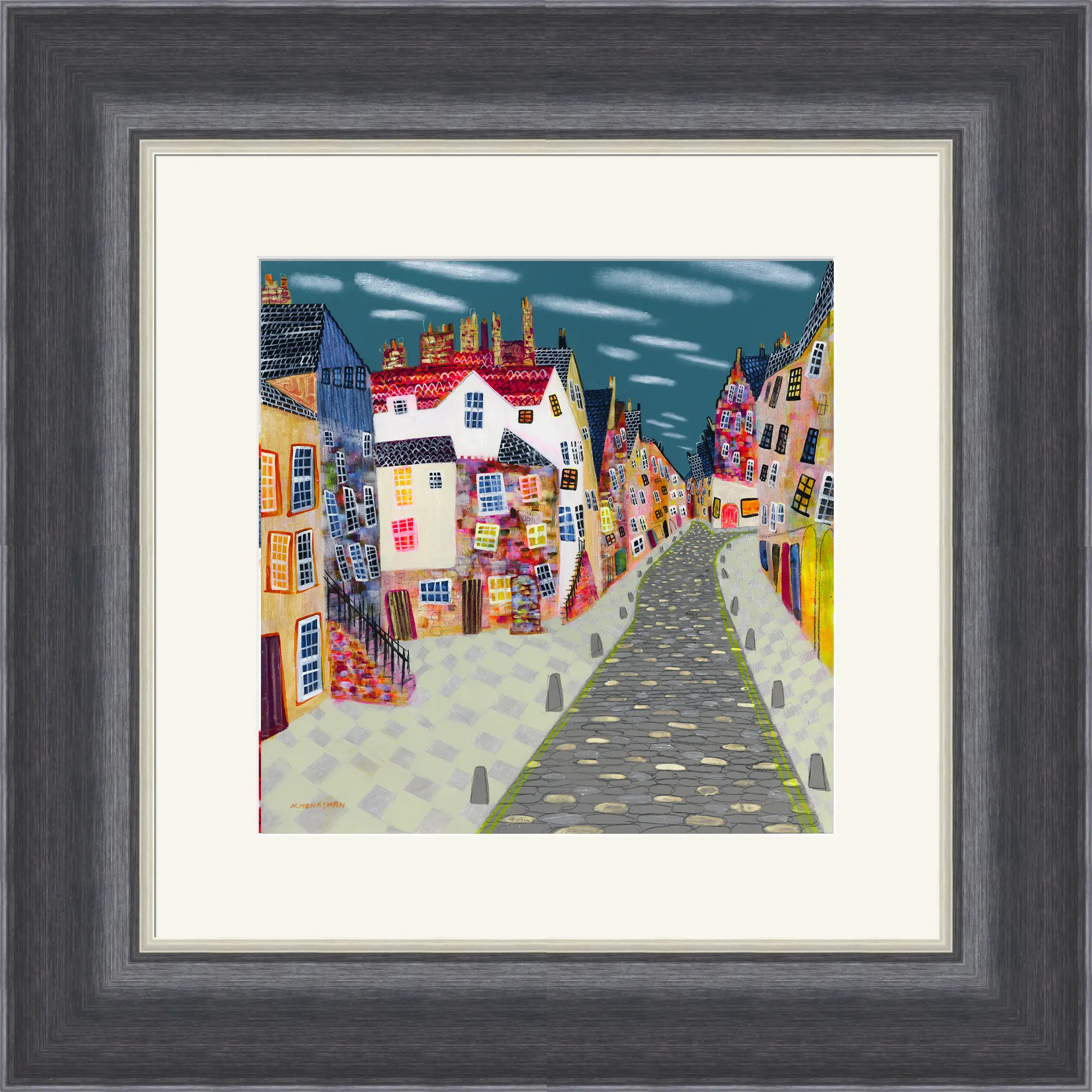
The Benefits of a Lighter, Cost-Effective Alternative to Wood
When choosing a picture frame, most people naturally think of wood. Timber has been the conventional material used by picture framers for generations, and it remains an excellent choice.
However, wood isn’t the only option.
At First4Frames, we also use high-quality polymer picture-frame mouldings where they are appropriate for the artwork and the type of finished frame we’re creating.
Modern polymer mouldings can offer some significant advantages, particularly when you’re looking for a large frame or a wide, substantial moulding without the additional weight and cost that can come with an equivalent timber frame.
One of the ranges available to professional framers is Polcore® from Mainline Mouldings, which is manufactured using recycled polystyrene. Mainline currently describes Polcore as containing 80–95% recycled polystyrene and being 100% recyclable. (mainlinemouldings.com)
What is a polymer picture frame?

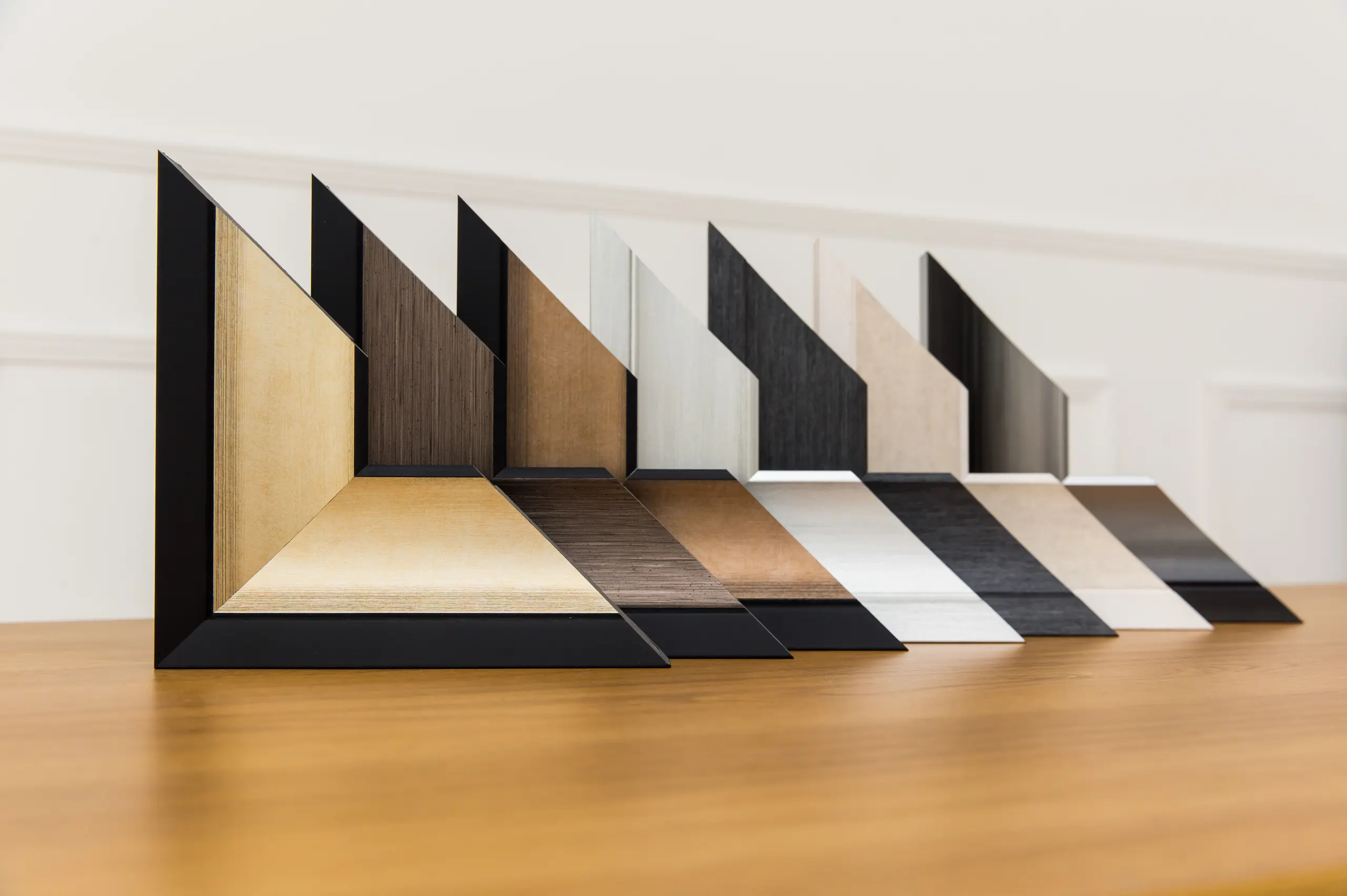
A polymer picture frame uses a manufactured polymer moulding for the outer frame rather than a traditional timber moulding.
The range of styles available is surprisingly extensive. Polymer mouldings can have contemporary finishes, traditional profiles, metallic effects, ornate designs and realistic wood finishes. Mainline’s Polcore collection, for example, includes black, bronze, gold, silver, white, coloured and wood-tone mouldings. (mainlinemouldings.com)

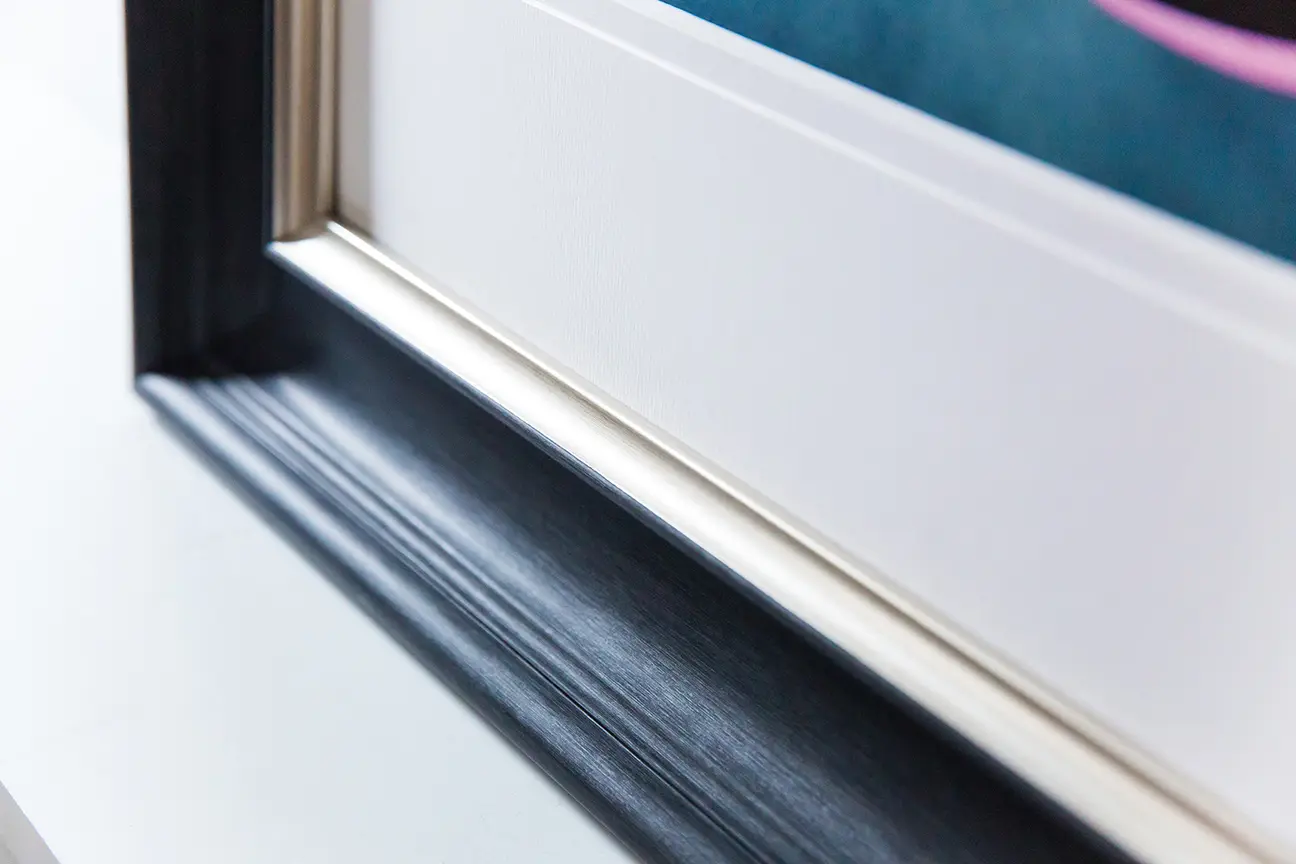
This means choosing polymer doesn’t necessarily restrict the appearance of your finished frame.
For many pictures, you’d be unlikely to know simply by looking at the finished frame on the wall whether the moulding underneath the decorative finish was polymer or timber.
The big advantages: cost and weight

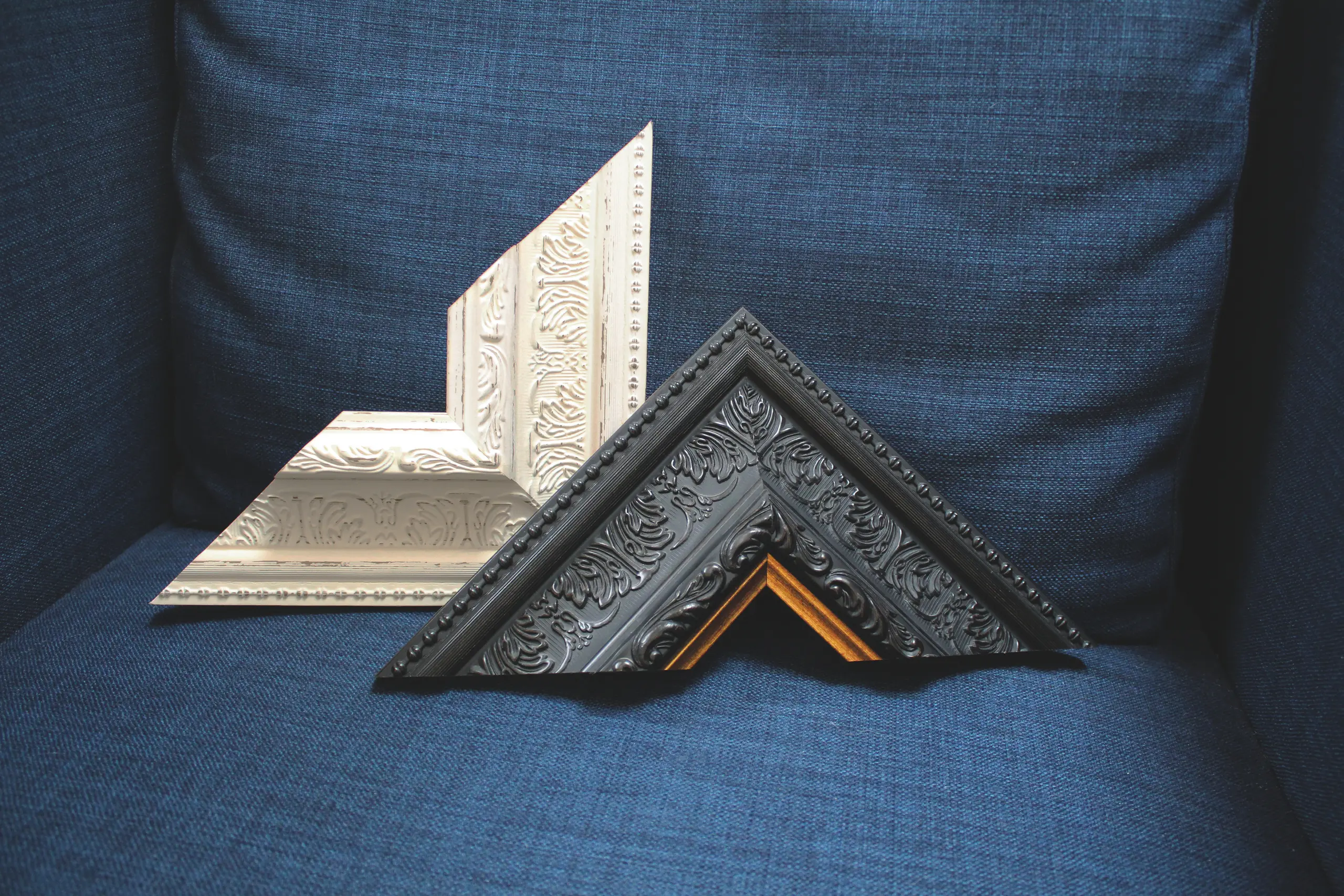
There are two particularly good reasons for considering a polymer frame: cost and weight.
Good-quality polymer mouldings can provide an impressive finished frame at a lower cost than many comparable timber mouldings. Mainline similarly describes its Polcore range as offering the appearance of traditional wood at a fraction of the weight and cost. (mainlinemouldings.com)
The difference becomes particularly interesting when we start looking at wide mouldings and large frames.
A substantial frame can require several metres of moulding. With traditional timber, increasing the width and depth of the moulding can add considerably to both the price and the overall weight of the finished picture.
A polymer moulding can give you the appearance and impact of a substantial frame while keeping the finished piece considerably lighter.
The bigger the frame, the more important weight can become
Weight isn’t necessarily a major consideration with a small picture. As frame dimensions increase, however, it becomes much more significant.
A lighter moulding makes a large finished picture easier to handle, transport and hang. Mainline also specifically highlights these weight advantages for larger Polcore frames. (mainlinemouldings.com)
This can make polymer particularly attractive when somebody wants a large statement frame or a wide moulding without unnecessarily increasing the weight hanging on the wall.
The frame may be polymer, but the rest of the framing doesn’t change
This is an important distinction.
Choosing a polymer moulding doesn’t mean choosing inferior glass, mountboard or other framing materials.
The polymer is the moulding used to create the outer frame.
We can use the same quality glass and mountboards that we would use when producing a frame with a traditional wooden moulding.
The artwork can therefore receive the same careful mounting, glazing and professional framing treatment. What changes is the material used to manufacture the outer moulding.
That allows us to take advantage of the reduced weight and cost of polymer where appropriate without compromising the other components that go into creating a quality finished picture frame.
Some examples of our finished frames
Here are a few examples showing how different moulding styles can work with very different types of artwork.
Border Bothy


The combination of a substantial dark frame, generous mount and colourful artwork demonstrates how the frame itself can become an important part of the overall presentation.


A lighter-toned moulding works particularly well with the intense blues, oranges and yellows in this colourful landscape.
Midnight Tour London

The wide light-coloured frame and mount provide a strong contrast to this atmospheric London night scene.
Circus Lane & Clock Tower
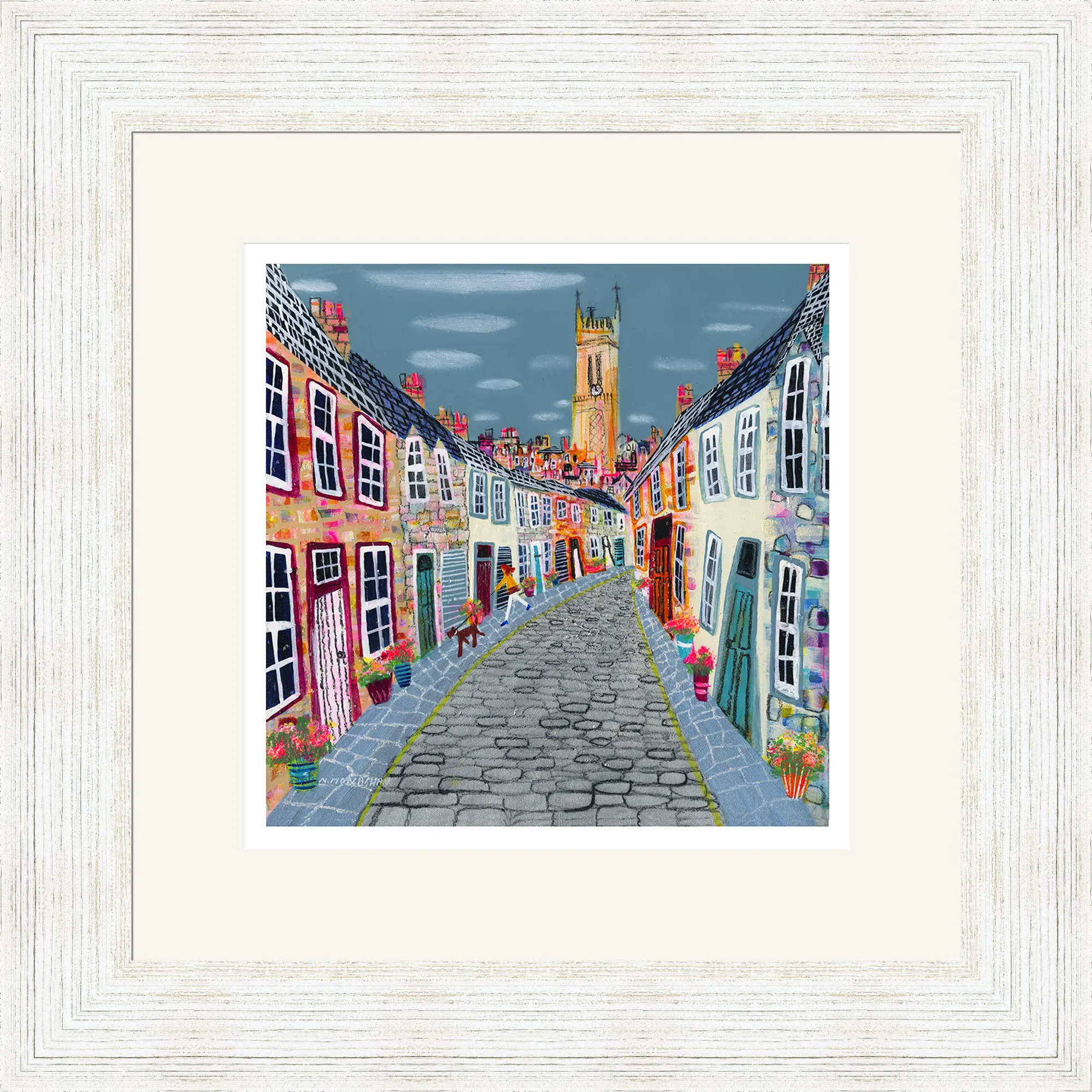
Another example of a wide frame giving a picture real presence, while allowing the colourful artwork itself to remain the focus.
You can see many more examples of finished artwork and framing combinations in the:
Why doesn’t every picture framer use polymer mouldings?
Working successfully with polymer mouldings requires different skills and techniques from traditional timber framing.
Although the finished frames may look very similar, polymer behaves differently when it is being cut, joined and assembled.
Depending on the moulding, a framer may need different machinery, cutting equipment or workshop settings to achieve a clean and accurate mitre. Joining also requires the correct technique to produce strong, neat corners.
At First4Frames, we also use a different type of glue specifically suited to polymer mouldings, rather than the conventional wood glue used when assembling timber frames.
Getting the combination of cutting, joining and adhesive right is particularly important with wider mouldings, where the quality and accuracy of a corner can be much more noticeable.
For a framing workshop that has traditionally worked exclusively with wood, introducing polymer mouldings can therefore mean investing in additional equipment and materials, as well as developing the practical skills and experience required to work with the material consistently.
This is one reason some picture framers choose to stay with timber.
Wood remains the conventional framing material and is an excellent choice. However, with the appropriate equipment, materials and expertise, polymer mouldings can produce strong, attractive and professionally finished frames while offering the advantages of lower weight and, in many cases, lower cost.
What about the environmental benefits?
It’s easy to assume that because a product is made from a polymer, timber must automatically be the more environmentally responsible option.
The reality deserves a little more consideration, particularly when recycled materials are involved.
According to Mainline, its Polcore mouldings are manufactured from 80–95% recycled polystyrene and are 100% recyclable. (mainlinemouldings.com)
Mainline has also published information about the lifecycle and production of Polcore. Its sustainability document states that moulding which fails its manufacturing standards is returned to the manufacturing process for reuse, while packaging includes 100% recyclable cardboard and recyclable low-density polyethylene sheets.
The same document reports a study by Hillside Environmental Services which found Polcore to be 38% more carbon efficient than an equivalent wood moulding. Mainline also states that its Polcore manufacturing sites use solar power and hydroelectric energy.
Those are Mainline’s published environmental claims and provide useful additional context when comparing the two materials.
Read Mainline’s Polcore: A Sustainable Approach document
Are there disadvantages to polymer picture frames?
As with most materials, there are advantages and disadvantages.
One consideration with polymer is repairability.
If a polymer moulding becomes badly damaged, repairing the affected section isn’t always practical. Depending on the type of damage and whether the same moulding remains available, it may be necessary to replace the complete outer frame.
Wood can sometimes offer more possibilities for repair. Depending on the finish and extent of the damage, a wooden frame may be capable of being filled, touched up, refinished or otherwise repaired.
However, it’s important to say that wooden frames aren’t always repairable either.
Serious damage, damage to a corner joint, an unusual finish or a discontinued moulding can mean that replacing a timber frame is also the most practical option.
It’s therefore something we consider alongside the many other factors when selecting an appropriate moulding.
Polymer or wood – which should you choose?
We don’t see framing as a question of polymer versus wood, with one material automatically being better than the other.
They each have their place.
There are pictures where a particular timber moulding is exactly what is required. There are other situations where a polymer moulding makes excellent practical and economic sense.
Polymer is particularly worth considering for:
- Large pictures and frames
- Wide or substantial mouldings
- Projects where reducing overall weight is beneficial
- Customers looking for the appearance of a larger frame while keeping costs under control
- Projects where one of the many available polymer finishes works particularly well with the artwork
Modern polymer mouldings are available in a surprisingly broad selection of styles. Mainline’s current Polcore collection ranges from simple contemporary profiles to wood effects, metallic finishes and highly decorative traditional mouldings. (mainlinemouldings.com)
Professional picture framing from First4Frames
Ultimately, the material used to manufacture the moulding is only one part of creating a successful picture frame.
The style, proportions, mount, glazing, colour and quality of construction all need to work together with the artwork.
Our aim at First4Frames is to choose the combination that works for the individual picture. Sometimes that’s a traditional timber moulding; sometimes a polymer moulding offers exactly the appearance we want along with the practical benefits of reduced weight and cost.
And for those larger pictures and wider statement frames, those advantages can become particularly significant.
For ideas and inspiration, take a look through our online gallery to see examples of artwork professionally framed by First4Frames.