Posted on

A3 Picture Frames: The Complete Guide to Choosing the Perfect Frame

A3 Picture Frames: The Complete Guide to Choosing the Perfect Frame

You’ve found the perfect piece of art, that spectacular A3 print you can’t wait to display. But now comes the part that can feel surprisingly tricky: choosing the frame. Suddenly, questions arise. What are the exact dimensions in centimetres versus inches? Will a mount make it look more professional? And how do you select a material that protects your print without overpowering the image?

Finding the perfect a3 picture frame should be a joy, not a source of stress. A frame is the essential bridge between your artwork and your décor, a piece of craftsmanship designed to elevate and preserve what’s inside. It’s the final touch that transforms a simple print into a beautiful, personal statement for your home.

Consider this your complete guide. We’re here to walk you through everything you need to know, from demystifying dimensions and materials to offering styling tips that will make your artwork truly shine. Let’s embark on this journey together and find the premium frame your art deserves.

What are the A3 Frame Dimensions? Getting the Basics Right

Embarking on your framing journey begins with a clear understanding of size. A3 is a wonderfully versatile and popular choice, striking the perfect balance for showcasing fine art prints, bold posters, and cherished photographs without overwhelming your space. Its universal appeal stems from the globally recognised ISO 216 international paper size standard, which guarantees that an A3 print will always have consistent dimensions. This standardisation removes the guesswork, ensuring that when you select an A3 piece, you know exactly what you’re working with. Getting these foundational measurements right is the first step toward finding the perfect a3 picture frame to complement your art.

To see these concepts in action and get some practical tips, this helpful video offers a great visual guide to framing.

A3 Size in Millimetres, Centimetres, and Inches

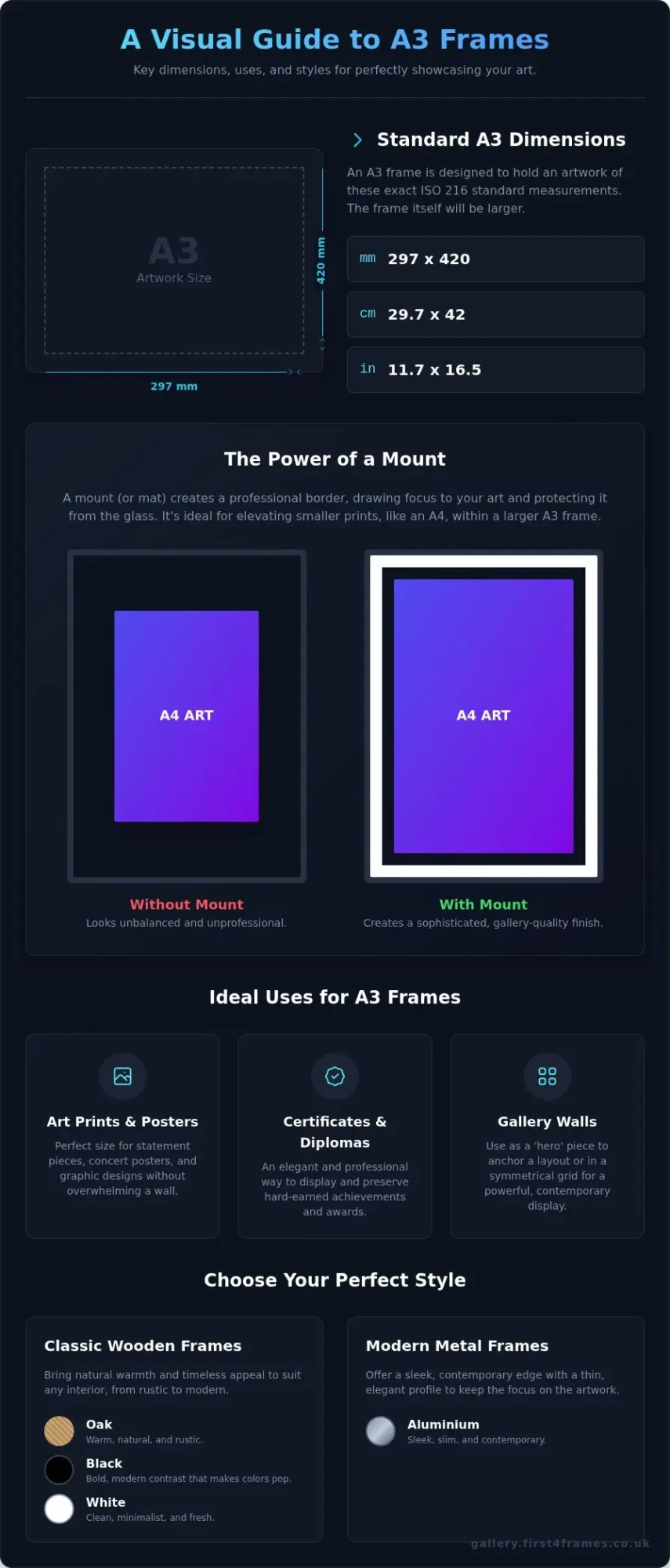
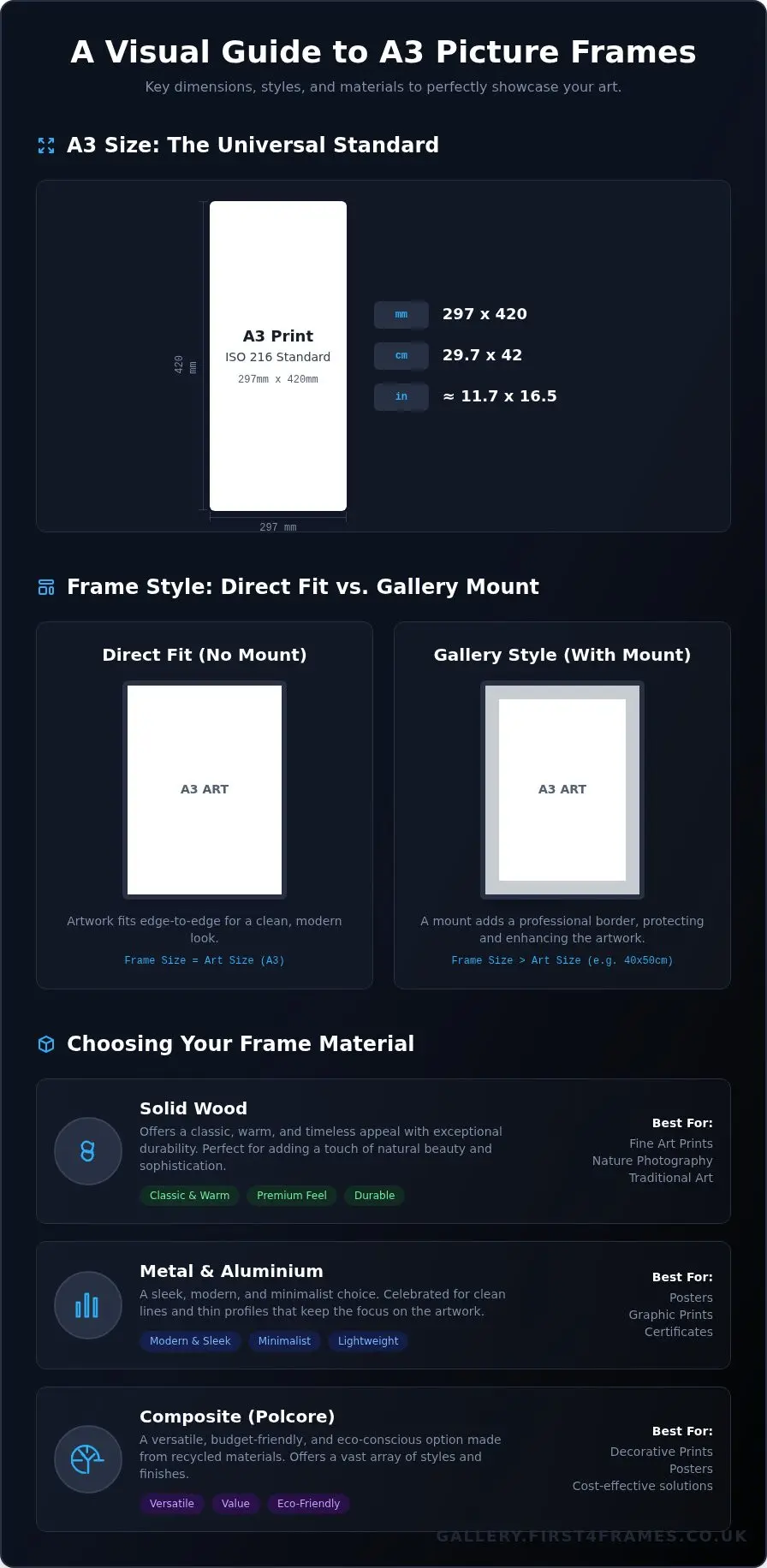
At First 4 Frames, we believe precision is the soul of craftsmanship. To ensure a perfect fit, it’s essential to know the exact dimensions of an A3 sheet. This is the size of your artwork itself, not the final frame. Being familiar with these measurements in millimetres, centimetres, and inches will give you the confidence to select the right frame every time.

Here is a quick-reference conversion guide for the A3 paper size:

  • In Millimetres (mm): 297 x 420 mm
  • In Centimetres (cm): 29.7 x 42 cm
  • In Inches (in): Approximately 11.7 x 16.5 inches

Frame Size vs. Aperture Size: Understanding Mounts

This is a crucial distinction that elevates a simple framed picture into a professionally presented piece of art. When you see a product described as an “A3 frame,” it’s vital to clarify what this means. It can refer to a frame with internal dimensions of exactly 29.7 x 42 cm, designed for your artwork to fit snugly from edge to edge. This style offers a clean, modern, and direct presentation.

However, for a classic, gallery-style look, the term often refers to a larger frame that incorporates a mount (also known as a passe-partout or window mount). This is a high-quality card border that sits between the artwork and the frame. The ‘aperture’, or opening, of this mount is cut precisely to display your A3 print. Using a mount is not just about aesthetics; it also protects your art by creating a small air gap between the print and the glazing. For instance, a common choice is a 40 x 50 cm frame with a mount whose aperture is cut for A3. This added border draws the eye inward, enhances the artwork’s presence, and acts as the perfect bridge between the art and its surroundings.

Choosing the Best Material for Your A3 Picture Frame

The material of your frame does more than just hold the glass; it’s the bridge between your artwork and your room’s decor. The right choice enhances the art, protects it for years, and reflects your personal style. When selecting an a3 picture frame, the material is one of the most important decisions you’ll make. Let’s explore the most popular options: classic wood, sleek metal, and versatile composite materials.

Solid Wood Frames: Classic, Warm, and Timeless

For a touch of natural beauty and a truly premium feel, nothing compares to solid wood. Crafted with care, these frames offer exceptional durability and a timeless appeal. Available in a variety of beautiful finishes, from the rich tones of oak and walnut to classic painted options, they bring warmth and sophistication to any space. A solid wood frame is the perfect partner for traditional art, fine art prints, and stunning nature photography, celebrating the quality of both the image and the craftsmanship.

Metal & Aluminium Frames: Modern, Sleek, and Minimalist

If your style leans towards the contemporary, a metal or aluminium frame is an excellent choice. Celebrated for their clean lines and minimalist aesthetic, these frames often feature a very thin profile, ensuring the focus remains squarely on your artwork. They are incredibly durable yet surprisingly lightweight, making them easy to hang. Available in popular finishes like matte black, polished silver, and elegant gold, they are ideal for framing posters, graphic prints, and professional certificates.

Composite (Polcore) Frames: Versatile and Budget-Friendly

Offering fantastic value without compromising on style, composite frames are a brilliant and popular choice. Often made from Polcore, an eco-friendly material created from recycled polystyrene, these frames come in a vast array of styles. They can expertly mimic the grain of real wood or offer a perfectly smooth, modern finish in any colour imaginable. While they may not have the same heirloom quality as solid wood, a composite a3 picture frame is a superb, cost-effective solution for decorative prints and posters.

To help you decide, consider the essence of your piece and your decor:

  • For warmth and tradition: Choose Solid Wood to add a natural, premium feel.
  • For a sharp, modern statement: Choose Metal for its clean, minimalist lines.
  • For versatility and value: Choose Composite for an endless choice of styles at a great price.

How to Select the Perfect Style and Colour

Choosing the perfect frame is an art in itself. Think of your frame as the bridge that connects your beautiful artwork to your room’s decor, creating a seamless and harmonious display. The right style and colour will enhance the piece without overpowering it, allowing the art to take centre stage while the frame does the important work of integrating it into your space. From sleek, simple profiles to ornate, traditional designs, the choice you make will define the final look.

Matching the Frame to the Artwork

A simple rule to follow is that the art is the hero, and the frame is its dedicated support. The goal is to complement, not compete. Minimalist prints or modern photography often look spectacular in a simple, thin frame that doesn’t distract from the clean lines. In contrast, classical art or a piece with intricate detail can be beautifully balanced by a more substantial or ornate frame. For a truly professional touch, select a frame colour that picks up on a subtle accent colour within the artwork itself.

Coordinating the Frame with Your Room Decor

A well-chosen frame should feel like a natural part of your room. Take a moment to consider the existing finishes and furniture. Are your door handles brass? Is your furniture made of light oak? Matching your frame to these elements creates a cohesive feel. For maximum versatility, a black or white a3 picture frame is a timeless choice that fits almost any interior style, from contemporary to traditional.

  • Wood Frames: Natural wood finishes, like oak or walnut, introduce warmth and texture, perfect for neutral, rustic, or Scandinavian-inspired spaces.
  • Black or White Frames: The ultimate chameleons, these frames provide a clean, classic border that works with any colour scheme.
  • Metal Frames: Finishes like silver, gold, or brass add a touch of elegance and complement modern, industrial, or glamorous interiors.

When to Use a Mount to Elevate Your A3 Print

A mount, or mat, is the paper-board border that sits between the art and the frame. It serves two key purposes. Aesthetically, it provides visual ‘breathing room’ around your print, drawing the eye inward. Functionally, it separates the artwork from the glazing, protecting it from potential damage caused by condensation. A crisp white mount is a classic choice that lends any print a sophisticated, gallery-quality finish. Need help creating the perfect combination? Explore our bespoke framing options.

Glazing and Backing: Protecting Your A3 Print for Years

When you invest in a beautiful A3 print, the frame does more than just complement the artwork; it serves as its primary protector. The two most critical components for preservation are the glazing (the clear front sheet) and the backing board. While it can be tempting to opt for a budget frame, cheaper materials often contain acids and impurities that can cause irreversible damage to your art over time, from fading to yellowing.

Understanding these components is the key to ensuring your cherished print remains as vibrant as the day you bought it.

Choosing Your Glazing: Glass vs. Acrylic

The glazing is the clear barrier between your print and the world. The choice you make here impacts not only protection but also the final look, weight, and safety of your framed piece. Here’s a simple breakdown:

  • Standard Glass: Offers perfect, crystal-clear clarity and a satisfying weight that speaks to its quality. It’s scratch-resistant and easy to clean, making it a timeless choice for most settings.
  • Acrylic (Perspex): A lightweight and shatter-resistant alternative. This makes it the perfect option for an a3 picture frame that needs to be shipped, hung in a child’s room, or placed in a high-traffic area. Modern, high-quality acrylic offers excellent clarity with added safety.

For truly valuable or sentimental pieces, consider upgrading to UV-protective glazing. Available in both glass and acrylic, this special coating blocks up to 99% of harmful ultraviolet rays, the primary cause of fading. It’s a small investment for priceless peace of mind.

The Importance of an Acid-Free Backing Board

What rests behind your print is just as important as what’s in front. The backing board provides structural support, but its material composition is crucial. Many off-the-shelf frames use standard cardboard or MDF, which are full of acids. Over years, these acids migrate into your artwork, causing a damaging process called ‘acid burn’ that leads to permanent yellowing and brittleness.

A professional, high-quality a3 picture frame will always use an acid-free or conservation-grade backing board. This archival-quality material is chemically stable and acts as a protective barrier, ensuring your print remains pristine for decades. It is a non-negotiable feature for anyone serious about preserving their art. At First 4 Frames, all our frames are built with premium, acid-free materials to guarantee the longevity of your artwork. Discover the difference professional craftsmanship makes in our online gallery.

Creative Ways to Display A3 Frames in Your Home

The beauty of the A3 size lies in its remarkable versatility. It’s large enough to make a significant visual impact on its own, yet compact enough to fit gracefully into almost any space, from a cosy reading nook to a spacious hallway. Moving beyond a single, isolated picture can transform your walls into a curated display of your personal style. Here are a few professional techniques to help you arrange your art with confidence and flair.

Create a Symmetrical Pair or Triptych

For a look that is both dramatic and perfectly ordered, consider hanging two or three matching A3 frames side-by-side. This approach works beautifully above a key piece of furniture like a sofa, bed, or console table, creating a strong horizontal line that draws the eye. Use this format to showcase a series of related art prints-such as botanical illustrations or architectural sketches-or even a single panoramic photograph split across the frames. The result is a high-impact, cohesive display that feels intentional and professionally styled.

Use A3 as the Anchor in a Gallery Wall

A sprawling gallery wall can quickly feel cluttered without a clear focal point. An a3 picture frame is the perfect piece to provide structure and prevent visual chaos. Start by placing your largest piece, the A3 frame, in a central or slightly off-centre position. From there, you can build outwards, arranging smaller frames (like A4 and A5), postcards, and other treasures around it. This creates a visual anchor, giving the entire arrangement a sense of purpose and balance that is pleasing to the eye.

Stylish Framing for Certificates and Diplomas

Your hard-earned achievements deserve more than a standard, off-the-shelf frame. Elevate your certificates, diplomas, and awards by presenting them with the sophistication they warrant. An A3 frame, complete with a custom-cut mount, transforms a simple document into a statement piece for your home office or study. Choose a premium frame style-a warm oak to match your desk or a sleek black for a modern aesthetic-to create a truly integrated and professional look. Ready to give your achievements the display they deserve? Get a bespoke framing quote today.

Your Journey to the Perfect A3 Frame Ends Here

As we’ve explored, selecting the right frame for your print goes far beyond simply knowing the dimensions. From choosing a material like warm, traditional wood or sleek, modern aluminium that complements your artwork, to selecting a style and colour that harmonises with your décor, every detail matters. The right glazing and backing are not just finishing touches; they are essential for protecting your cherished piece for years to come. With these insights, you are now perfectly equipped to find a beautiful a3 picture frame that truly does your art justice.

If you’re ready to take the next step, our team of passionate art lovers is here to help. With over 20 years of professional framing experience, we combine time-honoured craftsmanship with high-quality, conservation-grade materials to create bespoke frames that protect and enhance your art. Let our expert advice guide you. Find the perfect frame for your art with our bespoke framing service.

Your masterpiece deserves a spectacular frame. We look forward to helping you create something truly special.

Frequently Asked Questions About A3 Picture Frames

Can I put an A4 print in an A3 frame?

Yes, absolutely. An A3 frame is the perfect choice for showcasing an A4 print with a beautiful, professional-looking mount. The mount, or passe-partout, creates a border that draws the eye towards the artwork and prevents it from touching the glass. This is a classic gallery technique that gives your smaller artwork more presence and a truly spectacular finish on your wall, protecting it while enhancing its visual appeal.

What is the difference between an A3 poster frame and a picture frame?

While the terms are often used interchangeably, the main difference lies in the craftsmanship and materials. Poster frames are typically lighter, often made with plastic or MDF and perspex, designed for more temporary displays. A premium A3 picture frame is built for longevity, crafted from quality materials like solid wood with proper glass glazing. It provides a sturdier, more elegant home designed to protect and enhance fine art for years to come.

How do I measure my artwork correctly for an A3 frame?

For a perfect, hassle-free fit, precision is key. Lay your artwork on a clean, flat surface and use a steel ruler or firm tape measure to find its exact height and width. An official A3 paper size is 297 x 420mm (29.7 x 42cm). If your art matches these dimensions, it will fit snugly inside the frame without a mount. For any other size, measure carefully to ensure you choose the correct bespoke mount aperture.

Are black or white A3 frames more popular?

Both black and white frames are timelessly popular, each offering a distinct aesthetic. A black frame creates a bold, classic contrast that makes the colours within your artwork truly pop. A white frame provides a clean, contemporary feel, perfect for minimalist interiors or creating an airy, bright look. The best choice is the one that acts as the perfect bridge between your artwork and your room’s décor, so consider which will best complement your personal style.

Is it better to buy an A3 frame with or without a mount included?

This depends on the final look you wish to achieve. If your artwork is A3 size and you want a full-bleed, edge-to-edge presentation, a frame without a mount is ideal. However, including a mount adds a layer of professional sophistication, creates protective space between the art and the glass, and allows you to elegantly display a smaller piece within the frame. For a truly polished, gallery-worthy display, we almost always recommend using a mount.

How can I hang a heavy wooden A3 frame safely?

To hang a heavier wooden frame securely, we advise against using a single nail. The safest method is to fix two D-rings to the back of the frame, about one-third of the way down from the top on each side. Then, install two corresponding picture hooks or screws with appropriate wall plugs into your wall, making sure they are perfectly level. This two-point hanging system distributes the weight evenly and ensures your beautiful frame remains stable and secure.
Posted on

A3 Frames: The Complete Guide to Dimensions, Styles, and Uses

There’s a special kind of magic in finding the perfect piece of art. But turning that beautiful A3 print into a spectacular wall feature can feel surprisingly complex. Questions start to surface: What are the exact A3 dimensions in centimetres? Will it need a mount? And how do you choose a frame that elevates your art rather than making it look cheap? It can feel like a daunting task, leaving you worried about making the wrong choice for your cherished print.

Fear not. Choosing the right frame is an art in itself-it’s the bridge between your artwork and your décor. That’s why we’ve created this complete guide to a3 frames. We believe in making professional framing simple and accessible. In this guide, we will demystify everything from precise measurements and the role of a mount, to selecting a premium style that truly honours the piece within. Prepare to move from uncertainty to inspiration, ready to confidently select a beautiful frame that provides the perfect finishing touch for your home.

What is an A3 Frame? Understanding the Standard Dimensions

When choosing the perfect frame, understanding the size is the first step on your creative journey. The A3 size is one of the most popular and versatile choices for displaying everything from fine art prints to treasured photographs. As part of the globally recognised ISO 216 series, its Standard Dimensions make it a familiar and accessible option. It strikes a beautiful balance-large enough to make a statement on its own, yet modest enough to work splendidly as part of a gallery wall.

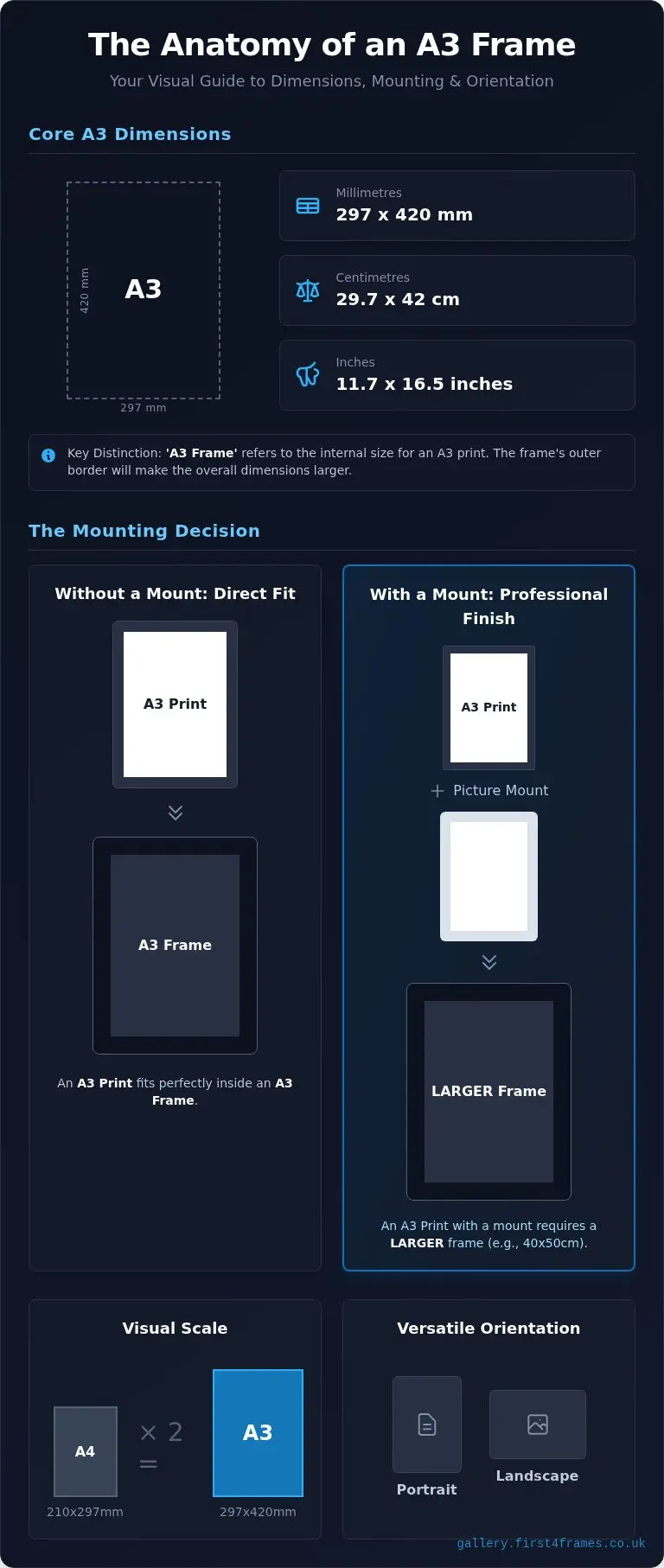
It’s important to remember that when we talk about an A3 frame, we are referring to the size of the artwork, poster, or photo it is designed to hold. The outer dimensions of the frame itself will be larger, depending on the width of the moulding you select. This versatile size is perfect for showcasing art in either a vertical (portrait) or horizontal (landscape) orientation, giving you complete creative control.

To see how these dimensions translate into a finished piece, the video below provides a fantastic hands-on look:

A3 Frame Dimensions in Detail

For perfect clarity when measuring your artwork, here are the exact dimensions of an A3 print. Ensuring your piece matches these measurements guarantees a flawless fit within any standard A3 frame.

  • Millimetres: 297 x 420 mm
  • Centimetres: 29.7 x 42 cm
  • Inches: 11.7 x 16.5 inches

The Role of a Mount: Enhancing Your A3 Artwork

A picture mount (also known as a mat or passe-partout) is the elegant cardboard border that sits between your artwork and the frame. It serves a dual purpose: it creates a professional visual separation that draws the eye inward and prevents your print from touching the glass, protecting it over time. Using a mount is a hallmark of premium, bespoke framing. For instance, our a3 frames can be beautifully paired with a mount to showcase a smaller A4 print, instantly elevating it with a sophisticated, gallery-quality finish that truly honours the art within.

The Best Uses for A3 Picture Frames in Your Home or Office

Once you understand the dimensions, the real creative journey begins. The A3 size (297 x 420 mm) hits a perfect sweet spot-it’s substantial enough to make a statement yet versatile enough to fit beautifully into any room, from a bustling office to a tranquil living space. Its adaptability is its greatest strength, offering a spectacular canvas for your most cherished memories, art, and achievements. Let’s explore how you can use a3 frames to elevate your décor.

Displaying Art Prints and Posters

The A3 format is the classic choice for artists and designers for good reason. It’s the perfect size for displaying concert posters, limited edition art prints, and bold graphic designs. An A3 frame allows the artwork’s finer details to shine without overwhelming your wall. Whether you’re showcasing a single, powerful statement piece above a desk or arranging a symmetrical series of prints along a hallway, this size provides the ideal balance and impact.

Framing Professional Certificates and Diplomas

Your academic degrees, professional awards, and certificates represent significant milestones. An A3 frame offers an elegant and professional way to display these important documents, protecting them for years to come. A premium frame does more than just showcase your hard-earned achievements; it preserves them. Using archival-quality materials is crucial, because as preservation experts advise, Quality Matters when protecting important documents from environmental damage. We recommend simple, classic styles like a slim black or natural oak frame to lend a timeless, distinguished look.

Creating a Striking Gallery Wall

A gallery wall is a beautiful way to tell a personal story, and a3 frames often play a leading role. Use them as the ‘hero’ pieces to anchor your layout, building a collection of smaller A4 and A5 frames around them for a dynamic, eclectic feel. Alternatively, for a clean and contemporary aesthetic, a symmetrical grid of identical A3 frames creates a powerful, organised display. This approach is perfect for a themed collection of photography or a series of matching art prints.

How to Choose the Perfect A3 Frame Style and Material

Selecting the perfect frame is about more than just protecting your print; it’s about creating a beautiful bridge between your artwork and your room’s decor. For A3 prints, a versatile size defined by the ISO 216 international standard, the right frame enhances the art and harmonises with your space. Think of the frame as the final, crucial touch that pulls everything together. Our passion is helping you find that perfect match, so here are a few simple tips to guide your decision.

Classic Wooden Frames: Timeless and Versatile

Wooden a3 frames bring a natural warmth and classic appeal that suits almost any interior. Crafted from premium, sustainable wood, they add a touch of timeless craftsmanship. Each finish offers a different personality:

  • Oak Frames: The gentle, warm tones of natural oak are perfect for bringing a touch of nature indoors. They beautifully complement traditional, rustic, or bohemian decor.
  • Black Frames: A classic for a reason. Black provides a bold, modern contrast that makes the colours in your artwork truly pop. It’s a spectacular choice for creating a focal point.
  • White Frames: For a clean, minimalist aesthetic, a white frame is unbeatable. It offers a fresh, airy feel that works wonderfully in Scandinavian-inspired or contemporary spaces.

Modern Metal Frames: Sleek and Contemporary

For a clean, contemporary edge, metal is an excellent choice. Aluminium frames typically have a very thin, elegant profile, ensuring the focus remains squarely on your artwork. This minimalist style is ideal for:

  • Photography and posters
  • Architectural prints and line drawings
  • Modern and industrial-style interiors

Available in various finishes like matte black, brushed silver, or subtle gold, metal frames offer a sophisticated and durable way to display your favourite pieces.

Matching Frame to Artwork: Simple Rules to Follow

Feeling unsure? Follow these simple principles to find the perfect pairing every time:

  • Complement the Style: Match the frame to the artwork’s era or mood. A modern abstract print shines in a sleek metal frame, while a classic watercolour feels at home in oak.
  • Balance the Composition: If your artwork is busy and vibrant, choose a simple, understated frame that won’t compete for attention.
  • Consider the Colour Palette: Look at the dominant colours in both the art and the room where it will hang. Choose a frame that either picks up on a subtle accent colour or provides a complementary contrast.

Ultimately, the goal is to select a frame that makes you fall in love with your artwork all over again. Ready to find your perfect match? Explore our curated collection of beautiful frames.

Quality Matters: What to Look for in a Well-Made A3 Frame

An A3 frame does more than just hang your picture on the wall; it acts as the bridge between your art and your room, protecting and enhancing the piece within. While a low price tag can be tempting, investing in a well-made frame ensures your artwork remains beautiful for years to come. Understanding the components of quality craftsmanship empowers you to choose wisely, turning a simple print into a lasting display.

The Moulding: Solid Wood vs. MDF

The moulding is the main structure of the frame, and its material is a key indicator of quality. Mass-produced frames often use MDF (Medium-Density Fibreboard) or Polcore, which are budget-friendly options. However, for superior durability and a truly premium feel, nothing compares to solid wood. Each wooden frame boasts a unique grain, offering a natural warmth and character that synthetic materials simply cannot replicate. It’s an investment in strength and timeless style.

Glazing: Protecting Your Print with Glass or Acrylic

Glazing is the clear, protective layer that shields your artwork from dust, moisture, and fading. Your main choices are:

  • Glass: Offers exceptional clarity and a traditional, weighty feel. It’s scratch-resistant and perfect for pieces that won’t be moved often.
  • Acrylic (Perspex): A lighter and shatter-resistant alternative, making it safer for high-traffic areas or children’s rooms. High-quality acrylic can also offer superior UV protection to prevent your print’s colours from fading over time.

Ready-Made vs. Bespoke Framing

Ready-made A3 frames are a convenient and cost-effective solution for standard-sized prints and posters. They offer a quick way to get your art on the wall. However, for a truly perfect finish or to protect a valuable piece of fine art, bespoke framing is the ultimate choice. A custom-made frame is crafted with higher-quality materials and precision-cut to fit your artwork exactly, eliminating unsightly gaps and ensuring archival-level protection. For a piece you truly treasure, a bespoke frame is an investment in its future. Get a quote for a custom A3 frame from our experts.

The Final Touch: Choosing Your Perfect A3 Frame

As we’ve explored, the perfect frame is more than just a border; it’s the bridge between your artwork and your decor. Understanding the standard A3 dimensions gives you a versatile starting point, while choosing the right style and material is what truly brings your vision to life. The key is that quality craftsmanship makes all the difference, ensuring your cherished prints and photographs are beautifully preserved for years to come.

With over 20 years of professional framing experience, we understand that power. From our Falkirk workshop, our team offers a bespoke service, using premium, locally sourced materials to create exceptional a3 frames that honour your art. Our passion is transforming your space with pieces that are built to last and designed to inspire.

If you’re ready to see the difference that true craftsmanship can make, we invite you to explore our collection of beautifully framed art prints. Discover the perfect frame for your story today.

Frequently Asked Questions About A3 Frames

What are the exact dimensions of an A3 frame in cm and inches?

An A3 frame is crafted to perfectly house an A3 print, which measures exactly 29.7 x 42 cm or 11.7 x 16.5 inches. It’s important to note these are the internal dimensions for the artwork itself. The frame’s external size will be slightly larger, depending on the width of the beautiful moulding you select. Always measure your artwork first to ensure a professional, seamless fit for your treasured piece before purchasing.

Can I put an A4 picture into an A3 frame?

Absolutely! Placing a smaller A4 picture (21 x 29.7 cm) inside a larger A3 frame is a spectacular way to achieve a professional, gallery-style presentation. This is done by using a picture mount, which creates a crisp, clean border around your artwork. This technique gives the piece space to breathe, draws the eye inward, and adds a touch of bespoke elegance to your wall display, truly elevating the final look.

Is A3 a good size for framing a photograph?

Yes, A3 is a fantastic and highly versatile size for framing photographs. It’s large enough to make a significant impact and showcase the fine details of your image, yet not so large that it overwhelms a room. This size works beautifully as a standalone feature piece or as the centrepiece of a growing gallery wall. Whether it’s a family portrait or a stunning landscape, an A3 frame provides the perfect canvas to display your memories.

What is a picture mount and do I need one for my A3 frame?

A picture mount is a high-quality cardboard border that sits between your artwork and the frame’s glass. It serves two key purposes: it creates a visual separation that enhances the artwork, and it protects your print by preventing it from touching the glass. While you don’t need a mount if your artwork is already A3 size, we highly recommend one for adding a premium, professional finish or for framing smaller images within your A3 frame.

How do I hang an A3 frame securely on the wall?

For most A3 frames, a single, correctly installed picture hook is sufficient for plasterboard walls. Always check that the hook is rated to hold at least double the weight of your frame for safety. Use a spirit level for perfect alignment. For heavier frames or solid masonry walls, we recommend using a wall plug and screw for a more robust and secure fitting, ensuring your beautiful artwork remains perfectly displayed for years to come.

Which is bigger, an A3 frame or an A2 frame?

An A2 frame is bigger than an A3 frame. The ‘A’ paper sizing system can seem counter-intuitive: as the number gets smaller, the paper size gets larger. An A2 sheet of paper (42 x 59.4 cm) is exactly double the size of an A3 sheet. Consequently, an A2 frame is designed for a much larger, statement piece of art, while an A3 frame offers a more adaptable and popular size for most homes.

Posted on

A3 Frame Size: The Complete Guide to Dimensions & Uses

You’ve found a beautiful piece of A3 art, a spectacular photograph, or a poster that speaks to you. Now comes the crucial final step: finding its perfect home on your wall. But navigating the world of the a3 frame size can feel surprisingly complex. Do you measure in centimetres or inches? Will a mount enhance the image or overwhelm it? Choosing the right frame is an act of craftsmanship, and it’s easy to feel lost in the details when you want everything to be just right.

This guide is here to be your trusted professional partner. We will demystify the exact A3 dimensions in millimetres, centimetres, and inches, ensuring you can buy online or in-store with complete confidence. We’ll explore how to select the ideal style and material to complement your artwork, and help you decide if a mount will elevate your piece from lovely to truly stunning. Let’s find the perfect frame to act as the bridge between your art and your room, making your piece shine.

What Exactly is A3 Frame Size? The Essential Dimensions

Choosing the perfect frame begins with understanding its size. Put simply, an A3 frame is expertly crafted to hold a piece of A3 paper or a print of the same dimensions. This size is defined by the globally recognised ISO 216 international paper size standard, ensuring consistency whether you’re framing a professional photograph, a fine art print, or a treasured poster.

To help you visualise it, an A3 sheet is exactly twice the size of a standard A4 piece of office paper, making it a popular and impactful choice for wall art without overwhelming a room.

For a practical look at how to handle and place artwork into a frame, this video offers an excellent tutorial:

A3 Frame Dimensions in cm, mm, and inches

To ensure you have the precise measurements for your artwork, it’s helpful to know the dimensions in various units. An A3 print measures:

  • In centimetres: 29.7 cm x 42 cm
  • In millimetres: 297 mm x 420 mm
  • In inches: 11.7 x 16.5 inches

These are the exact dimensions your print should be to fit snugly and professionally within an A3 frame.

Artwork Size vs. Frame Size: A Crucial Distinction

One of the most important details to understand is that when you purchase an ‘A3 frame’, the measurement refers to the internal aperture-the ‘window’ that your A3 artwork will fit into perfectly. The overall external dimensions will always be larger, depending on the width of the frame’s border, often called the ‘moulding’ or ‘profile’. This is a crucial detail to consider when planning your gallery wall to ensure a perfect fit in your chosen space.

Portrait vs. Landscape Orientation for A3 Frames

The versatile a3 frame size is beautifully suited for displaying artwork in both portrait (vertical) and landscape (horizontal) orientations. Most high-quality frames, including those we craft, are supplied with flexible fittings on the backboard, allowing you to hang them either way with ease. We always recommend checking the orientation of your chosen artwork first to help you envision its perfect spot on your wall before making a final decision.

Common Uses for A3 Frames: What Fits Perfectly?

The A3 frame size is often considered the “Goldilocks” of framing-not too big, not too small, but just right. It’s a wonderfully versatile and popular mid-size option that makes a beautiful statement without overwhelming your space. Measuring 29.7 x 42 cm, it strikes the perfect balance between offering enough scale for visual impact and allowing the finer details of the artwork to be appreciated. For those interested in the precise standards behind these measurements, the University of Cambridge offers a technical overview of the A3 frame dimensions and the ISO 216 paper system.

Displaying Art Prints and Posters

A3 is the ideal canvas for the affordable art prints, limited edition graphics, and concert posters you love to collect. It’s large enough that the artwork commands attention and its details can be enjoyed from across the room. A single, beautifully framed A3 print can serve as a stunning focal point above a desk or console table, while also acting as the perfect centrepiece to build a dynamic gallery wall around.

Framing Larger Photographs and Collages

While smaller photos are charming, an A3 frame gives a truly special photograph the presence it deserves. This size is perfect for showcasing a spectacular landscape from your travels, a professional family portrait, or a cherished wedding photo. It also provides ample space to create a bespoke photo collage, weaving together multiple smaller moments into one impactful piece that tells a unique story.

Professional Use: Certificates, Diplomas, and Signage

Step into any professional office, and you’ll likely see A3 frames used to display important qualifications, diplomas, and industry awards. The generous size lends a sense of prestige and ensures the text is easily readable. This professional, polished look also makes the A3 frame size a superb choice for customer-facing signage in reception areas, cafes, and boutiques, clearly communicating information with a touch of class.

To Mount or Not to Mount? Elevating Your A3 Print

Once you’ve chosen your beautiful A3 print, the next decision is how to present it. While you can place it directly into an A3 frame, adding a picture mount is the secret to achieving a truly professional, gallery-quality finish. A mount, also known as a mat, does more than just fill space; it’s a crucial element that protects and enhances your artwork.

The right mount creates a visual ‘breathing space’ between the art and the frame, preventing the composition from feeling cramped. This clean border draws the viewer’s eye inward, focusing attention squarely on the print itself. It’s a simple addition that dramatically elevates the final look, making it a key consideration when selecting the perfect a3 frame size for your piece.

What is a Picture Mount and Why Use One?

A picture mount is a specially cut piece of acid-free cardboard that sits between your artwork and the frame’s glass. Its purpose is twofold: protection and presentation. By creating a small air gap, it prevents the print from making direct contact with the glass, which can cause damage from condensation over time. Aesthetically, it adds depth and structure, giving your print a polished, deliberate, and professional appearance.

How a Mount Affects Your Frame Size Choice

This is the most important rule to remember: if you use a mount with your A3 print, you will need a frame that is larger than A3. Forgetting this can lead to a frame that simply won’t fit.

Let’s use a practical example. An A3 print measures 297 x 420 mm, as defined by the ISO 216 international paper size standard. If you add a classic 50mm (5cm) mount border around it, the total mounted size becomes approximately 400 x 520 mm. This combination would then fit perfectly within a standard A2 frame (420 x 594 mm). Always measure your artwork and add the width of your desired mount border (times two) to determine the final dimensions you need. Getting this right is essential for your final a3 frame size calculation. Our bespoke framing service can create the perfect mount and frame combination, taking all the guesswork out of the process.

Choosing a Mount Colour and Style

The right mount colour can beautifully complement your artwork. Here are a few popular approaches:

  • Classic White: A crisp white or a softer off-white mount is a timeless choice that works with almost any artwork and interior style.
  • Complementary Colour: Selecting a mount colour that picks up on a subtle accent in your print can create a wonderfully cohesive and curated look.
  • Double Mounts: For added sophistication, a double mount uses two layers, with the inner layer providing a thin, contrasting border. This adds an incredible sense of depth to the finished piece.

Choosing the Right A3 Frame Style for Your Space

Once you’ve settled on the perfect a3 frame size for your print, the next step is a journey into style. A frame is much more than a simple border; it’s the crucial bridge connecting your artwork to your room’s décor. The right choice will elevate both the print and the space it inhabits. The material, colour, and profile width all play a vital role in creating a cohesive and beautiful final look that honours your art.

Frame Materials: Wood, Metal, and Modern Finishes

The material of your frame sets the foundational tone. Each offers a distinct personality to complement your art and interior style:

  • Wood Frames: Crafted from materials like oak or pine, wooden frames bring natural warmth and a timeless, traditional feel. They are perfect for classic art, family portraits, and rustic interiors.
  • Metal Frames: Typically made from sleek aluminium, these provide a sharp, contemporary look. Their minimalist appeal is ideal for modern photography, posters, and abstract art.
  • Polcore Frames: A fantastic and versatile alternative, Polcore is a modern composite material made from recycled polystyrene. It offers a smooth, clean finish and is available in a huge range of colours and styles, providing a premium look at an affordable price.

Matching Frame Colour to Your Artwork and Décor

Colour is your tool for creating harmony. The goal is to choose a shade that enhances the artwork without overpowering it. Consider these classic pairings:

  • Black or White: The ultimate versatile choice. A simple black or white frame allows the art to be the hero, suiting almost any print and décor style, from monochrome to vibrant colour.
  • Natural Wood Tones: These beautifully complement nature scenes, botanical prints, and art with a warm palette. The organic grain adds texture and depth.
  • Gold or Silver: For a touch of elegance, metallic frames are unmatched. They can elevate a formal certificate, a classical print, or a special photograph, adding a sophisticated finish.

Moulding Profile: From Simple & Modern to Ornate & Classic

The ‘moulding profile’ refers to the shape and width of the frame itself. This detail can dramatically alter the final impression. A thin, flat profile offers a clean, minimalist feel, perfect for a contemporary gallery wall where the art is the sole focus. Conversely, a wider or more ornate profile makes a bold, traditional statement. It draws the eye and can transform a simple print into a significant feature piece, adding a sense of grandeur and importance.

Considering the style of your art is paramount. A modern abstract piece will sing in a thin metal frame, while a classic watercolour may call for the warmth of oak. Whatever your vision, finding the perfect style for your a3 frame size is a rewarding final step in bringing your art to life. Browse our curated collections to find inspiration and the perfect frame for your space.

Ready-Made vs. Bespoke A3 Frames: Which is Right for You?

Once you’ve chosen your beautiful A3 print, the next crucial step is selecting the perfect frame. This often leads to a key decision: should you opt for a readily available off-the-shelf frame or invest in a bespoke creation? The answer depends entirely on your artwork, your budget, and the final look you want to achieve. Let’s explore both paths to help you make a confident choice for your space.

The Pros and Cons of Off-the-Shelf Frames

Ready-made frames are a popular choice, primarily for their convenience and affordability. You can find them in countless high street shops, often for under £20, making them a great option for framing simple posters, certificates, or children’s drawings. They are perfect for temporary displays or when you need a quick and easy solution for a standard a3 frame size.

However, this convenience comes with trade-offs. The range of styles, colours, and materials is often limited, and the quality can be inconsistent. Most standard frames use basic materials that lack the protective qualities needed for fine art, such as UV-filtering glass or acid-free mounts. This can leave your artwork vulnerable to fading and long-term damage from sunlight and acidic materials.

When to Invest in a Bespoke A3 Frame

A bespoke frame is more than just a border; it’s a vital part of the artwork’s presentation and preservation. It acts as the perfect bridge between your art and your room’s décor. Investing in a custom frame is the best choice when:

  • You are framing something valuable: For limited edition prints, original art, or irreplaceable photographs, a bespoke frame provides essential, conservation-grade protection to preserve its value and condition.
  • You want a perfect design match: With custom framing, you can select the precise moulding, colour, and mount to create a seamless, professional finish that perfectly complements both the artwork and your interior design.
  • Preservation is a priority: We use premium materials like acid-free conservation mount boards to prevent discolouration and UV-protective glazing to shield your art from 99% of harmful light.

Ultimately, a bespoke frame is an investment in the life and beauty of your art, ensuring your piece is not only displayed beautifully but is also protected for decades. If you have a special piece that deserves the finest presentation, professional craftsmanship is the answer. Get a quote for a bespoke A3 frame for your artwork.

Your Perfect A3 Frame: From Idea to Artwork

Mastering the versatile a3 frame size is about more than just dimensions; it’s about making a statement. We’ve explored how the right mount can elevate a simple print and how a carefully chosen style can transform your space. Whether you opt for a ready-made solution or a bespoke creation, the goal is always to perfectly complement your artwork and enhance your décor.

At First 4 Frames, we pour over 20 years of professional framing experience into every piece we create. Each frame is a testament to true craftsmanship, handcrafted with passion in our Falkirk workshop using only premium, locally-sourced materials. We believe the perfect frame is the bridge between your art and your home. Ready to find yours? Discover our collection of beautiful prints and bespoke A3 frames and let us help you turn your cherished piece into a spectacular centrepiece.

Frequently Asked Questions About A3 Frames

What are the exact dimensions of an A3 frame in cm?

An A3 frame is expertly crafted to hold a print measuring exactly 29.7 x 42 cm. While these are the internal dimensions your artwork will fit into, the frame’s overall external size will be larger. This depends on the width of the beautiful, handcrafted moulding you select. When you purchase an A3 frame, you can be confident the aperture is perfectly sized to provide a snug and secure home for your cherished piece.

Will an A3 print fit in a 30×40 cm frame?

An A3 print can technically fit inside a 30×40 cm frame, but it is not a perfect match. Since A3 paper measures 29.7 x 42 cm, the frame is slightly wider but 2 cm shorter. This means the top and bottom of your artwork will be cropped. This can work if the main subject is centred, but for a flawless presentation, we always recommend a frame specifically made for the A3 format or using a custom mount.

Is A3 a good size for a gallery wall?

Absolutely! A3 is a spectacular and versatile size for creating a gallery wall. It strikes the perfect balance, offering enough presence to act as a central focal point without overwhelming the other pieces. You can use a single A3 print as the anchor for your collection, surrounded by smaller A4 and A5 frames. Its scale allows it to shine on its own or harmonise beautifully within a larger, curated display, bringing your entire wall to life.

How much bigger should my frame be if I want to add a mount to my A3 print?

To give your A3 print a professional, gallery-quality finish, we suggest adding a mount with a border of 5-8 cm on all sides. For a classic 5 cm border, you would need a frame with an internal aperture of approximately 40 x 52 cm. This essential breathing room prevents the artwork from feeling cramped and beautifully draws the viewer’s eye inward, enhancing the visual impact of the art and completing its story.

Can I buy just an A3 frame for a picture I already own?

Yes, of course. We believe every piece of art deserves a perfect home, which is why we offer our premium frames for sale individually. If you have a treasured A3 print or photograph, selecting one of our standalone frames is a wonderful way to elevate it. Choosing the right a3 frame size and style is a key step, and our bespoke craftsmanship ensures your existing picture will be protected and displayed with the elegance it deserves.

What is the difference between an A3 and A4 frame?

The primary difference between an A3 and A4 frame is simply size. An A4 frame is designed to hold paper measuring 21 x 29.7 cm, which is standard for letters and certificates. An A3 frame holds paper that is exactly double that size, at 29.7 x 42 cm. This makes A4 ideal for smaller photos and documents, while the more substantial A3 format is perfect for art prints, posters, and photographs you wish to turn into a true statement piece.

Posted on — 3 Comments

John Lowrie Morrison (Jolomo): A Guide to the Iconic Scottish Artist

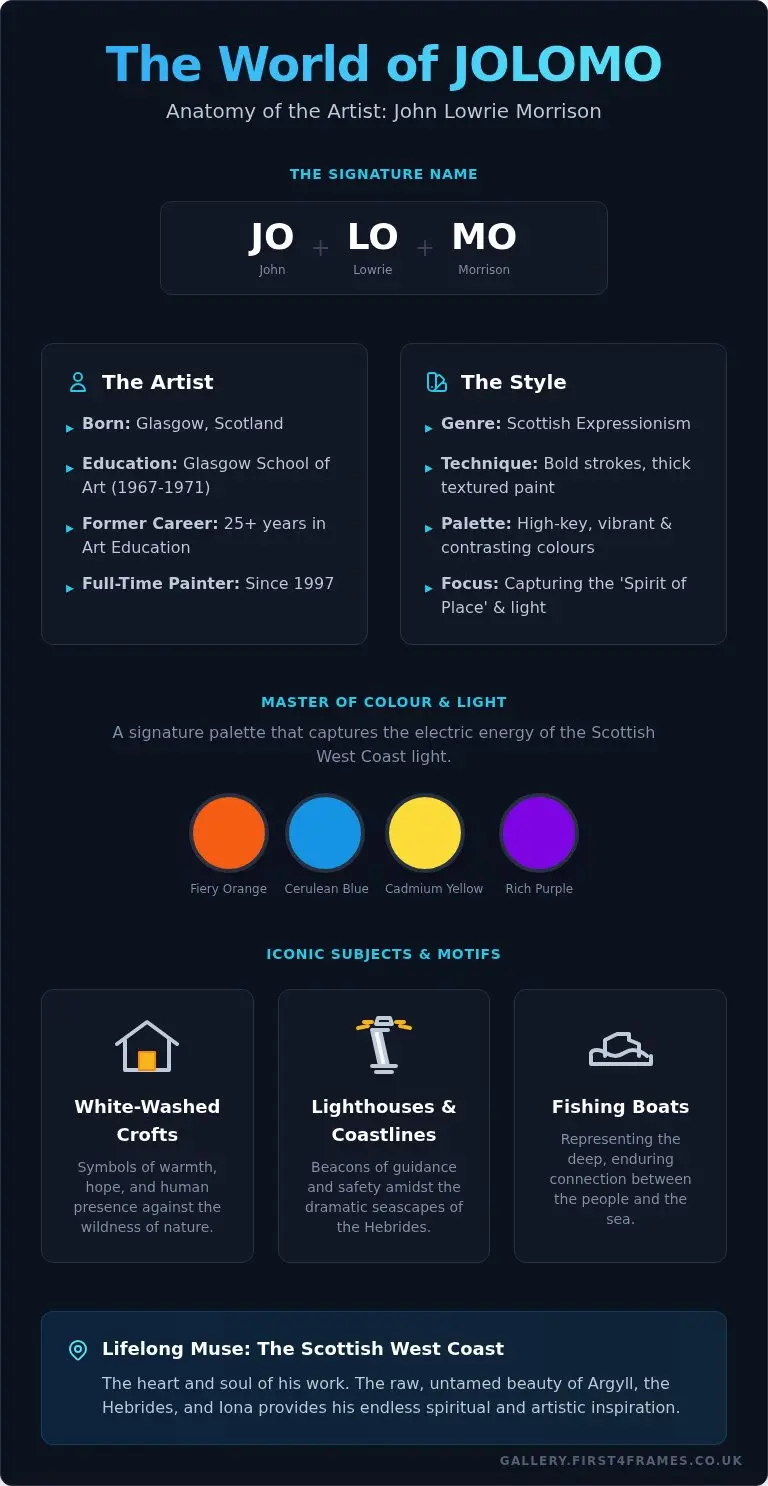
If you’ve ever been captivated by a painting of a Scottish croft bathed in impossibly vibrant light, or a dramatic coastal scene bursting with electric colour, you’ve likely encountered the spectacular work of the iconic john lowrie morrison artist. Known affectionately to many as ‘Jolomo’, his style is one of the most recognisable in contemporary Scottish art, yet many admirers are left with questions about the man behind the breathtaking canvases.

What does ‘Jolomo’ actually mean? What inspires his uniquely powerful use of colour? And is it possible to bring one of these beautiful pieces into your own home without an eye-watering price tag? In this guide, we embark on a journey to discover the life and passion of one of Scotland’s most beloved painters. We’ll explore his deep connection to the landscape, uncover the secrets behind his vibrant style, and show you how owning a piece of his artistic legacy, through a premium, professionally framed print, is more accessible than you might think.

Who is John Lowrie Morrison? The Man Behind ‘Jolomo’

When exploring the world of contemporary Scottish art, one name shines with unparalleled vibrancy: John Lowrie Morrison. Known globally by his signature ‘Jolomo’, he is widely celebrated as one of Scotland’s most successful and beloved landscape painters. His work is a passionate and powerful expression of his deep connection to the Scottish West Coast and its islands, capturing the wild, untamed beauty of Argyll, the Hebrides, and beyond.

With a spectacular and distinctive high-key colour palette, Jolomo’s paintings are instantly recognisable. His use of bold, expressive strokes and intense, often electric, colours transforms familiar landscapes into something truly magical. This unique vision has earned him international recognition, with his beautiful fine art prints and original works cherished by collectors across the world.

Early Life and Artistic Beginnings

Born and raised in Glasgow, John Lowrie Morrison’s artistic journey began at a young age, culminating in his studies at the prestigious Glasgow School of Art from 1967 to 1971. For a detailed look at his formative years, the John Lowrie Morrison (Jolomo) Wikipedia page offers a comprehensive overview of his development. For over 25 years, he balanced his painting with a dedicated career in art education, serving as an art adviser in Argyll and inspiring a new generation of artists before committing to painting full-time in 1997.

The Origin of the ‘Jolomo’ Signature

The name ‘Jolomo’ is more than just a signature; it is his artistic identity. This renowned name is a clever portmanteau, created by taking the first two letters of each of his names: John Lowrie Morrison. What started as a simple way to sign his work has become a powerful brand, synonymous with the vibrant energy and spectacular colour that defines this exceptional john lowrie morrison artist. Today, the Jolomo signature is a hallmark of quality and a promise of a breathtaking view of Scotland.

The Unmistakable Style: What Makes a ‘Jolomo’ Painting?

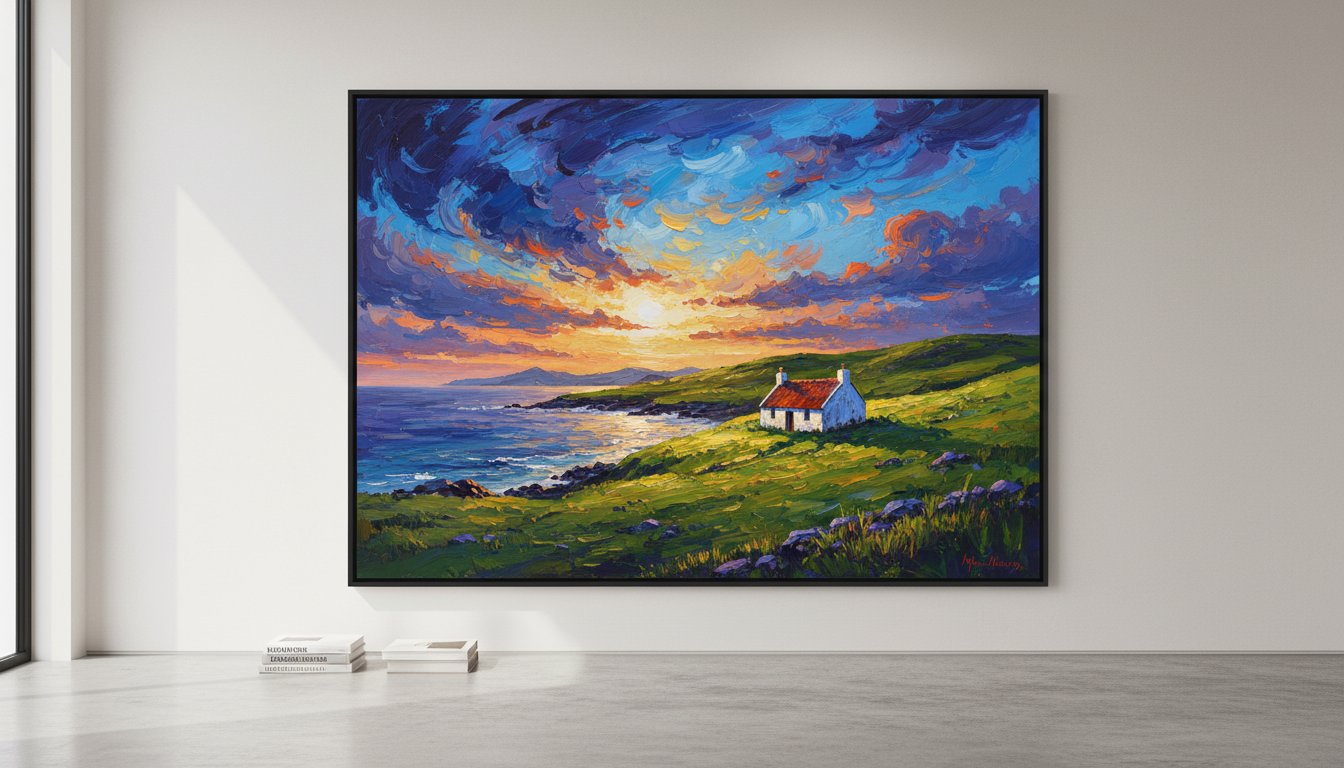
To gaze upon a Jolomo painting is to experience the Scottish landscape with heightened senses. His powerful interpretation of the land, often described as a form of Scottish Expressionism, is not about creating a literal, photographic copy. Instead, John Lowrie Morrison captures the very soul of a place. His work is an emotional response, translating the feeling of a windswept Hebridean coastline or a quiet Argyll croft into a spectacular visual language. This is achieved through bold, confident brushstrokes and a thick, textured application of paint that gives each piece a vibrant, almost sculptural quality. The distinctive approach of this celebrated john lowrie morrison artist has resonated deeply with collectors and critics alike, earning him significant recognition, including an honorary doctorate from the University of the West of Scotland for his contribution to Scottish culture.

A Master of Colour and Light

Colour is the cornerstone of Jolomo’s work. He is renowned for his signature use of high-key, vibrant colours that seem to radiate energy from the canvas. He masterfully captures the unique, ever-changing light of the Scottish West Coast, where sunlight can break through stormy skies in an instant. By placing contrasting colours side-by-side-a fiery orange against a deep cerulean blue, or a brilliant cadmium yellow next to a rich purple-he creates a dynamic tension that makes his landscapes feel alive. These are not the muted tones one might expect, but a joyous and optimistic celebration of light and atmosphere.

Key Subjects and Recurring Motifs

While his style is distinct, Jolomo frequently returns to a set of beloved subjects that have become iconic in his art. His paintings are populated with the enduring symbols of the Highlands and Islands:

  • White-Washed Crofts: Often depicted with a glowing light in the window, the humble croft becomes a beacon of warmth, hope, and human presence against the wildness of nature.
  • Lighthouses and Coastlines: Standing resilient against the elements, his lighthouses symbolise guidance and safety amidst the dramatic seascapes of Argyll, the Hebrides, and Iona.
  • Fishing Boats: These vessels represent the deep connection between the people and the sea, a core part of life on the West Coast.

Though best known for these spectacular landscapes, Morrison also applies his unique vision to beautiful still life paintings, proving his mastery extends beyond the coastal horizon.

The Scottish West Coast: Morrison’s Lifelong Muse

To understand the art of Jolomo is to understand the Scottish West Coast. This spectacular, rugged landscape is not merely a subject for John Lowrie Morrison; it is the heart and soul of his entire body of work. He possesses a deeply personal and spiritual connection to the isles and crofting communities of Argyll and the Hebrides. It is here, amidst the raw, untamed beauty of churning seas and windswept moors, that he finds his endless inspiration.

Morrison is a master of translating the fleeting, dramatic moments of Hebridean weather onto the canvas. He captures the sudden burst of golden light through dark, stormy clouds, the vibrant turquoise of a sunlit sea, and the deep, rich purples of a twilight sky. It is this profound ability to convey the energy and emotion of the landscape that truly defines the john lowrie morrison artist style, making each painting a living, breathing experience of a specific moment in time.

Capturing the ‘Spirit of Place’

For Morrison, painting is not about creating a literal copy of a view but about capturing its ‘spirit of place’-the intangible essence and feeling of a location. His strong Christian faith is central to this, as he perceives a divine light and spiritual presence within the land’s natural glory. This is particularly evident in his frequent depictions of Iona, a historic centre of Celtic Christianity, which he paints as a beacon of peace and spirituality.

The Human Element: Crofts and Communities

Amidst the wildness of his landscapes, the humble croft house stands as a powerful symbol of warmth, resilience, and human presence. These simple, whitewashed buildings represent safety and sanctuary against the elements, embodying a historic and enduring way of life. The recurring motif of a single light glowing from a window is particularly poignant, offering a message of hope, welcome, and the enduring spirit of the close-knit communities that inhabit this beautiful land.

This appreciation for heritage and craftsmanship, capturing the spirit of a place, isn’t limited to the canvas. In the culinary arts, for instance, artisanal producers work to preserve the authentic taste of a region. For those who appreciate this dedication to quality, you can find out more.

From Art Teacher to National Treasure: Career and Accolades

For over two decades, John Lowrie Morrison masterfully balanced two passions: a career as an art teacher shaping young minds, and his personal drive to capture the soul of the Scottish landscape on canvas. In 1997, he took a leap of faith, leaving education to pursue painting full-time. The decision was immediately validated. His first major solo exhibition in Edinburgh was a phenomenal success, selling out within hours and setting a precedent for the soaring demand that would follow.

This breakout success quickly established the john lowrie morrison artist name as a powerhouse in contemporary Scottish art. His vibrant and emotionally resonant paintings became highly coveted, leading to a string of sell-out exhibitions across the UK, from London to Glasgow, and attracting collectors from around the globe. His work has not only captured the public’s imagination but has also made a significant and lasting contribution to Scottish culture.

OBE for Services to Art and Charity

In recognition of his profound impact, Morrison was appointed an Officer of the Order of the British Empire (OBE) in the 2011 New Year Honours list. This prestigious national honour celebrated his dual contributions, acknowledging both his outstanding services to art in Scotland and his incredible dedication to charitable causes, cementing his status as a true national treasure.

Philanthropy: The Jolomo Foundation

Deeply committed to fostering new talent, Morrison established The Jolomo Foundation to support and encourage emerging artists who paint the Scottish landscape. The foundation became renowned for the Jolomo Bank of Scotland Awards, which grew to be the UK’s largest privately funded art prize. Beyond this, Morrison’s generosity is legendary; he has raised over £2 million for numerous charities through the sale of his spectacular artwork, using his success as a powerful force for good.

The journey of John Lowrie Morrison is a testament to talent, hard work, and generosity. His captivating vision of Scotland continues to inspire art lovers everywhere. Explore our curated selection of his fine art prints to bring a piece of his world into your home.

How to Own a John Lowrie Morrison: Prints and Originals

Falling in love with a John Lowrie Morrison painting is easy; bringing one home can feel like a more distant dream. As one of Scotland’s most celebrated contemporary painters, his original works are in high demand, often commanding prices in the thousands of pounds. But the spirit and spectacular colour of his art are not reserved solely for high-end collectors. Thanks to premium Giclée printing, you can welcome the magic of Jolomo into your own space.

Original Paintings vs. Fine Art Prints

An original painting is a one-of-a-kind piece, a direct connection to the artist’s vision and touch, which is why it holds such significant value. A fine art Giclée print, on the other hand, is a museum-quality reproduction created using specialist archival inks to perfectly capture the colour, texture, and depth of the original. This makes prints an affordable and accessible way to begin your art collection and celebrate the work of an artist you admire. They offer a beautiful, lasting way for everyone to enjoy the vision of the john lowrie morrison artist.

Why Professional Framing Matters for Your Jolomo Print

A print is only half the story; the frame is what completes it. A professionally chosen frame does more than simply hang the artwork on your wall-it protects your investment and elevates its visual impact. Think of the frame as the perfect bridge between the artwork and your room’s décor, pulling everything together in harmony. For a Jolomo print, with its famously vibrant and expressive colours, the right frame is essential to make those hues truly sing.

Our bespoke framing service ensures your print is not only beautifully presented but also preserved for a lifetime. Key elements of our craftsmanship include:

  • Conservation Materials: We use acid-free mounts and backing boards to prevent discolouration and damage over time.
  • UV-Protective Glazing: Specialist glass helps shield the print from harmful ultraviolet light, ensuring the brilliant colours won’t fade.
  • Bespoke Design: We help you select the perfect moulding and mount colour to complement both the artwork and your personal style.

Ready to bring the light and colour of the Scottish coast into your home? Browse our curated collection of framed Jolomo prints.

Bring the Light of Jolomo into Your Home

From his beginnings as an art teacher to his status as a national treasure, John Lowrie Morrison’s journey is as inspiring as his art. His unmistakable style, defined by bold, expressive colour, perfectly captures the raw, spiritual beauty of the Scottish West Coast. The enduring appeal of the john lowrie morrison artist lies in his unique ability to translate the dramatic light and landscapes of his homeland onto canvas, creating works that resonate with collectors worldwide.

Owning a piece of this Scottish magic is a wonderful way to connect with that vision. As your one-stop-shop for beautiful, ready-to-hang art, we are passionate about presentation. Our premium Giclée prints capture every vibrant detail of Jolomo’s work, and with over 20 years of bespoke framing expertise, we ensure your chosen piece becomes a stunning focal point in any room. Begin your journey and find the perfect, professionally framed John Lowrie Morrison print for your home.

Frequently Asked Questions About John Lowrie Morrison

What does JOLOMO stand for?

JOLOMO is the distinctive signature used by the artist John Lowrie Morrison. It is a creative acronym derived from the first two letters of his first name (JO), his middle name (LO), and his surname (MO). This unique moniker has become synonymous with his vibrant and expressive paintings of the Scottish landscape, making his work instantly recognisable to collectors and art lovers alike. It’s a memorable signature for a truly memorable artist.

Is John Lowrie Morrison still painting today?

Yes, John Lowrie Morrison is still a prolific and active artist. He continues to draw inspiration from the Scottish landscape, regularly producing new and spectacular paintings from his studio in Argyll. He frequently holds exhibitions of his latest work, allowing enthusiasts to see how his style evolves while retaining its signature vibrancy. His ongoing passion for his craft ensures there is always new art for admirers to discover and enjoy.

How much is an original John Lowrie Morrison painting worth?

The value of an original painting by the john lowrie morrison artist can vary significantly, often ranging from a few thousand pounds for smaller pieces to over £20,000 for major canvases. Factors like size, subject matter, and the period it was painted all influence the price. For a precise valuation, it is always best to consult a reputable art gallery or auction house that specialises in contemporary Scottish art and can provide expert advice.

Where can I see Jolomo’s original artwork in a gallery?

You can view Jolomo’s original artwork at several prestigious galleries, primarily in Scotland. His own dedicated spaces, the Jolomo Galleries, are key locations to see a wide collection of his work. Additionally, respected commercial galleries such as Annan Gallery in Glasgow and Morningside Gallery in Edinburgh frequently exhibit and sell his beautiful original paintings. We recommend checking with a gallery directly to confirm their current display before visiting.

What type of paint does John Lowrie Morrison use?

Jolomo is renowned for his masterful use of oil paints. He applies the paint thickly, a technique known as impasto, which creates a spectacular texture and depth in his work. This method allows him to capture the dynamic light and rugged character of the Scottish landscape with incredible energy and vibrancy. The rich, bold pigments are a signature element of his beautiful and expressive style, bringing each scene to life on the canvas.

Why is John Lowrie Morrison’s art so popular in Scotland?

John Lowrie Morrison’s art resonates deeply across Scotland because it captures the very soul of the nation’s landscape. His vibrant, high-key colours and expressive style bring the West Coast, the Hebrides, and Argyll to life in a way that feels both dramatic and familiar. His work evokes a powerful sense of place and emotion, celebrating the wild beauty of Scotland. This unique ability to translate scenery into feeling has made him one of the country’s most beloved contemporary painters.