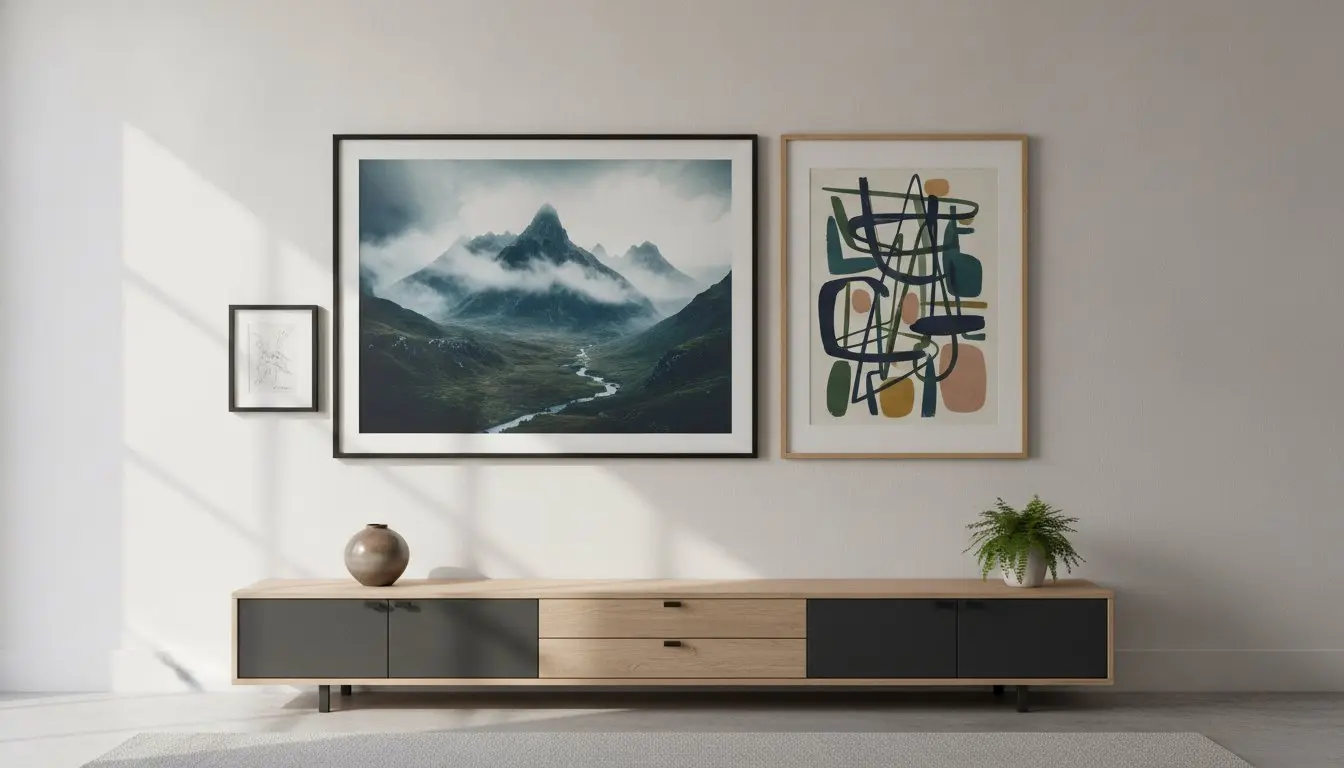
Posted on

A3 Frames: The Complete Guide to Dimensions, Styles, and Uses

There’s a special kind of magic in finding the perfect piece of art. But turning that beautiful A3 print into a spectacular wall feature can feel surprisingly complex. Questions start to surface: What are the exact A3 dimensions in centimetres? Will it need a mount? And how do you choose a frame that elevates your art rather than making it look cheap? It can feel like a daunting task, leaving you worried about making the wrong choice for your cherished print.

Fear not. Choosing the right frame is an art in itself—it’s the bridge between your artwork and your décor. That’s why we’ve created this complete guide to a3 frames. We believe in making professional framing simple and accessible. In this guide, we will demystify everything from precise measurements and the role of a mount, to selecting a premium style that truly honours the piece within. Prepare to move from uncertainty to inspiration, ready to confidently select a beautiful frame that provides the perfect finishing touch for your home.

What is an A3 Frame? Understanding the Standard Dimensions

When choosing the perfect frame, understanding the size is the first step on your creative journey. The A3 size is one of the most popular and versatile choices for displaying everything from fine art prints to treasured photographs. As part of the globally recognised ISO 216 series, its Standard Dimensions make it a familiar and accessible option. It strikes a beautiful balance—large enough to make a statement on its own, yet modest enough to work splendidly as part of a gallery wall.

It’s important to remember that when we talk about an A3 frame, we are referring to the size of the artwork, poster, or photo it is designed to hold. The outer dimensions of the frame itself will be larger, depending on the width of the moulding you select. This versatile size is perfect for showcasing art in either a vertical (portrait) or horizontal (landscape) orientation, giving you complete creative control.

To see how these dimensions translate into a finished piece, the video below provides a fantastic hands-on look:

A3 Frame Dimensions in Detail

For perfect clarity when measuring your artwork, here are the exact dimensions of an A3 print. Ensuring your piece matches these measurements guarantees a flawless fit within any standard A3 frame.

  • Millimetres: 297 x 420 mm
  • Centimetres: 29.7 x 42 cm
  • Inches: 11.7 x 16.5 inches

The Role of a Mount: Enhancing Your A3 Artwork

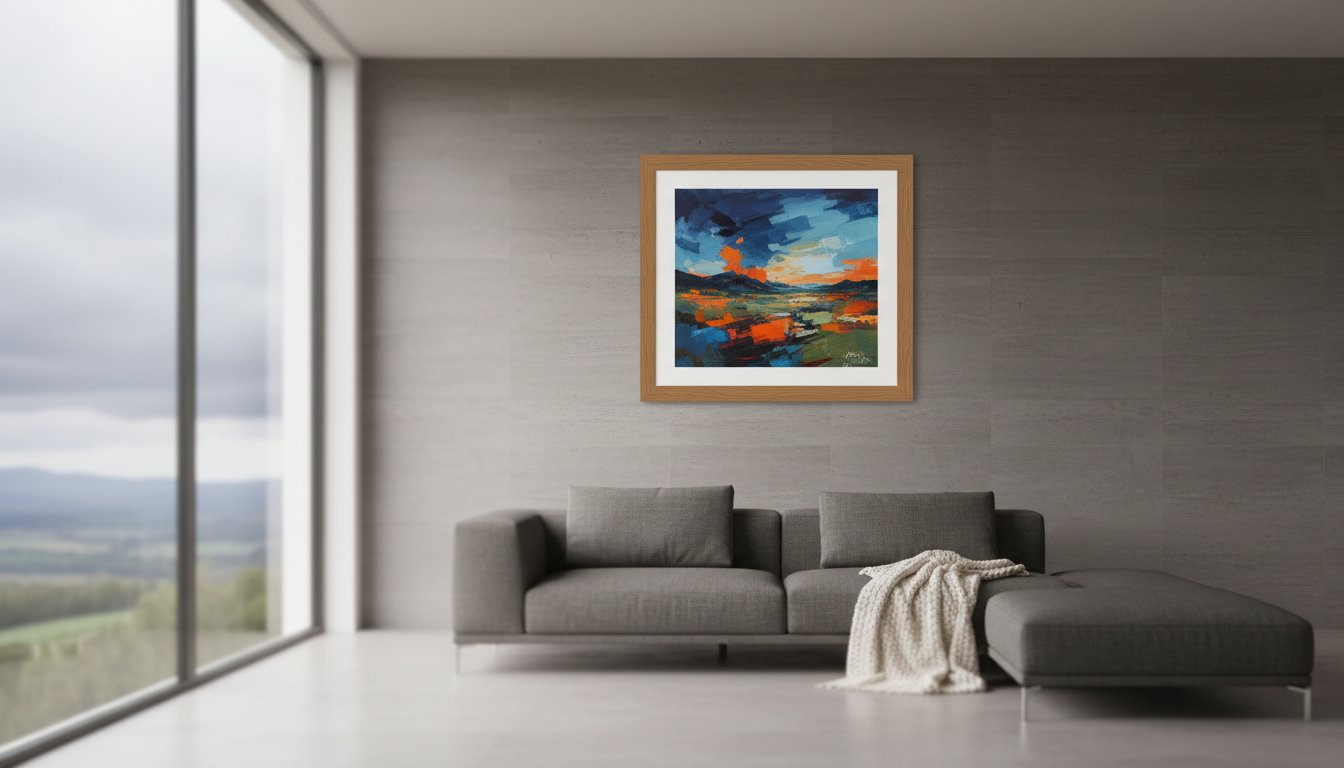
A picture mount (also known as a mat or passe-partout) is the elegant cardboard border that sits between your artwork and the frame. It serves a dual purpose: it creates a professional visual separation that draws the eye inward and prevents your print from touching the glass, protecting it over time. Using a mount is a hallmark of premium, bespoke framing. For instance, our a3 frames can be beautifully paired with a mount to showcase a smaller A4 print, instantly elevating it with a sophisticated, gallery-quality finish that truly honours the art within.

The Best Uses for A3 Picture Frames in Your Home or Office

Once you understand the dimensions, the real creative journey begins. The A3 size (297 x 420 mm) hits a perfect sweet spot—it’s substantial enough to make a statement yet versatile enough to fit beautifully into any room, from a bustling office to a tranquil living space. Its adaptability is its greatest strength, offering a spectacular canvas for your most cherished memories, art, and achievements. Let’s explore how you can use a3 frames to elevate your décor.

Displaying Art Prints and Posters

The A3 format is the classic choice for artists and designers for good reason. It’s the perfect size for displaying concert posters, limited edition art prints, and bold graphic designs. An A3 frame allows the artwork’s finer details to shine without overwhelming your wall. Whether you’re showcasing a single, powerful statement piece above a desk or arranging a symmetrical series of prints along a hallway, this size provides the ideal balance and impact.

Framing Professional Certificates and Diplomas

Your academic degrees, professional awards, and certificates represent significant milestones. An A3 frame offers an elegant and professional way to display these important documents, protecting them for years to come. A premium frame does more than just showcase your hard-earned achievements; it preserves them. Using archival-quality materials is crucial, because as preservation experts advise, Quality Matters when protecting important documents from environmental damage. We recommend simple, classic styles like a slim black or natural oak frame to lend a timeless, distinguished look.

Creating a Striking Gallery Wall

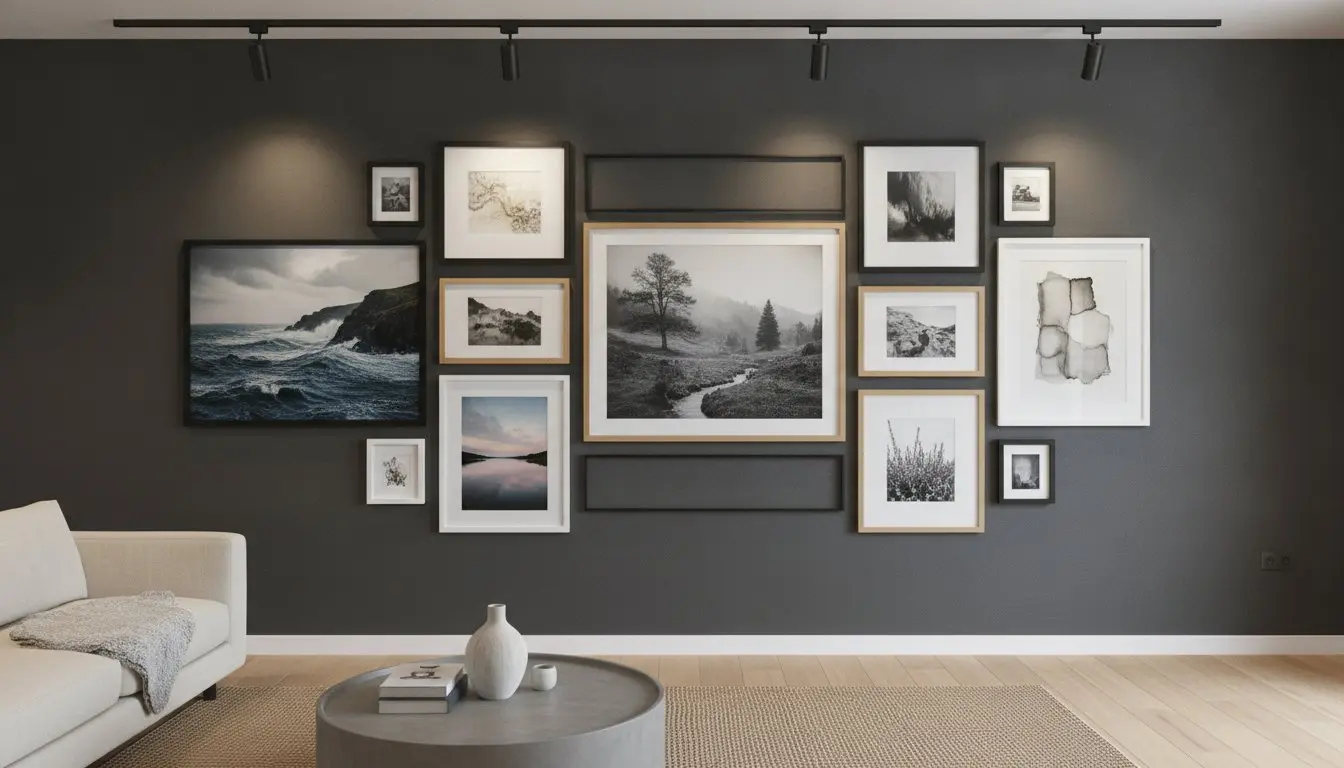
A gallery wall is a beautiful way to tell a personal story, and a3 frames often play a leading role. Use them as the ‘hero’ pieces to anchor your layout, building a collection of smaller A4 and A5 frames around them for a dynamic, eclectic feel. Alternatively, for a clean and contemporary aesthetic, a symmetrical grid of identical A3 frames creates a powerful, organised display. This approach is perfect for a themed collection of photography or a series of matching art prints.

How to Choose the Perfect A3 Frame Style and Material

Selecting the perfect frame is about more than just protecting your print; it’s about creating a beautiful bridge between your artwork and your room’s decor. For A3 prints, a versatile size defined by the ISO 216 international standard, the right frame enhances the art and harmonises with your space. Think of the frame as the final, crucial touch that pulls everything together. Our passion is helping you find that perfect match, so here are a few simple tips to guide your decision.

Classic Wooden Frames: Timeless and Versatile

Wooden a3 frames bring a natural warmth and classic appeal that suits almost any interior. Crafted from premium, sustainable wood, they add a touch of timeless craftsmanship. Each finish offers a different personality:

  • Oak Frames: The gentle, warm tones of natural oak are perfect for bringing a touch of nature indoors. They beautifully complement traditional, rustic, or bohemian decor.
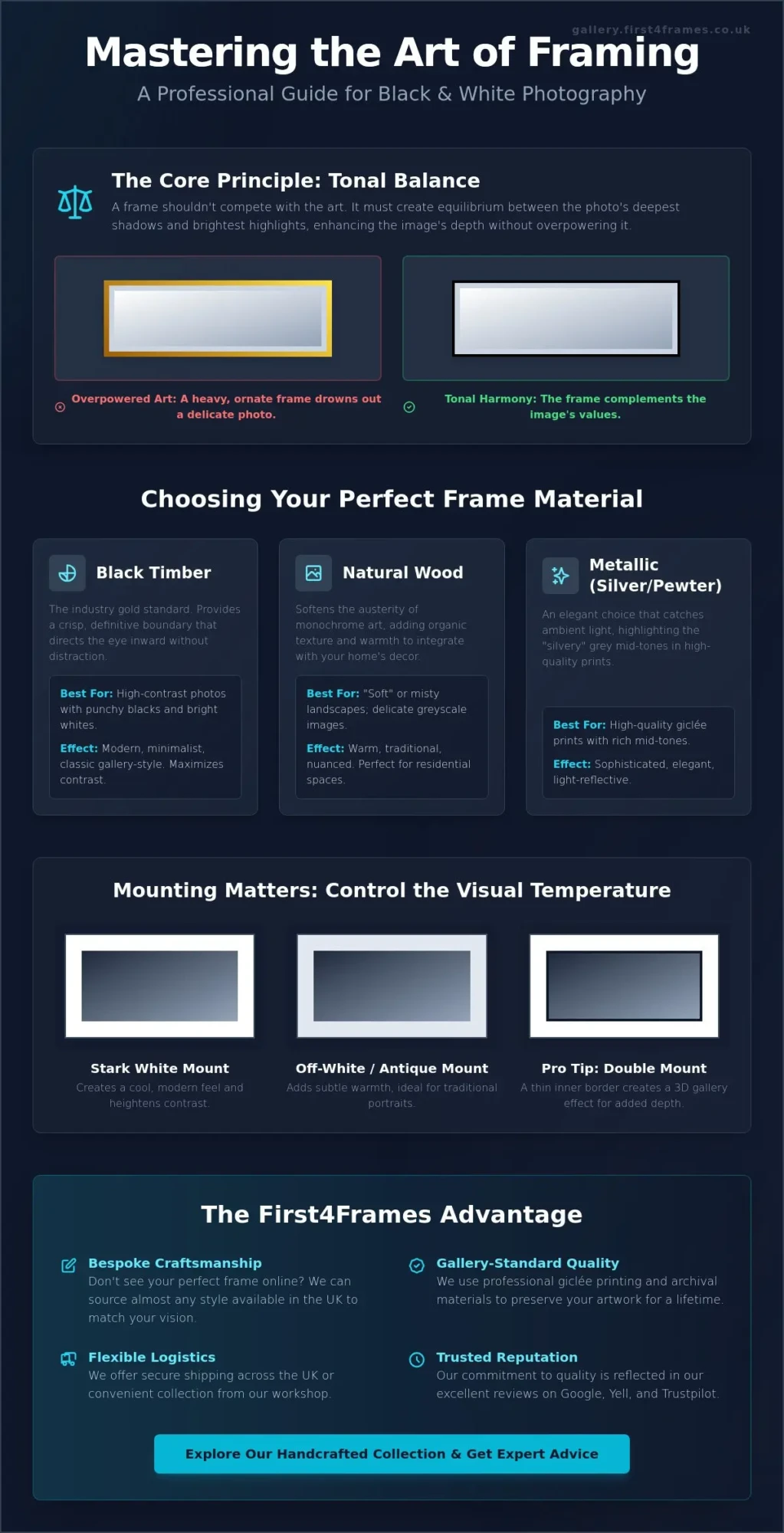
  • Black Frames: A classic for a reason. Black provides a bold, modern contrast that makes the colours in your artwork truly pop. It’s a spectacular choice for creating a focal point.
  • White Frames: For a clean, minimalist aesthetic, a white frame is unbeatable. It offers a fresh, airy feel that works wonderfully in Scandinavian-inspired or contemporary spaces.

Modern Metal Frames: Sleek and Contemporary

For a clean, contemporary edge, metal is an excellent choice. Aluminium frames typically have a very thin, elegant profile, ensuring the focus remains squarely on your artwork. This minimalist style is ideal for:

  • Photography and posters
  • Architectural prints and line drawings
  • Modern and industrial-style interiors

Available in various finishes like matte black, brushed silver, or subtle gold, metal frames offer a sophisticated and durable way to display your favourite pieces.

Matching Frame to Artwork: Simple Rules to Follow

Feeling unsure? Follow these simple principles to find the perfect pairing every time:

  • Complement the Style: Match the frame to the artwork’s era or mood. A modern abstract print shines in a sleek metal frame, while a classic watercolour feels at home in oak.
  • Balance the Composition: If your artwork is busy and vibrant, choose a simple, understated frame that won’t compete for attention.
  • Consider the Colour Palette: Look at the dominant colours in both the art and the room where it will hang. Choose a frame that either picks up on a subtle accent colour or provides a complementary contrast.

Ultimately, the goal is to select a frame that makes you fall in love with your artwork all over again. Ready to find your perfect match? Explore our curated collection of beautiful frames.

Quality Matters: What to Look for in a Well-Made A3 Frame

An A3 frame does more than just hang your picture on the wall; it acts as the bridge between your art and your room, protecting and enhancing the piece within. While a low price tag can be tempting, investing in a well-made frame ensures your artwork remains beautiful for years to come. Understanding the components of quality craftsmanship empowers you to choose wisely, turning a simple print into a lasting display.

The Moulding: Solid Wood vs. MDF

The moulding is the main structure of the frame, and its material is a key indicator of quality. Mass-produced frames often use MDF (Medium-Density Fibreboard) or Polcore, which are budget-friendly options. However, for superior durability and a truly premium feel, nothing compares to solid wood. Each wooden frame boasts a unique grain, offering a natural warmth and character that synthetic materials simply cannot replicate. It’s an investment in strength and timeless style.

Glazing: Protecting Your Print with Glass or Acrylic

Glazing is the clear, protective layer that shields your artwork from dust, moisture, and fading. Your main choices are:

  • Glass: Offers exceptional clarity and a traditional, weighty feel. It’s scratch-resistant and perfect for pieces that won’t be moved often.
  • Acrylic (Perspex): A lighter and shatter-resistant alternative, making it safer for high-traffic areas or children’s rooms. High-quality acrylic can also offer superior UV protection to prevent your print’s colours from fading over time.

Ready-Made vs. Bespoke Framing

Ready-made A3 frames are a convenient and cost-effective solution for standard-sized prints and posters. They offer a quick way to get your art on the wall. However, for a truly perfect finish or to protect a valuable piece of fine art, bespoke framing is the ultimate choice. A custom-made frame is crafted with higher-quality materials and precision-cut to fit your artwork exactly, eliminating unsightly gaps and ensuring archival-level protection. For a piece you truly treasure, a bespoke frame is an investment in its future. Get a quote for a custom A3 frame from our experts.

The Final Touch: Choosing Your Perfect A3 Frame

As we’ve explored, the perfect frame is more than just a border; it’s the bridge between your artwork and your decor. Understanding the standard A3 dimensions gives you a versatile starting point, while choosing the right style and material is what truly brings your vision to life. The key is that quality craftsmanship makes all the difference, ensuring your cherished prints and photographs are beautifully preserved for years to come.

With over 20 years of professional framing experience, we understand that power. From our Falkirk workshop, our team offers a bespoke service, using premium, locally sourced materials to create exceptional a3 frames that honour your art. Our passion is transforming your space with pieces that are built to last and designed to inspire.

If you’re ready to see the difference that true craftsmanship can make, we invite you to explore our collection of beautifully framed art prints. Discover the perfect frame for your story today.

Frequently Asked Questions About A3 Frames

What are the exact dimensions of an A3 frame in cm and inches?

An A3 frame is crafted to perfectly house an A3 print, which measures exactly 29.7 x 42 cm or 11.7 x 16.5 inches. It’s important to note these are the internal dimensions for the artwork itself. The frame’s external size will be slightly larger, depending on the width of the beautiful moulding you select. Always measure your artwork first to ensure a professional, seamless fit for your treasured piece before purchasing.

Can I put an A4 picture into an A3 frame?

Absolutely! Placing a smaller A4 picture (21 x 29.7 cm) inside a larger A3 frame is a spectacular way to achieve a professional, gallery-style presentation. This is done by using a picture mount, which creates a crisp, clean border around your artwork. This technique gives the piece space to breathe, draws the eye inward, and adds a touch of bespoke elegance to your wall display, truly elevating the final look.

Is A3 a good size for framing a photograph?

Yes, A3 is a fantastic and highly versatile size for framing photographs. It’s large enough to make a significant impact and showcase the fine details of your image, yet not so large that it overwhelms a room. This size works beautifully as a standalone feature piece or as the centrepiece of a growing gallery wall. Whether it’s a family portrait or a stunning landscape, an A3 frame provides the perfect canvas to display your memories.

What is a picture mount and do I need one for my A3 frame?

A picture mount is a high-quality cardboard border that sits between your artwork and the frame’s glass. It serves two key purposes: it creates a visual separation that enhances the artwork, and it protects your print by preventing it from touching the glass. While you don’t need a mount if your artwork is already A3 size, we highly recommend one for adding a premium, professional finish or for framing smaller images within your A3 frame.

How do I hang an A3 frame securely on the wall?

For most A3 frames, a single, correctly installed picture hook is sufficient for plasterboard walls. Always check that the hook is rated to hold at least double the weight of your frame for safety. Use a spirit level for perfect alignment. For heavier frames or solid masonry walls, we recommend using a wall plug and screw for a more robust and secure fitting, ensuring your beautiful artwork remains perfectly displayed for years to come.

Which is bigger, an A3 frame or an A2 frame?

An A2 frame is bigger than an A3 frame. The ‘A’ paper sizing system can seem counter-intuitive: as the number gets smaller, the paper size gets larger. An A2 sheet of paper (42 x 59.4 cm) is exactly double the size of an A3 sheet. Consequently, an A2 frame is designed for a much larger, statement piece of art, while an A3 frame offers a more adaptable and popular size for most homes.

Posted on

Picture Frames: The Ultimate Guide to Choosing, Hanging, and Displaying Art

That spectacular print you’ve just bought, or the family photograph you cherish, deserves more than to be left leaning against a wall. But stepping into the world of picture frames can often feel overwhelming. With a sea of materials, colours, and styles to choose from, how do you find the one that doesn’t just hold your art, but truly elevates it? How do you create that seamless bridge between a beautiful piece and your room’s decor, instead of creating an awkward afterthought?

Consider this your friendly, expert guide. We believe that framing is an art in itself, and our passion is to make it accessible and enjoyable for everyone. In the following sections, we will demystify the entire process. You will learn how to confidently select the perfect frame that makes your art sing, master the simple, secure techniques for hanging it at the ideal height, and find professional inspiration for creating a stunning gallery wall that tells your unique story. Let’s turn those bare walls into a beautiful, personal gallery, together.

More Than a Border: Why the Right Picture Frame is Essential

A common mistake is to see a frame as a mere afterthought—a simple border to finish the job. In reality, a thoughtfully chosen frame does the heavy lifting, acting as the crucial bridge between your artwork and your room’s decor. It protects, enhances, and completes, transforming a simple photograph or print into a spectacular, finished piece ready for display. The right choice doesn’t just surround the art; it pulls you into the picture.

To see how these elements come together, this short video offers a great overview:

Protecting Your Prized Artwork

First and foremost, a frame’s primary role is preservation. To ensure your art stands the test of time, it is vital to use conservation-grade materials. This includes:

  • Acid-free mounts: These prevent the unsightly yellowing and deterioration that can occur when art is in direct contact with acidic materials.
  • Protective glazing: High-quality glass or acrylic acts as a shield against everyday threats like dust, moisture, and, most importantly, harmful UV light that causes colours to fade.

Enhancing the Visual Impact

A well-chosen frame guides the viewer’s eye, drawing attention directly to the artwork’s focal point. The colour and texture of the frame should complement the piece, echoing its tones without overpowering them. This role has evolved significantly throughout the history of picture frames, moving from purely functional to an art form in itself. By creating a distinct boundary, the frame gives the art a sense of depth and importance, elevating its presence on your wall.

Completing Your Interior Design

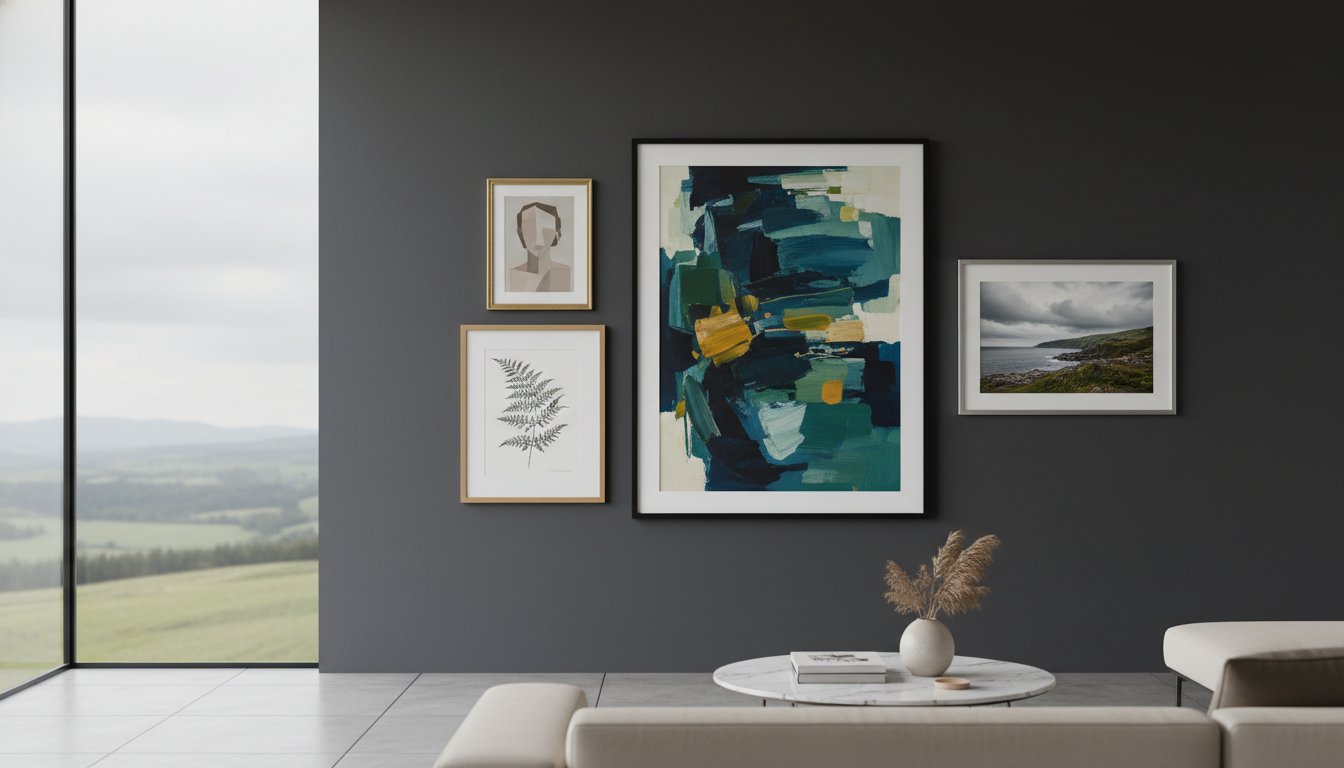
The best picture frames are a seamless extension of your home’s personality. A sleek, black frame can accentuate a modern, minimalist aesthetic, while a rustic oak frame might be the perfect fit for a country-style living room. You can use frames to introduce a subtle accent colour or a new texture, such as brushed metal or natural wood grain. Using a consistent style across a gallery wall or throughout a room creates a cohesive, professionally curated look that ties your entire space together.

A Guide to Picture Frame Materials and Styles

Choosing the perfect frame is about more than just a border; it’s about creating a beautiful bridge between your artwork and your living space. The material of a frame dramatically affects its look, feel, and durability, while its style can elevate a simple print into a masterpiece. Key factors like the frame’s width (known as its profile) and its finish—from matte to high gloss—all play a vital role. Understanding the main categories of picture frames is the first step to making a choice you’ll love for years to come.

Classic and Versatile: Wood Frames

For a touch of warmth and timeless elegance, nothing compares to wood. It’s a wonderfully versatile material that brings a natural, organic feel to any room. Each type of wood offers a unique character, from the rich, pronounced grain of Oak to the subtle, lighter tones of Ash and the rustic charm of Pine. Finishes range from natural stains that celebrate the grain to a spectrum of painted colours, offering a bespoke solution for any interior palette. Wood frames are the perfect choice for traditional art, family photographs, and creating a cosy, inviting atmosphere.

Modern and Minimalist: Metal Frames

Sleek, sharp, and effortlessly contemporary, metal frames are prized for their strength and clean lines. Typically crafted from high-grade aluminium, they allow for exceptionally slim profiles that let the artwork take centre stage. This minimalist approach is perfect for modern interiors. Popular finishes include:

  • Matte Black or White for a crisp, graphic look.
  • Brushed Silver or Gold for a touch of sophisticated shimmer.
  • Polished Chrome for a high-impact, industrial feel.

Metal frames are an ideal partner for contemporary art, posters, and black and white photography, complementing minimalist and industrial décor schemes perfectly.

Statement Pieces: Ornate and Decorative Frames

When you want to create a truly dramatic focal point, an ornate frame is the answer. Styles inspired by Baroque, Rococo, or Victorian design feature intricate carvings, gilded finishes, and sweeping, decorative details. These frames are works of art in themselves, best used to enhance traditional oil paintings or to give a single, special piece pride of place. To prevent an ornate frame from overwhelming the art, select a piece with a simple composition or ensure the frame’s tones are echoed within the artwork itself, creating a harmonious and spectacular display.

How to Select the Perfect Frame for Your Art and Home

Choosing a frame is an art in itself. The goal is to find a partner for your artwork—a frame that enhances and elevates the piece without competing for attention. It’s a beautiful balance between the art, the frame, and the room it will call home. Considering the scale of the piece, the style of your decor, and the professional finish a mount can provide will transform a simple print or photo into a bespoke centrepiece. And remember, with over two decades of experience, we’re always here to offer a professional opinion.

Rule #1: Let the Artwork Guide You

Your art should always be the star of the show. The frame’s style should harmonise with the era and mood of the piece—a classic oil painting often suits an ornate, traditional frame, while modern photography shines in a minimalist design. For colour, look for a neutral tone within the artwork to pull into the frame. Finally, a mount board provides essential ‘breathing space’, creating a clean visual pause that draws the viewer’s eye directly to the image.

Rule #2: Consider Your Room’s Decor

The perfect frame acts as a bridge between your artwork and your interior. Take cues from the existing finishes in your room. Do you have warm oak furniture, brushed chrome light fittings, or a specific wall colour you want to complement? Choosing picture frames that echo these materials and tones creates a seamless, curated feel. You can either create harmony by matching styles or introduce a deliberate, stylish contrast for a bolder statement.

Rule #3: Get the Proportions Right

Scale and proportion are key to achieving a polished look. Generally, larger pieces of art can handle wider, more substantial frames that give them weight and presence on the wall. In contrast, smaller, more delicate works are often best served by thin, simple frames that don’t overwhelm them. The mount is also a powerful tool here; a wider mount can make a small piece feel more significant and important. Visualising the final result is the best way to make a confident choice. Explore our gallery for inspiration!

The Art of the Hang: How to Display Picture Frames Like a Pro

A beautifully framed picture deserves to be displayed with care. The final step, hanging your art, can feel daunting, but it’s where the magic truly happens. The most common mistake is hanging art too high, but with a few professional tips and the right tools, you can position your picture frames perfectly every time, creating a display that feels balanced and intentional.

Your Essential Toolkit

Gathering your tools beforehand makes the process smooth and simple. For most jobs, you will only need the basics:

  • Tape Measure: For accurate measurements.
  • Spirit Level: To ensure a perfectly straight finish.
  • Pencil: For marking the wall lightly.
  • Hammer: To secure your fixings.

Your wall type dictates the fixing. For solid masonry walls, a drill and rawl plug are best. For modern plasterboard walls, specialist hooks are designed to grip the board securely. Always check the weight rating on the hook’s packaging to ensure it can support your frame. For larger pieces, we always recommend using two fixing points for stability.

Understanding your wall’s condition is just as important as the right fixing. If you’re ever in doubt about the structural health of your property, particularly concerning issues like damp that could affect both walls and artwork, you can check out South Surveyors for a professional assessment.

The 57-Inch Rule: Finding the Perfect Height

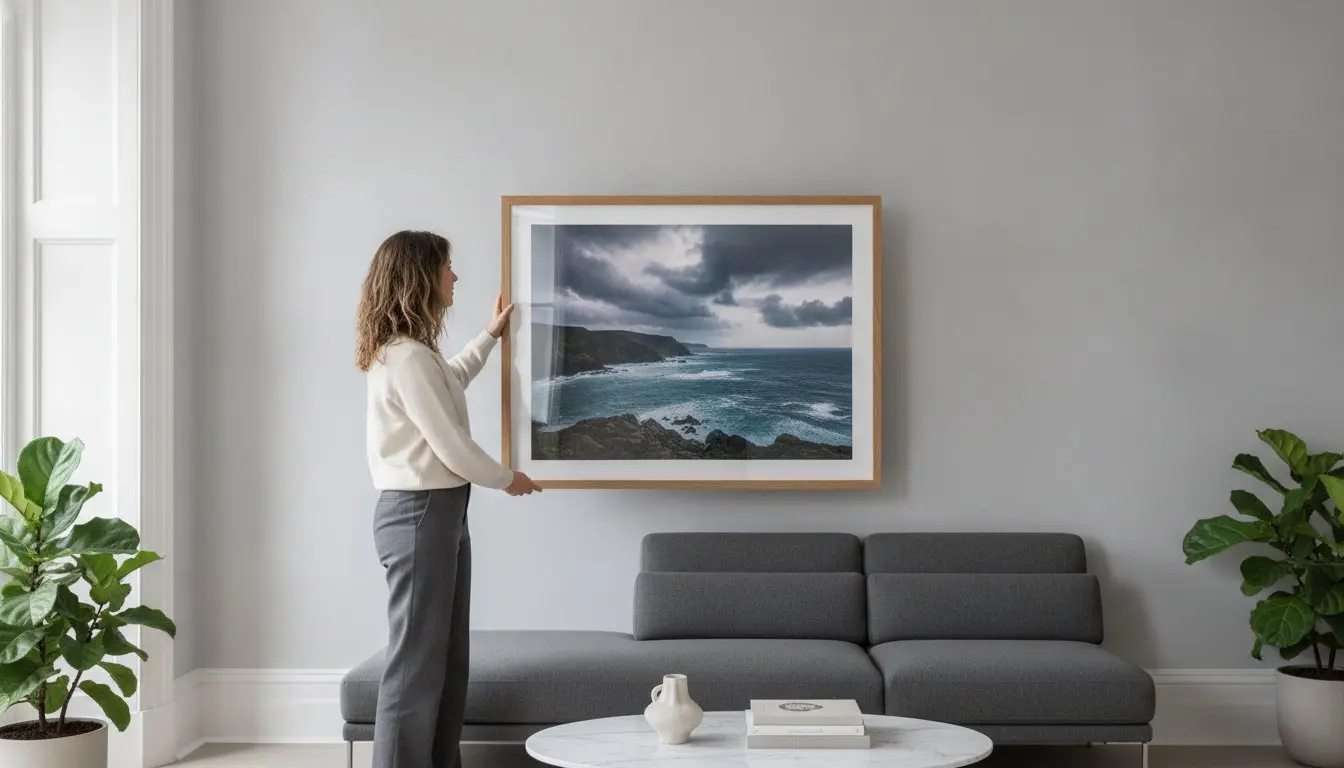
Ever wonder how galleries achieve such a harmonious look? They use the 57-inch (or 145 cm) rule. This industry standard dictates that the centre of a piece of art should be positioned 57 inches from the floor, which represents the average human eye level. This creates an immediate and comfortable connection with the artwork. When hanging above furniture like a sofa or console table, simply adapt the rule by aiming for a gap of 6-8 inches between the bottom of the frame and the top of the furniture.

A Simple Step-by-Step Hanging Method

Follow these simple steps for a professional result every time:

  1. Mark Your Centre: Measure 57 inches (145 cm) from the floor and make a light pencil mark on the wall. This is the central point for your artwork.
  2. Measure Your Frame: On the back of your frame, measure the distance from the top edge down to the hanging wire or fixing point (when pulled taut).
  3. Find Your Hook Point: On the wall, measure up from your 57-inch mark by half of your frame’s total height. From that new spot, measure back down by the distance you found in step 2. This is precisely where your nail or hook goes.
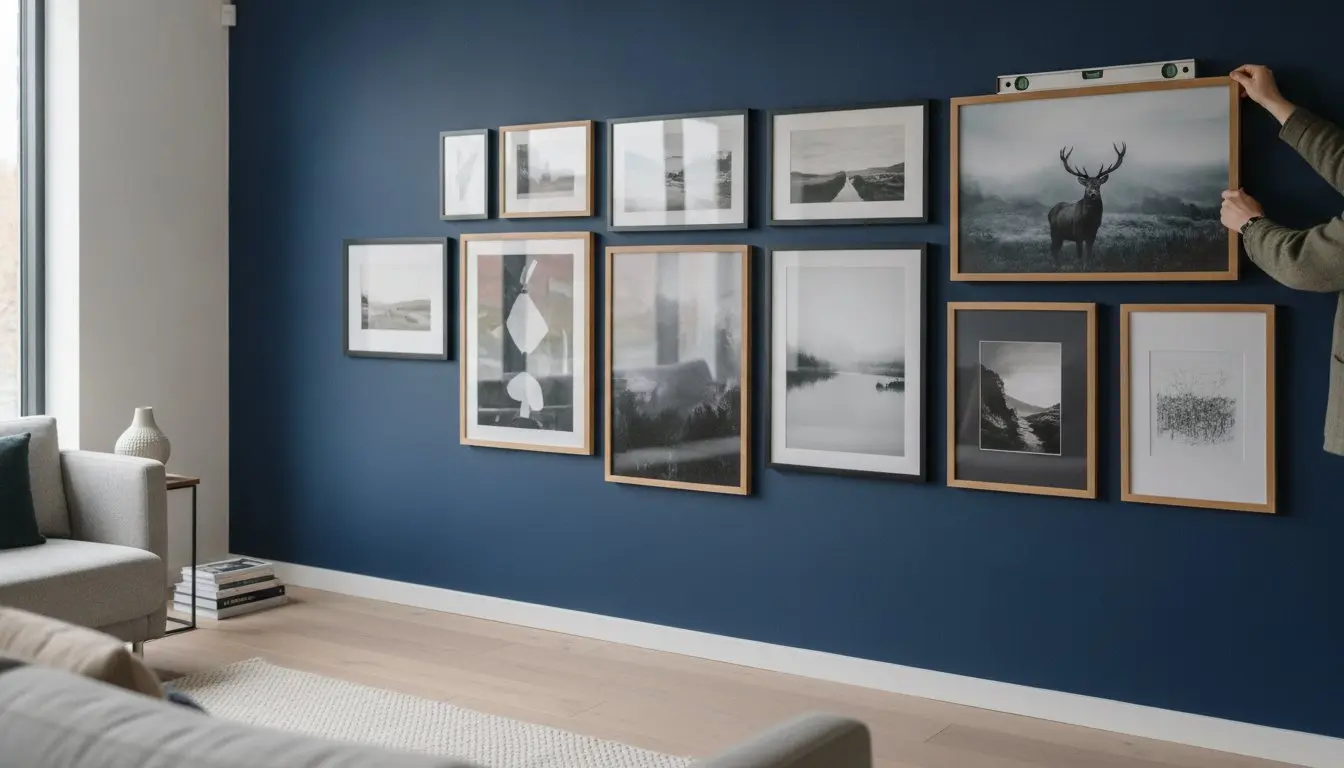
  4. Hang and Level: Install your hook, hang your frame, and place your spirit level on top to make final adjustments until it’s perfectly straight.

With your beautiful picture frames now perfectly placed, you can stand back and admire the result. If you’re ready to find your next masterpiece, we invite you to explore our curated gallery.

Beyond the Single Frame: How to Arrange a Collection

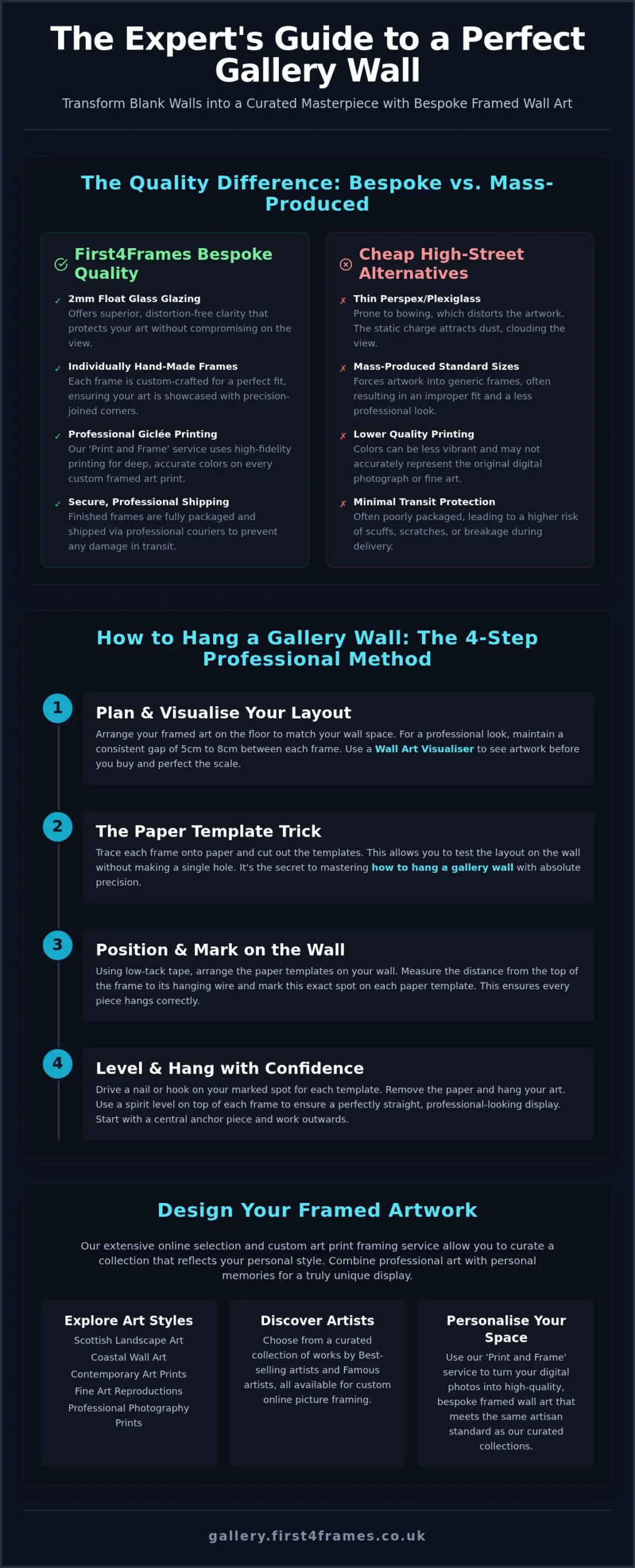
A single, beautifully framed piece is a statement, but a collection of frames is a story. Arranging multiple picture frames on a wall is your chance to create a personal gallery that reflects your taste and memories. Before you pick up a hammer, save yourself time and misplaced holes by planning your layout on the floor first. The secret to a professional, polished look lies in two simple rules: build your arrangement around a larger ‘anchor’ piece and maintain consistent spacing between every frame.

The Structured Grid: A Formal Approach

For a clean, contemporary, and symmetrical display, the structured grid is a timeless choice. This approach uses identical frames, perfectly aligned to create a sense of order and calm. It is especially effective for displaying a series of related photographs or a matched set of fine art prints. To ensure perfect alignment, create paper templates for each frame and use painter’s tape to position them on the wall. This allows you to adjust the layout until it’s just right before making any permanent marks.

The Eclectic Salon Wall: A Creative Display

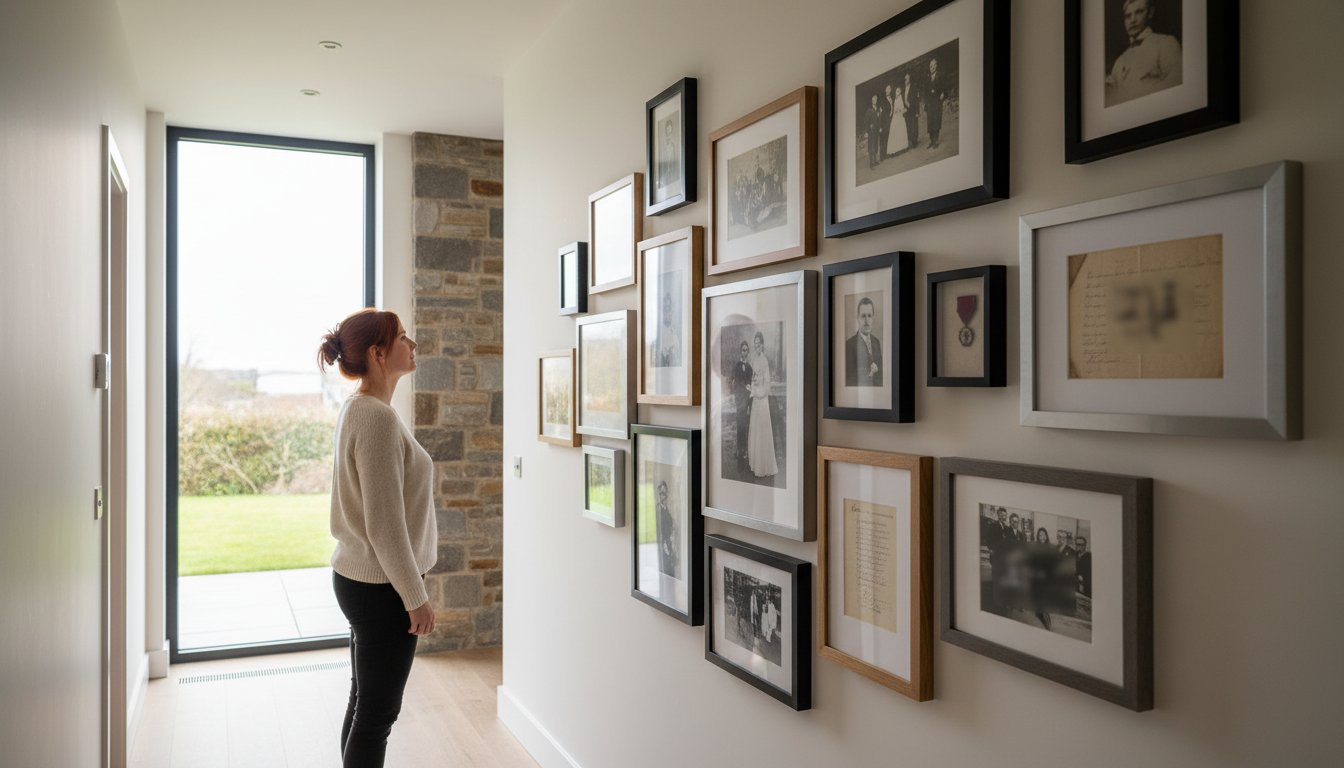
Embrace your inner curator with a salon-style wall. This creative display involves mixing different frame sizes, styles, materials, and orientations to build a rich, visual tapestry. The key to avoiding chaos is to start by placing your largest or most impactful piece slightly off-centre. From there, work outwards, balancing smaller pieces around it. You can unify the collection with a common element, such as a consistent colour in the artwork or a single finish for all the frames.

The Picture Ledge: Flexible and Stylish

A picture ledge offers a wonderfully versatile way to display your art without the commitment of multiple wall hooks. This simple shelf allows you to effortlessly rotate and update your collection. Create visual depth by layering frames of different heights and sizes, placing smaller ones in front of larger ones. This method is ideal for renters or anyone who loves to frequently refresh their decor. This flexible approach is also perfect for commercial spaces that need regular updates. Need help with a large project? Learn about our commercial services.

Bringing Your Vision to Life with the Perfect Frame

As we’ve explored, the right frame is far more than a simple border—it’s the bridge that connects your art to your personal style and the soul of your home. From understanding materials and styles to mastering the art of the gallery wall, you now have the tools to display your cherished pieces with the confidence of a professional.

Finding the perfect picture frames is the final, crucial step in your creative journey. At First 4 Frames, we bring over 20 years of expert framing experience from our Falkirk workshop to every project. As your one-stop-shop for fine art prints and professional framing, we use only the highest quality, conservation-grade materials to protect and showcase what you love. Need the perfect frame? Discover our bespoke framing service.

Your walls are a canvas for your story. Now go and tell it beautifully.

Frequently Asked Questions

What is the best way to clean a picture frame and the glass?

For the frame itself, a soft, dry microfibre cloth is usually sufficient to remove dust. For the glazing, spray a small amount of glass cleaner onto your cloth, not directly onto the surface. This prevents liquid from seeping under the glass and damaging your artwork. Gently wipe the glass or acrylic in a circular motion for a beautiful, streak-free finish that lets your art shine through.

How do I hang a picture frame without using nails?

For a simple, damage-free solution, adhesive strips like Command Strips are a superb choice for lighter frames. Always check the weight limit on the packaging to ensure they can support your piece. For a more traditional and versatile option, consider installing a picture rail. This allows you to hang and easily rearrange your art using adjustable hooks and wires, all without creating new holes in your walls.

What is a picture frame mount (or mat) and do I need one?

A mount, also known as a mat, is the card border that sits between your artwork and the frame. It serves two key purposes. Aesthetically, it creates visual space, drawing the eye inward and giving the piece a professional, gallery-quality finish. Practically, it separates the art from the glazing, protecting it from condensation. While not always essential, a mount is highly recommended to both protect and elevate your artwork.

Should I choose glass or acrylic (Perspex) for my frame?

The choice depends on your priorities. Traditional glass offers excellent clarity and is more scratch-resistant, but it is heavier and can shatter. Premium acrylic, or Perspex, is a fantastic modern alternative. It’s lightweight, shatter-resistant—making it ideal for large frames or homes with children—and often provides superior UV protection to prevent your artwork from fading. Both offer a spectacular view; the decision rests on safety, weight, and location.

How can I tell what size frame I need for my picture?

First, carefully measure the exact height and width of your picture. Standard picture frames are sold based on the artwork size they are designed to hold, so an A4 photo will fit an A4 frame. If you plan to use a mount, you will need a larger frame. For example, an A4 print with a 5cm mount border would require a frame with an internal dimension of approximately 30cm x 39cm. Always measure your art first for a perfect fit.

Is it worth paying for bespoke framing for a simple photo?

While an off-the-shelf frame suits standard prints, bespoke framing is an investment in preservation and perfect presentation. For a cherished photo, professional framing ensures it is protected by conservation-grade materials that prevent fading and damage. It also offers limitless creative control, allowing you to choose the perfect mount and frame style to complement both the photo and your home, turning a simple snapshot into a treasured piece of art.