
The biggest mistake in interior design isn’t choosing the wrong colour; it’s choosing art that feels like an afterthought. You’ve likely felt that hesitation, wondering how to choose art for your living room that reflects your personality without settling for generic, hotel-style prints. It’s common to feel overwhelmed by frame sizes or the fear of a flimsy frame detracting from a beautiful piece of Scottish landscape art or a contemporary fine art print. We’re here to help you create a home that feels curated and intentional.
We’ll guide you from uncertainty to a professional finish. You’ll learn how to select the perfect anchor piece and use our online picture framing tools to design your framed artwork with confidence. We’ll show you why bespoke framed wall art, crafted by hand with premium 2mm float glass instead of cheap perspex, makes all the difference in clarity. By using an art print framing service that allows you to choose your frame online and visualise art on your wall using our wall art visualiser, you’ll see artwork before you buy to ensure it fits perfectly. From landscape wall art to works by best-selling artists, you’ll discover how our professional couriers deliver your custom framed art prints in pristine condition.
Key Takeaways
- Discover how to choose art for your living room by identifying a central anchor piece that establishes your home’s unique tone and colour palette.
- Learn how to select the ideal focal point for your space using inspiring styles like rugged Scottish landscape art or calming coastal wall art.
- Understand why bespoke framed wall art using 2mm float glass provides superior clarity and protection compared to the cheap perspex used by competitors.
- Use our wall art visualiser and online picture framing tools to see artwork before you buy, ensuring a perfect match for your decor.
- Explore how to design your framed artwork using our professional print and frame service to turn personal photography into gallery-quality displays.
Finding the Anchor: Where to Position Your Living Room Art
Every well-designed room needs a soul. An anchor piece is the primary artwork that establishes the visual weight of your space; it dictates the colour palette and the emotional tone for everything else. Understanding how to choose art for your living room begins with identifying this central element. By following fundamental design principles, you can ensure your chosen piece doesn’t just hang on the wall, but actually belongs there.
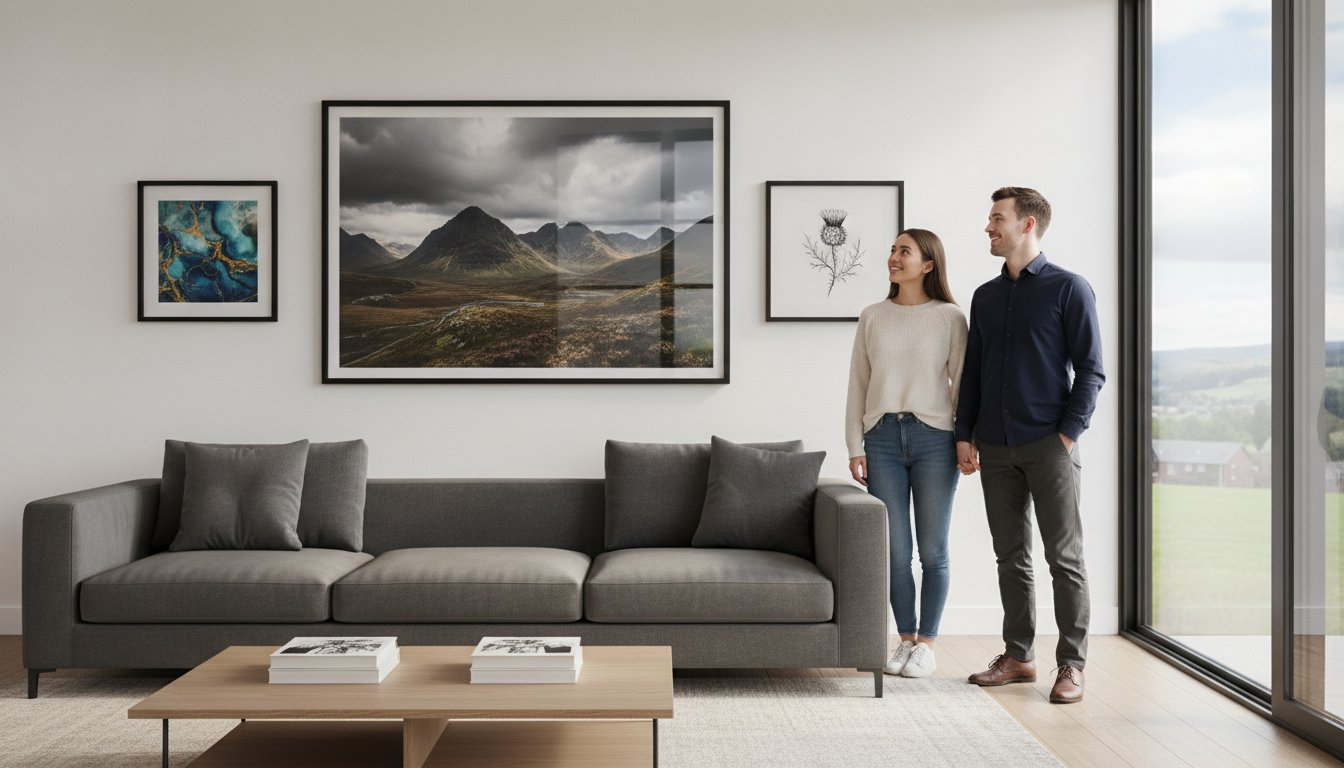
Traditional focal points like the wall above the sofa or the chimney breast are the heart of the room. These areas naturally draw the eye. Placing a significant work here creates a sense of balance that grounds the entire seating area. It’s the difference between a room that feels scattered and one that feels “settled.”
To better understand this concept, watch this helpful video:

Size is just as critical as subject matter. We recommend the 75% rule: your artwork should cover roughly three-quarters of the width of the furniture it sits above. This creates a cohesive visual field without overcrowding the wall. If the piece is too small, it looks lost. If it’s too large, it can make the ceiling feel lower. Choosing Scottish landscape art or a similar heritage piece adds a layer of narrative, connecting your home to the local environment and providing a timeless sense of place.
Measuring for Success
Galleries use a standard height for a reason. Aim for 145cm from the floor to the centre of the artwork. This ensures the piece sits at a comfortable eye level for most people. Always ensure your bespoke framed wall art is narrower than the sofa or sideboard below it. This simple alignment prevents the arrangement from feeling top-heavy or unstable.
Considering Light and Longevity
Natural light can be art’s greatest friend or its worst enemy. High-quality glazing is essential in living rooms with large windows. We use 2mm float glass because it offers superior clarity compared to the cheap, scratch-prone perspex used by many competitors. This professional-grade glass reduces distracting glare and preserves the fidelity of your fine art or photography prints for decades. Don’t let a reflection of your window hide the intricate details of your investment.
5 Inspiring Styles That Make a Living Room Feel Like a Home
Once you’ve identified the perfect location for your anchor piece, the subject matter becomes the voice of the room. Understanding how to choose art for your living room is about finding a style that resonates with your personality while complementing your architecture. Whether you live in a traditional tenement or a sleek new-build, the right genre of art bridges the gap between a house and a home.
- Scottish Landscape Art: These pieces bring the rugged textures of the Highlands or the soft light of the Lowlands into your interior. They ground a room with a sense of history and natural beauty.
- Coastal Wall Art: Using serene blues and maritime themes, coastal pieces create a “settled” and calming atmosphere, perfect for relaxing after a long day.
- Contemporary Art Prints: Abstract shapes and bold colours add a layer of modern personality. These are particularly effective at adding character to neutral spaces.
- Heritage and Bothy Art: Iconic scenes and traditional dwellings act as fantastic conversation starters for guests, celebrating local culture and architecture.
You can explore these diverse styles and find a piece that speaks to you in our curated online art gallery.
Matching Art to Your Interior Palette
Don’t feel restricted by trying to match your wall colour exactly. Instead, pull subtle accent colours from a painting to inform your choice of cushions, rugs, and accessories. This creates a layered, professional look. Many collectors now use a wall art visualiser to test different styles against their specific paint shade before buying. This allows you to visualise art on your wall and see how the light interacts with the colours in your specific environment.
Fine Art vs. Mass-Market Prints
For your primary living space, the quality of the print is just as vital as the image itself. Giclée prints offer superior colour depth and longevity, ensuring the reds stay vibrant and the blacks stay deep for decades. Unlike mass-market posters that fade in the sun, fine art prints are an investment in your home’s future. It’s also a smart move to choose standard photo and picture sizes for your collection. This makes it much simpler to update your display or rearrange your gallery wall in the years to come.


The First4Frames Gallery Difference: Why the Frame is the Final Step
You’ve found the perfect style. Now, you need to consider how to finish it. Many people focus so much on how to choose art for your living room that they forget the frame is what actually integrates the piece into their home. A cheap, standard frame from a high-street shop often warps or fails to fit the artwork properly; this leaves gaps or causes the paper to ripple. At our Falkirk workshop, First4Frames Gallery hand-crafts every frame individually. This bespoke approach ensures a superior fit and finish that mass-produced alternatives simply can’t match.
One of the most significant technical differences lies in the glazing. While many competitors use thin, scratch-prone Perspex to save on shipping costs, we insist on 2mm float glass. This material provides maximum clarity and doesn’t attract dust through static like plastic does. It allows the vibrant colours of your fine art to shine through without distortion. You can choose your frame online to match your specific room hardware, ensuring your art feels like a built-in feature rather than an afterthought.
The Anatomy of a Quality Frame
A quality frame does more than look good; it preserves your investment. We use acid-free matting for our mounts to give your art room to breathe. This prevents the chemical yellowing caused by cheaper, acidic materials found in off-the-shelf products. When combined with professional backing, your art is protected from the humidity and dust common in busy living spaces. This attention to detail is vital for maintaining the longevity of your contemporary art prints or photography.
Safe Delivery of Bespoke Art
We know that ordering large, fragile items online can feel risky. That’s why our finished frames are fully packaged using specialised materials to prevent any impact damage. We ship via professional UK-wide couriers. This gives you total peace of mind that your ready-to-hang art will arrive in perfect condition. From the workshop bench to your living room wall, First4Frames Gallery handles every step with the care of a dedicated partner.
Ready to see the difference professional craftsmanship makes? You can browse our full range of bespoke framed wall art today.
Design Your Framed Artwork: From Digital Memories to Statement Pieces
While professional galleries offer incredible inspiration, a home truly feels complete when it reflects your own journey. Understanding how to choose art for your living room often involves blending professional fine art with your own digital memories. Our print and frame service allows you to elevate your photography prints to the same gallery standard as a masterpiece by famous artists. By using professional giclée printing and bespoke framing, your personal moments become sophisticated statement pieces rather than simple snapshots.
The biggest challenge many face is bridging the gap between a digital file on a screen and a physical anchor piece on the wall. Our wall art visualiser solves this by allowing you to visualise art on your wall before making a commitment. This interactive experience ensures that whether you’re selecting coastal wall art or a personal landscape, the proportions and colours work harmoniously with your existing furniture and light. It’s the most reliable way to see artwork before you buy, removing the guesswork from online picture framing.
How to Order Your First Piece Online
Our art print framing service is designed to be as straightforward as it is professional. You can move from inspiration to a finished product in just a few steps:
- Step 1: Select your style from our extensive collection of contemporary art prints or works by best-selling artists.
- Step 2: Use the wall art visualiser to scale the piece to your specific living room dimensions, ensuring the 75% rule mentioned earlier is perfectly applied.
- Step 3: Design your framed artwork by choosing from our range of hand-crafted frames and acid-free mounts to create a piece of bespoke framed wall art.
Ready-to-Hang Convenience
For busy homeowners, the ready-to-hang model is the ultimate solution for an instant room transformation. Unlike DIY kits or cheap shop-bought frames that require assembly and often result in trapped dust, we deliver a finished product. Every piece undergoes a final artisan check in our workshop to ensure the 2mm float glass is pristine and the custom framed art prints are perfectly aligned. Once our professional UK couriers deliver your package, it’s ready to take its place as the heart of your home.
Transform Your Living Space Today
Creating a home that feels truly yours is a process of curation and quality. You now have the tools to understand how to choose art for your living room by identifying a powerful anchor piece and selecting a style that resonates with your personal heritage. Whether you opt for a rugged Scottish landscape or a series of bespoke framed photography prints, the difference lies in the details. By moving away from mass-produced frames and embracing artisan craftsmanship, you ensure your walls tell a story that lasts for decades.
Every piece we create is individually hand-crafted in our Falkirk workshop. We use high-clarity 2mm float glass as standard to provide the protection and fidelity your art deserves. With our secure packaging and professional UK-wide courier shipping, your new focal point will arrive ready to hang and enjoy immediately. Don’t settle for generic, hotel-style decor when you can create something truly meaningful and unique to your family.
Visualise art on your wall and design your bespoke framed artwork in our gallery today. We’re excited to be your partner in this creative journey and help you turn your house into a home.
Frequently Asked Questions
How do I know what size art is right for my living room wall?
The ideal size for an anchor piece is usually between two-thirds and three-quarters the width of the furniture it sits above. If you’re placing art over a 200cm sofa, aim for a frame width of approximately 135cm to 150cm. This creates a balanced visual weight that anchors the room without making the wall feel overcrowded or the artwork look lost in the space.
Is it better to have one large piece or a gallery wall in a living room?
A single large piece creates a clean, dramatic focal point that instantly makes a room feel professionally designed. Gallery walls are excellent for personal storytelling but can feel cluttered if not executed carefully. If you’re unsure how to choose art for your living room, starting with one significant statement piece is the most effective way to establish a sophisticated and “settled” atmosphere.
What is the difference between float glass and Perspex for framing?
Clarity and longevity are the main differences. We use 2mm float glass because it offers superior visual fidelity and doesn’t attract dust through static like plastic does. Many competitors use cheap Perspex because it’s lighter for shipping, but it’s prone to scratching and can warp over time. Professional glass ensures your contemporary art prints look crisp and remains easy to clean for decades.
How can I see if the art will match my sofa before I buy it?
You can use our wall art visualiser to test different pieces against your specific interior. This tool allows you to see artwork before you buy by placing digital versions of our prints into a room setting. It’s the most reliable way to visualise art on your wall, helping you check that the colours in a Scottish landscape or coastal piece complement your upholstery and paint perfectly.
Why should I choose bespoke framing over a standard shop-bought frame?
Bespoke framing guarantees a perfect fit and uses materials that protect your art from damage. Standard shop-bought frames are often made to generic sizes with acidic backing that can yellow your prints over time. Every frame from our Falkirk workshop is individually hand-crafted using professional-grade components. This ensures your bespoke framed wall art stays flat, secure, and beautiful for its entire lifetime.