

A Giclée print is a masterpiece of digital fidelity, yet without the right protection, it’s just a delicate piece of paper waiting to fade. You’ve likely spent hours searching for the perfect Scottish landscape art, only to worry that a cheap frame might ruin the display of your framed giclee prints. It’s frustrating when cloudy perspex glazing masks the vibrant details of your investment. We believe your art deserves better than a one-size-fits-all solution from a mass-producer.
In this guide, you’ll discover why bespoke framing is the only way to preserve high-fidelity fine art for a lifetime. We’ll show you how to visualise art on your wall and see artwork before you buy, ensuring gallery-quality custom framed art prints every time. From the superior clarity of 2mm float glass to our handmade craftsmanship in Falkirk, you’ll learn how to choose your frame online for a ready-to-hang finish. Our expert online picture framing service ensures your bespoke framed wall art is protected for generations.
Key Takeaways
- Understand the archival standards of Giclée printing and why acid-free materials are essential for preserving artwork for over 100 years.
- Learn why 2mm float glass is the superior choice for framed giclee prints, offering crystal-clear fidelity that cheap perspex or acrylic cannot provide.
- Discover how to use our wall art visualiser and online picture framing tools to see artwork before you buy and customise every detail.
- Gain confidence in our professional shipping process, which uses specialist packaging and dedicated couriers to ensure your art arrives ready to hang.
What is a Giclée Print and Why Does Framing Matter?
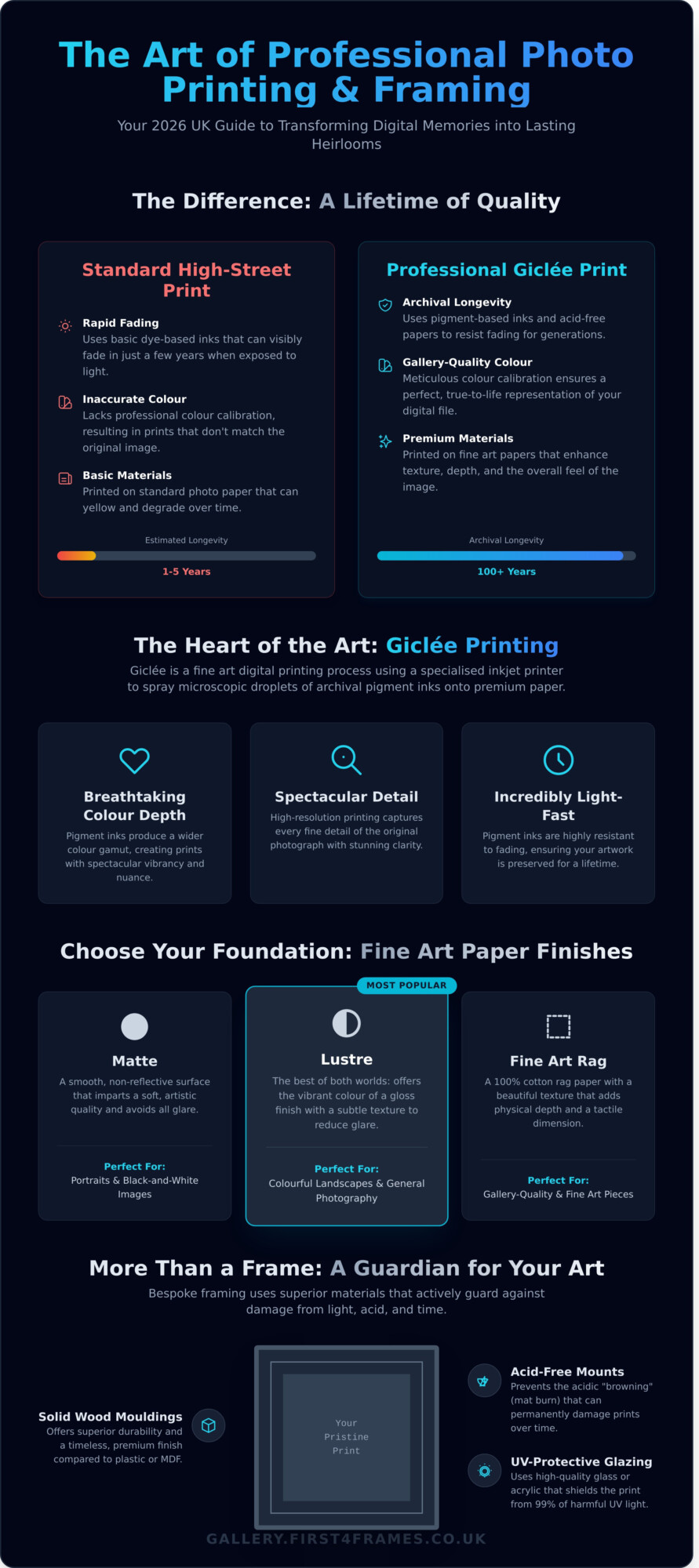
A Giclée print is a museum-quality reproduction method that utilizes pigment-based inks on archival, acid-free paper, requiring professional-grade housing to preserve its exceptional detail. While standard prints might look bright initially, they lack the technical depth of framed giclee prints. These pieces are designed to last over 100 years, but their longevity depends entirely on their environment. Without a protective barrier, light, humidity, and dust can quickly degrade the delicate fine art paper.
The Archival Advantage
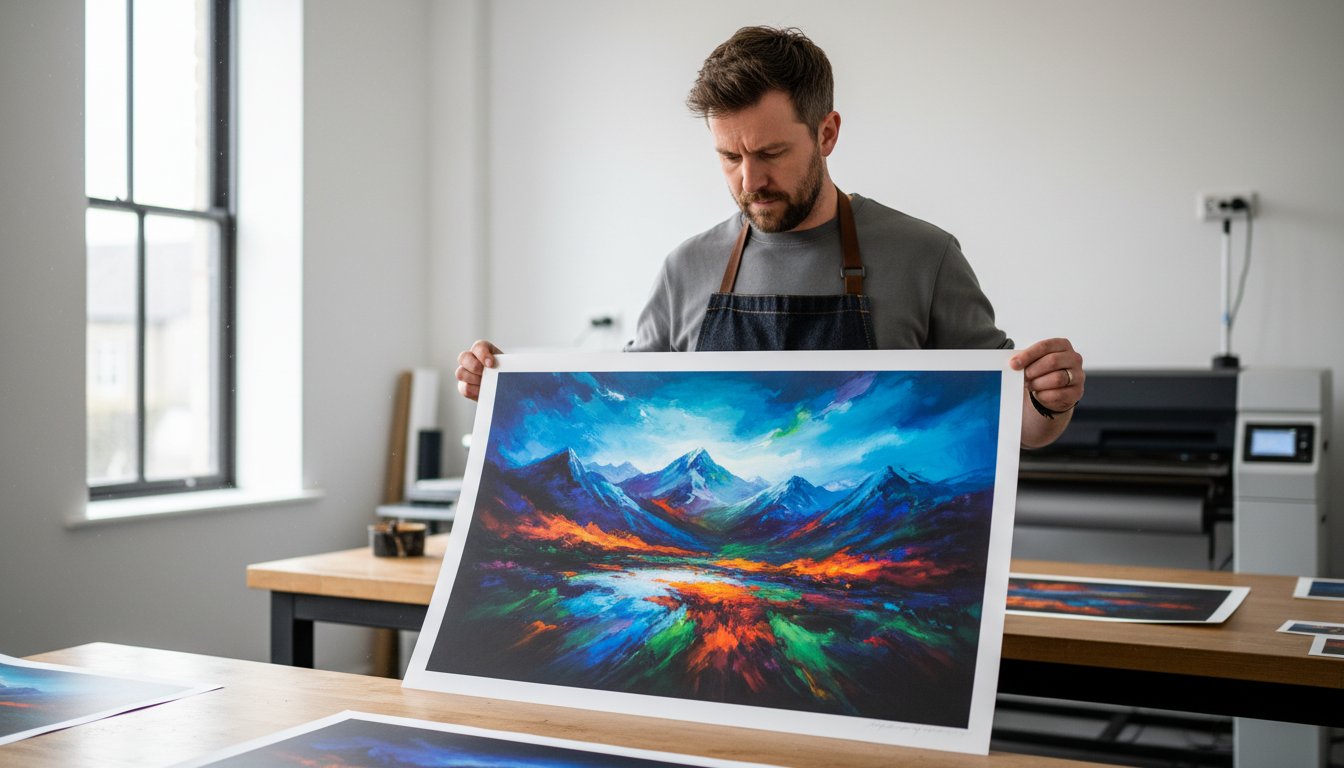
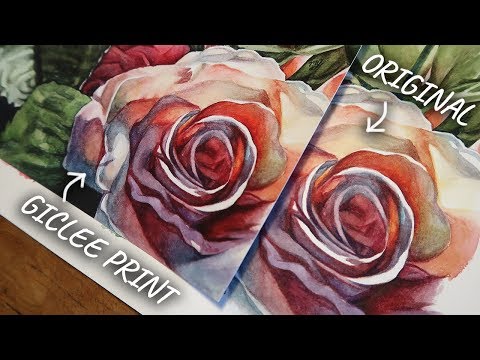
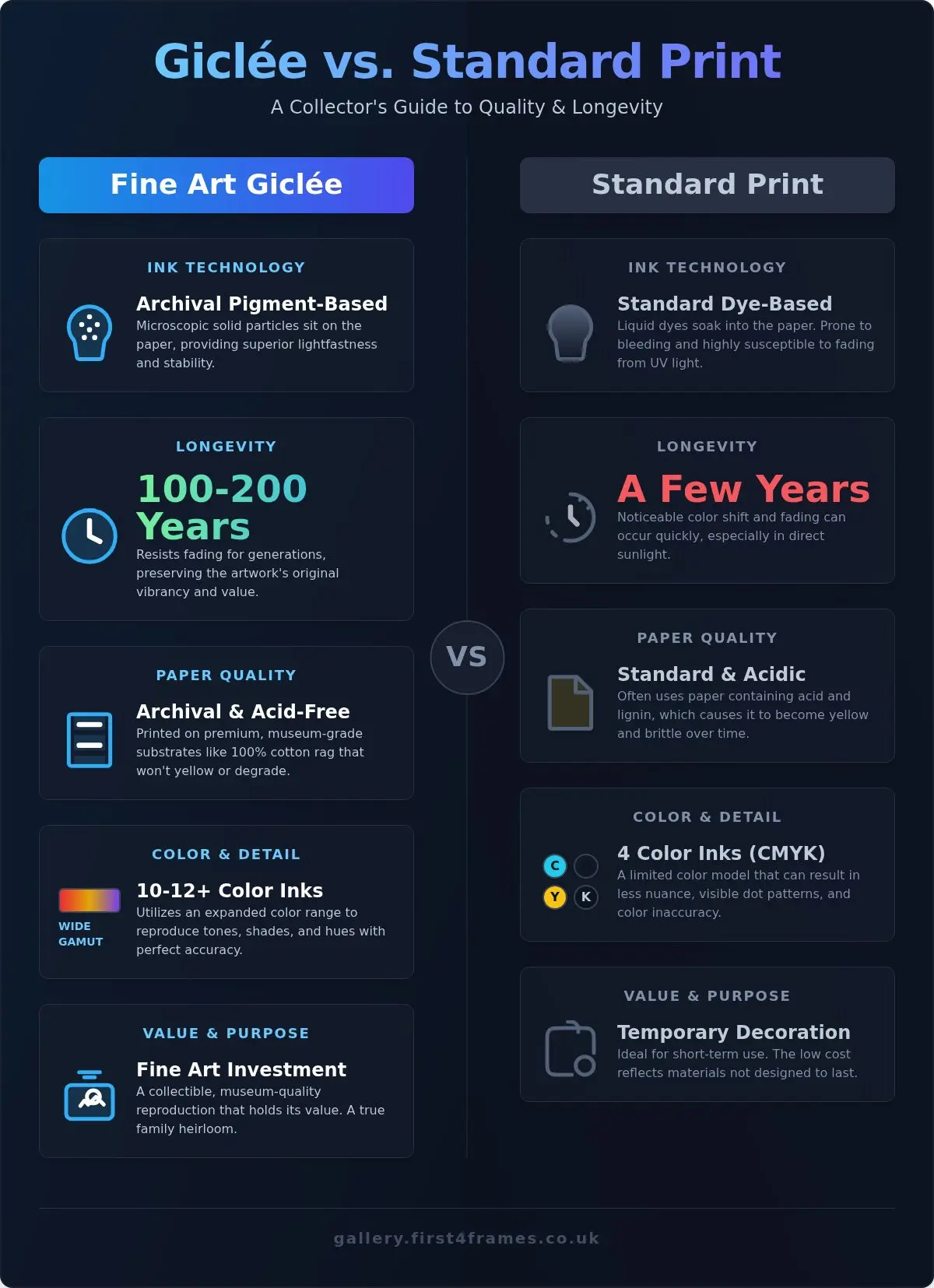
The secret to Giclée’s permanence lies in the chemistry. Standard inkjet printers use dye-based inks that break down quickly under UV exposure. In contrast, Giclée uses pigment-based archival inks that remain vibrant for generations. You can explore these stunning results in our Fine Art Prints collection, which features everything from evocative Scottish landscape art to works by famous artists. These prints capture every brushstroke with incredible fidelity, making them a true investment for your home.
The Role of the Frame in Art Preservation
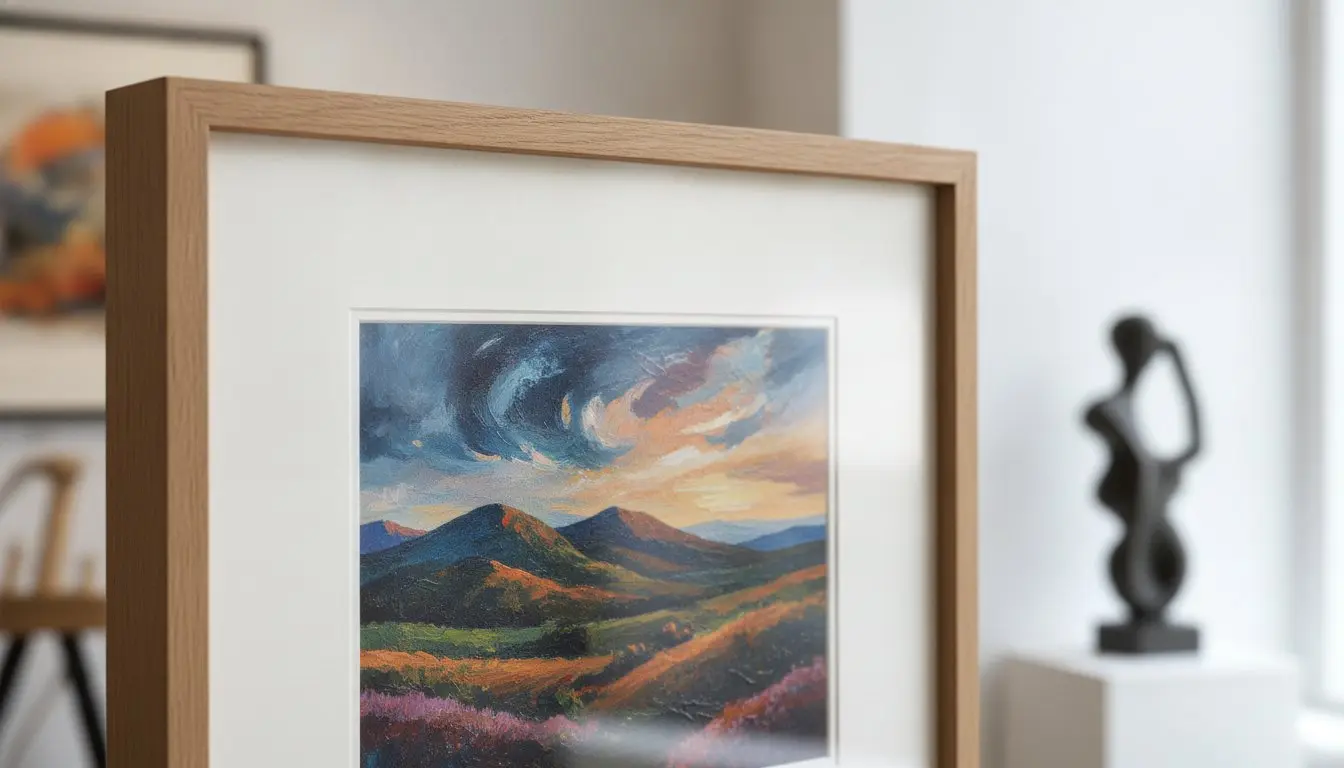
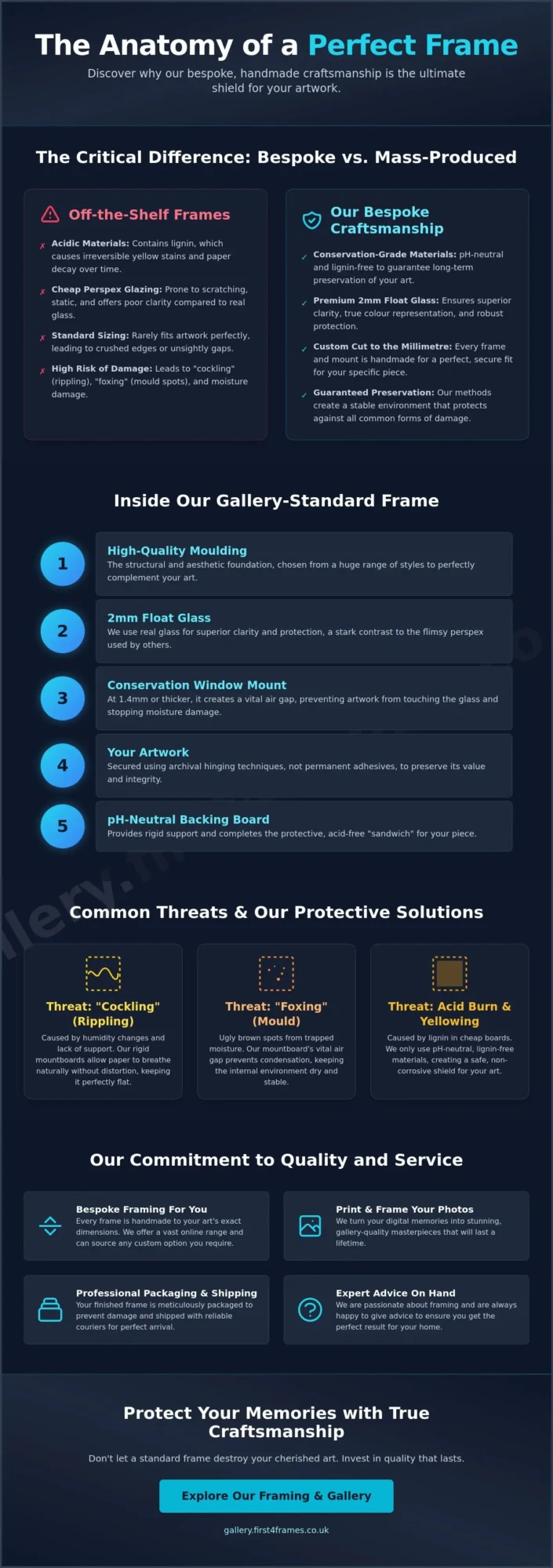
Bespoke framed wall art acts as a vital shield for your collection. High-street frames often use cheap, standard sizes that don’t support the weight of heavy fine art papers, leading to unsightly rippling or “cockling.” Our handmade frames are individually crafted in our Falkirk workshop to provide a perfect fit for every order. We use 2mm float glass for superior clarity, ensuring your contemporary art prints are visible in high definition. Unlike the cloudy perspex used by many competitors, our glass protects against moisture while maintaining the print’s original brilliance. It’s the difference between a simple picture and a gallery-ready masterpiece.
The Anatomy of Quality: 2mm Float Glass vs. Perspex
Many retailers cut costs by using thin acrylic or perspex glazing. While this reduces shipping weight, it compromises the visual experience of your framed giclee prints. Perspex is prone to static, attracting dust like a magnet, and often has a subtle milky tint that dulls the vibrant colours of contemporary art prints. We choose 2mm float glass because it offers unmatched clarity and scratch resistance. This ensures the viewer sees the true depth of the artwork rather than a distorted reflection.
Why We Use 2mm Float Glass
Real glass doesn’t just look better; it behaves better. It remains perfectly flat over time and doesn’t yellow like plastic alternatives. Some worry about glass during transit, but we’ve perfected our logistical process to eliminate that fear. Every piece of bespoke framed wall art is wrapped in heavy-duty protective packaging and delivered by professional couriers. This ensures your glass arrives intact, providing a crystal-clear window into the artist’s world without the static or haze of cheaper materials. It’s the only way to do justice to high-fidelity framed giclee prints.
Bespoke Craftsmanship vs. Mass-Market Frames
A “standard size” frame from a high-street shop is usually a compromise. These mass-market products often use acidic backings and mounts that cause “burn” marks or yellowing on the edges of your fine art. Our frames are individually crafted for each order in our Falkirk workshop. We use only acid-free mounts to protect the integrity of the paper and pigment inks. Our artisans hand-join every corner, ensuring there are no unsightly gaps or misaligned mitres. When you choose your frame online, you’re commissioning a handmade protective environment for your collection that mass-production simply can’t match.


Designing Your Custom Framed Art Prints Online
Designing your collection should be as inspiring as the art itself. Our online picture framing service simplifies the journey from digital screen to gallery-quality display. Unlike high-street shops with limited stock, we offer a vast selection of styles, from rugged Scottish landscape art to serene minimalist photography prints and works by famous artists. You can experiment with hundreds of combinations to design your framed artwork exactly as you imagined your framed giclee prints. This flexibility is essential for creating bespoke framed wall art that feels personal and unique.
Visualise Art on Your Wall
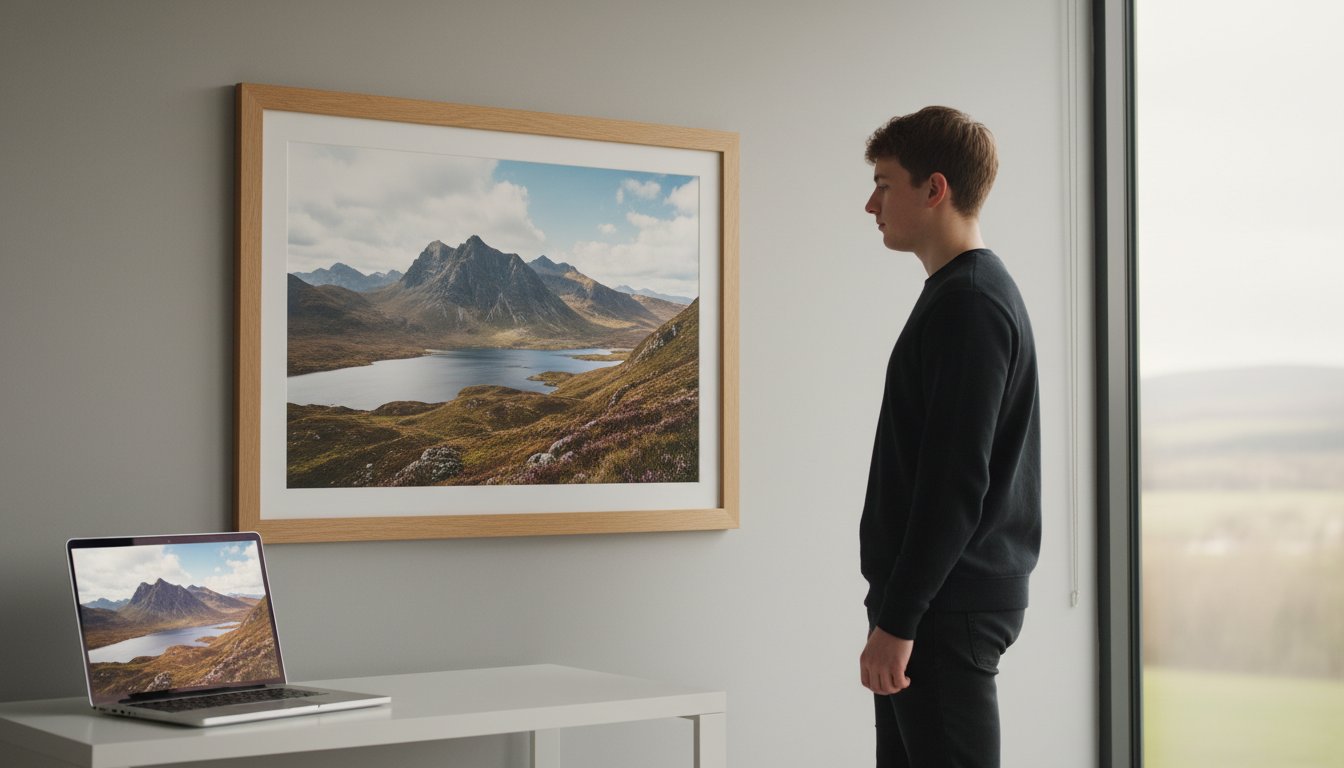
Scale is often the hardest thing to judge when buying art online. Our wall art visualiser tool allows you to visualise art on your wall and see artwork before you buy, helping you gauge how different sizes interact with your furniture and wall colour. This interactive experience ensures your custom framed art prints harmonize perfectly with your existing decor. It’s a risk-free way to explore bold contemporary art prints without the guesswork. If you’re looking for inspiration for a loved one, check out our Expert Guide: Choosing the Perfect Frame for a Gift.
Choosing the Right Style for Your Space
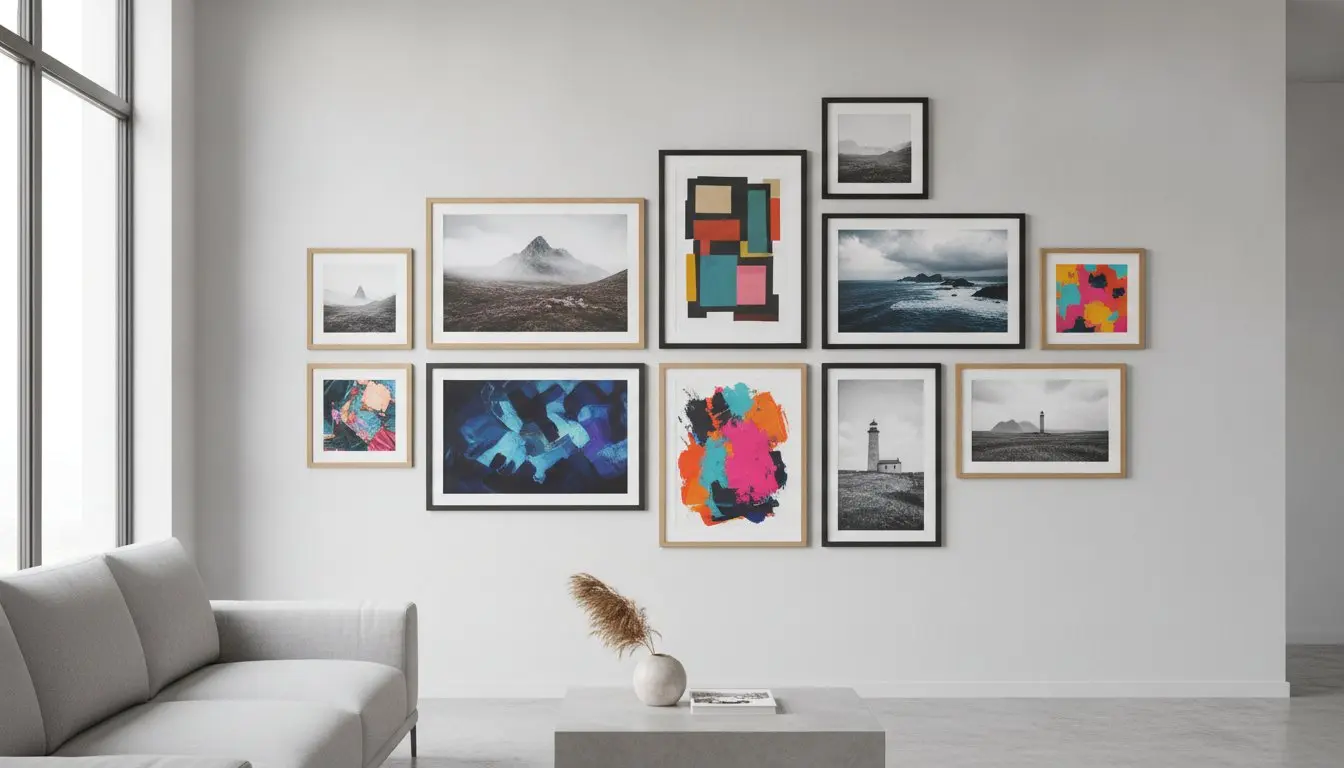
Selecting the right frame is about more than protection; it’s about setting a mood. For Coastal wall art, light wood or white frames create a breezy, nautical atmosphere. Conversely, pairing Fine art or Landscape wall art with a traditional dark wood frame adds a sense of heritage, while a sleek black frame offers a contemporary edge. Our art print framing service allows you to choose your frame online with confidence, knowing every piece is handmade in our Falkirk workshop by experts who value high-quality framed giclee prints.
You don’t need to be an interior designer to create a beautiful gallery. You can browse our full collection of best-selling artists and start building your perfect display today.
Safe Delivery & Professional Curation Services
Your journey with us doesn’t end when our Falkirk workshop finishes your frame. Delivering framed giclee prints requires more than just a standard cardboard box. We’ve developed a rigorous logistical process to ensure your investment arrives in pristine condition. Every piece is encased in multi-layered, heavy-duty protective packaging designed to absorb shocks and prevent pressure on the glass. We partner exclusively with professional couriers who specialize in handling bespoke framed wall art. This ensures your order isn’t just another parcel in a van; it’s a carefully managed piece of fine art.
The Ready-to-Hang Experience
We want you to enjoy your new acquisition the moment it arrives at your door. Every order is a complete, ready-to-hang solution. This means we include the necessary hanging hardware and secure fixtures as standard. You won’t need to spend time searching for the right wire or brackets. If you have personal digital photographs you’d like to display with this same level of craftsmanship, our Photo Printing and Framing service offers the same archival quality and bespoke framing for your own images.
Commercial Curation and Large Orders
Beyond residential projects, we provide comprehensive commercial artwork curation for property developers, interior designers, and office staging. We help businesses source and frame art for reception areas and boardrooms to create an immediate, professional impact. Our curated selection includes works by famous artists and incredible local Scottish talent. Whether you need a single statement piece or a large-scale installation of framed giclee prints, our team manages the entire process. We ensure every frame is individually crafted to meet the specific aesthetic requirements of your commercial space.
Ready to transform your environment? You can browse our gallery of best-selling artists to find your next masterpiece, or contact us for custom framing options to discuss a unique bespoke project.
Elevate Your Home with Professional Art Curation
Choosing the right display for your collection is a commitment to its legacy. We’ve explored how archival pigment inks and acid-free papers require the protective shield of a handmade frame to last for generations. By opting for 2mm float glass instead of cloudy perspex, you ensure that every detail of your framed giclee prints remains visible with crystal-clear fidelity. Every piece we create is individually hand-crafted in our Falkirk workshop to provide a perfect, supportive fit that mass-produced frames simply can’t offer. From the initial visualisation on your wall to the moment our professional couriers deliver your secure parcel, we’re here to make the process effortless. It’s time to stop settling for standard sizes and start investing in craftsmanship that honours your creative vision.
Design Your Bespoke Framed Giclée Print Today
We look forward to helping you transform your favourite artwork into a stunning, ready-to-hang centerpiece that you’ll be proud to display for years to come.
Frequently Asked Questions
What is the difference between a standard print and a Giclée print?
A Giclée print uses pigment-based archival inks and acid-free fine art paper to achieve museum-quality results. Unlike standard prints that use dye-based inks, these materials ensure your artwork won’t fade for over 100 years. This technical standard is essential for high-fidelity framed giclee prints. The process captures every nuance of the original piece, providing a level of detail and colour depth that standard digital printing simply cannot match.
Is it safe to ship framed art with real glass across the UK?
It’s entirely safe to ship our frames because we use specialist multi-layered packaging and professional couriers experienced in handling fragile art. While some competitors use perspex to avoid breakage, we insist on 2mm float glass for its superior clarity. Our secure boxing process absorbs shocks during transit, ensuring your bespoke framed wall art arrives in pristine condition. We successfully deliver these high-quality pieces across the UK every day without issue.
Can I choose my frame online for a digital photo I already have?
You can easily use our “print and frame” service for your own digital photographs. Simply upload your image, and we’ll print it using the same archival standards we apply to our fine art collections. You can then choose your frame online from our extensive range of high-quality materials. Every order is individually crafted in our Falkirk workshop, ensuring your personal memories receive the same professional care as works by famous artists.
How do I use the wall art visualiser to see the print in my room?
Our wall art visualiser tool lets you visualise art on your wall before making a purchase. By using this interactive feature on our website, you can see how different sizes and frame styles look in a room setting. This helps you judge scale and colour harmony, ensuring your custom framed art prints fit your decor perfectly. It’s a straightforward way to see artwork before you buy and experiment with various combinations.
Do you offer bespoke framing for non-standard artwork sizes?
We specialise in custom picture framing for any artwork size, regardless of how unusual the dimensions may be. Unlike retailers who rely on cheap, standard frames, our artisans hand-build every piece to your exact specifications in our Falkirk workshop. Whether it’s a small contemporary art print or a large landscape wall art piece, we provide a perfect fit. We don’t believe in “one-size-fits-all” when it comes to protecting your art.