Posted on

Professional Framing vs DIY Cost: Is Bespoke Worth the Investment in 2026?

Professional Framing vs DIY Cost: Is Bespoke Worth the Investment in 2026?

What if that “budget-friendly” frame you just bought is actually a ticking time bomb for your favorite artwork? It’s tempting to think you’re saving money by choosing a quick DIY solution, but the professional framing vs diy cost debate isn’t just about the initial price tag. We know the feeling of finding a print you love, only to have it sit in a drawer because you’re worried about damaging it or can’t find a frame that fits. You want your home to have a gallery-standard finish, yet the confusion over glass types and mounting materials often stops the creative process in its tracks.

At First4Frames Gallery, we’ve spent years perfecting the art of bespoke craftsmanship because we believe every piece of art deserves a permanent, protected home. In this guide, you’ll discover the true cost comparison between DIY kits and professional services, highlighting why the 2mm float glass we use offers a clarity that cheap perspex simply can’t match. You’ll learn how to avoid the hidden risks of material degradation and see why investing in hand-made, custom frames is the only way to ensure your memories stay vibrant for decades. We’ll show you how our dedicated team balances cost with the uncompromising quality your art deserves, proving why bespoke is still the smartest investment in 2026.

Key Takeaways

  • Identify the hidden “mistake tax” that can instantly turn a budget DIY project into a costly replacement when materials are damaged.
  • Compare the visual fidelity of our 2mm float glass against standard Perspex to see how professional glazing affects your art’s long-term vibrancy.
  • Use our value threshold guide to analyze the professional framing vs diy cost and decide which pieces deserve bespoke craftsmanship.
  • Learn why hand-made timber frames provide essential structural integrity for oversized prints that standard plastic frames simply cannot support.
  • Understand our professional logistics process that guarantees your custom order arrives safely and in perfect condition via reliable couriers.

The Hidden Costs of DIY Framing: Is It Actually Cheaper?

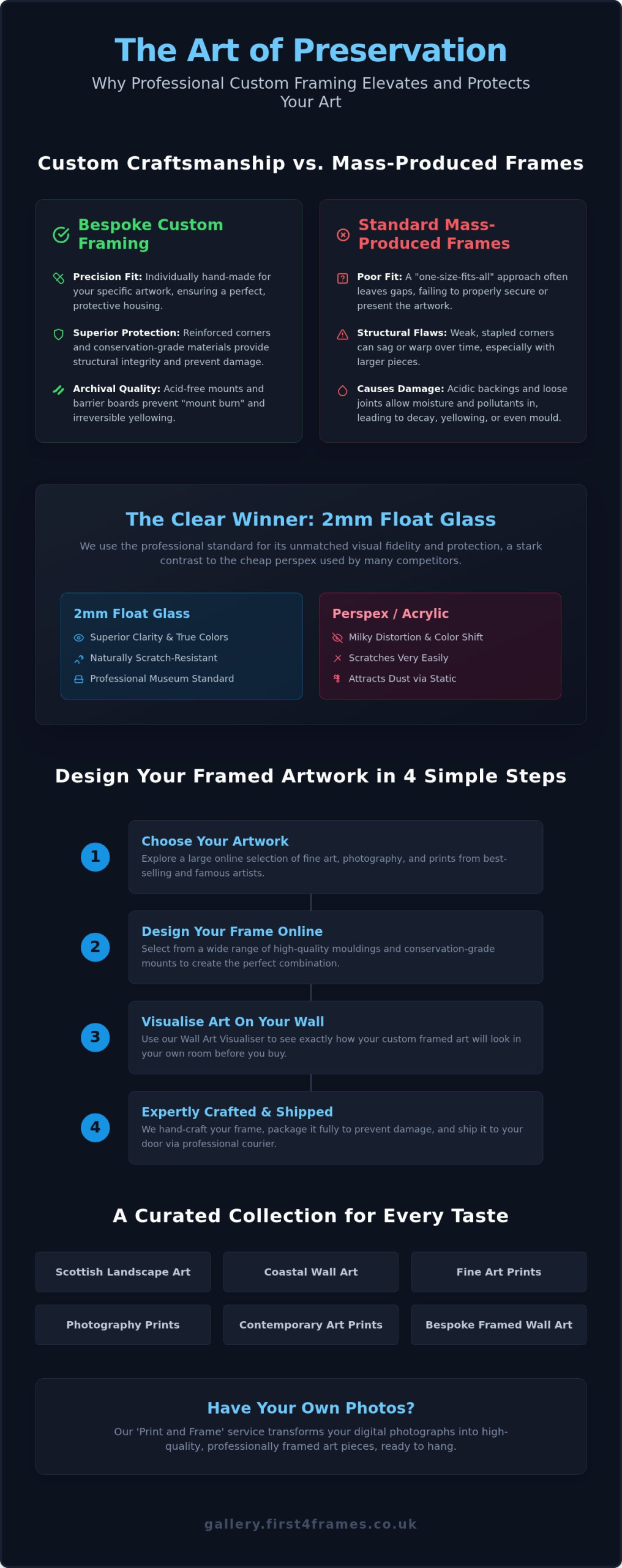
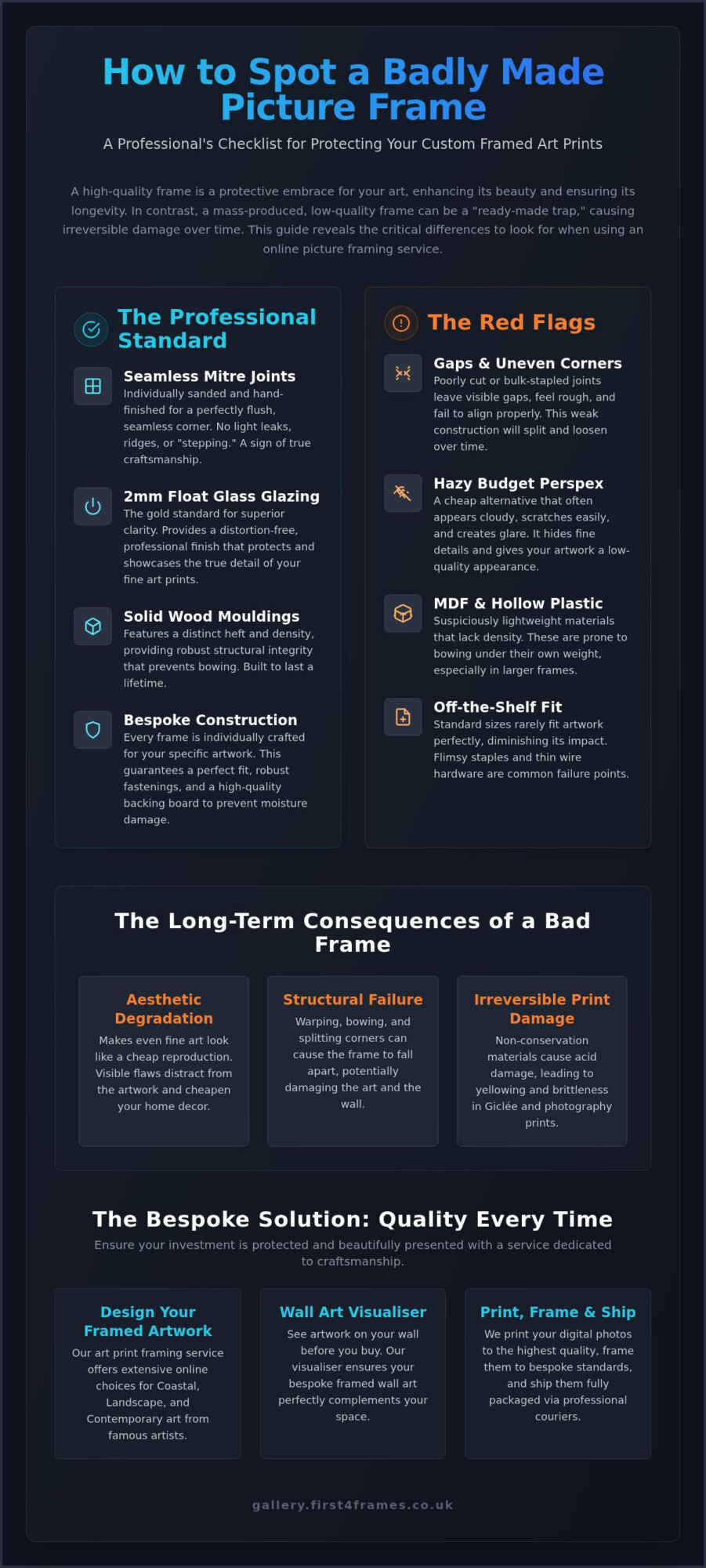
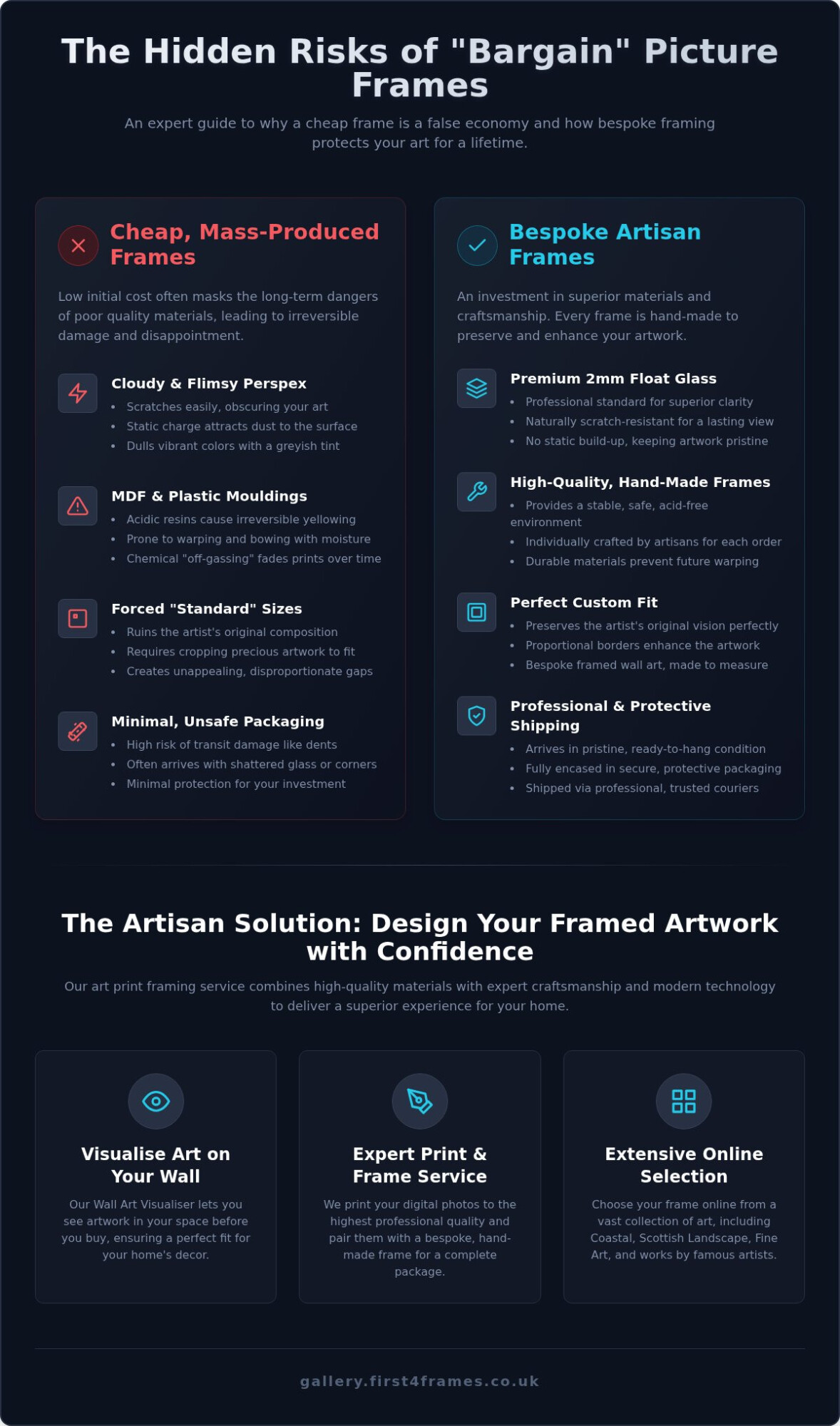
Choosing to frame your own artwork usually means one of two things: buying a pre-made kit from a big-box retailer or attempting to assemble a picture frame using basic household tools. At first glance, the professional framing vs diy cost seems to favor the home-made approach. It’s easy to be seduced by the low price of a standard plastic frame, but these initial savings often mask a series of hidden expenses that we see customers struggle with every day. When you’re working with delicate prints or sentimental photographs, the true cost isn’t just the materials; it’s the risk to the art itself.

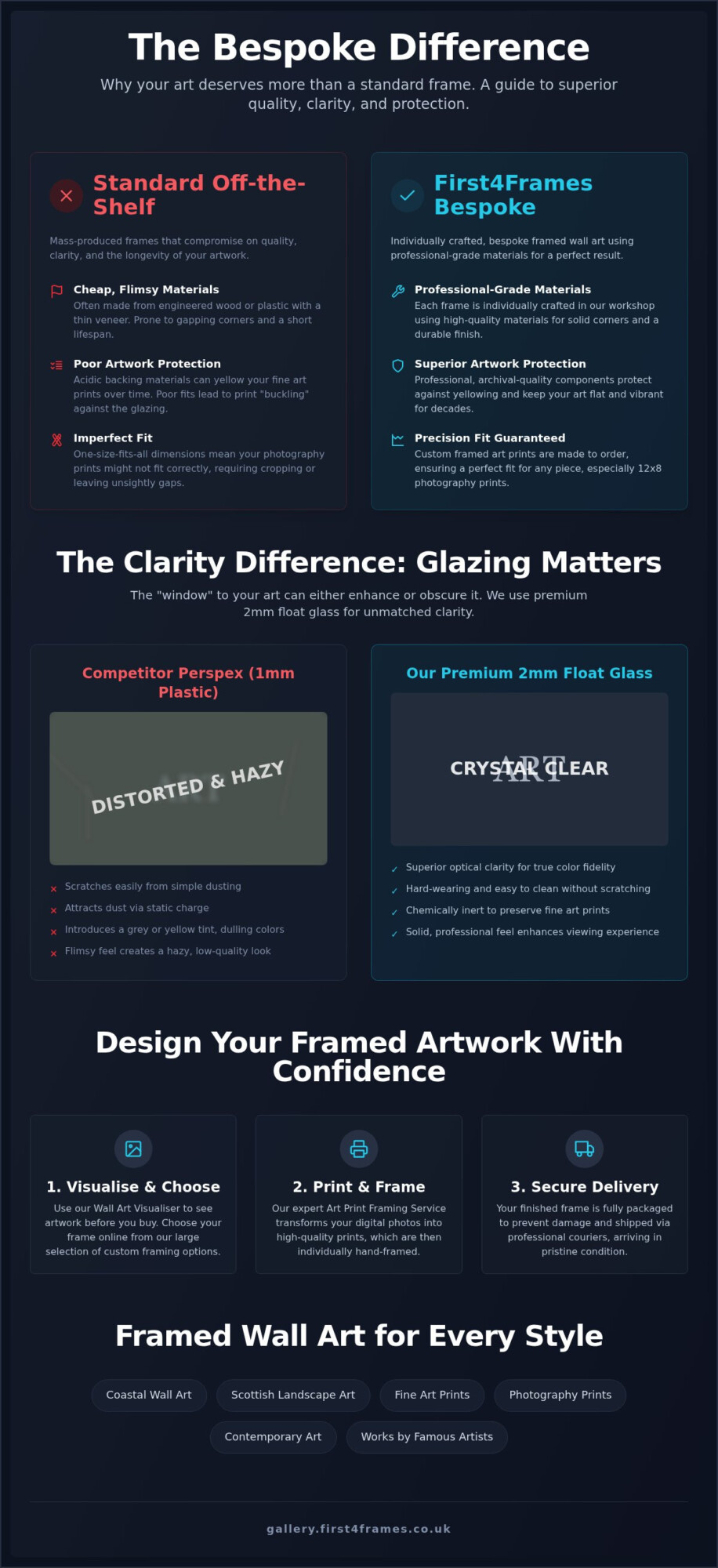
We often talk about the “Mistake Tax” in our workshop. This is the unavoidable cost that occurs when a DIY project goes wrong. It only takes one slip of a utility knife on a mount board or a single scratch on a static-heavy piece of perspex to ruin your materials. Unlike the 2mm float glass we use for its superior clarity and scratch resistance, the cheap materials found in DIY kits are unforgiving. If you have to buy your supplies twice because of a simple error, your “cheap” project has suddenly become more expensive than a bespoke, hand-made frame from a professional team.

To better understand the value behind these costs, watch this helpful video:

Beyond the materials, there is the significant factor of your own time. Measuring, cutting, and assembling a frame to a gallery standard can take hours of focused labor. When you calculate the professional framing vs diy cost, you must account for the value of your own afternoon. Our craftsmen have spent years refining their techniques, allowing us to provide a level of precision and structural integrity that is nearly impossible to replicate on a kitchen table. We handle the frustration so you can simply enjoy the finished result.

The Tool Barrier for Home Framers

To achieve a professional finish, you need more than just a hammer and some glue. True bespoke framing requires an investment in specialized equipment like professional-grade mat cutters and joining vices. Without these, you’ll often find visible gaps in the corners of your frame or uneven borders on your mount. We’ve invested in the highest-quality machinery to ensure every corner is seamless and every cut is perfect. If you’re looking for a specific solution and don’t want to invest hundreds in tools, we’re always happy to give advice on the best path forward for your artwork.

Professional Framing vs DIY: A Quality and Material Comparison

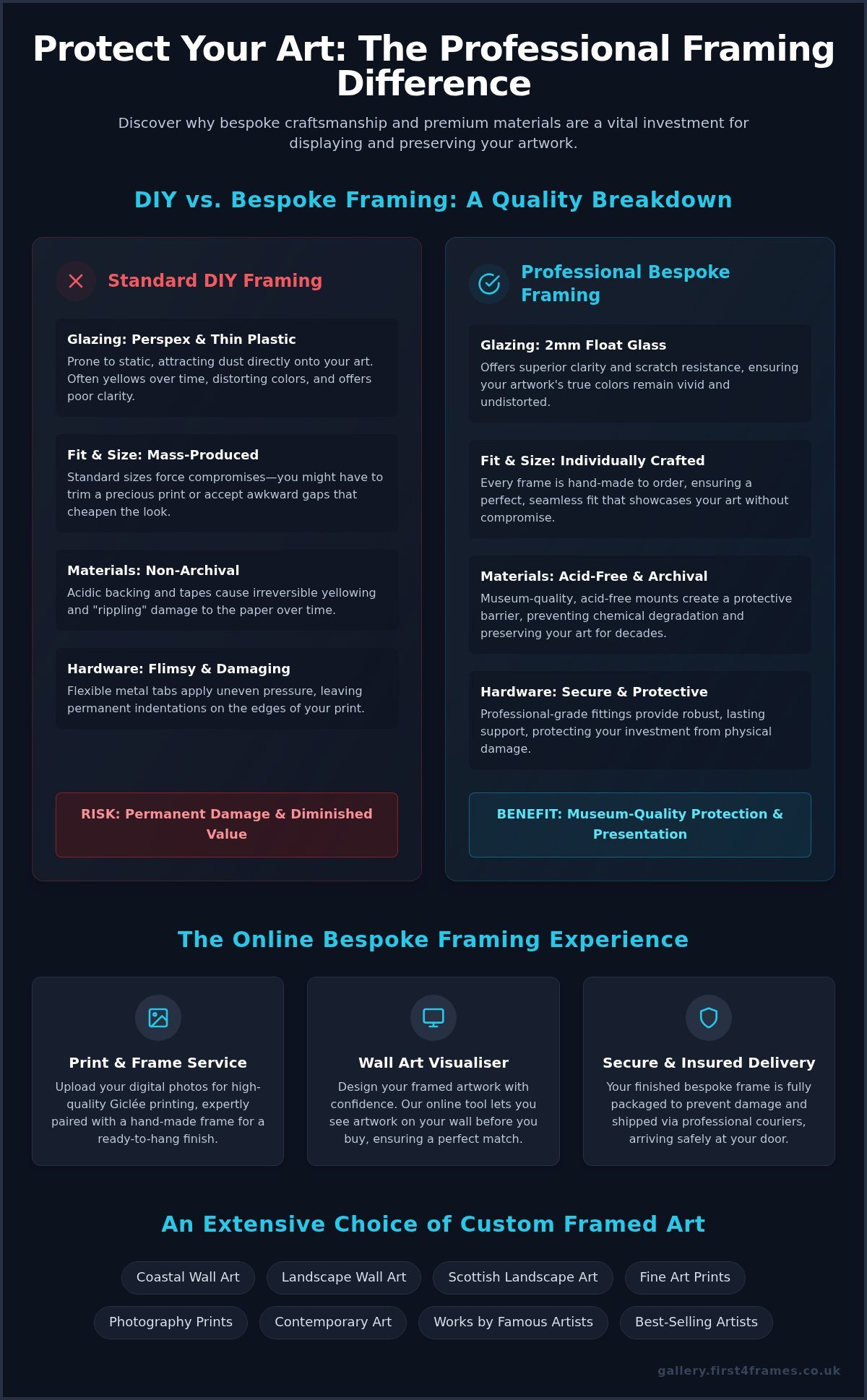
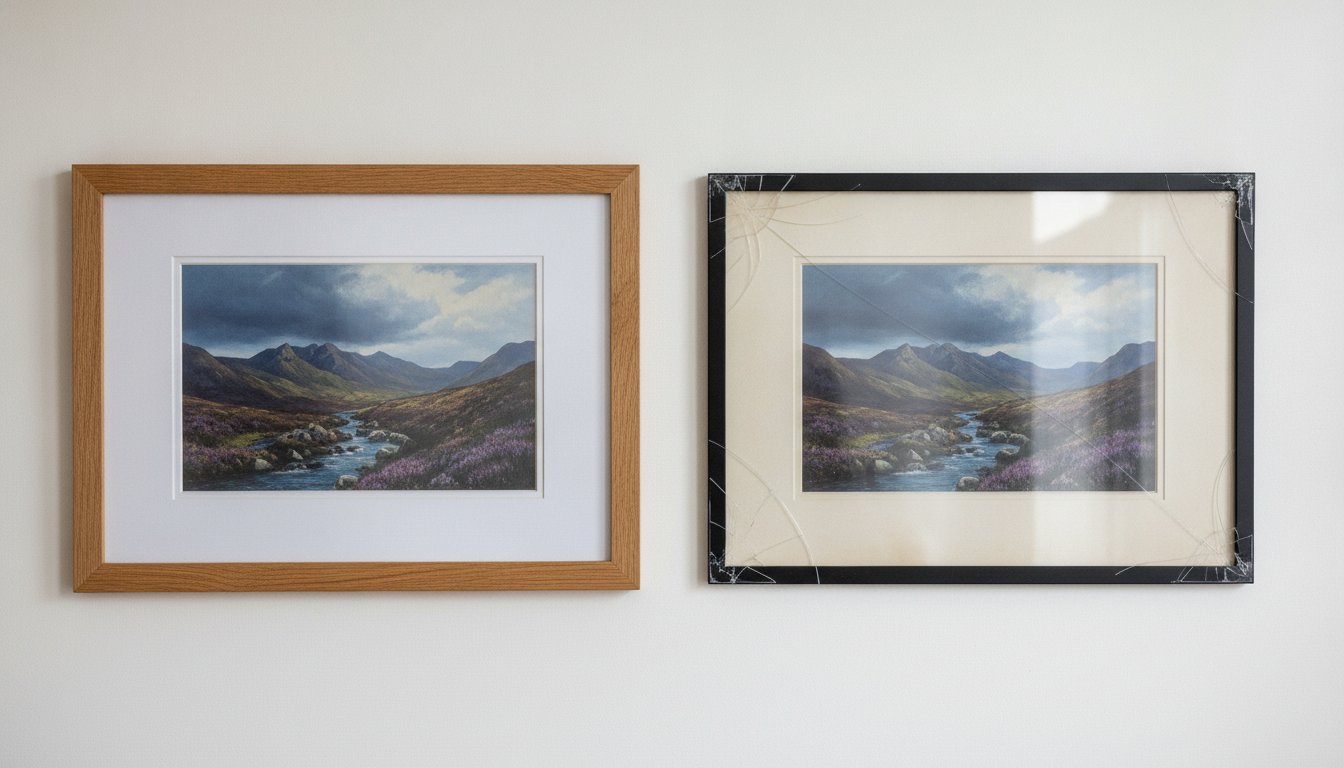
When you evaluate the professional framing vs diy cost, the physical components of the frame tell the most compelling story. A budget-friendly DIY kit might look acceptable on a shelf, but the materials often compromise the very art they’re meant to showcase. We’ve seen how standard, mass-produced frames can fail over time, leading to bowed edges or damaged prints that lose their value. We believe that a frame should be a guardian for your artwork, not just a temporary holder.

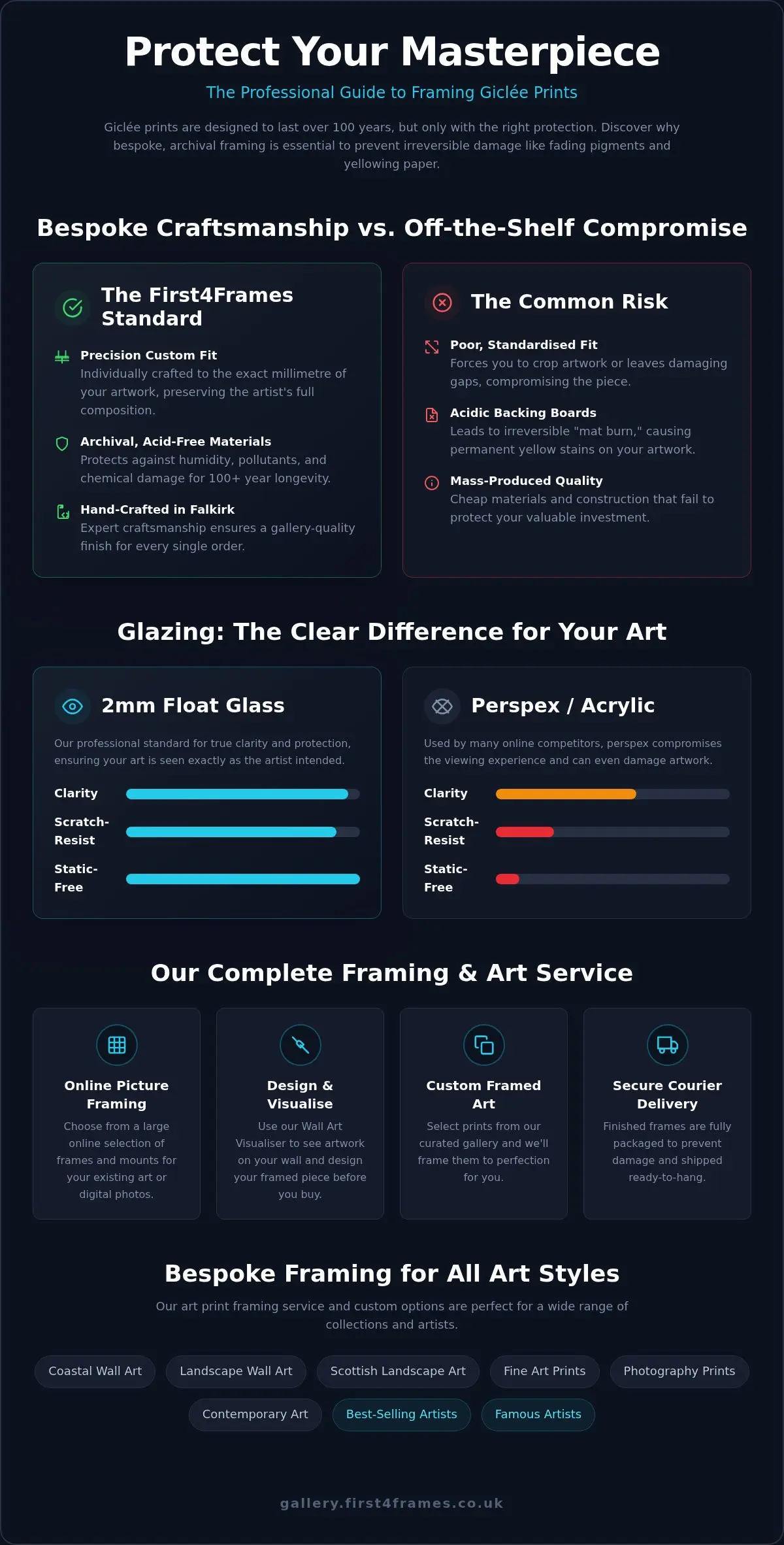
Why 2mm Float Glass Beats Perspex

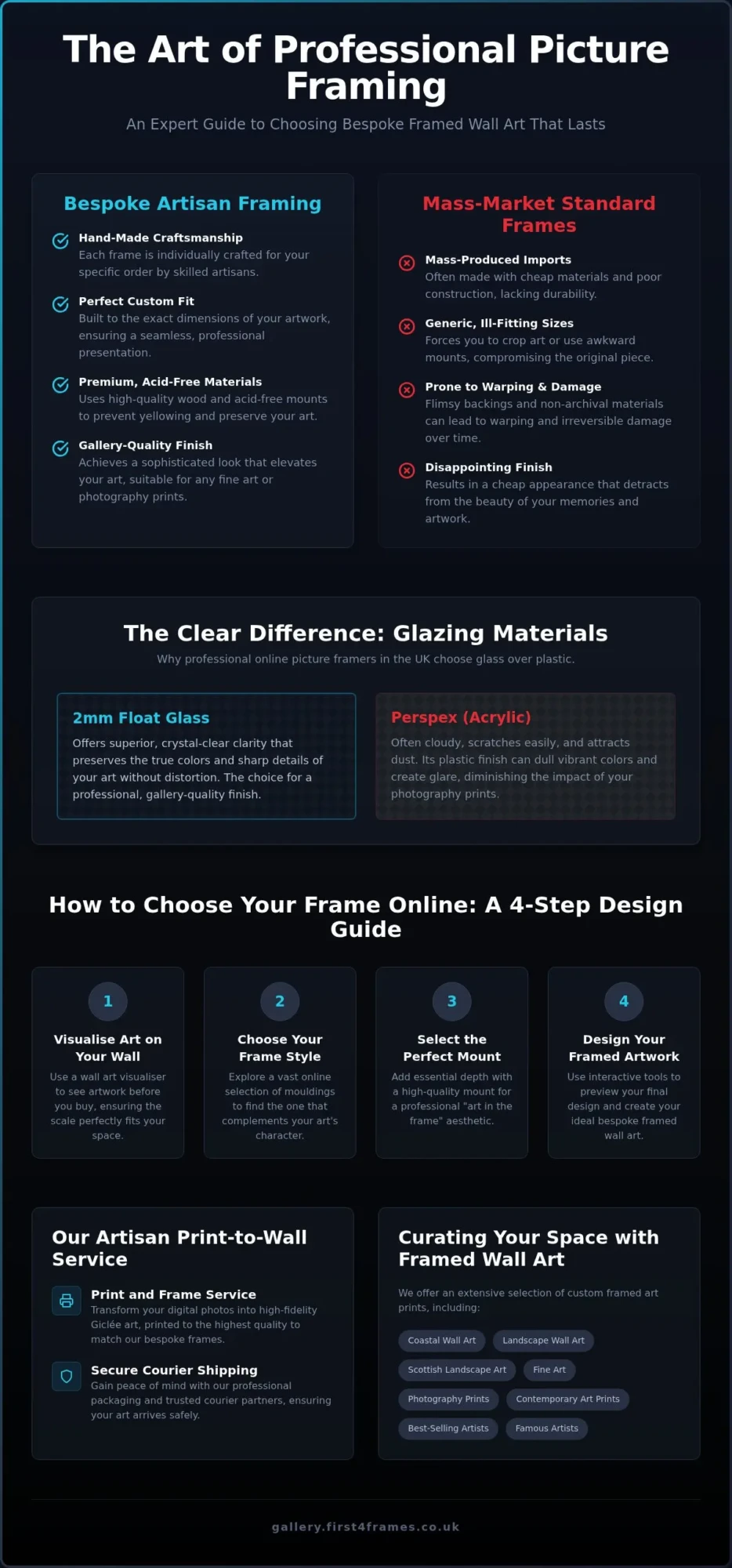
Most DIY kits and budget online sellers use Perspex or acrylic glazing to keep costs down. While it’s light and cheap to ship, it creates a static charge that acts like a magnet for household dust, often trapping it against your print. It also scratches easily during routine cleaning, which permanently obscures your view of the art. We use 2mm float glass in every bespoke frame we create. This professional standard offers superior clarity and a scratch-resistant surface that maintains its fidelity for years, allowing the true colors of your print to shine through.

The Craft of Hand-Made Bespoke Frames

Every order at First4Frames Gallery is individually hand-made by our team of craftsmen in our workshop. Unlike plastic or resin frames that rely on standard sizes, our bespoke approach ensures a precision fit for your specific print, no matter how unusual the dimensions. We use high-quality wood mouldings that provide the structural integrity needed for larger works, preventing the sagging and corner gaps often seen in cheaper alternatives.

Professional framing also provides a critical barrier against environmental damage. By using archival mounting techniques, we help prevent “foxing,” those small brown spots caused by acid in cheap paper and trapped moisture. Our goal is to ensure your art is preserved for decades, not just a few seasons. If you’re ready to see the impact of high-quality craftsmanship, feel free to browse our collection of framed art or contact us for personalized advice. We’re always happy to help you find the perfect match for your creative vision.

Calculating Your Framing Budget: When to DIY and When to Call the Experts

Deciding between professional framing vs diy cost often comes down to the value of the piece itself. We suggest a simple rule of thumb: if your artwork, print, or photograph cost more than £50, it deserves the security of bespoke protection. Shop-bought frames typically use acidic backings that cause paper to yellow and become brittle over time. By choosing our hand-made service, you’re investing in acid-free materials and 2mm float glass that actively preserve your art’s longevity and vibrancy.

Size and depth present their own sets of hurdles that home kits rarely solve. Oversized landscape prints or heavy canvases require the structural integrity of timber frames joined with professional precision. DIY kits often bow or warp under the weight of larger dimensions, risking a fall from the wall. Similarly, if you’re looking to display memorabilia like sports shirts or medals, a shadow box is required. These 3D displays are complex to build at home. We specialize in these custom framing options, ensuring your treasures are mounted securely and look stunning from every angle.

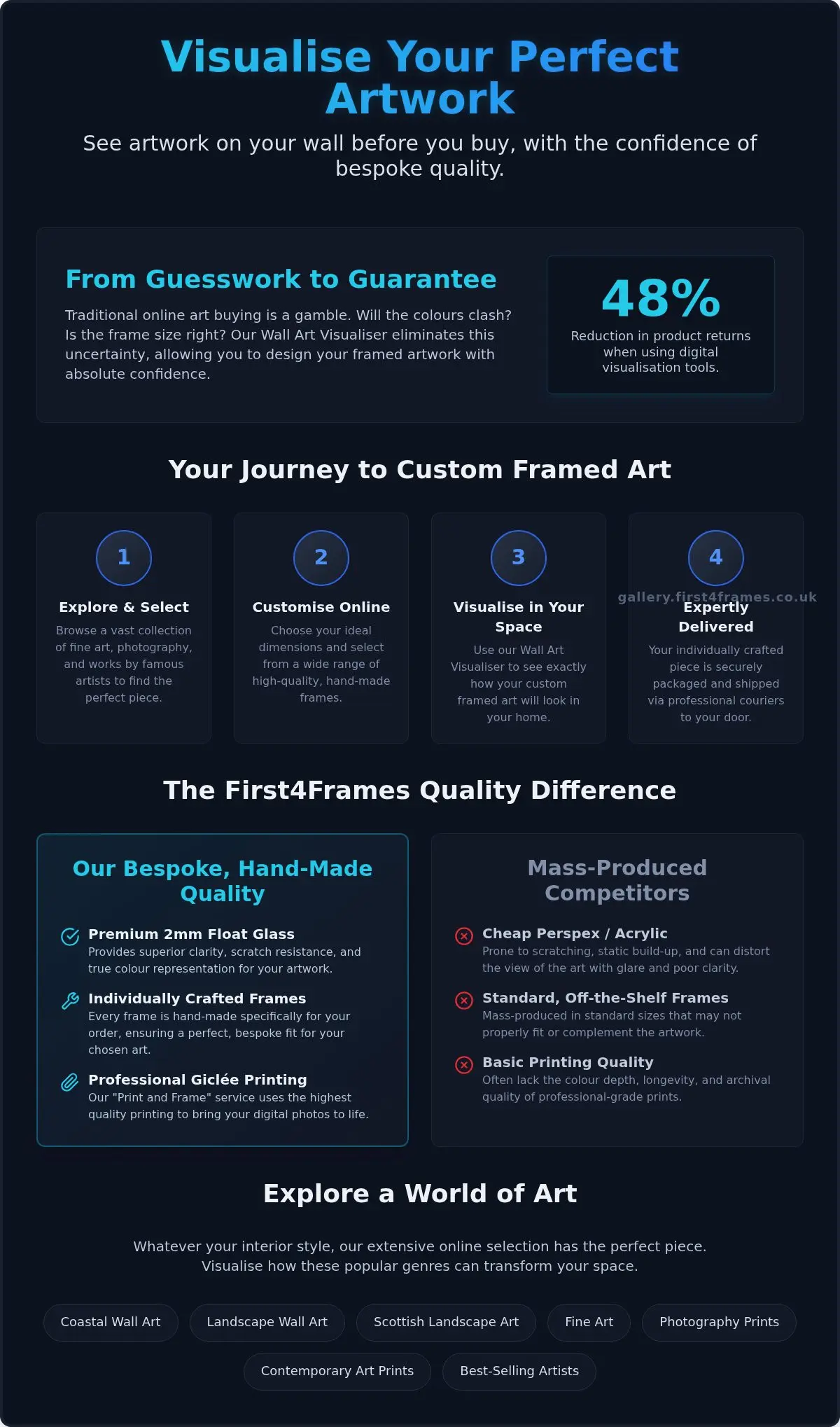
Our team takes great pride in the “Ready-to-Hang” factor. When you order from us, you don’t receive a box of parts and a confusing instruction manual. You receive a finished piece of craftsmanship. Every order is fully packaged to prevent damage and shipped using reliable couriers. This ensures your frame arrives in perfect condition, ready to transform your wall immediately. We handle the technical logistics so you don’t have to worry about the professional framing vs diy cost of ruined materials.

Choosing the Right Frame Style for Your Space

Selecting the perfect moulding is about more than just matching a color. It’s about finding a style that bridges the gap between the artwork and your home decor. We’re always happy to give advice to ensure the final result feels like a cohesive part of your environment. For more inspiration on textures and finishes, explore our guide on custom framing styles.

Ready to give your art the professional finish it deserves? Explore our Ready-to-Hang Framed Art collection today and find the perfect match for your home.

We believe that the final decision regarding professional framing vs diy cost shouldn’t be a compromise on quality. Our service is designed to remove the stress of assembly and the risk of damage, providing a comprehensive solution for your home or business. While DIY kits often leave you with a box of parts and a list of worries, First4Frames Gallery delivers a hand-made, bespoke product that is ready to hang the moment it arrives.

Our commitment to material superiority is evident in every piece we produce. We exclusively use 2mm float glass for its clarity and durability, ensuring your art looks exactly as the creator intended. This is a significant step up from the thin, static-prone perspex used by many other online galleries. When combined with our premium wood mouldings, the result is a frame that feels substantial and looks professional. We also offer a specialized service to print and frame your own digital photographs, bringing gallery-standard quality to your personal memories.

The journey of your frame doesn’t end when the last nail is driven. We take extraordinary care with our professional logistics. Every order is fully packaged in protective materials to prevent any transit damage. We ship using only reliable couriers, ensuring that your investment arrives in perfect condition. This level of care is often missing from the DIY experience, where the responsibility for safe handling and assembly falls entirely on you. By choosing First4Frames Gallery, you’re choosing a partner that values your art as much as you do.

From Our Falkirk Workshop to Your Wall

There’s a distinct personal touch that comes from a dedicated team of craftsmen. In our Falkirk workshop, we treat every order with the same passion and attention to detail as if it were for our own homes. We offer a large range of frames online, but our capacity for customization is nearly limitless. If you have a unique project or need specific guidance on the professional framing vs diy cost for a complex piece, please contact us for bespoke advice. We’re always happy to share our industry experience to help you find the best possible framing solution.

Invest in the Longevity of Your Artwork

Choosing how to display your art is a significant decision for any collector. While the initial professional framing vs diy cost might seem lopsided, the long-term value of bespoke craftsmanship is clear. We’ve seen how the “mistake tax” and the degradation of cheap materials like perspex can quickly turn a budget project into a costly regret. By choosing our hand-made, bespoke frames, you’re investing in 2mm float glass and high-quality timber that protects your art for decades. It’s about more than just a frame; it’s about preserving the fidelity of your most cherished pieces.

Our team handles every order with the care of a dedicated artisan, from the first cut in our workshop to the final packaging. We ensure your finished piece is delivered safely via reliable couriers, ready to transform your space immediately. Whether you’re framing a personal photograph or a fine art print, we’re here to provide the expert advice and professional logistics you need. Browse our gallery of ready-to-hang framed art today to find the perfect finish for your walls. We look forward to helping you bring your creative vision to life with the quality it deserves.

Frequently Asked Questions

Is it cheaper to buy a frame or have it custom made?

Buying a ready-made frame is usually cheaper upfront, but custom-made frames offer significantly better long-term value and protection. When you evaluate the professional framing vs diy cost, you’ve got to consider that bespoke options use archival materials that prevent your art from yellowing or warping. Our hand-made frames are built to the exact millimetre, ensuring your artwork is secure and perfectly presented without the risks of “making it fit” a standard size.

What are the risks of using cheap Perspex instead of professional glass?

Cheap Perspex is a magnet for household dust due to static electricity and it scratches very easily during routine cleaning. These scratches permanently obscure your art and can’t be polished out. We use 2mm float glass as our standard because it provides superior clarity and a much tougher surface. This ensures your art remains vibrant and visible for decades without the hazy, dull finish often seen with plastic glazing.

How much does professional framing typically cost in the UK?

The cost of professional framing in the UK varies based on the size of the artwork, the complexity of the mounting, and the specific wood mouldings you choose. While the initial professional framing vs diy cost is higher, it includes the expertise of a dedicated team and the use of premium, preservation-grade materials. We focus on providing a transparent value proposition where the quality of the craftsmanship justifies the investment in protecting your valuable art.

Can I frame my own digital photos to a professional standard?

How does First4Frames ensure my framed art arrives without breaking?

We use a meticulous, multi-layered packaging process specifically designed to protect glass and timber during transit. Every bespoke frame is fully wrapped and cushioned to prevent shifting or impact damage within the box. We then ship your order using reliable, professional couriers who specialize in handling fragile items. This careful approach to logistics ensures your hand-made frame arrives in perfect condition, ready to be displayed on your wall immediately.

Posted on

Glass vs Perspex: Choosing the Best Glazing for Art

Did you know that approximately 70% of art collectors still prefer the traditional clarity of regular glass over modern plastic alternatives? While many online retailers opt for acrylic to simplify their shipping logistics, we believe that glass used instead of perspex for glazzing artwork is the only way to truly honour the depth and detail of a fine Giclée print. It’s a choice that reflects our commitment to traditional craftsmanship and the belief that your art deserves to be seen exactly as the artist intended.

We know how disappointing it is to watch a beautiful piece of art lose its spark because of static dust buildup or the noticeable scratching that comes with cheap plastic glazing. You’ve likely noticed that dull, “milky” appearance that can mask the vibrant colours of your favourite prints over time. We want to help you avoid those common pitfalls. In this guide, you’ll discover why our professional 2mm float glass is the superior choice for both visual perfection and long-term preservation. We will explore the material differences between glass and Perspex to ensure you achieve the high-end gallery finish your home deserves.

Key Takeaways

  • Understand why professional 2mm float glass provides the high-fidelity view and long-term protection your Giclée prints deserve.
  • Learn why glass used instead of perspex for glazzing artwork is the professional standard for preventing static dust and surface scratches.
  • Discover how traditional glass maintains a crystal clear finish and avoids the “milky” degradation often seen with cheaper plastic alternatives.
  • Explore our bespoke framing process, where every piece is hand-made to order and secured with professional packaging for perfect delivery.
  • Gain expert insight on placing your framed art in high-traffic areas where glass offers easier cleaning and superior durability.

Understanding Glazing: What is Glass Used Instead of Perspex for Artwork?

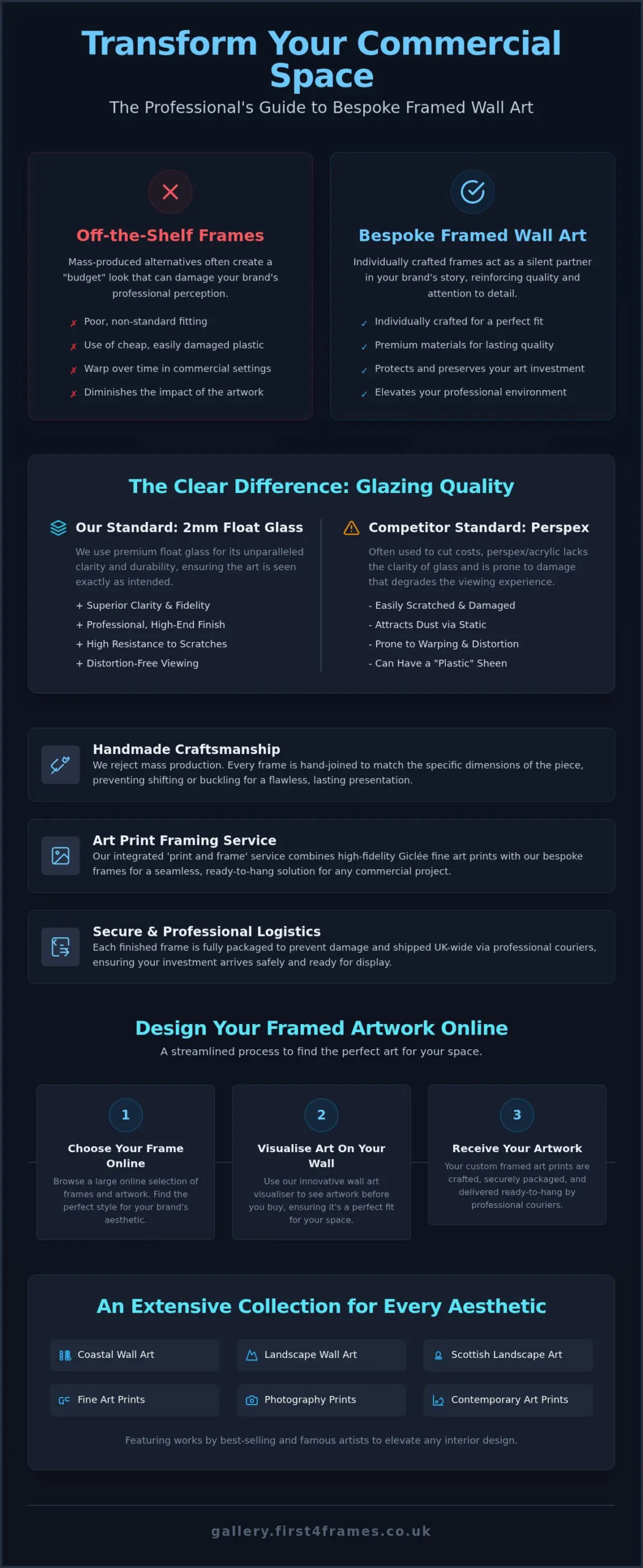
Glazing is the essential protective layer that shields your cherished art from dust, moisture, and physical damage. It’s the final touch that seals the frame, yet many people overlook its importance. While some providers prioritise shipping convenience, we believe that glass used instead of perspex for glazzing artwork is the only way to provide a truly high-end finish. We exclusively use 2mm float glass, a professional-grade material that brings a sense of permanence and quality to your walls.

To better understand how different materials affect your display, watch this helpful video:

Perspex is often the default choice for mass-produced, off-the-shelf frames because it’s lightweight and cheap to transport. However, it lacks the optical purity of real glass and can feel temporary or flimsy. Our team of craftsmen insists on glass because it doesn’t just protect; it enhances. The weight and clarity of 2mm float glass provide a premium feel that plastic simply cannot replicate.

The Role of Glazing in Preservation

A high-quality Picture-framing glass acts as a barrier against atmospheric pollutants and household grime. It’s vital for maintaining the longevity of your pieces. Unlike thin acrylic sheets that may bow or warp as temperatures change, glass remains perfectly rigid. This stability ensures your artwork stays flat within the frame, preventing the unsightly waving that often occurs with lower-quality materials.

Why Material Choice Matters for Art

Professional 2mm float glass is the gold standard for Giclée prints because it offers absolute clarity and a distortion-free view that honours the artist’s original vision. This dedication to superior materials is exactly what you can expect from our bespoke framing services, where every frame is hand-made to suit your specific needs.

2mm Float Glass vs Perspex: A Direct Comparison

Choosing the right material for your frame is a decision between long-term beauty and short-term convenience. While many mass-market retailers prefer plastic for its weight, the physical properties of glass used instead of perspex for glazzing artwork offer a level of protection that acrylic simply cannot match. We choose 2mm float glass because it provides a rigid, scratch-resistant surface that stays perfectly flat for a lifetime. It’s a choice that reflects our commitment to the highest standards of craftsmanship.

The Problem with Perspex Static and Scratches

Acrylic is a soft material. Even a soft microfibre cloth can leave permanent swirl marks on its surface during a routine cleaning. Beyond physical damage, Perspex acts like a magnet for dust due to its natural static charge. This isn’t just a nuisance for cleaning; it can be devastating for certain mediums. As noted in the Canadian Conservation Institute framing guide, static can actually pull delicate particles of pastel or charcoal right off the paper. Glass remains chemically inert and static-free, ensuring your art stays exactly where the artist placed it.

Optical Clarity and Long-Term Stability

A common myth suggests that glass has a distracting green tint. While this is true for thick architectural windows, our professional 2mm float glass is thin enough that colour shift is virtually non-existent. It provides a crystal-clear window into the soul of your Giclée prints without the “funhouse mirror” warping often seen in thin plastic sheets. Unlike some plastics that yellow or become brittle when exposed to light over several years, glass maintains its transparency indefinitely. For a deeper look at what to look for in a professional framer, see our guide on choosing the best art frame shops. If you’re ready to see the difference for yourself, feel free to browse our curated gallery of ready-to-hang pieces.

When to Insist on Glass for Your Framed Prints

While we’ve explored the technical differences, it’s helpful to understand which specific projects demand the clarity of glass. For anyone investing in high-quality Giclée prints, the choice is clear. The precision of these prints requires a glazing material that won’t dull the ink or soften the edges of the fine detail. This is why glass used instead of perspex for glazzing artwork is our standard for all fine art orders. We believe that if you’ve chosen a premium print, you shouldn’t have to view it through a plastic veil.

Room placement also plays a huge role in your decision. Hallways and entryways are high-traffic areas where frames are more likely to be touched or bumped. Glass is much easier to wipe clean with standard glass cleaners without the fear of leaving permanent micro-scratches. If you’re building a gallery wall, consistency is your best friend. Mixing glass and plastic in the same display creates a disjointed look because they reflect light differently. Glass offers a more natural, sophisticated reflection that makes a collection feel unified and professional.

Protecting Your Investment in Fine Art

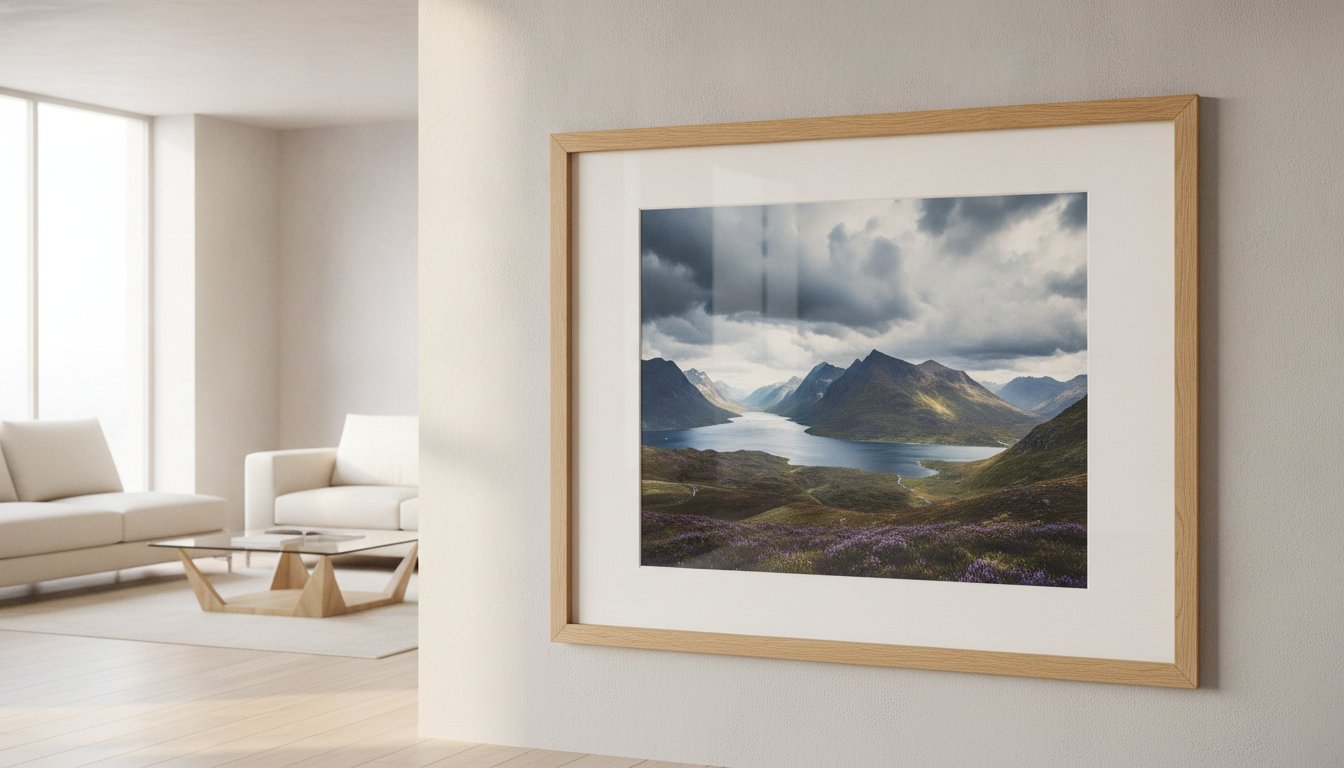
We often recommend glass for our Scottish landscape art prints. The deep blues of the lochs and the subtle purples of the heather need that extra pop that only optical clarity can provide. A bespoke frame is an investment in an heirloom piece. Using 2mm float glass ensures that the frame feels substantial and professional, standing the test of time alongside the art itself. It’s about creating a finished product that you’ll be proud to pass down through generations.

The Aesthetic Difference in Your Home

There’s a distinct tactile difference when you hang a glass-glazed frame. It has a satisfying weight that speaks to its quality and craftsmanship. Acrylic can often feel like a temporary solution, whereas glass feels like a permanent part of your home’s decor. It catches the ambient light in a way that feels organic and soft, avoiding the harsh, artificial glare sometimes found with plastic alternatives. Ready to find the perfect piece for your home? You can browse our full collection of framed art to see the difference for yourself.

Many online retailers suggest that glass is too risky for delivery. They often use this as an excuse to push plastic alternatives that don’t offer the same visual rewards. We see things differently. By investing in superior logistics and custom packaging, we ensure that glass used instead of perspex for glazzing artwork arrives at your door in pristine condition. Our “Safe-Arrival” system isn’t just a box; it’s a multi-layered shield designed specifically for the weight and fragility of professional 2mm float glass.

Hand-Made Quality in Every Order

Our workshop in Falkirk is where the magic happens. We don’t buy in bulk or use “standard” sizes that compromise the fit of your art. Every frame is hand-made by our team of passionate artisans to your exact specifications. This bespoke approach allows us to offer a huge breadth of options, from our online gallery to our specialized photo printing and framing service. We take pride in every mitre and every pane of glass we set, ensuring a finish that off-the-shelf products simply can’t match.

Peace of Mind Delivery

At First4Frames Gallery, we treat your art as if it were our own. Our packaging process involves custom-fitted protection that prevents the glass from shifting or vibrating during transit. We only trust couriers who have a proven track record of handling fragile cargo with the respect it deserves. This commitment to professional logistics ensures your high-end gallery finish remains intact from our hands to your walls. If you’re unsure about which frame or glazing suits your piece, we’re always happy to give advice. You can contact us anytime to discuss your specific needs and find the perfect solution for your home.

Give Your Artwork the Clarity It Deserves

Your home deserves a high-end finish that stands the test of time. We’ve explored how the right material choice prevents the static dust and unsightly scratches often found with plastic alternatives. By choosing glass used instead of perspex for glazzing artwork, you’re opting for a professional standard that honours the depth of every Giclée print and original piece. It’s the difference between a temporary display and a lasting heirloom.

Every order we handle is a unique project. Our team in Falkirk hand-crafts each bespoke frame using premium 2mm float glass to ensure absolute fidelity. We don’t stop at production; our professional logistics team uses specialist packaging and reliable couriers to guarantee your art arrives in perfect condition. Whether you’re starting a new gallery wall or framing a single cherished memory, we’re here to provide the expert advice and craftsmanship you need. Explore our gallery of bespoke framed Scottish art and discover the difference that professional craftsmanship makes. We’re excited to help you bring your creative vision to life with the care and precision it requires.

Frequently Asked Questions

Is glass better than Perspex for framing artwork?

Yes, glass is generally superior for home displays because it offers better optical clarity and natural scratch resistance. While Perspex is a logistical convenience for some shippers, glass used instead of perspex for glazzing artwork ensures your prints look vibrant for decades. We find that glass provides a more sophisticated, high-end feel that complements the traditional craftsmanship of a bespoke frame, making it the preferred choice for approximately 70% of art collectors.

Does 2mm float glass have a green tint?

Professional 2mm float glass has such a minimal thickness that any green tint is virtually imperceptible to the naked eye. This slight coloration only becomes noticeable in much thicker architectural glass, such as window panes or heavy tabletops. For picture framing, the 2mm standard provides a crystal-clear view that won’t distort the colours of your Giclée prints. It allows the true brilliance of the ink and paper to shine through without interference.

Is it safe to ship picture frames with real glass?

It is perfectly safe to ship glass-glazed frames provided they are packaged with professional-grade materials. We use a multi-layered wrapping system designed to absorb impact and prevent vibration during transit. By partnering with reliable couriers who specialize in fragile items, we ensure your bespoke frame arrives in perfect condition. We treat every order with the same care we would give our own art, making damage during delivery an extremely rare occurrence in our workshop.

How do I clean a glass-glazed picture frame without scratching it?

You can clean glass easily using a soft, lint-free microfibre cloth and a small amount of standard glass cleaner. Unlike plastic alternatives, glass is naturally resistant to minor scratches, so you don’t need to worry about leaving swirl marks during routine maintenance. We recommend spraying the cleaner onto the cloth rather than directly onto the frame to prevent liquid from seeping behind the glazing. This simple process keeps your artwork looking sharp and clear without the risk of surface degradation.

Can I swap the Perspex in my existing frame for real glass?

Yes, you can certainly upgrade your current frames by having glass used instead of perspex for glazzing artwork. We often help customers replace dull or scratched plastic with our premium 2mm float glass to revitalize their displays. Since our frames are hand-made and bespoke, we can cut glass to any specific size you require. Upgrading your glazing is a cost-effective way to achieve a professional gallery finish without needing to replace the entire frame structure.

Posted on

Choosing Quality Mountboard for Your Custom Frames

Did you know that the very thing meant to highlight your artwork could actually be slowly destroying it from the inside out? We understand how frustrating it is to see a cherished print start to yellow or ripple after just a few years in a standard, mass-produced frame. It’s a common worry for anyone investing in bespoke framing, and technical jargon like pH neutral or lignin-free often adds more confusion than clarity. The quality mountboard used on artwork in your frames is far more than just a decorative border; it’s a vital chemical shield that preserves the life and vibrancy of your piece.

We’re here to help you understand the difference between basic decorative boards and professional conservation mounting. You’ll discover how our handmade approach and use of premium materials, such as 2mm float glass instead of the cheap perspex used by others, create a professional, gallery-quality look for your home. We’ll walk you through the industry standards so you can choose the perfect level of protection for your art with total confidence, ensuring your memories remain in perfect condition for years to come.

Key Takeaways

  • Understand how professional-grade mountboard functions as both an aesthetic window and a protective barrier for your most precious pieces.
  • Learn why the quality mountboard used on artwork in your frames is essential for preventing “cockling” and maintaining the perfect air gap behind the glass.
  • Discover the benefits of our bespoke, handmade approach, featuring 2mm float glass for clarity that far surpasses standard online alternatives.
  • Master our simple two-step process for choosing the right mount colours and widths to create a high-end, gallery-quality display in any room.

What is Mountboard and Why is Quality Essential?

At First4Frames Gallery, we believe that the foundation of a great frame starts long before the wood is cut. What is Mountboard? In its simplest form, it is the thick, protective card that surrounds your artwork. However, the quality mountboard used on artwork in your frames is far more than just a decorative border. It serves as both a structural support and a chemical barrier, ensuring that your art remains isolated from environmental pollutants and the acidic components found in cheaper framing materials. We select our boards based on their ability to preserve the integrity of the paper and the vibrancy of the ink for decades to come.

The choice of material is the first line of defence for your art. While a standard frame might look acceptable on the day it’s bought, professional-grade mounting is an investment in the future of the piece. We treat every order with a focus on longevity, ensuring that the materials we use in our Falkirk workshop meet the rigorous standards expected by galleries and collectors alike.

Mountboard vs. Mat Board: Clearing the Confusion

It’s helpful to clear up some terminology, as you’ll often see different names used online. While the US typically uses the term “mat board,” here in the UK, we almost exclusively call it mountboard. It’s also vital to distinguish between the window mount, which creates the visual frame around the art, and the backing board. The backing board provides the rigid rear support that keeps everything flat and secure. At First4Frames Gallery, we ensure that every layer of the “sandwich” inside your frame meets our high professional standards, providing a complete environment of protection.

The Chemistry of Protection: pH Neutral and Acid-Free

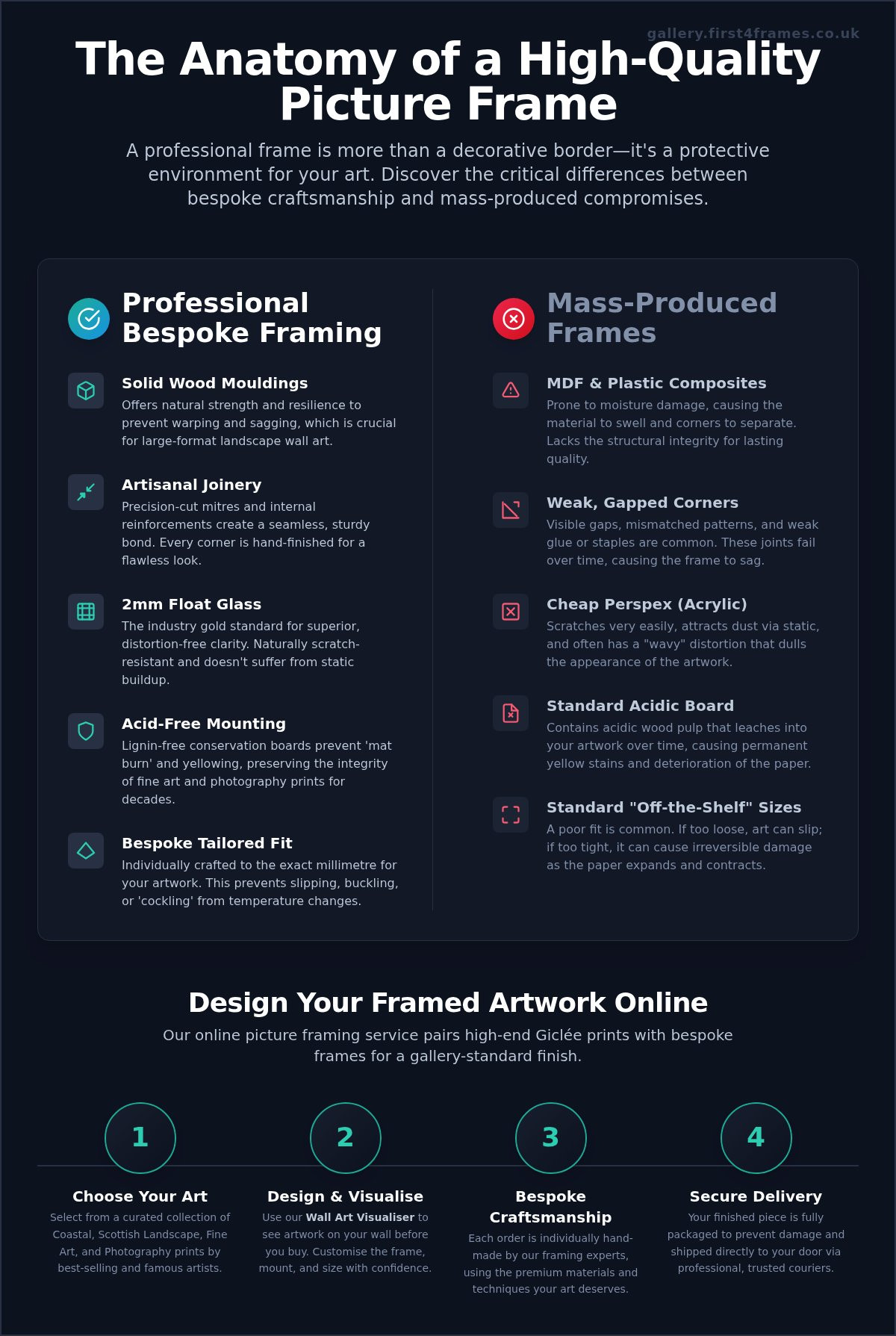
The secret to long-term preservation lies in the chemistry of the board. A pH neutral state prevents harmful chemical migration from the mount to the artwork. Standard “white core” boards often contain lignin, a natural substance in wood pulp that eventually turns into acid. This acidity is what causes those unsightly brown stains on old prints. By using professional conservation-grade, lignin-free materials, we eliminate the risk of the “yellow edge” that plagues mass-produced frames. This commitment to quality materials is why the quality mountboard used on artwork in your frames is such a critical component of our bespoke service.

How Quality Mounting Prevents Artwork Damage

Paper art is a living material. It breathes. When humidity levels in your home shift, paper fibres naturally expand and contract. Without the right support, this movement leads to “cockling” or “buckling,” which are those frustrating ripples that ruin a smooth, professional look. The quality mountboard used on artwork in your frames provides the necessary structure to allow this natural movement while preventing permanent distortion. We see many pieces brought into our Falkirk workshop that have been damaged by tight, restrictive mounting, and we’re always happy to give advice on how to avoid these common pitfalls.

Beyond structural support, professional mounting guards against “foxing,” those unsightly brown mould spots caused by trapped moisture. We never use permanent adhesives that can devalue your art; instead, we use archival hinging techniques. This approach is essential for the conservation of precious items, ensuring the environment inside the frame remains stable and dry for years to come.

Creating the Vital Air Gap

Your artwork should never touch the glass directly. When it does, even minor temperature changes can cause condensation to form on the inside of the pane. This moisture can cause the art to stick to the glass or lead to ink transfer, which is often irreversible. Our professional mountboards, usually 1.4mm to 2mm thick, create a safe buffer zone. We pair this protective gap with 2mm float glass for superior clarity, which is a significant upgrade over the thin perspex used by many other online galleries.

The Problem with “Off-the-Shelf” Standard Frames

Mass-produced frames frequently rely on thin, acidic paper inserts that offer no real protection. These generic sizes rarely fit your artwork perfectly, which often results in crushed edges or gaps. Our bespoke process ensures that every mount is cut to the exact millimetre of your specific print. This precision ensures the quality mountboard used on artwork in your frames acts as a perfect, tailored shield. If you’re ready to see the difference professional materials make, you can explore our range of ready-to-hang art to see these standards in action.

Every frame produced at First4Frames Gallery is a unique creation, hand-made to order in our Falkirk workshop. We don’t believe in the “one size fits all” approach of mass-produced alternatives that often fail to support your art correctly. Instead, we hand-make every order to ensure a perfect fit for your specific piece. By choosing our bespoke photo frames, you’re investing in a product where the quality mountboard used on artwork in your frames is just the beginning of a high-standard build. We take pride in being an approachable team, always happy to give advice to help you navigate the many choices available for your project.

Beyond the Board: 2mm Float Glass vs. Perspex

While many online galleries cut corners by using acrylic or perspex, we strictly use 2mm float glass for all our bespoke glazing. This choice provides superior clarity and a premium feel that plastic simply cannot match. Perspex is notoriously prone to scratching and attracts static electricity. This static can actually pull delicate particles off the surface of pastel or charcoal drawings, causing permanent damage. Our use of real glass ensures that the quality mountboard used on artwork in your frames works in harmony with the glazing to provide a clear, undistorted view of your art.

Professional Logistics and Packaging

Crafting a beautiful frame is only half the journey. We understand the anxiety of waiting for a fragile item to arrive, which is why we’ve perfected our professional logistics and packaging methods. Each finished frame is fully encased in protective materials designed to withstand transit, ensuring the delicate glass and mount arrive in perfect condition. We partner with reliable couriers for UK-wide delivery, so your order reaches you exactly as it left our hands. If you are looking for inspiration, you can view our latest work to see the quality of our finished products.

Choosing the Right Mount Style for Your Art

Once you understand the protective role of materials, you can focus on the aesthetic transformation. Selecting the right mount is an art form itself. We recommend a simple three-step approach to achieve that professional, bespoke look. First, choose a colour that picks out a subtle highlight from the artwork rather than simply matching your wall paint. This draws the viewer’s eye into the piece. Second, don’t be afraid of width. A wider mount often creates that sought-after “gallery-standard” feel, giving the art room to breathe. Finally, consider the depth of a double mount. This technique adds a sophisticated layer that can provide a tiny “pop” of contrasting colour. For inspiration on these pairings, feel free to browse our online gallery.

Single vs. Double Mounting

A single mount is a classic, clean choice. However, a double mount uses a second board underneath, typically showing just a 5mm “inner mount” or reveal. This creates a beautiful bevelled edge that adds 3D depth to the presentation. The quality mountboard used on artwork in your frames provides this structural “step” that guides the eye. While neutral off-whites are the most popular choice for a timeless look, a bold, contrasting inner mount can make a modern print truly stand out. It’s a simple way to add a touch of luxury to your bespoke frames.

Framing Your Own Memories

The quality mountboard used on artwork in your frames isn’t reserved just for high-end gallery pieces. We apply these same rigorous conservation standards to your personal photographs. If you have digital images you’d love to see on your wall, our photo printing and framing service ensures your memories are treated with the same hand-made care as a masterpiece. We use the same 2mm float glass and acid-free boards to ensure your family photos never fade or stain. Our team is always happy to give advice on which mount style will best suit your home and your history.

Give Your Artwork the Protection It Deserves

Choosing the right mount is about more than just picking a pretty colour; it’s about the chemistry of preservation and the precision of craftsmanship. High-quality materials act as a vital shield against environmental damage, while our bespoke sizing ensures your art is never crushed or distorted. We take pride in every piece we handle, ensuring that the quality mountboard used on artwork in your frames meets the highest conservation standards to prevent yellowing or staining over time.

Every order is hand-made in our Falkirk workshop using 2mm float glass as standard, providing a level of clarity and safety you simply won’t find in mass-produced frames. Whether you’re framing a rare print or a cherished family photograph, our team is always on hand to provide expert advice on all custom framing options. We’re dedicated to making professional-grade protection accessible for every home and every creative project.

Ready to transform your space? Browse our Gallery of Framed Prints or Start Your Bespoke Order Today. We look forward to helping you create a beautiful, lasting display that you can enjoy with total confidence for decades to come.

Frequently Asked Questions

Is all mountboard acid-free?

No, not all mountboard is acid-free or suitable for long-term preservation. Many mass-produced frames use standard boards that contain lignin, which breaks down into acid over time and stains your art. We only use conservation-grade materials that are lignin-free and pH neutral. This ensures the quality mountboard used on artwork in your frames acts as a protective shield rather than a source of chemical damage.

What is the difference between a single and a double mount?

The main difference is that a single mount uses one layer of board, whereas a double mount uses two layered boards for added depth. In a double mount, the top board is cut with a slightly larger window to reveal about 5mm of the board underneath. This technique adds a sophisticated, 3D effect. It’s an excellent way to introduce a secondary accent colour that draws the eye toward the finer details of your art.

Can I choose a custom mount colour for my frame online?

Yes, we offer a wide variety of mount colours that you can select directly through our online shop. We provide a large range of options to suit everything from traditional watercolours to modern giclée prints. If you don’t see the exact shade you need, our team in Falkirk is happy to give advice on custom combinations to ensure your bespoke frame looks perfect and fits your decor.

Does the mountboard touch the artwork directly?

Yes, the window mount sits directly against the surface of your artwork to secure it in place. Because of this direct contact, using professional-grade material is vital for the safety of your piece. The quality mountboard used on artwork in your frames prevents harmful chemicals from migrating into the paper. It also creates a crucial air gap between the art and the 2mm float glass, protecting it from condensation.

How do I know if my existing frame has an acidic mount?

You can identify an acidic mount by inspecting the bevelled edge of the window opening for any signs of yellowing or browning. If this edge has turned a dark cream, tan, or brown colour, the board is acidic and is likely “burning” your artwork. This discolouration is a clear sign that the materials are breaking down. We recommend replacing these old mounts with conservation-quality boards to stop the damage before it becomes permanent.