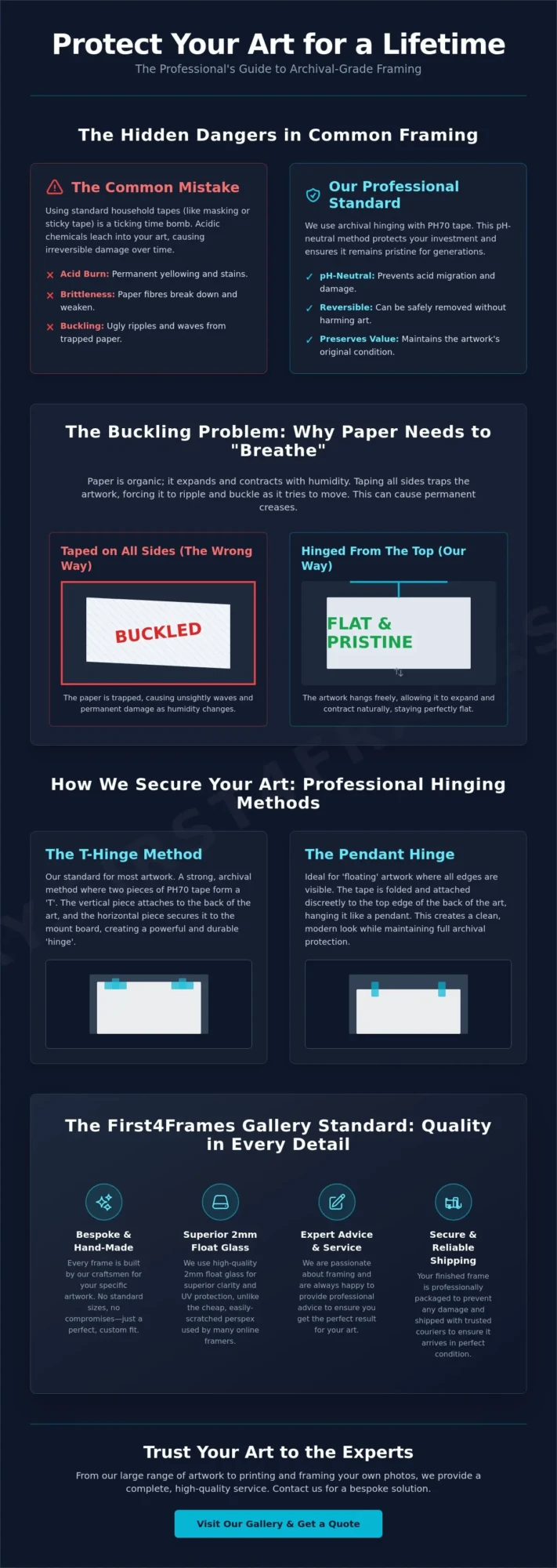
Is there anything more frustrating than framing a beautiful print, only to see it ripple and wave behind the glass? That perfectly smooth, gallery-quality finish you admire isn’t a secret; it’s the result of impeccable craftsmanship. At First4Frames Gallery, our professional dry mounting services for prints are the key to eliminating those distracting imperfections, ensuring your artwork lies perfectly flat and flawless for years to come.
But what exactly is this process, and is it the right choice for that treasured piece you discovered in our gallery? We understand the hesitation – the technical jargon can be confusing, and you want to be certain you’re making the best investment for your art. As trusted professionals with excellent customer ratings, we believe in making our bespoke framing techniques clear and accessible. In this guide, we’ll show you what dry mounting is, when to use it, and how our service gives your prints the spectacular, long-lasting finish they truly deserve.
Key Takeaways
Understand how the dry mounting process uses heat and pressure to permanently eliminate unsightly ripples and waves, ensuring your print stays perfectly flat.
Quickly determine if dry mounting is the right choice for your artwork with our clear guide on suitable print types, including posters and photographs.
Compare different mounting techniques side-by-side to confidently choose the best method based on finish, reversibility, and your specific artwork.
Discover how our professional dry mounting services for prints use expert craftsmanship to deliver a flawless, gallery-quality finish for your most cherished pieces.
What is Dry Mounting? The Secret to a Perfectly Flat Print
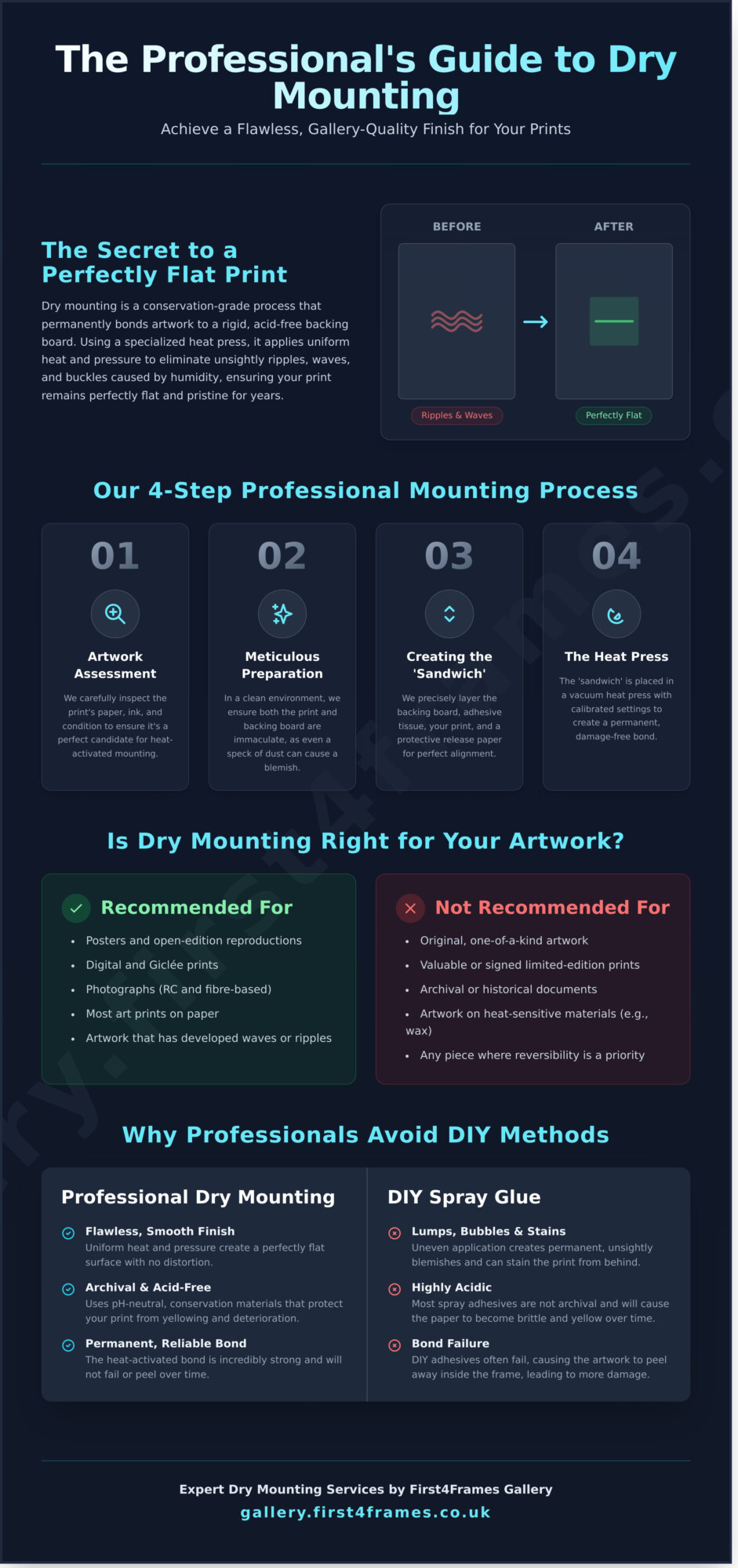
Have you ever framed a beautiful print, only to see it develop unsightly ripples or waves over time? This common and frustrating issue is often caused by changes in humidity and temperature, which make the paper expand and contract within the frame. Fortunately, there is a perfect, professional solution: dry mounting.
Dry mounting is a process that permanently bonds a print to a rigid, acid-free backing board. As detailed in conservation resources like the AIC’s guide on What is Dry Mounting?, the technique uses a specialised heat press to apply uniform heat and pressure, activating a thin sheet of adhesive tissue placed between the print and the board. The core benefit is simple and transformative: it creates a completely smooth, flat surface that showcases your artwork without distortion and preserves it for years to come. Think of it like expertly ironing a delicate shirt-the process requires precise control to achieve a flawless finish.
To see this meticulous process in action, watch this helpful video from our trusted industry partners:
The Tools of the Trade
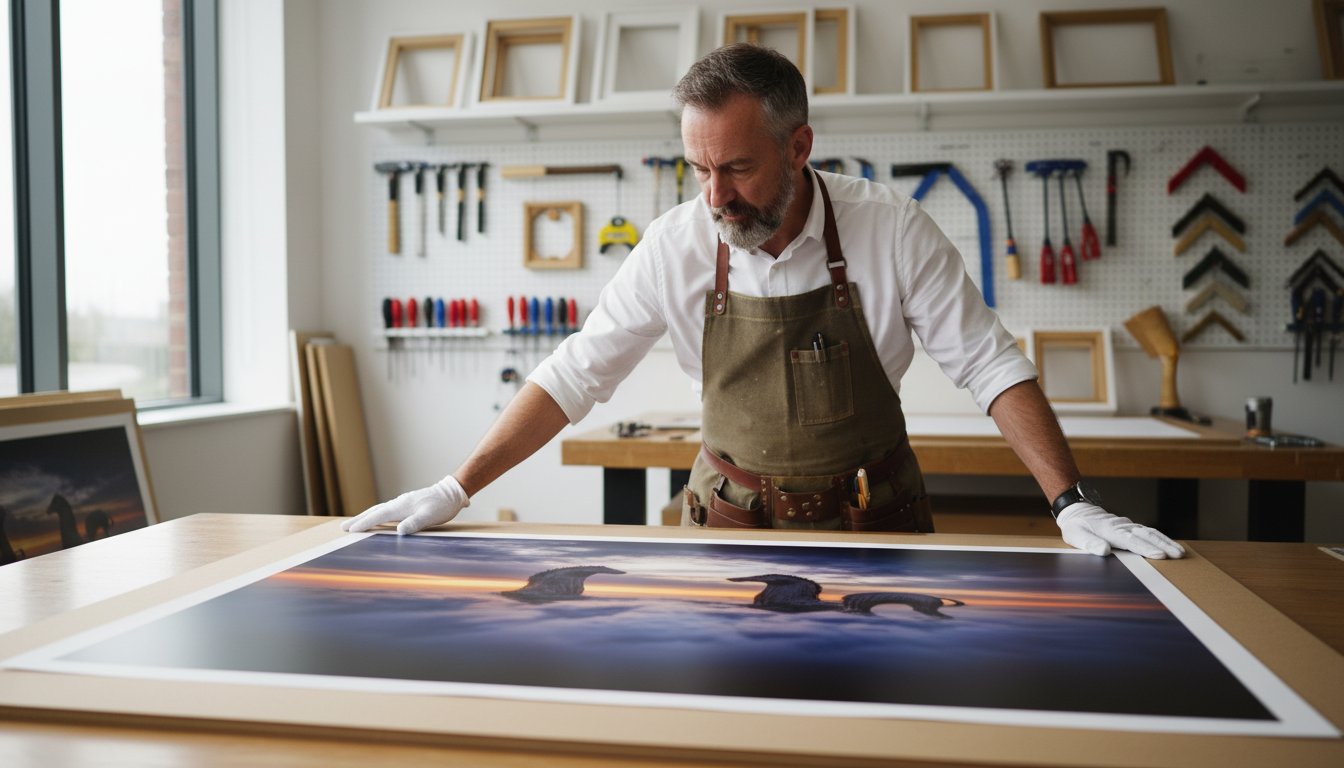
Achieving this pristine finish is a task for skilled professionals with specialised equipment. The centrepiece of the process is a large-format vacuum or heat press, which provides the consistent heat and pressure needed for a perfect bond. We pair this with premium, conservation-grade materials, including pH-neutral backing boards and high-quality, heat-activated adhesive tissue. This professional setup is essential for a flawless, damage-free result that protects your investment.
Why Not Just Use Spray Glue?
It can be tempting to reach for a can of spray adhesive for a quick fix, but this is one of the most common and damaging DIY mistakes. Spray glues are often highly acidic, which will cause your print to yellow and deteriorate over time. They also apply unevenly, creating permanent lumps, bubbles, and stains. Worse still, these adhesives often fail, leaving your artwork to peel away inside the frame. Our professional dry mounting services for prints offer the superior, long-term solution your art deserves.
The Professional Dry Mounting Process: A Look Inside Our Workshop
At First 4 Frames, we believe that true craftsmanship lies in the details. The journey from a beautiful print to a perfectly finished piece of art is a meticulous one, combining technical skill with a deep respect for the artwork itself. Unlike DIY methods that risk damaging your print, our professional process ensures a flawless, permanent bond that protects and enhances your image. It’s this dedication to quality that has earned us our excellent customer ratings and reputation for trustworthiness.
Here is a look at the four key stages every print goes through in our workshop:
Step 1: Artwork Assessment. Before we begin, our specialists carefully inspect your print. We check the paper type, ink, and overall condition to confirm it is a suitable candidate for the heat-activated mounting process, ensuring the integrity of your artwork is our top priority.
Step 2: Meticulous Preparation. We prepare your print and the chosen substrate (the backing board) in a controlled, clean environment. Even the smallest speck of dust can create a blemish under the surface, so we use specialised tools to ensure both surfaces are completely immaculate.
Step 3: Creating the Mounting ‘Sandwich’. With precision, we layer the components. This starts with the substrate, followed by a sheet of dry mount tissue (a heat-activated adhesive), your print, and finally, a protective layer of non-stick release paper.
Step 4: The Heat Press. The ‘sandwich’ is placed in our vacuum heat press. We use carefully calibrated settings for temperature and pressure, specific to your print’s material, to create an even, permanent bond without any risk of damage.
Precision and Care at Every Stage
Perfect alignment is critical. Before the press is activated, we take great care to position your print with absolute accuracy on the backing board. The release paper on top acts as a crucial barrier, protecting the delicate surface of your artwork from direct heat. We exclusively use conservation-grade, acid-free materials, ensuring our methods align with established preservation guidelines for photographs to protect your artwork for decades to come.
The Final Result: Flawless and Ready for Framing
The outcome is a perfectly flat, smooth print, permanently bonded to its backing with no ripples, bubbles, or creases. This pristine finish is the ideal foundation for the final framing process, allowing for a cleaner, more precise fit within the frame. This level of perfection is what defines our professional dry mounting services for prints and is a crucial step in achieving the spectacular, gallery-quality presentation your art deserves.
Is Dry Mounting Right for Your Artwork? A Suitability Guide
The most common question we hear from our clients is, “Should I dry mount my print?” It’s a fantastic question because the answer depends entirely on the artwork itself. Dry mounting is a permanent process that bonds your print to a backing board, creating a flawless, perfectly flat finish. Our professional dry mounting services for prints are ideal for achieving that crisp, gallery-ready look, but it’s crucial to know when this is the right choice and when a different approach is needed to protect your art’s value.
Artworks That Benefit Most from Dry Mounting
For many types of artwork, dry mounting is the key to a truly professional presentation. It elevates the piece, ensuring it remains perfectly smooth and free from the distracting waves or ripples that can develop over time, especially in larger frames. As trusted professionals with excellent customer ratings, we confidently recommend it for:
Photographs: Larger photographic prints have a natural tendency to buckle or warp within the frame. Dry mounting provides essential stability, keeping your beautiful images perfectly flat for years to come.
Posters & Giclée Prints: Whether it’s a vintage poster or a stunning open-edition Giclée print, like those from our First4frames gallery artists, dry mounting delivers that premium, immaculate finish.
Thin or Delicate Papers: Artwork on thinner paper stock gains much-needed support from mounting, which prevents creasing and ensures a smooth, professional appearance once framed.
When to Choose Alternative Mounting Methods
While excellent for presentation, the permanence of dry mounting means it is not suitable for every piece. If your artwork is a valuable original, a signed limited-edition print, or anything considered a collectible investment, we strongly advise against it. Permanently bonding the art to a board can diminish its long-term financial and historical value.
For these irreplaceable pieces, we always use conservation mounting. This archival, museum-standard technique uses acid-free paper “hinges” or corners to secure the art, allowing it to be safely removed from the mount in the future without damage. This is the standard for preserving the integrity of fine art, and it’s the trusted, bespoke method we apply to ensure your most treasured pieces are protected for a lifetime.
Dry Mounting vs. Other Techniques: Making an Informed Choice
Choosing how to present your artwork is as important as choosing the frame itself. The mounting technique directly impacts the print’s longevity, appearance, and value. At First4Frames, we believe in a bespoke approach, because the perfect method depends entirely on the piece you are framing. Understanding the options is the first step towards a beautiful, lasting result.
To help you decide, here is a simple comparison of the most common professional mounting methods:
Feature
Dry Mounting
Hinge Mounting
Wet Mounting
Finish
Perfectly flat and smooth
Hangs naturally, may have slight wave
Perfectly flat, bonded to substrate
Reversibility
Generally permanent
Fully reversible (archival)
Permanent
Relative Cost
££
£££
££££
Best Use Case
Posters, photographs, open-edition prints
Original art, limited editions, valuable prints
Large-scale works, textiles, canvas
Conservation Hinge Mounting: The Archival Standard
For pieces with significant monetary or sentimental value, conservation hinge mounting is the gold standard. Using specialist Japanese paper hinges and wheat-starch paste or acid-free tape, the artwork is secured from the top, allowing it to hang naturally and respond to changes in humidity. This method is fully reversible without damaging the art, which is why it’s trusted by museums worldwide. It is our go-to recommendation for the beautiful limited edition prints available in our gallery.
Self-Adhesive Boards: A Risky Alternative
You might come across ‘cold mounting’ boards with a self-adhesive surface. While they seem convenient for DIY projects, they present significant risks in professional framing. Once a print touches the aggressive adhesive, repositioning is nearly impossible without causing irreparable damage. Trapping air bubbles and dust is also a common problem. Our professional, heat-activated dry mounting services for prints create a far superior, permanent bond, ensuring a flawless, bubble-free finish that truly honours your artwork.
Ultimately, the right choice balances preservation with presentation. With over two decades of craftsmanship and exceptional customer ratings, our team is here to provide expert advice, ensuring your artwork receives the care it deserves.
Expert Dry Mounting Services in Falkirk & Across Scotland
Understanding the theory behind dry mounting is one thing; entrusting your cherished prints to an expert is another. At First4Frames, we combine over 20 years of professional framing experience with a genuine passion for art preservation. From our gallery workshop in Falkirk, our dedicated team provides premium dry mounting services for prints, ensuring every piece is treated with the care and precision it deserves. We are committed to using only the highest quality, acid-free materials, guaranteeing a flawless, permanent bond that protects your artwork for years to come.
Why Trust First4Frames with Your Prints?
Our reputation for excellence is built on a foundation of trust and exceptional craftsmanship, reflected in our outstanding customer ratings. We believe that every piece of art is unique and deserves a bespoke solution. That’s why we offer:
A Personal Consultation: We don’t believe in one-size-fits-all. We take the time to discuss your artwork, your vision, and your space to provide tailored advice.
Individual Assessment: Our experts carefully assess every print, poster, or photograph to determine if dry mounting is the most suitable technique for a perfect, long-lasting finish.
Uncompromising Quality: From the heat-activated adhesive to the mounting board, every material we use is of archival quality, safeguarding your print against damage and discoloration.
Get a Quote for Your Print Mounting & Framing
Ready to give your artwork the professional finish it deserves? Whether you have a single photograph or a collection of fine art prints, we are here to help. We invite you to visit us at our Falkirk gallery to see our craftsmanship firsthand and discuss your project. Our team provides expert dry mounting services for prints and can guide you through our extensive range of bespoke framing options to create the perfect display.
Bring Your Prints to Life with Professional Craftsmanship
As we’ve explored, dry mounting is a superb technique for achieving that flawlessly flat, professional finish for your cherished posters and photographs. Understanding when this method is suitable and appreciating the meticulous process involved are the first steps toward preserving and presenting your art beautifully.
Here at our Falkirk gallery, our passion for craftsmanship is at the heart of everything we do. With over 20 years of professional framing experience, we provide trusted dry mounting services for prints and bespoke solutions for clients across Scotland. Our excellent customer ratings for quality and service reflect our commitment to achieving a perfect, lasting result for every piece.
Ready to give your artwork the spectacular presentation it deserves? Let our expertise be the bridge between your art and your décor. Get a bespoke quote for your picture framing project and discover how we can bring your vision to life.
Frequently Asked Questions
Is dry mounting permanent?
Yes, dry mounting is considered a permanent process. It uses a heat-activated adhesive to bond your print to a rigid backing board, creating a perfectly flat, smooth finish. While some specialised techniques can reverse the process, it’s a delicate and costly procedure. We always recommend considering dry mounting as a final, archival step for pieces you intend to display permanently, ensuring they remain beautiful and ripple-free for years to come.
Will dry mounting damage my photograph or print?
When performed by our experienced professionals, dry mounting is a safe and highly effective method for preserving your artwork. We use premium, acid-free materials and precisely controlled heat and pressure to ensure the integrity of your print is protected. For irreplaceable or highly valuable fine art, we might suggest alternative conservation methods. Our team is always happy to provide a bespoke consultation to choose the perfect, safest presentation for your treasured piece.
How much does dry mounting cost?
The cost of dry mounting depends on the size of your print and the specific backing material chosen. As a guide, prices typically start from around £15 for a smaller A4-sized piece and increase with the dimensions. For larger or bespoke projects, such as preparing one of the spectacular prints from our First4Frames gallery for framing, we provide a custom quote. This ensures you receive a fair price for the premium materials and craftsmanship involved.
Can you dry mount a canvas print?
Generally, we do not recommend dry mounting for canvas prints. The beauty of a canvas lies in its unique texture and the traditional method of stretching it over a wooden frame. Dry mounting would flatten this texture and is not the appropriate technique for this medium. For our beautiful canvas art, we always recommend professional canvas stretching, which honours the material and prepares it perfectly for display, either framed or unframed for a contemporary look.
What’s the difference between dry mounting and laminating?
The key difference is the finish. Dry mounting adheres the back of your print to a rigid board, leaving the print’s surface untouched and ready for framing behind glass. Laminating, however, applies a protective plastic film to the front surface of the print. While lamination offers protection from moisture and UV light, it permanently alters the artwork’s surface texture and appearance. We typically recommend dry mounting for a classic, professional gallery finish.
How long does the dry mounting process take?
At First 4 Frames, our efficient process ensures a swift turnaround without compromising on our high standards of quality, a commitment reflected in our excellent customer ratings. The dry mounting itself is relatively quick, but we allow time for proper preparation and cooling. Typically, you can expect our dry mounting services for prints to be completed within 2 to 4 working days as part of our bespoke picture framing service.
Do I need to dry mount a small print?
While not always essential, dry mounting can significantly enhance the appearance of even small prints, especially those on thinner paper. It prevents the subtle cockling or rippling that can occur over time due to changes in humidity, ensuring a perfectly flat and professional presentation. For any print you truly value and wish to display beautifully, dry mounting is a worthwhile investment in its long-term preservation and aesthetic appeal.
Have you ever admired a piece of art that seems to hover within its frame, casting a soft, captivating shadow? This modern, gallery-quality display can truly elevate a piece, but the terminology can be confusing. If you’re unsure what ‘float mounting’ means, if it’s the right choice for your treasured print, or how it differs from traditional framing, you’ve come to the right place. We believe understanding the beautiful technique of float mounting for artwork should be simple and inspiring, not a source of worry about potential damage.
As passionate artisans with decades of experience, we want to give you the confidence to make the perfect choice. In this complete guide, we’ll demystify the process, exploring what float mounting is and when to use it for a spectacular effect. You’ll discover how our bespoke, archival-quality craftsmanship not only creates a stunning display but also protects your art for years to come. Prepare to see your art in a whole new, professional light.
What is Float Mounting? A Modern Approach to Framing
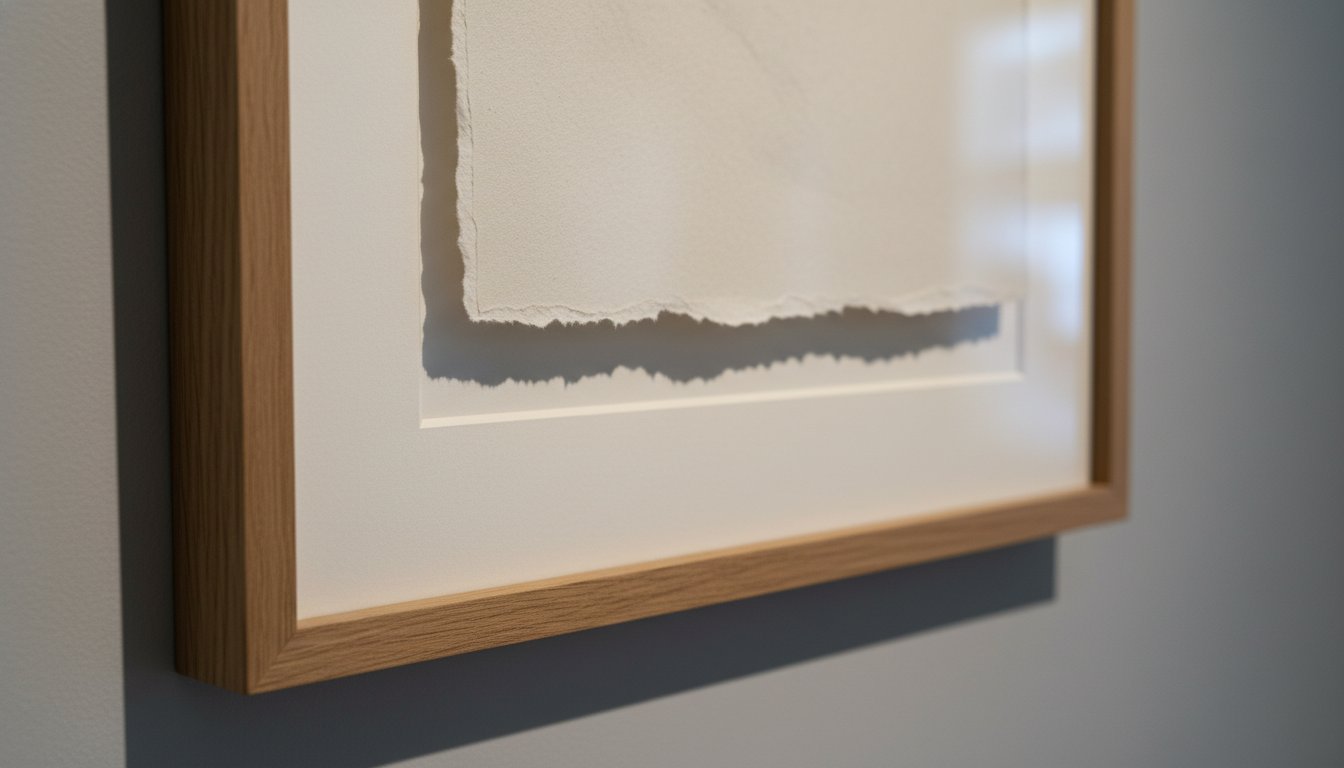
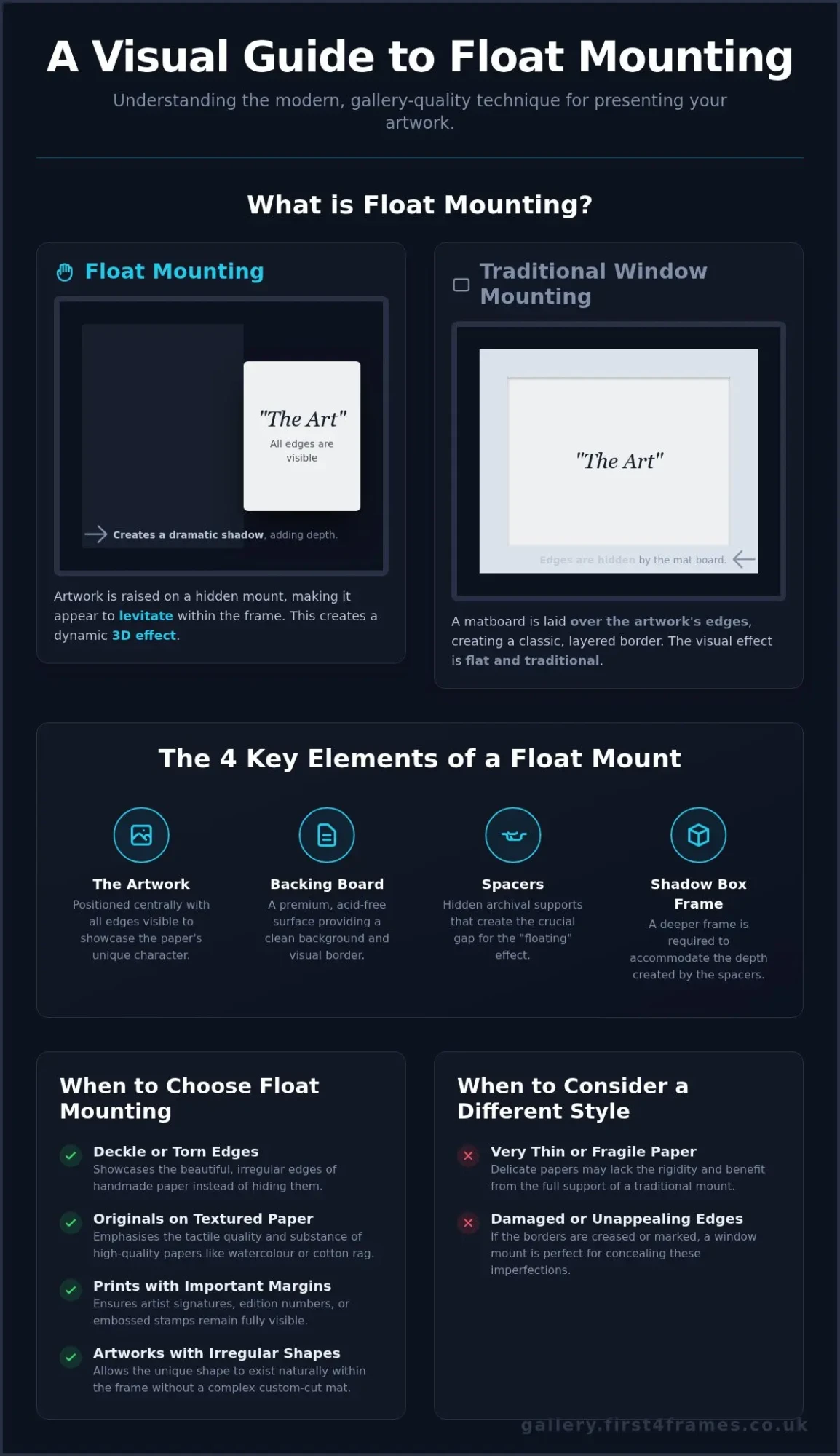
Imagine your artwork not just displayed, but truly presented. Float mounting is a premium framing technique where your art is raised on a hidden, archival-quality mount. This elevates the piece away from the backing board, making it appear as if it is levitating or ‘floating’ within the frame. This subtle separation creates a soft, dramatic shadow beneath the artwork, adding a spectacular sense of depth and drawing the viewer’s eye directly to the piece itself.
To see this beautiful technique in action, watch this helpful demonstration from the experts:
This modern approach stands in beautiful contrast to traditional window mounting. In a window mount, a bespoke matboard is cut with an aperture and laid over the edges of the artwork, creating a classic border. While a standard picture framing mat serves to protect and frame the image, float mounting celebrates the entire piece, edges and all. For a quick comparison, see our table below.
Feature
Float Mounting
Window Mounting
Artwork Edges
Completely visible and celebrated
Overlapped and hidden by the mat
Visual Effect
Dynamic 3D effect with a shadow
Flat, layered, and traditional
Best For
Original art, textured paper, modern interiors
Photographs, prints, classic decor
The Key Elements of a Float Mount
The magic of float mounting lies in a few essential components working in perfect harmony:
The Artwork: Positioned centrally with every edge visible, showcasing the paper’s unique character.
The Backing Board: A premium, acid-free surface that provides a clean background and a visual border around the art.
The Spacers: Hidden supports, often made from archival foam board, that create the crucial gap between the art and the backing.
The Frame: A deeper frame, known as a ‘shadow box’, is required to accommodate the depth created by the spacers.
Why It’s a Favourite for Galleries and Artists
The preference for float mounting for artwork in professional galleries and studios comes down to respect for the art. This method offers a contemporary and sophisticated presentation that treats the artwork as a physical object, not just an image. It honours the craftsmanship by highlighting the unique qualities of the paper itself-be it a delicate, deckled edge on watercolour paper or the rich texture of a handmade print. It’s a statement that the art, in its entirety, is the hero.
When to Choose Float Mounting for Your Artwork
Float mounting is a spectacular way to present a piece, but its modern, gallery-style finish isn’t the perfect fit for every single artwork. This bespoke technique, which shouldn’t be confused with other display methods as detailed in this helpful guide on Float mounting vs. floater frames, is all about celebrating the artwork as an object. The decision hinges on the unique characteristics of your piece-its paper, the condition of its edges, and its overall style. This guide will help you determine if it’s the ideal choice to create that stunning, three-dimensional effect you’re looking for.
Ideal Candidates for Float Mounting
This premium presentation style truly shines when paired with specific types of art. It turns the entire piece, paper and all, into the star of the show. Consider this method if your artwork has:
Deckle or Torn Edges: The feathered, irregular edges of handmade paper are a beautiful feature. Float mounting showcases this unique texture rather than hiding it behind a window mount.
Originals on Heavy, Textured Paper: For works on high-quality, heavyweight paper (like watercolour or cotton rag), floating the art emphasises its tactile quality and substance.
Prints with Important Margins: If an artist’s signature, edition number, or an embossed stamp sits in the margin, float mounting ensures these vital details remain visible and part of the overall presentation.
Artworks with an Irregular Shape: Instead of commissioning an awkward, custom-cut window mount, floating an unusually shaped piece allows it to exist naturally within the frame.
When to Consider a Different Framing Style
While beautiful, float mounting for artwork isn’t a universal solution. In some cases, a traditional window mount provides better aesthetic or physical support. You might prefer a different style if:
The paper is very thin or fragile: Delicate papers, like those from old books or certain rice papers, may lack the rigidity to be float mounted and benefit from the full support of a traditional mount.
The edges are damaged or unappealing: If the borders of your artwork are creased, stained, or simply not intended to be seen, a window mount is perfect for creating a clean, crisp finish.
A classic aesthetic is preferred: Float mounting offers a contemporary look. For a more traditional or formal presentation, the classic elegance of a window mount is often a better match.
You are working to a tighter budget: As a more labour-intensive, bespoke process, float mounting typically costs more than standard mounting. It’s a premium service with a price tag to match.
The Professional Process: How a Float Mount is Constructed
Creating a genuine float mount is a meticulous craft that blends precision engineering with art conservation. It’s far more than simply sticking a picture to a board; it’s a bespoke technique designed to enhance and protect your piece. We use only premium, archival-grade materials to ensure your artwork is preserved without damage for decades to come. Understanding the craftsmanship involved highlights why trusting a professional framer is essential for any valuable or sentimental artwork.
Step 1: Preparing the Foundation
The process begins with a solid, stable base. We cut a sheet of high-quality, acid-free mountboard to the final dimensions of your chosen frame. Centred on this backing, we then secure a smaller, hidden ‘riser’-typically made from conservation-grade foam board. This riser is the hidden hero of the float mount, providing the crucial elevation that lifts your artwork away from the backboard and creates the signature shadow effect.
Step 2: Hinging the Artwork
This is where true conservation expertise comes into play. The artwork is carefully positioned and attached to the riser using a time-honoured method known as ‘T-Hinging’. We use delicate, strong Japanese paper and a reversible, pH-neutral wheat starch paste. This secure method is central to professional float mounting for artwork and is completely reversible, meaning the hinges can be removed by a conservator in the future without leaving any residue or causing damage. These principles are core to all archival framing, including advanced museum mounting techniques.
Step 3: Creating Space and Assembling
To complete the floating effect and protect the art’s surface, we fit spacers to the inside edge of the frame’s rebate. These spacers create a vital air gap between the artwork and the glazing (the glass or acrylic). This gap prevents moisture transfer and stops the art from ever touching the glass, which could cause irreversible damage over time. Finally, the glazing, the mounted artwork, and the backing are all carefully layered and secured within the frame, ready to display.
Key Benefits: Why Float Mounting is Worth It
While the visual appeal of float mounting is undeniable, its benefits extend far beyond a beautiful first impression. This premium technique is a thoughtful investment, offering a perfect marriage of superior aesthetics and professional-grade preservation. It’s a method designed to honour the art, allowing the piece to be the undisputed star of the show while ensuring it’s protected for decades to come. By respecting the integrity of the artwork and presenting it in its entirety, it provides a viewing experience that is both spectacular and sincere.
Unmatched Visual Impact
The defining feature of float mounting is the breathtaking 3D effect it creates. By elevating the artwork from the backing board, it casts a soft shadow that adds depth and a dynamic quality to the entire presentation. This clean, gallery-style aesthetic is perfectly suited to modern interiors, offering a minimalist frame that doesn’t compete with the art. The artwork’s own edges-whether crisp and clean or beautifully deckled-become an integral part of the composition.
Complete and Unobstructed View
Unlike traditional window mounts that cover the perimeter of your print, the great advantage of float mounting for artwork is that it leaves the piece completely visible. This means crucial details are never hidden from view. You can fully appreciate:
The artist’s signature
Edition numbers on limited prints
Embossments or watermarks from the printmaker
The unique texture and quality of the fine art paper
This method celebrates the artwork as a complete object, not just an image.
Superior Archival Protection
At First4Frames Gallery, our craftsmanship is rooted in conservation. Float mounting is an excellent choice for archival protection because the artwork never makes direct contact with the glazing (glass or acrylic). This crucial separation prevents potential moisture damage or the image adhering to the surface over time. We use only 100% acid-free, conservation-grade materials to prevent yellowing and degradation, and our non-invasive hinging technique can be safely reversed by a professional, protecting the long-term value of your piece.
To see how this beautiful technique transforms a piece of art, explore some stunning examples in our online gallery.
Your Artwork, Expertly Float Mounted by First4Frames
Achieving the perfect float mount is more than a technical process; it’s an art form that demands a passion for creativity and an expert’s eye for detail. With over 20 years of experience in bespoke picture framing, our team at First4Frames understands how to make your art the undeniable focal point of any room. We combine time-honoured craftsmanship with the finest archival materials to ensure your piece is not just displayed, but beautifully preserved. Trust us to transform your artwork into a stunning, gallery-worthy centrepiece that will be cherished for a lifetime.
Our Bespoke Consultation Process
Your vision is the starting point for everything we do. Our friendly, personalised consultation process is designed to bring that vision to life. We take the time to understand your artwork and what you want to achieve with its display. Our experts will:
Discuss your artwork’s unique characteristics and your personal style.
Guide you through our extensive collection of premium frame mouldings and backing colours to find the perfect combination.
Advise on whether float mounting for artwork is the ideal technique to create the dramatic, 3D effect you desire for your specific piece.
Commitment to Quality and Craftsmanship
We treat every piece of art that enters our workshop with the care and respect it deserves. From our dedicated workshop in Falkirk, our skilled framers employ professional conservation techniques to protect your art from environmental damage and ensure its longevity. Every frame is meticulously constructed, creating a bespoke home for your artwork that is built to last. This commitment to quality is the cornerstone of our service, giving you complete peace of mind.
As we’ve explored, float mounting offers a stunning, contemporary way to display your cherished pieces. This technique creates a beautiful shadow effect that makes your art appear to levitate within the frame, drawing the eye directly to the unique edges and texture of the work. It’s the perfect choice for adding depth and a modern, gallery-quality feel to your home.
When you’re ready to experience the unique beauty of float mounting for artwork, trust the passionate experts. With over 20 years of professional framing experience, our team at the First4Frames workshop in Falkirk, Scotland, handles every piece with meticulous care. We use only archival, conservation-grade materials to create a bespoke frame that not only looks spectacular but also protects your art for a lifetime.
Does float mounting cost more than standard framing?
Yes, float mounting typically costs more than standard framing. This is because the process requires more specialist materials, such as spacers to create the floating effect and often a deeper, more premium frame profile. The craftsmanship involved is also more detailed and time-consuming. While the exact price varies, you can generally expect to invest a little more for this spectacular, three-dimensional finish, but the stunning result is well worth it for a treasured piece.
Will float mounting damage my original artwork?
When carried out by a professional, float mounting is a completely safe and archival method that will not damage your artwork. We use conservation-grade, acid-free materials and specialised hinging techniques to secure the art to the backing board. This process is fully reversible, ensuring your piece is preserved in its original condition. Entrusting your art to an expert guarantees its protection and a beautiful, lasting display that honours the piece.
Can you float mount a canvas painting?
Absolutely! While the technique is slightly different, you can achieve a beautiful floating effect with a canvas. This is typically done using a ‘floater frame’. The stretched canvas is set into a deep frame, leaving a small, uniform gap all around the edge. This creates the illusion that the canvas is suspended within the frame, offering a clean, contemporary finish that allows the entire painted surface, including the sides, to be visible.
What is a ‘deckle edge’ and why is it good for float mounting?
A ‘deckle edge’ is the beautifully feathered, untrimmed edge found on high-quality, handmade paper. It’s a sign of true craftsmanship. This unique detail is why float mounting for artwork is such a perfect choice for these pieces. A traditional window mount would hide these gorgeous, irregular edges, but float mounting elevates the paper, turning the deckle edge into a celebrated feature of the final, stunning presentation.
How deep does a frame need to be for float mounting?
To create a successful float mount with a noticeable 3D effect, the frame needs a sufficient internal depth, known as the ‘rebate’. We recommend a frame with a rebate of at least 25mm. This depth is necessary to accommodate the backing board, the spacers that lift the artwork, the artwork itself, and the protective glazing on top. This ensures there is enough space to create that beautiful shadow and sense of dimension.
Is the artwork permanently stuck down in a float mount?
No, in a professionally executed float mount, your artwork is never permanently stuck down. We use a conservation method involving acid-free ‘T-hinges’ made from Japanese paper. These are applied only to the top edge of the artwork, allowing it to hang naturally and respond to environmental changes without buckling. This technique is completely reversible, meaning the artwork can be safely removed from the frame in the future without any damage.