
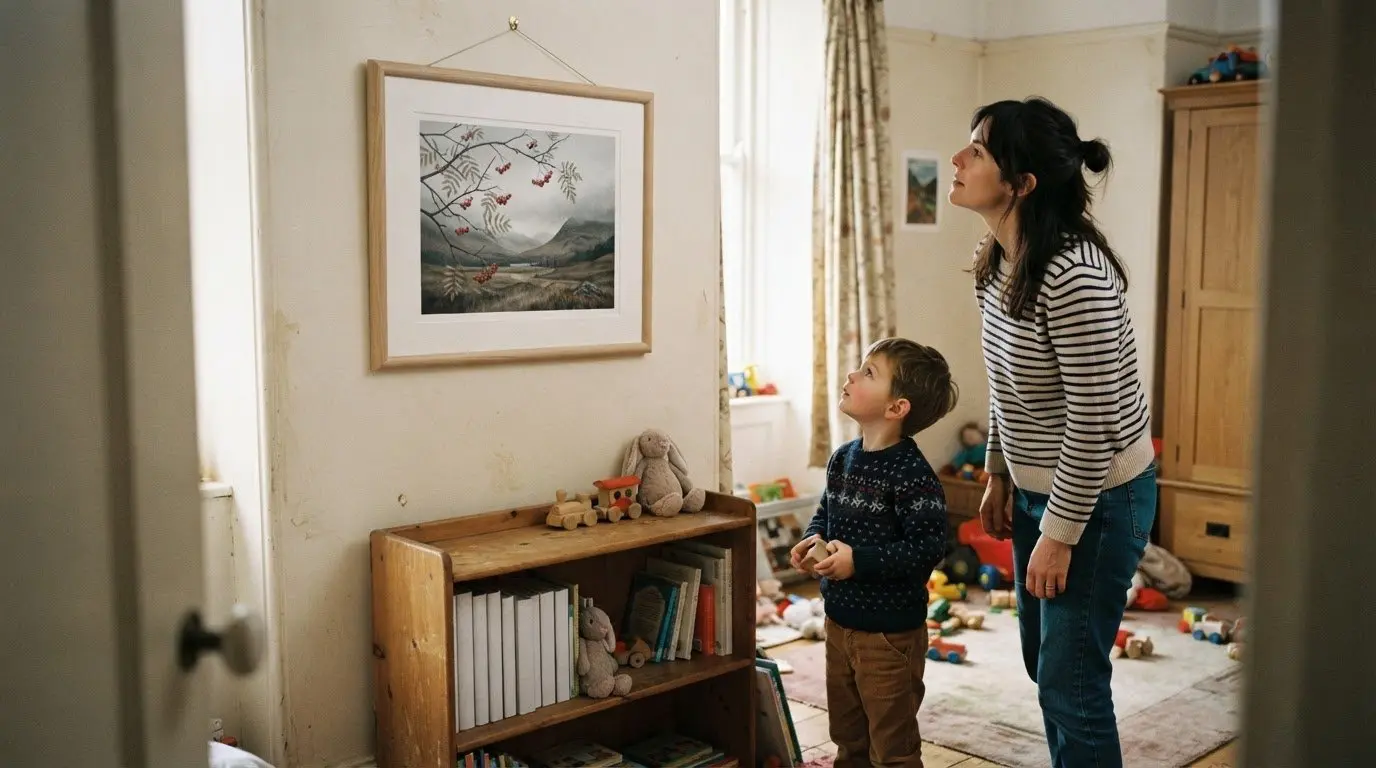
A frame’s safety depends on more than its main material. Finishes, adhesives and the complete finished piece all matter. When choosing non-toxic and child-safe framing materials, consider how the components work together rather than relying on a reassuring label or a single material claim.
It’s natural to want artwork to feel at home in a child’s room and to feel confident about the materials used. This guide explains how to assess finishes, recycled materials, adhesives and testing, helping you make a thoughtful choice when selecting a frame or planning framed artwork.
From coastal wall art and Scottish landscape art to photography prints, famous artists and contemporary art prints, thoughtful framing helps artwork feel at home. Explore ideas for bespoke framed wall art and custom framed art prints, and consider how online picture framing, an art print framing service or a wall art visualiser can help you picture a piece in your space. Whether you want to visualise art on your wall, find framed wall art or browse best-selling artists, start with the materials and details that matter in your home.
Key Takeaways
- Look beyond “BPA-free” or “PVC-free” labels; understand what each claim covers before judging a material.
- Consider how frame finishes and recycled components are described, not just the material used for the frame itself.
- Learn what adhesive and product-testing information can tell you, including the limits of individual standards.
- Assess a picture frame as a complete item, paying attention to its construction and suitability for the room.
1. Phthalates, BPA and formaldehyde
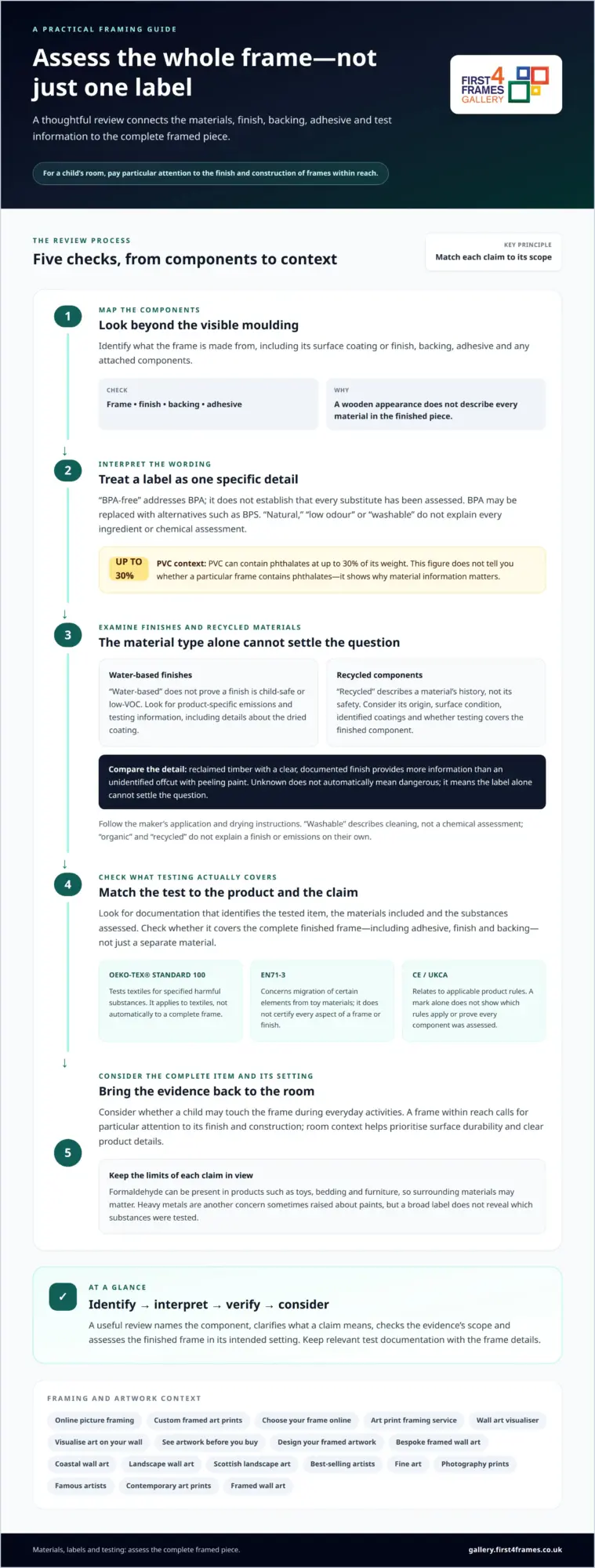
For a child’s room, assess the frame’s finish and backing, not just its wooden appearance. PVC components can contain phthalates, plasticisers used to make the material flexible. PVC can contain phthalates at up to 30% of its weight. That figure doesn’t tell you whether a particular frame contains them; it shows why material information matters. Ask what each component is made from, including any decorative coating or backing.
Labels need careful interpretation. “BPA-free” means a product excludes BPA, but it doesn’t establish that every substitute has been assessed. BPA may be replaced with alternatives such as BPS. Treat a claim about one chemical as a single detail, not a full account of the frame. For example, a wooden moulding may still have a painted or sealed surface to consider separately.
Formaldehyde can be present in products such as toys, bedding and furniture. It is described as a carcinogen that can cause asthma and skin issues. For framing, this makes surrounding materials relevant too: a frame may include manufactured backing or finishes, not only solid wood. “Washable” describes a practical cleaning feature, not the ingredients. Similarly, “mineral” describes a type of material, not a complete safety assessment.
Use a simple review: identify the frame, finish, backing and any attached components; then look for information that names the material or chemical addressed. Don’t treat “natural”, “low odour” or “free from toxic chemicals” as proof about every substance. Heavy metals are another concern sometimes raised about paints, but a broad label doesn’t reveal which substances were tested. OEKO-TEX Association says its Standard 100 tests textiles for specified harmful substances; it applies to textiles, not automatically to a complete frame. Consider the room’s activity, too: a frame within a child’s reach calls for particular attention to its finish and construction.
2. Water-based frame finishes and recycled materials
A finish isn’t child-safe or low-VOC simply because it is water-based. Treat water-based paints and stains as options to assess, and look for product-specific information about emissions and testing rather than relying on the label alone.
Water-based describes a finish’s formulation, not every chemical it contains or releases. It may still include additives, and “low odour” isn’t evidence about emissions. If a child might touch the frame, focus on the exact coating and whether the available information covers the dried finish. Follow the maker’s application and drying instructions before placing the frame in a child’s room.
Recycled materials also need careful assessment. Recycled wood, plastic or mixed-material components can vary in origin and processing, so “recycled” describes a material’s history, not its safety. Consider whether the surface is intact, whether coatings are identified, and whether testing covers the finished component. A certification is useful only when its scope matches the material and claim you’re assessing.
For example, reclaimed timber with a clear, documented finish provides more information than an unidentified offcut with peeling paint. That doesn’t mean every unknown material is dangerous; it means the label alone can’t settle the question. “Organic” describes how a material is produced, while “recycled” describes reuse. Neither term explains the frame’s finish or emissions on its own.
Keep the artwork’s setting in view. A frame beside a child’s drawing area may be touched during creative activity, while a high-mounted frame may be less accessible. This context helps you prioritise surface durability and clear product details. Don’t confuse washable with non-toxic: washable describes cleaning, not a chemical assessment. For another way to bring artwork into a room, browse framed artwork options and consider how each piece will sit in its surroundings.
No paint, stain or finish can be identified as child-safe or low-VOC by type alone. Choose a specific coating only when its product information supports the relevant emissions and testing claims, including for the dried finish.
3. Adhesives and product testing
UK child-safety standards apply according to the rules relevant to a product, not automatically to every picture frame or finish. EN71-3 concerns migration of certain elements from toy materials; it doesn’t certify every aspect of a wall sticker, let alone a complete frame.
For adhesives, check what the test actually covers. For a wall sticker, consider whether testing covers the complete finished item. Apply the same approach to a frame: look for documentation identifying the tested product and the materials included, such as its adhesive, finish and backing. A test on a separate crayon or surface doesn’t establish how a framed item performs.
CE or UKCA marking relates to applicable product rules. The marking alone doesn’t show whether those rules apply to a particular frame or finish. Relevant documentation should identify the item and explain what the marking covers. Standards and certifications answer different questions, so don’t treat a mark as proof that every component has been assessed for every concern.
Adhesive information matters even when it sits behind the artwork. Find out what the adhesive joins, whether testing covers the finished product, and which substances were assessed. Phthalates may be used as plasticisers in PVC, but a test for one substance doesn’t cover every alternative or material. Look for clear, product-specific information rather than relying on broad phrases such as “child-safe”.
For a practical review, match each claim to its scope. Identify the tested item, note the material or chemical assessed, and check whether the adhesive and surrounding components are included. Markers on a label or packaging may help identify the product, but they aren’t test results. Keep test documentation with the frame details so you can distinguish a specific assessment from a general safety claim.
4. Non-toxic and child-safe picture frames
Acrylic glazing isn’t automatically safer than glass. The material alone can’t settle the question. Consider the frame’s location, construction and likelihood of being knocked or handled by a toddler.
Solid wood, MDF and plywood can all be used for picture frames, but their names alone don’t establish safety. Surface coatings, adhesives and backing matter too. A wooden frame may have painted edges, while a manufactured board may use binders. Look for information about the complete frame, not just its main material.
In the UK, frame prices depend on material, size, glazing and construction, so there’s no useful like-for-like figure without those details. Durability also depends on the frame’s construction, finish and care. A sturdy frame with a well-finished surface may suit a busy room better than a delicate finish that’s handled often.
Inspect corners and edges for rough spots, loose splinters or damaged coatings. Sharp corners and exposed hanging hardware may be more concerning at toddler height, especially near furniture that invites climbing. Smooth edges and secure fittings reduce obvious snagging or contact points, but they don’t make a frame a toy.
Where you hang a picture matters as much as the materials. Position it away from a cot, bed or furniture a child could climb, and use fixings suited to the wall and frame. Check that the hanging hardware is firmly attached, then inspect the frame regularly for loose fittings, cracks or movement.
For a careful materials review, consider the frame, glazing, finish, backing and pigments together. “Vegetable-based paints” and “natural ingredients” describe claims, not proof that every part has been assessed for harmful substances. Suitability depends on the complete construction and where the frame will hang. Keep crayons and other creative materials separate from the frame so they don’t mark or damage its finish.
Explore framed artwork for your space, and consider how its materials and placement will suit the room.
First4Frames Gallery: Custom Picture Framing
First4Frames Gallery offers Custom Picture Framing for artwork that needs a considered fit, finish and presentation. Each frame is handmade to order using high-quality materials, with 2 mm float glass. If you’re choosing a frame for a child’s room, you can discuss the artwork and intended setting as part of selecting a suitable design.
Choose from a wide range of frames to complement the piece, or explore Ready-to-Hang Framed Art and Giclée Fine Art Prints. The aim is a well-made frame that supports the artwork and feels at home in your space. For a tailored framing conversation about your artwork, contact First4Frames Gallery.
Choose a frame that belongs in the room
A picture frame becomes part of daily life in a room, not just a border around a favourite image. Think about where it will hang, who can reach it, and how its finish and shape work with the furniture. These details help turn your understanding of non-toxic and child-safe framing materials into a considered choice for your home.
Let the artwork guide the design, too. A quiet landscape may suit a subtle frame, while a bright print can bring a playful note to a child’s room. The right pairing gives the image space to shine and helps the room feel personal, welcoming and thoughtfully put together.
When you’re ready to find artwork or explore framing possibilities, contact First4Frames Gallery. Take your time choosing a piece that feels right for your space, and let it become a lasting part of the room.
Frequently Asked Questions
Which framing materials are non-toxic and safe for children?
No single frame material is automatically safe for every child or room. Assess non-toxic and child-safe framing materials as a complete combination, including coatings, adhesives, backing and glazing. Consider solid wood, MDF and plywood alongside those components. Look for product-specific information about the finished frame, rather than relying only on a material name. Also think about whether a child can touch or reach it.
What frame materials are safest for nurseries and children’s bedrooms?
For a nursery, choose non-toxic and child-safe framing materials with clearly described components, a smooth finish and no visibly rough or damaged edges. Placement matters too: keep frames away from cots and furniture a child could climb. A securely mounted picture in an inaccessible area presents a different situation from a frame within easy reach.
How can I check a frame for toxic substances such as lead, formaldehyde, and phthalates?
Look for documentation identifying the finished frame and stating which substances or components were assessed. Check whether it covers the coating, backing and adhesives, not just the main frame material. A claim such as “BPA-free” addresses BPA alone; it doesn’t answer questions about lead, formaldehyde or phthalates. Keep the product details so you can refer to the exact frame later.
What paints, stains, and finishes are child-safe and low-VOC for frames?
No paint, stain or finish type is child-safe or low-VOC on its own, including water-based finishes. Choose a specific coating only when product information supports the relevant emissions and testing claims, including for the dried finish.