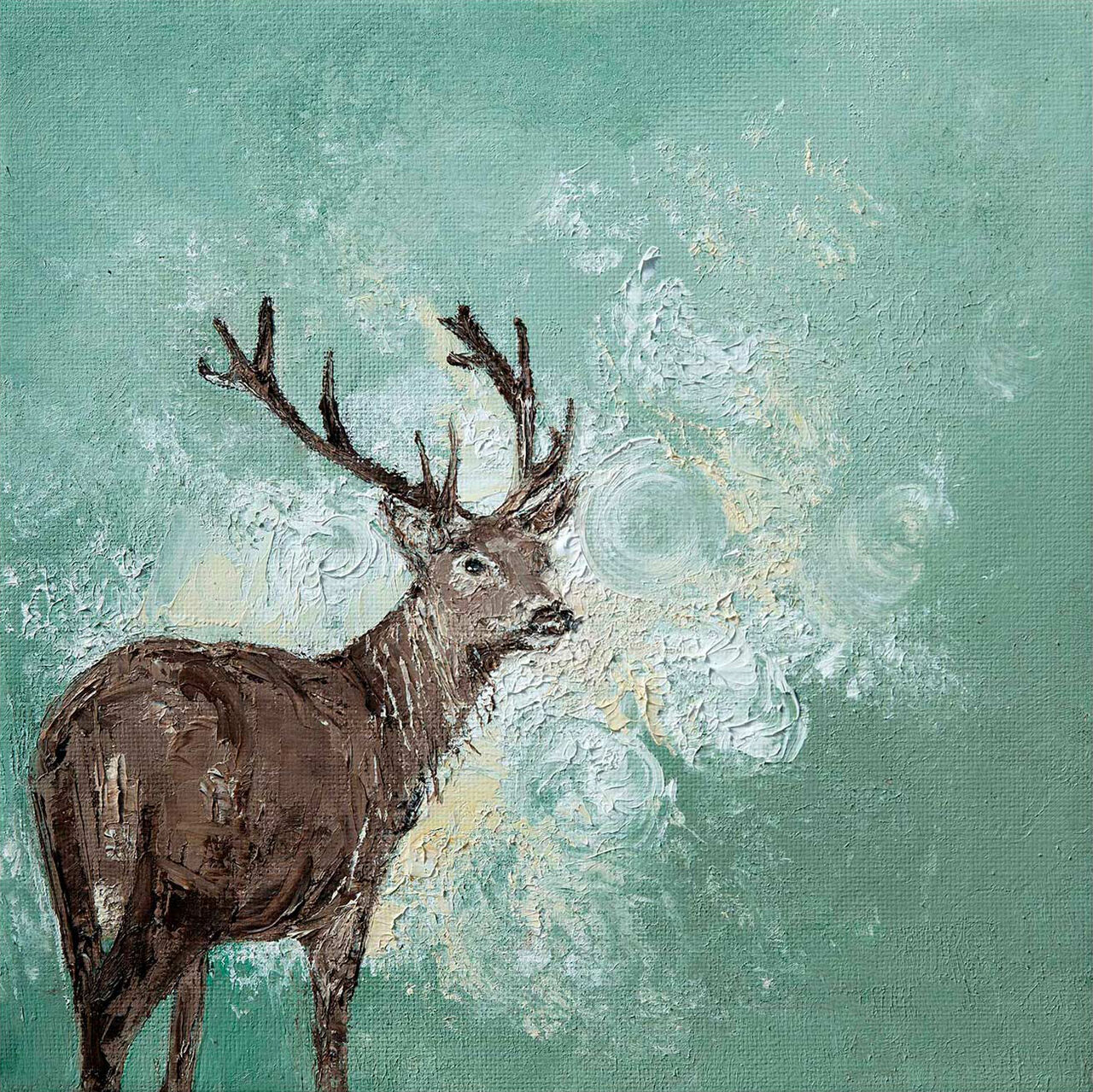
Art for bedroom walls should still reward attention, but it need not demand it at every moment. Morning Mist draws on the flora, fauna and quiet atmosphere of the British countryside. Its misty mood can establish a gentler transition into the day without making the room feel colourless or sleepy.
Place art for bedroom calm where it can be seen slowly
Opposite the bed
This position makes the picture part of the morning view. Keep the wall around it simple and avoid placing a bright screen directly below.
Above a chest
Use the furniture as a visual base, then keep taller objects away from the centre of the composition. One low ceramic piece is enough.
Muted bedding does not require an equally muted frame. A light natural timber can connect to the countryside subject, while a darker narrow moulding may provide useful definition against pale paint. Compare samples beside the wall and textiles in both daylight and lamplight. This simple check prevents a calm frame choice from looking unexpectedly stark after sunset.
A restful bedroom is not empty; it is edited so that every visible element has room to settle.
Protect subtle atmosphere from glare and flat reproduction
Mist relies on small tonal differences and soft edges, yet the natural subject still needs enough clarity to avoid looking washed out. Colour-managed Giclée production supports that balance. Bespoke framing completed in-house adds a deliberate finish, and careful glass positioning helps the quieter detail remain visible from the bed.
For anyone selecting art for bedroom walls, Morning Mist offers a calm but active presence: atmosphere, nature and movement held within a carefully finished frame rather than a blank decorative wash.
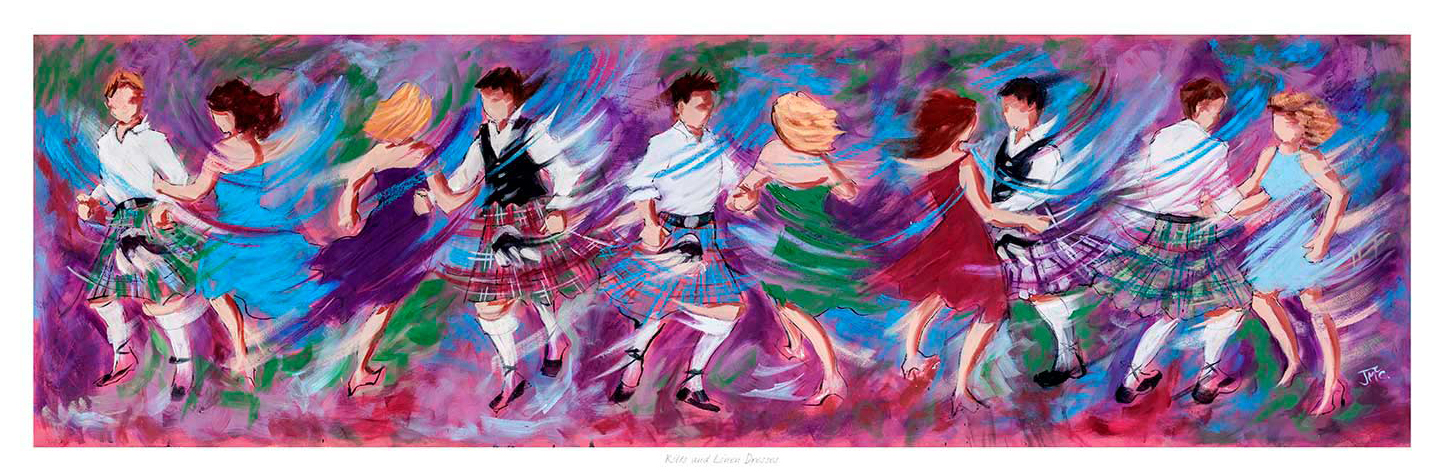
Scottish ceilidh gift ideas are most meaningful when they recognise the shared experience of dancing rather than relying on a slogan. Kilts and Linen Dresses captures turning figures, tartan and the social energy of the floor. As a signed limited-edition Giclée print, it can mark a wedding, anniversary, club milestone or friendship formed through dancing with lasting visual substance.
Choose a Scottish ceilidh gift for a real connection
For a couple
The paired movement can recall a wedding ceilidh or years of dancing together without printing names or dates across the image.
For a teacher or club organiser
The work recognises the movement and community they help sustain. A short handwritten note can carry the personal thanks while the art remains timeless.
For someone leaving Scotland
It offers a lively cultural connection that can travel into a new home without looking like a generic souvenir.
Before ordering, consider where the recipient is likely to display the piece and whether vivid colour already has a place in their home. The best gift is easy to live with. A considered frame can calm the energetic marks and help the dancing figures sit comfortably in a dining room, hall or music space.
Let the limited-edition craft support the memory
Janet McCrorie uses mixed media, scraping and scratching vibrant colour to suggest tartan and movement. A signed limited-edition Giclée print preserves that layered energy, while colour-managed production and bespoke in-house framing give the gift a polished finish suited to long-term display.
As a Scottish ceilidh gift, Kilts and Linen Dresses celebrates people in motion and the pleasure of dancing together. That shared human memory gives it more staying power than themed accessories or novelty text.
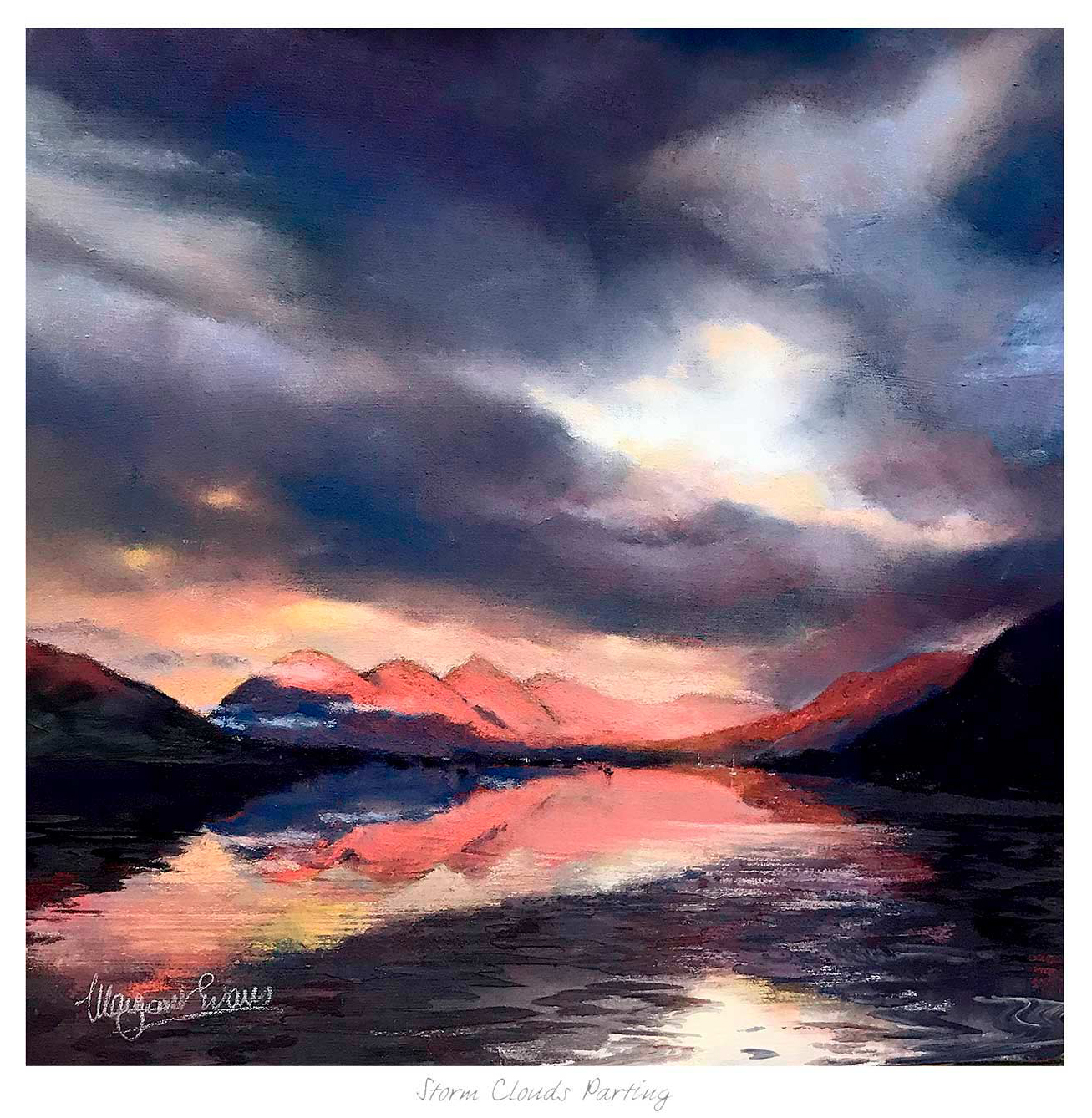
Oversized wall art can command a room without making it feel crowded when much of the composition is given to distance and sky. Storm Clouds Parting uses breaking cloud, mountain silhouettes and sunset light to create drama with breathing room. It can anchor a wide living area while remaining more open than a dense gallery arrangement.
Scale oversized wall art from the furniture outward
Measure the sofa, sideboard or bed that will visually support the piece.
Mark the proposed outer frame, not only the printed image, with low-tack tape.
Check the outline from the main doorway and the usual seated position.
Leave enough space above furniture for objects and lamps to remain separate.
A dramatic sky needs a quieter wall. Avoid placing it beside a television, tall shelving and several small pictures at once. One broad presentation gives the moving cloud and distant land enough room to establish their own pace.
Lighting should reveal the darker land without bleaching the brighter opening in the cloud. Diffused room light or a carefully angled picture light is preferable to direct window reflection. Check the glass from more than one seat before fixing the final position.
Retain every step from storm to clearing light
The composition depends on controlled transitions between dark cloud, illuminated edges, distant mountains and warm sky. Colour-managed Giclée production helps preserve that range. A bespoke hand-finished frame supplies the physical authority expected at larger scale while keeping the boundary simple enough for the sky to dominate.
Storm Clouds Parting makes oversized wall art feel expansive rather than oppressive. Its scale can hold the room, while the open sky and distant horizon stop the wall from becoming visually solid.
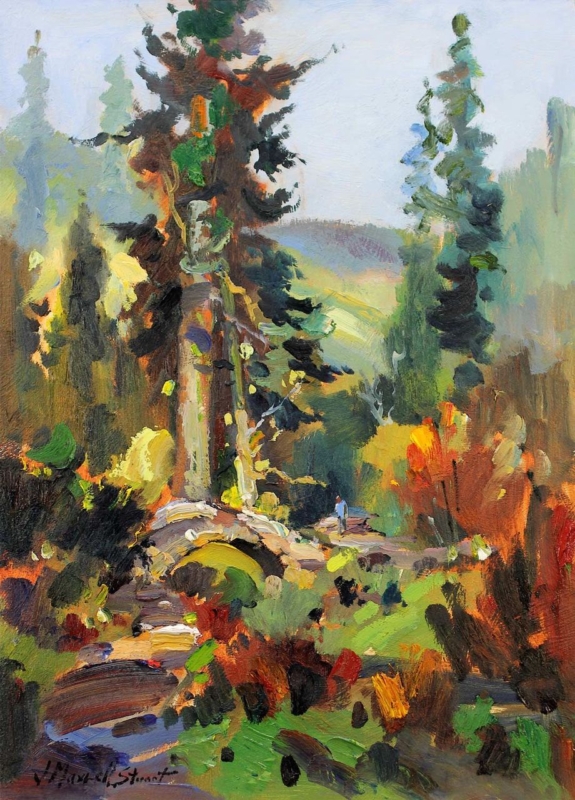
Art for living room walls can do more than supply colour. The Woodland of Royal Botanic Garden, Dawyck offers a route into a real Borders woodland, using its portrait format to draw the eye through trees and layered space. That visual depth is especially useful where a living room feels enclosed or where a narrow wall needs a convincing destination.
Place art for living room depth on a useful sightline
Seen from the doorway
Use the portrait image to create a point of arrival. Keep the floor area below it clear so the woodland route is not blocked by a tall plant or lamp.
Seen from the sofa
Hang it at seated viewing height and check reflections at the time of day the room is used most. Softer side lighting will reveal depth more reliably than a spotlight aimed at the glass.
Should woodland art sit beside lots of houseplants?
Not necessarily. One plant can connect the room to the subject, but several overlapping leaves may flatten the framed view. Let the picture provide the main woodland structure.
The 230 × 320 mm print size suits a reading-side wall or compact room. The 400 × 550 mm option has more presence beside a standard sofa or console. In either case, relate the complete framed dimensions to the furniture rather than judging the print size alone.
Frame the woodland as a view, not a pattern
Subtle changes through trunks, foliage and distance create the sense of walking into the scene. Colour-managed Giclée output protects those quieter tonal steps. Bespoke in-house framing can provide breathing space around the portrait image so it reads as a considered view rather than another layer of surface pattern.
When choosing art for living room walls, The Woodland of Royal Botanic Garden, Dawyck is a useful reminder that perceived space can matter as much as colour. A clear woodland route gives the eye somewhere calm to travel.
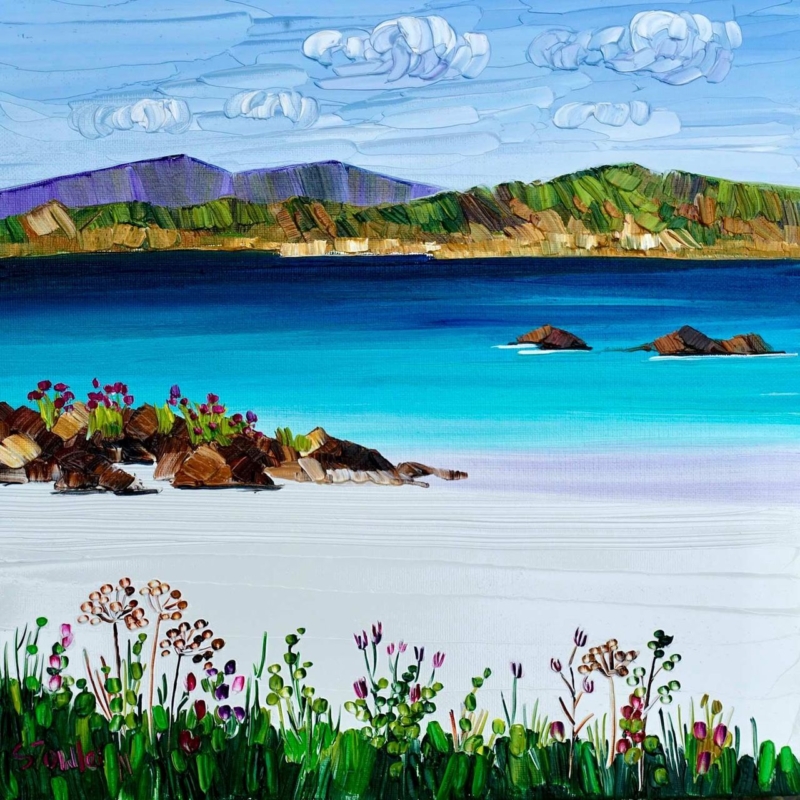
Art for willow green walls should deepen a natural palette rather than repeat one green tone from edge to edge. Sea Thrift and Grasses, Iona introduces coastal grasses, bright sea thrift and the clear light associated with Iona. Its square composition can lift a calm room while keeping the overall scheme connected to nature.
Choose art for willow green walls with tonal contrast
Use the flowers as a small accent, not a cue for several matching cushions.
Let pale timber, linen or off-white ceramics echo the coastal light.
Choose a wall where daylight reaches the image without creating direct glare.
Keep nearby foliage simple so painted grasses and real plants do not compete.
A natural wall colour feels richer when artwork adds a different landscape layer instead of merely matching the paint.
The 265 × 265 mm option can finish a compact corner above a chair or narrow cabinet. At 500 × 500 mm, the print becomes a clearer focal point for a bedroom, garden-facing sitting room or relaxed dining area. Test the square outline with paper first; enough space around it will stop the frame feeling boxed in.
Keep flower colour and coastal texture distinct
Sheila Fowler’s expressive colour and texture need separation between petals, grasses, shore and sky. Colour-managed Giclée production helps retain those differences. A hand-finished frame can add a clean pause between the green wall and the landscape, allowing the artwork to complement the room without disappearing into it.
As art for willow green walls, Sea Thrift and Grasses, Iona succeeds through contrast within harmony: fresh coastal light, concentrated flower colour and enough open landscape to keep the room breathing.
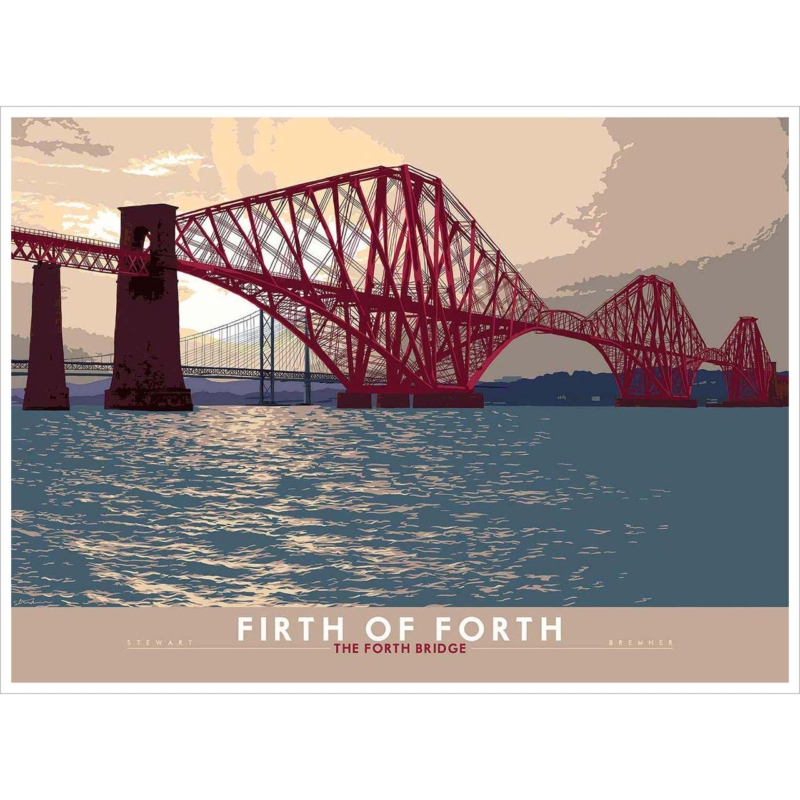
Travel poster prints work best when their graphic clarity is matched by a subject with genuine substance. Firth of Forth: The Forth Bridge combines Stewart Bremner’s bold, mid-century-influenced style with one of Scotland’s most recognisable engineering landmarks. The result can give an office, living room or open-plan space a strong horizontal anchor without slipping into souvenir décor.
Use travel poster prints to organise a broad wall
Design decision
Practical effect
Relate the print to a long desk or sideboard
The bridge span connects the furniture and wall instead of floating above it.
Leave clear space at both frame edges
The architecture keeps its sense of width and movement.
Repeat only one accent colour
The room feels connected without becoming a red-bridge theme.
The available 594 × 420 mm and 840 × 594 mm print sizes suit walls that need a confident landscape proportion. Mark the intended outer frame size before ordering, especially above a monitor or low cabinet. The larger option needs enough surrounding wall to preserve the clean silhouette.
Industrial materials can support the subject, but restraint matters. Dark metal, oak and charcoal upholstery are enough. Repeated bridge models or transport signs would weaken the authority of the artwork itself.
Preserve the clean geometry and Scottish colour
Graphic artwork exposes weak edges and uneven colour quickly. Colour-managed Giclée production keeps the bridge shapes, sky and smaller details distinct. Bespoke framing completed in-house can then give the long composition a precise boundary and the visual weight needed for a working or social room.
Among travel poster prints, Firth of Forth: The Forth Bridge offers more than a destination. It brings proportion, engineering rhythm and a rooted sense of Scotland to a wall that needs one disciplined focal point.
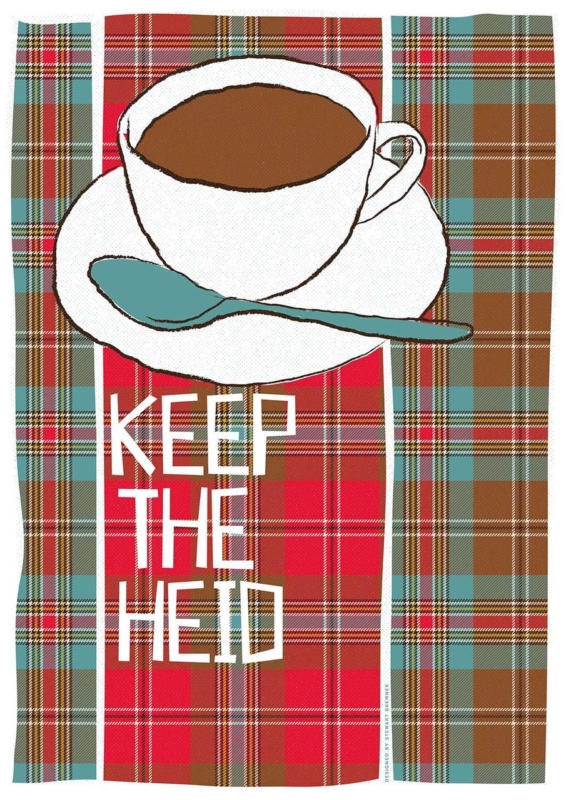
Scottish wall art for a staff break room can make a shared pause feel more welcoming without turning the space into an extension of the office noticeboard. Keep the Heid by Stewart Bremner combines a cup of tea, layered tartan, and a familiar Scots reminder to stay calm. It brings humour and local identity to the room, yet its clear graphic design still feels polished enough for a professional workplace.
What Scottish wall art for a staff break room should do
A break room has a different purpose from reception or a meeting space. It should let people step out of work mode for a few minutes. Artwork can support that change by replacing formal brand language with something warm, recognisable, and human. The aim is character, not another instruction.
Keep the Heid works because the message is conversational. The teacup makes sense in a place used for a quick drink, while the tartan pattern adds colour and Scottish context. The wording offers perspective with a light touch. It can raise a smile after a demanding morning without pretending that a poster can solve workplace pressure.
Keep practical notices away from the focal point
Shared kitchens often collect rotas, cleaning reminders, menus, and safety information. These materials are necessary, but they change regularly and create visual noise. Group them on one clearly defined board. Give the framed print its own wall section above a small table, beside the seating area, or where it can be seen on entering.
Area
Best use
Helpful principle
Noticeboard
Changing operational information
Keep it current and contained
Refreshment counter
Kettle, cups, and daily supplies
Leave the wall easy to clean
Seating wall
Permanent framed artwork
Create one calm visual anchor
Use the vertical format where floor space is limited
The portrait proportions make the print useful on a narrower wall between a door and a cupboard, or above a compact two-person table. Measure the clear wall rather than the full room. Leave enough margin for the tartan to read as a deliberate block of pattern rather than being squeezed between fittings.
Check the hanging height from a seated position as well as while standing at the counter. The words should be easy to read without the frame sitting directly above heads or chairs. In a busy shared space, secure fixings matter. The artwork should remain safely clear of opening cabinet doors, steam, and regular cleaning activity.
Let the tartan carry the colour
Red, turquoise, cream, and brown already give the design a strong palette. The surrounding room can stay simple. Neutral walls, plain seating, and one small turquoise or warm red detail are enough to connect the piece. Avoid adding several competing slogans or tartan accessories, which can make a workplace feel themed rather than genuinely local.
A restrained frame can sharpen the graphic layout. First 4 Frames produces colour-managed Giclée prints and completes professional framing in-house at its Falkirk workshop. The hand-finished presentation gives the playful subject a durable, display-worthy finish suited to daily use in a business setting.
Well-chosen Scottish wall art for a staff break room should make a shared space feel more personal without becoming distracting. View the framed Keep the Heid print for a clear, good-humoured focal point built around tea, tartan, and a useful Scots phrase.
colourful wall art for a quilting room should feel at home beside fabric, thread, and works in progress without making a creative space busier. Winter Trees by Rikki O’Neill offers that balance. Its lower half resembles a glowing patchwork of red, orange, green, and violet. Above it, white cottages and bare trees form a calm horizon. The contrast gives the room energy and a visual place to rest.
Why colourful wall art for a quilting room needs structure
A quilting room already contains colour. Folded fabric, sample blocks, rulers, and pinned plans all compete for attention. The strongest artwork does not try to outdo those materials. Instead, it gathers similar visual ideas into one composed image. That makes the room feel intentional even when a project is spread across the table.
In Winter Trees, the broad bands and irregular blocks suggest piecing without copying a traditional quilt pattern. Splashes and transparent-looking layers add movement. The quieter sky and simple buildings then keep the picture open. This mix of order and experiment suits a room where careful measurement and creative instinct work together.
Give the working wall and display wall different jobs
Keep cutting instructions, reference notes, and current fabric choices close to the main table. Place the framed artwork on a separate wall, perhaps above low storage or where it is visible from the sewing machine. Dividing practical information from permanent display reduces distraction and makes tidying between projects much easier.
Working zone: reserve pinboards and magnetic rails for changing project material.
Storage zone: group fabric by a system you can maintain, rather than by every shade in the picture.
Focal zone: leave clear wall around the artwork so its quieter upper half can breathe.
Echo one colour rather than the whole palette
The image contains enough colour to connect with many fabric collections. There is no need to match every tone. Pick one recurring shade, such as turquoise or burnt orange, for a chair cushion, storage label, or small tray. Let neutral shelving and the work surface hold the background. This keeps tools easy to find and allows changing textiles to remain the most flexible layer.
The square print format also helps. It can sit comfortably above a compact cabinet without stretching across valuable storage. Make a paper template using the finished frame dimensions, then view it from both the machine and the cutting table. The cottages should remain readable from a distance, while the layered foreground offers detail at closer range.
Choose a frame that settles the pattern
A simple frame will give the busy lower section a firm edge. Pale timber can relate to an oak table or shelving, while a slim dark moulding can pick up the tree silhouettes and roofline. Avoid selecting from a tiny colour sample alone. Compare the actual print with the room’s permanent finishes and the daylight used for detailed work.
First 4 Frames uses colour-managed Giclée printing and completes bespoke framing by hand at its Falkirk workshop. That in-house process supports the saturated blocks, pale sky, and crisp dark details while producing a polished piece that arrives ready to hang.
Good colourful wall art for a quilting room can celebrate colour while making the room feel more settled. View the framed Winter Trees print for a square focal point that connects patchwork rhythm, winter calm, and a practical creative space.
A 12 x 8 picture frame can look right but still leave your print cramped or poorly centred if you have not checked the measurements. A 12 x 8 print measures 12 inches by 8 inches, and a frame labelled 12 x 8 is generally designed to hold artwork of those dimensions.
Once you have measured the print, decide whether to show it edge to edge or add a mount. A mount’s opening is usually smaller than the artwork, allowing it to hold the print in place. This guide explains how to check dimensions, account for a mount and choose between a ready-to-hang frame and bespoke picture framing. At First4Frames Gallery, every frame is individually crafted for each order using high-quality materials, including 2mm float glass. Whether you are framing a photograph or choosing framed art, the right measurements and finish help give your picture the space and care it deserves.
Key Takeaways
For picture framing, 12 x 8 usually refers to the artwork’s dimensions in inches. Check the units before choosing a frame.
Measure the print, then account for any mount. Its opening and the finished frame dimensions can vary.
Compare standard frames with individually crafted options to find a suitable fit and finish for your artwork.
Explore framed wall art online and picture how your choice will look in your space before deciding.
Search results can use the same numbers for very different things, from picture frames to garden sheds. The units make all the difference. For picture framing, 12 x 8 usually describes artwork measuring 12 inches wide by 8 inches high. It does not mean the finished frame will measure 12 by 8 inches on the outside.
Print size is the artwork’s edge-to-edge measurement. Frame size usually refers to the artwork size the frame is designed to hold. Finished framed dimensions are the outside measurements of the completed frame. These can be larger and may also be affected by a mount.
This video offers a practical look at framing an 8 x 12 print:
How to Measure a 12 x 8 Print
Measure the artwork itself from edge to edge, not the outer edge of the paper, a border you plan to trim, or an existing frame. Record the width and height in the same units, and note which measurement is which. Consistent units make it easier to compare your print with frame details. If the print differs slightly from the expected size, use its actual measurements when choosing a frame.
Why Search Results May Show 12 x 8 Feet
A shed listing may use 12 x 8 to describe a footprint of 12 feet by 8 feet. That is a garden structure’s floor area, not a picture dimension. For a frame, the same numbers usually refer to inches. Check the product category and stated units before buying, particularly when search results show sheds and picture frames side by side. A quick unit check helps you choose a frame for your artwork rather than a garden plot.
How to Choose a Frame for 12 x 8 Artwork
Use these steps to match the frame to your print and the way you want it to look on the wall:
Measure: Check the artwork’s width and height, including any border you want to keep visible. Compare those measurements with the frame’s stated picture size.
Decide on a mount: A mount adds space around the image. Its opening may be smaller than the print so it can hold the edges in place. Check the stated opening and outer dimensions, as mount sizes vary.
Choose a frame: A standard frame can be convenient when its intended artwork size suits your print. Cheap, standard frames may not fit the artwork properly or offer the finish you want. A bespoke frame, individually crafted for your order, can be made with the artwork’s fit and your preferred presentation in mind.
Consider the display: Measure the wall space and consider nearby colours. Decide whether you want the artwork to stand out or sit comfortably within the room.
The print size describes the artwork, the mount opening determines how much of it is visible, and the external frame size is the overall measurement of the finished piece. A 12 x 8 print with a mount will not necessarily suit a frame whose external dimensions are 12 x 8.
Should You Add a Mount to a 12 x 8 Picture?
A mount can give artwork breathing room and create a considered transition between image and frame. Its opening affects both the visible area and how the print is held, so do not assume every mount is cut to the same size. If colour is part of your decision, read this guide to choosing a mount colour. For broader guidance on caring for paper, see the Library of Congress’s paper preservation advice.
When Bespoke Framing Makes Sense
Custom framing is useful when your artwork has unusual edges, needs a particular finish or calls for a specific presentation. First4Frames Gallery crafts each frame individually for the order, with the artwork’s fit and your display preferences in mind. Once you know what matters most, explore framed artwork for inspiration.
What Quality Details Matter in a 12 x 8 Framed Picture?
A ready-made frame is convenient when its dimensions and finish suit your print. However, standard off-the-shelf frames are made to set sizes, leaving less flexibility over fit and presentation. First4Frames frames are individually crafted for each order using high-quality materials. Instead of relying on a cheap, one-size-fits-all frame that may not suit the artwork, you can choose a finish designed around the piece.
Float Glass and Perspex: What Is the Difference?
First4Frames uses 2mm float glass for clear, traditional glazing with superior clarity to the Perspex used by many competitors. Glazing sits in front of the image, so its clarity can affect how colours and details appear. The frame’s tone and profile matter too: they can complement the artwork or create a more defined border. Together, the glazing and frame shape the presentation without changing the artwork itself.
Choosing Artwork That Suits Your Space
Choose an image that feels at home in the room, then consider how its colours and subject will work with your décor. Framed wall art includes many styles and subjects, from Coastal wall art and Landscape wall art to Scottish landscape art, Photography prints, Fine art and Contemporary art prints. You can also explore works by Best-selling artists and Famous artists.
For a tailored presentation, explore the framing options and consider how the frame can support the artwork’s character. Browse framed wall art to find a piece that feels right for your space.
How to Choose and Order 12 x 8 Framed Wall Art Online
Online picture framing brings artwork and framing choices together in one place. Start by browsing framed wall art, then select a piece or framing option that suits your space. For a 12 x 8 print, keep the artwork’s measurements in mind as you choose a frame. Decide too whether you want a mount to add space around the image.
From Online Picture Framing to Ready-to-Hang Art
Explore the gallery’s artwork and frame options, then choose a style that complements the image and your room. A wall art visualiser can help you visualise art on your wall and see artwork before you buy. Choose your frame online and design your framed artwork around the look you want, whether you are selecting custom framed art prints or bespoke framed wall art. Ready-to-hang framed art gives you a simple way to go from choosing a piece to displaying it. For inspiration, browse framed artwork and discover the available choices.
Printing and Framing a Digital Photograph
Have a digital photograph you would like to display? First4Frames’ print and frame service brings the image and frame together as one considered piece. Your photograph is printed to the highest quality to complement the bespoke framing. Explore online photo printing and framing to turn your photograph into wall art.
Each frame is individually crafted for its order, then fully packaged to help prevent damage in transit and shipped via professional couriers. This careful process makes online ordering a straightforward way to bring a framed image from selection to your home.
Find the Right Frame for Your Artwork
Choosing a 12 x 8 frame starts with measuring the print and checking whether the stated frame size refers to the artwork or the finished piece. If you add a mount, its opening affects how much of the image shows and the space around it. Consider the look you want as well as the fit.
For a finish made with care, First4Frames frames are individually crafted for each order using high-quality materials. The 2mm float glass glazing gives a clear view of the artwork. Finished frames are fully packaged to help prevent damage and shipped via professional couriers, so your chosen piece can make its journey from gallery to home.
Is 12 x 8 the right frame size for a 12 x 8 inch print?
Usually, yes. A frame labelled 12 x 8 is generally intended to hold artwork measuring 12 inches by 8 inches. Check whether the listing gives the size of the print it fits or the frame’s external dimensions. If you plan to add a mount, make sure the frame can accommodate the artwork and mount together. The mount changes the visible opening and the overall fit.
What does 12 x 8 mean when buying a picture frame?
For picture framing, 12 x 8 usually means the artwork measures 12 inches wide by 8 inches high. The same numbers can describe other products in different units, so check the product category and measurement units. For example, a shed listed as 12 x 8 may be measured in feet. Frame listings generally use the artwork dimensions, not the outside measurement of the finished frame.
Can I put a 12 x 8 print in a larger frame?
Yes. A larger frame can display a smaller print with a mount, creating space around the artwork and a different presentation. Check that the frame’s internal dimensions can accommodate the print and mount, and remember that mount openings vary. If you want a specific border or fit, custom framing can be tailored to the print and the look you have in mind.
How do I choose a frame for a 12 x 8 photograph?
Measure the photograph edge to edge, then choose a frame designed for those dimensions or a larger one with a suitable mount. Consider whether you want the image displayed edge to edge or surrounded by a border, and how the frame’s finish will work with the photograph and room. First4Frames Gallery crafts each frame for the order using high-quality materials.
Is glass or Perspex better for a 12 x 8 picture frame?
It depends on your priorities, but First4Frames Gallery uses 2mm float glass for clear, traditional glazing. Its clarity is superior to Perspex, which is used by many competitors. Glazing affects how the artwork appears behind the frame, so consider the visual finish you prefer and the setting where the picture will be displayed. The glazing is part of creating a frame that suits the artwork.
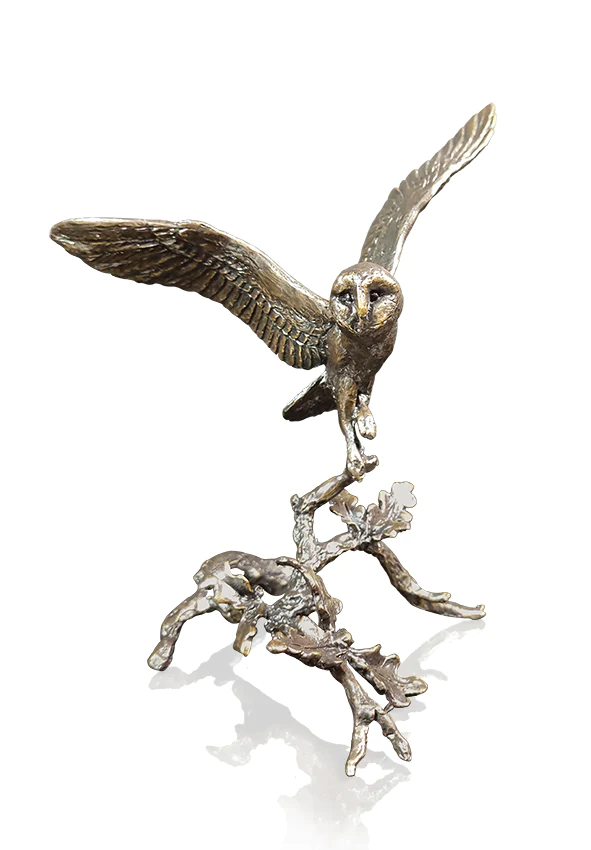
Art gifts are most successful when the recipient’s interests and the maker’s craft matter equally. Barn Owl with Acorns is a solid foundry bronze wildlife sculpture created through lost-wax casting. Its barn owl, branch and acorn detail offer meaning beyond novelty, while the limited-edition format gives the object clear provenance.
Assess art gifts by material, scale and provenance
Check the material. This is solid foundry bronze rather than a resin object with a metallic coating.
Confirm the process. Lost-wax casting and hand-applied patination create variation and depth in the surface.
Measure the display point. At approximately 13.5cm high, 11.5cm wide and 6cm deep, the sculpture needs a stable shelf with breathing room.
Keep the paperwork. The signed certificate and matching limited-edition number are part of the work’s provenance.
Where should a small bronze owl be displayed?
Choose a steady shelf, glazed cabinet or side table away from a vulnerable edge. A plain background helps the spread wings, branch and acorns read clearly. Avoid packing it among many small ornaments.
The subject can suit a birdwatcher, countryside enthusiast, milestone birthday or retirement. Those occasions are stronger reasons to choose it than a generic owl motif. The recipient gains an object connected to a genuine interest, with material weight and a documented edition.
Let bronze craftsmanship carry the sentiment
Patination uses acids and heat to create the rich brown surface, after which protective wax enhances the colour and helps preserve the bronze. The engraved sculptor’s signature and edition number match the enclosed certificate. Those details make the gift feel considered before any card or presentation is added.
Among art gifts, Barn Owl with Acorns stands out through the combination of wildlife meaning, compact display scale and traditional bronze craftsmanship rather than through disposable sentiment or novelty wording.