
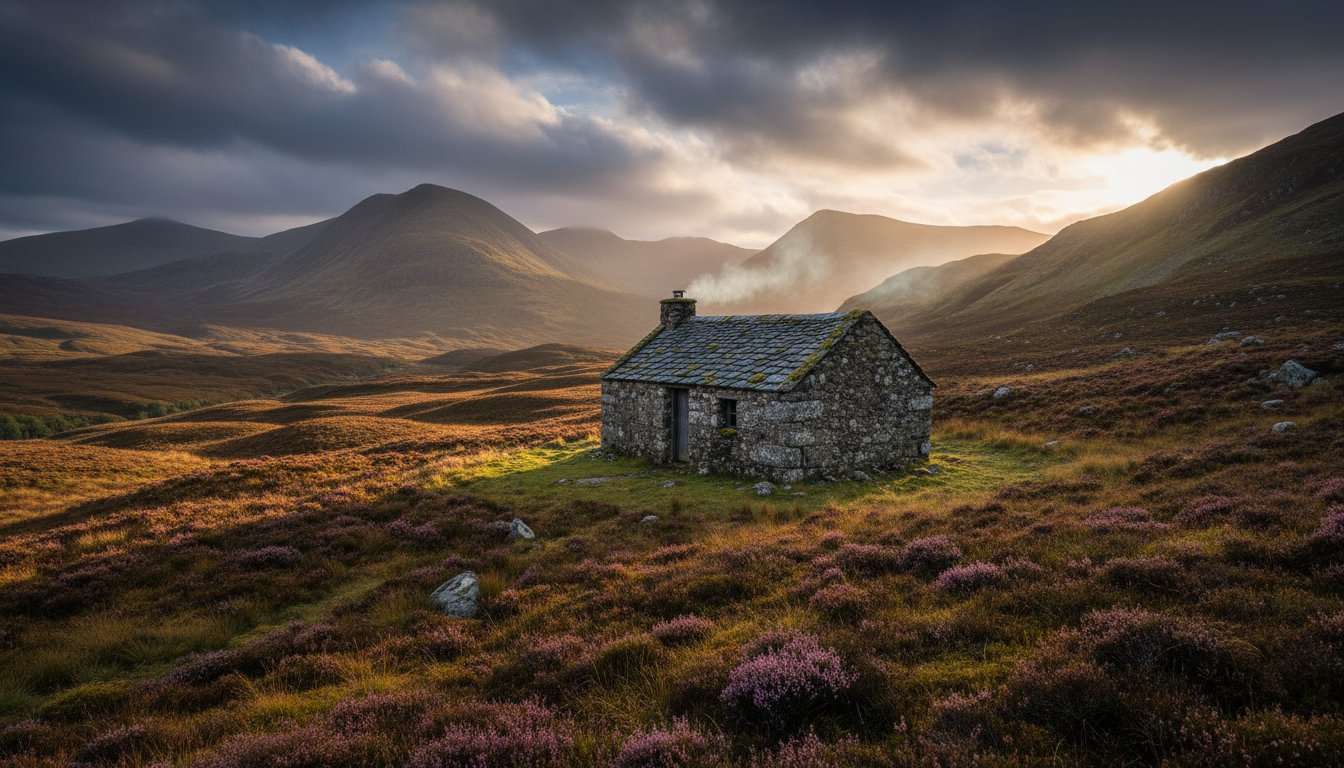
Picture this: you’re deep in the spectacular Scottish Highlands, miles from the nearest road, and you spot a simple stone structure on the horizon. It’s a welcome sight, a promise of shelter, but what exactly is it? For many, the word ‘bothy’ conjures a romantic yet vague image of a remote mountain hut, a testament to rugged craftsmanship set against a wild backdrop. You might wonder about their purpose, their history, and the unwritten rules that govern these unique havens for walkers and climbers.
This guide is your key to unlocking their secrets. Embark on a journey with us as we explore the very soul of the Scottish bothy, from its humble origins to its vital role in modern hillwalking culture. We will provide a clear, practical look at the essential etiquette for staying in one, ensuring you can use these incredible shelters with respect and confidence. Prepare to discover the history, the charm, and the profound sense of freedom that these simple walls represent.
Key Takeaways
- Discover the core purpose of a bothy: a simple, unlocked shelter offering crucial refuge to adventurers in Scotland’s wild landscapes.
- Grasp the essential ‘Bothy Code’-the unwritten rules of respect and community that are vital for sharing these unique spaces.
- Prepare for your first bothy adventure by understanding exactly what to pack; complete self-sufficiency is the golden rule.
- Explore why these humble structures have become powerful symbols of resilience and solitude, inspiring countless artists and photographers.
What is a Bothy? More Than Just a Stone Hut
Imagine you’re deep in the Scottish Highlands, miles from the nearest road, as the weather turns. Through the mist, you spot a simple stone structure-a welcoming silhouette against the wild landscape. This is a bothy: a basic, unlocked shelter, left open and available for anyone to use as a refuge from the elements. It’s a place of incredible simplicity and warmth, offering protection for walkers, climbers, and mountaineers exploring the UK’s most remote and beautiful corners.
To get a clear picture of what these unique shelters represent and the etiquette involved, this video provides an excellent introduction:
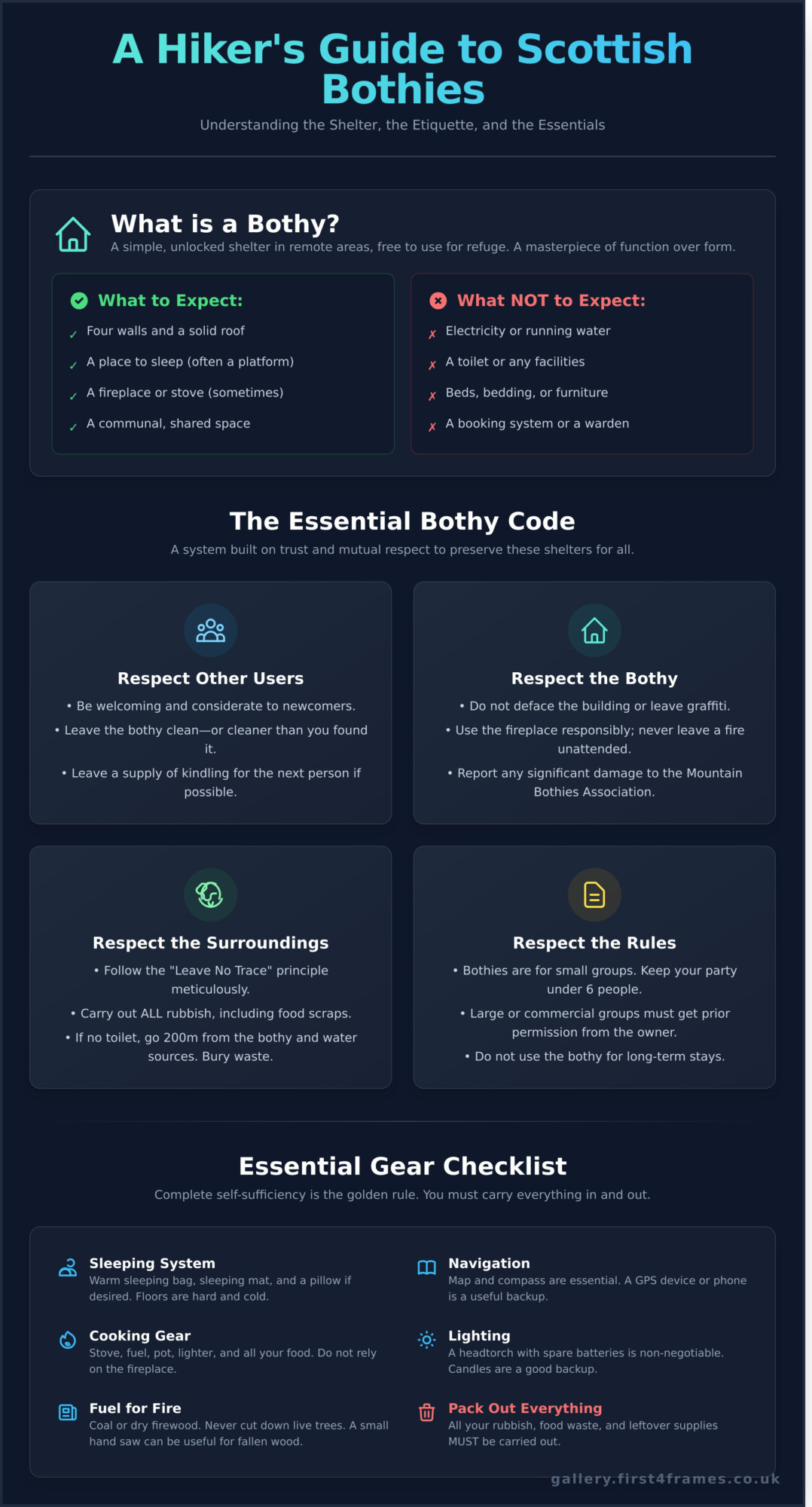
It’s crucial to understand what a bothy is not. It isn’t a holiday cottage with charming decor, a hostel with a warden, or a campsite with facilities. Think of it as a significant step up from wild camping, providing four solid walls and a roof over your head, but requiring the same self-sufficiency. You must carry in all your own supplies-food, fuel, sleeping bag, and stove-and carry out all your rubbish.
Defining the Modern Mountain Bothy
The modern mountain bothy is a masterpiece of function over form. Typically a stone building with a solid roof, its interior is sparse, often containing little more than a wooden or stone sleeping platform and perhaps a fireplace. There is no electricity, no running water, and no toilet. While Wikipedia provides a detailed history answering What is a Bothy?, the key takeaway for today’s adventurer is its role as a primitive shelter. Maintained by volunteers from organisations like the Mountain Bothies Association (MBA), they are free for anyone who needs them.
Key Characteristics: Simplicity and Shelter
The experience is often described as “camping without a tent.” The primary purpose of a bothy is not to be a destination in itself, but a safe haven to rest and recover from the harshness of the mountain environment. This spirit of practicality fosters a unique communal atmosphere. You may find yourself sharing the space with fellow adventurers, swapping stories by candlelight, and enjoying a shared sense of place. It’s a system built on trust, respect, and a love for the great outdoors.
The Soul of a Bothy: History, Community, and the Unwritten Code
A bothy is far more than just four walls and a roof; it’s a living piece of mountain heritage, imbued with the spirit of generations. Understanding its soul begins with its history and the dedicated community that breathes life into these simple stone shelters. This shared stewardship is what makes the bothy experience so unique and precious.
From Farm Labourers to Hillwalkers
Originally, these structures were humble dwellings for shepherds, gamekeepers, and other workers on large, remote estates. As land use changed, many fell into disrepair. However, their value was rediscovered by a new generation of hillwalkers and mountaineers seeking refuge from the elements. This history is etched into their very fabric, contributing to their rustic character and undeniable charm.
The survival of these invaluable shelters is largely thanks to the tireless work of volunteers. The Mountain Bothies Association (MBA), a charity established in 1965, negotiates with estate owners and organises work parties to maintain the buildings. From repairing leaky roofs to clearing pathways, this volunteer effort ensures that the bothies remain open and free for all to use, a testament to a powerful community spirit.
The Essential Bothy Code of Conduct
To ensure these shelters survive for future generations, all users must follow a simple, yet vital, code of conduct. This is a system built entirely on trust and mutual respect.
- Respect Other Users: Always be welcoming and considerate to those who arrive after you. Leave the bothy clean and tidy-if possible, in a better state than you found it. Leave a supply of kindling for the next visitor.
- Respect the Bothy: Do not deface the building with graffiti. Report any significant damage you find to the MBA. Use the stove or fireplace responsibly and never leave a fire unattended.
- Respect the Surroundings: Follow the “leave no trace” principle. Carry out all your rubbish, including food scraps. If there is no toilet, make sure to walk at least 200 metres from the bothy and any water source before relieving yourself, and bury all waste.
- Respect the Rules: Bothies are intended for small groups. Large groups (6 or more) and commercial groups should not use a bothy without seeking permission from the owner.
A Night in a Bothy: What to Expect and How to Prepare
Embarking on your first bothy adventure is a spectacular way to connect with the UK’s wildest landscapes. However, it’s crucial to set the right expectations. These simple stone shelters are not holiday cottages; they offer a primitive, yet welcome, refuge from the elements. Think of it less as a free hostel and more as a ‘camping with walls’ experience. You are entirely self-sufficient from the moment you leave your car, carrying everything you need to stay safe, warm, and fed. The reward is a profound sense of peace and a night under a sky full of stars, far from the everyday hustle.
This escape into nature offers a chance to reset both mentally and physically. Many people find that incorporating natural elements into their daily wellness routine helps maintain that sense of balance. If you’re interested in how botanicals and functional mushrooms can support this, you can learn more.
Your Essential Bothy Packing List
Success lies in meticulous preparation. Your comfort and safety depend on what’s in your pack, so choose your gear with care. Here is a checklist of non-negotiable items for any bothy trip:
- Sleeping Gear: A warm, four-season sleeping bag and a high-quality insulated sleeping mat are essential. Stone floors are unforgivingly cold, even in summer.
- Cooking Equipment: A reliable stove, fuel, a pot, and utensils. Pack high-energy, easy-to-cook food. Crucially, carry all the water you need or have a dependable method for purifying it from a local source.
- Lighting and Fuel: A headtorch with spare batteries is your most important tool after dark. Candles can create a welcoming atmosphere. If the bothy has a fireplace, consider carrying sustainable fuel like coal or eco-logs, as firewood is rarely available.
- Navigation Tools: A physical map and compass are vital. While a GPS device is useful, you should never rely on it alone as batteries can fail in the cold.
Safety and Etiquette in the Wild
Respect for the environment and fellow adventurers is the cornerstone of the bothy code. Following these simple rules ensures these unique shelters remain available for all to enjoy for years to come.
- Inform Someone: Always leave a detailed plan of your route and your expected return time with a reliable person.
- Prepare for All Weather: The mountain environment is unpredictable. Pack waterproofs, warm layers, a hat, and gloves, no matter the forecast.
- Share the Space: If other walkers arrive, be welcoming. Bothies operate on a first-come, first-served basis, but the spirit is one of community and sharing.
- Leave No Trace: This is the golden rule. Pack out every single piece of your rubbish. To truly leave the place better than you found it, consider carrying out any litter left by less considerate visitors.
Bothies in Art: Capturing the Spirit of the Scottish Wilderness
A lone stone structure set against a sweeping glen, a warm light glowing in the window-the humble Scottish bothy is a profoundly powerful subject for artists and photographers. More than just a building, it provides a narrative and a crucial sense of scale, anchoring the viewer in an otherwise vast and untamed landscape. It represents humanity’s quiet, resilient foothold in the wild, allowing artists to explore timeless themes of solitude, endurance, and our intrinsic connection to nature.
The Bothy as a Symbol of Solitude and Shelter
In paintings and photographs, a bothy often stands as a potent symbol of refuge and peace. Artists masterfully use the stark contrast between the rugged, imposing mountains and the simple, sturdy shelter to evoke deep emotion. This juxtaposition creates a romantic and deeply evocative scene, reminding us of the profound comfort found in simplicity and the quiet strength needed to exist in such a place. It’s a testament to endurance-a quiet beacon of warmth against the dramatic, beautiful indifference of the Highlands.
Featured Artists Who Paint the Highlands
The unique atmosphere of the Scottish wilderness has inspired generations of artists, and our gallery is proud to feature creators who capture its spirit. Their work, rich with dramatic light and sweeping vistas, often features the isolated cottages and stone shelters that define these remote landscapes. Using bold brushstrokes or delicate watercolours, they convey the feeling of being truly immersed in ‘bothy country’-exploring the textures of ancient stone, the ever-changing moods of the sky, and the deep, soul-stirring tranquillity of the glens.
Bringing the Bothy Scene into Your Home
For lovers of Scotland and the great outdoors, a beautiful piece of art is more than just decoration; it’s a permanent window to a cherished place. A professionally framed, premium-quality print of a Highland scene can transport you back to the mountains, evoking the crisp air and the quiet stillness of a remote glen. It is a perfect way to keep your connection to the wild alive, offering a daily moment of escape and reflection from the comfort of your own home. Find your own piece of the Scottish wilderness in our gallery.
Bring the Bothy Spirit Home
As we’ve discovered, a bothy is far more than a simple stone shelter against the wind and rain. It is a powerful symbol of a culture built on trust, community, and a profound respect for the wild Scottish landscape. These humble buildings offer not just physical refuge, but a deep connection to the history and untamed soul of the mountains-a spirit of solitude and resilience that has long captivated artists and adventurers alike.
While the raw experience of a night by the fire is truly unique, you can capture that same rugged beauty and bring a piece of the wilderness into your own home. Our curated collection of Scottish landscape prints features spectacular works by leading artists who perfectly capture this untamed spirit. Each fine art print is finished with bespoke, high-quality framing, handcrafted with pride right here in Falkirk-the perfect way to keep the dramatic beauty of Scotland with you.
Embark on your own artistic journey today. Explore our collection of Scottish landscape prints and find a piece that speaks to your adventurous soul.
Frequently Asked Questions About Bothies
Are bothies in Scotland completely free to use?
Yes, staying in a bothy is entirely free of charge. These beautiful, rustic shelters are maintained by the Mountain Bothies Association (MBA), a charity powered by volunteers. While there’s no fee for your stay, the MBA relies on donations to continue its essential work. If you enjoy your experience, consider making a contribution or becoming a member to help preserve these unique havens for future adventurers. It’s a wonderful way to support the spirit of the mountains.
Can you book a bothy in advance to guarantee a space?
No, you cannot book a bothy in advance. They operate on a first-come, first-served basis, which is a core part of their charm and ethos. You simply turn up and hope there is space. For this reason, it’s always wise to carry a tent or a bivvy bag as a backup, especially during peak seasons or when visiting a popular location. Sharing the space with fellow walkers is all part of the authentic bothy experience.
Are dogs allowed inside mountain bothies?
This can vary from one shelter to another. While many bothies welcome well-behaved dogs, some have specific restrictions, particularly during lambing season or on estates where dogs are not permitted. The most reliable approach is to check the individual bothy page on the Mountain Bothies Association (MBA) website before you go. Always ensure your dog is under control and be considerate of other guests who may be sharing the space with you.
Do bothies have toilets and running water?
You should expect no modern facilities. Bothies are very basic shelters and do not have toilets or running water. It’s essential to be self-sufficient. For water, you will need to collect it from a nearby stream or loch and be prepared to treat or boil it before drinking. For toilet needs, walk at least 30 metres away from any water source, dig a hole with a trowel, and bury all waste properly.
How do I find the locations of bothies in Scotland?
The definitive and most reliable resource is the Mountain Bothies Association (MBA) website. Once you become a member, you gain access to the grid references and detailed information for all the bothies they maintain. This ensures you have the most up-to-date information on a shelter’s condition or any temporary closures. While some locations are well-known, joining the MBA is the best way to support their work and plan your adventures responsibly.
Is it safe to stay in a bothy alone?
Staying in a bothy alone can be a wonderfully peaceful experience, but your safety is your own responsibility. These shelters are in remote, wild locations, so you must be a confident and experienced hillwalker, fully equipped to handle emergencies. Always leave a detailed route plan with someone, check the weather forecast, and carry a reliable navigation tool and an emergency communication device. While the bothy community is generally very welcoming, being prepared for self-sufficiency is paramount.