
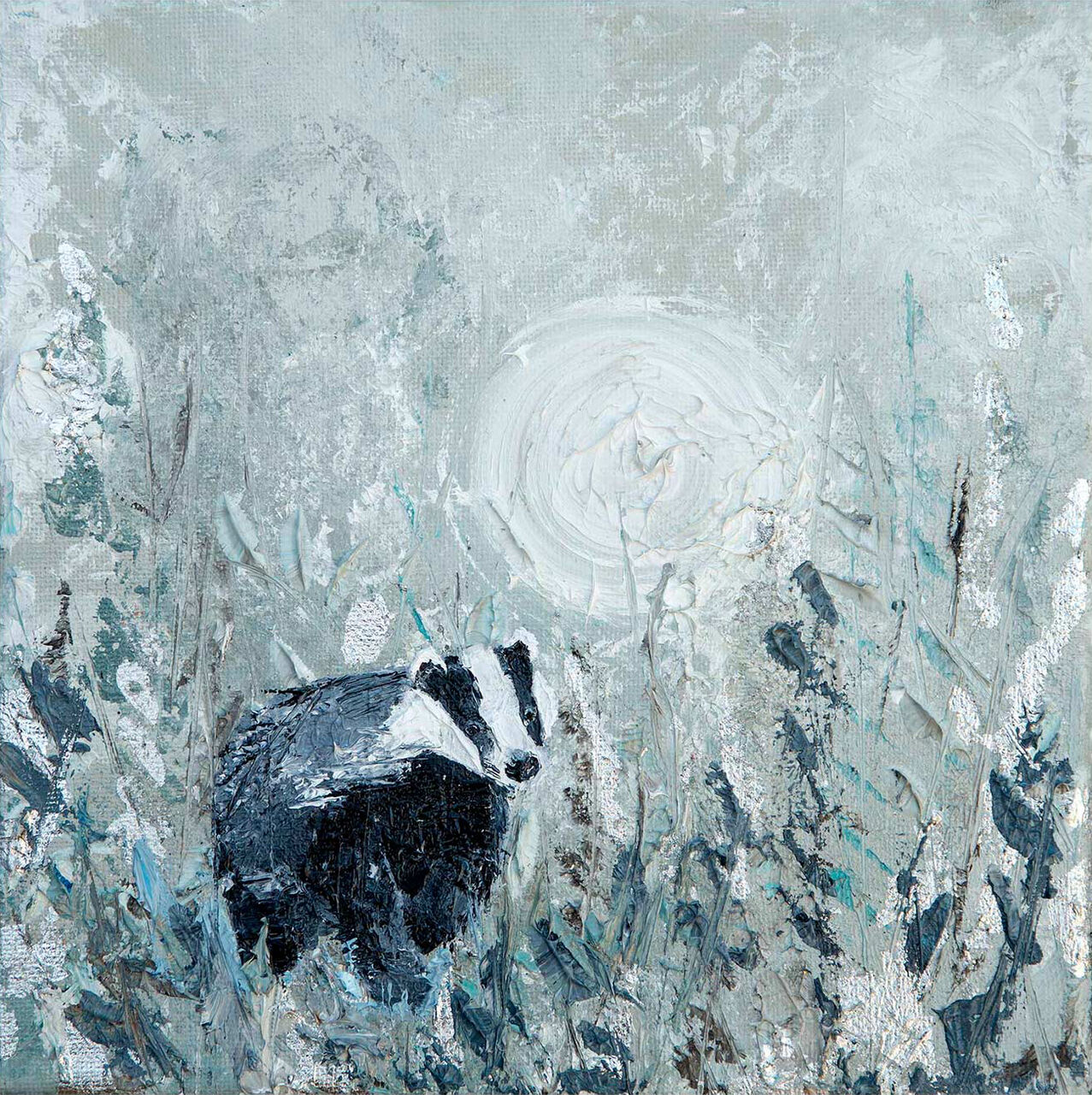
wildlife reception wall art for a rehabilitation centre should feel connected to the organisation’s purpose without making the entrance look like an information panel. Midnight Stroll by Charlotte Strawbridge offers a quieter approach. Its impressionistic badger, textured grasses, pale moon, and cool blue-grey colour create a calm point of attention for visitors who may arrive worried, tired, or uncertain.
Give visitors a calm subject before more information
Reception areas often have to carry forms, guidance, donation messages, safety notices, and directional signs. Every item may be necessary, but together they can make the first view feel demanding. A single piece of art offers a pause. It lets someone settle their attention before speaking to staff or reading the practical information.
The badger in Midnight Stroll is present without being dramatic. It moves through long grass beneath a soft moon, so the picture suggests natural behaviour rather than a posed emblem. That restraint can suit a wildlife rehabilitation setting. It acknowledges the animals at the heart of the work while respecting the fact that rescue and recovery are serious, patient processes.
What wildlife reception wall art for a rehabilitation centre should avoid
Visual overload
A crowded gallery can compete with notices, staff movement, and the reception desk. One clear image may be more reassuring.
Childish theming
Cartoon animals can make professional conservation work feel simplified. Painterly wildlife remains welcoming to adults and children.
Distressing imagery
Clinical or rescue photographs have an educational role, but they are not always the right first view for anxious visitors.
The artwork does not need to explain every aspect of the organisation. Interpretation boards, leaflets, and conversations can provide detail elsewhere. Reception art can instead establish care, local relevance, and a composed atmosphere.
Plan the sightline from the door
Stand at the entrance and identify the first uninterrupted wall. The picture should be visible without obscuring the reception sign or confusing the route to the desk. A position behind a seating area can work well because it gives waiting visitors something detailed to study. A wall opposite the desk may create a calmer backdrop during conversations.
- Keep the frame clear of doors, cages, carriers, and equipment routes.
- Avoid direct sun, strong spotlights, and glazing reflections that hide the nocturnal detail.
- Leave clear space around the frame instead of surrounding it with small notices.
- Check the hanging height from both standing and seated eye levels.
- Use secure fixings suited to a public or frequently used area.
Use the moonlit palette to soften practical finishes
Rehabilitation centres need durable floors, wipeable surfaces, and good task lighting. Those choices can feel hard when they dominate a reception. The misty blue-grey, white, and natural grass tones in this print add softness without requiring fragile textiles or numerous decorative objects.
Warm off-white walls can prevent the cool palette from feeling stark. Natural timber on a desk or frame can bring a grounded note. If seating must be practical and dark, the pale moon and grasses provide useful contrast. There is no need to add badger ornaments or repeat woodland motifs elsewhere.
Choose a frame that supports calm and care
A slim charcoal moulding can define the moonlit image and relate to functional dark finishes. A pale timber can make the result gentler and connect with natural materials. In either case, keep the profile simple. The textured grasses and soft animal form already provide enough visual detail.
First 4 Frames produces colour-managed Giclée prints and completes bespoke, hand-finished framing in-house at its Falkirk workshop. Careful reproduction helps the pale badger remain distinct from the surrounding grasses, while considered framing gives the piece the durability and polish expected in a visitor-facing space.
Nature and movement by Charlotte Strawbridge
Charlotte Strawbridge is an Edinburgh-based contemporary artist and writer inspired by the flora and fauna of the British countryside, European landscapes, spirit-like animals, and movement in nature. Visit Charlotte Strawbridge’s official art website for more context, then browse the broader Charlotte Strawbridge collection at First 4 Frames.
For wildlife reception wall art for a rehabilitation centre that reflects native wildlife while maintaining a calm and professional entrance, view the framed Midnight Stroll print. Its quiet nocturnal scene can make a practical reception feel more humane, focused, and connected to the care taking place beyond it.