
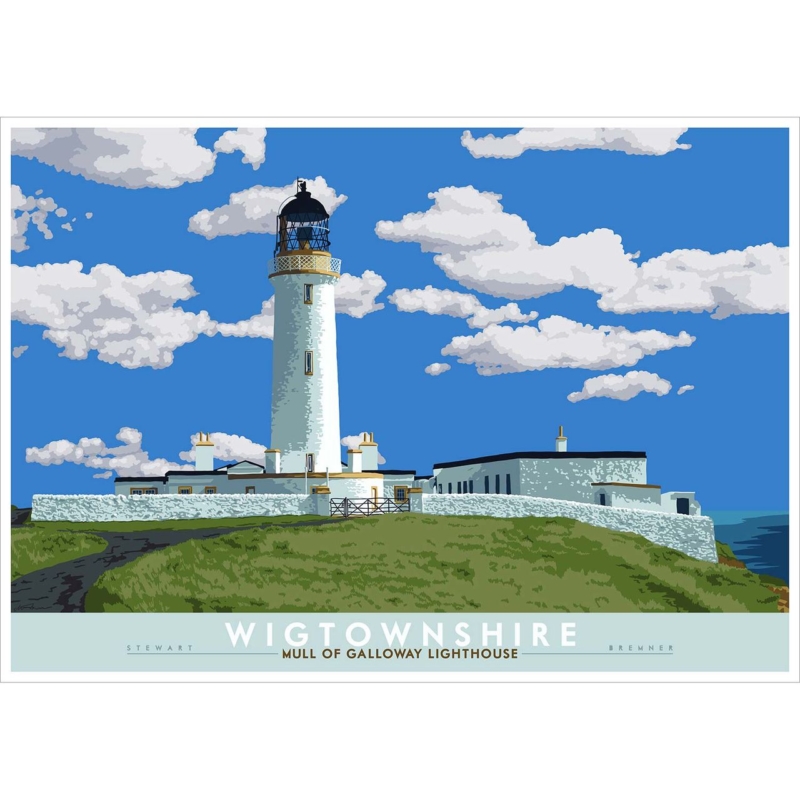
Scottish coastal art can lend an outward destination to an internal study or snug that has little connection to the horizon. Wigtownshire: Mull of Galloway Lighthouse gives the decision a real subject, proportion and finish to test.
Use Scottish coastal art to create direction, not false daylight
Mull of Galloway Lighthouse marks a specific exposed headland. The structure and horizon offer direction, which is useful where architecture provides no view. Treat the work as a destination rather than a substitute window.
| Room issue | Response |
|---|---|
| No focal point | Use the wall first seen from the entrance. |
| Flat overhead light | Add a shaded lamp and controlled picture light. |
| Limited floor area | Compare the complete 594 × 420 and 840 × 594 mm framed outlines. |
| Literal coastal theme | Remove rope and shells; let the named place carry the story. |
Should the frame repeat lighthouse colours?
Not automatically. The frame should separate image from wall and suit the room’s materials. A direct colour match can feel like signage.
Assess both sizes while seated. A paper template reveals whether the larger option feels immersive or simply too close.
Give Scottish coastal art a stable edge
A lighthouse landscape relies on the relationship between structure, coast and distance. Colour-managed Giclée production preserves those distinctions. Hand-finished bespoke framing creates a dependable boundary where artificial light and close viewing matter.
For wildlife, access and the character of this headland, visit RSPB information about the Mull of Galloway reserve. Browse the Stewart Bremner collection, then view the exact product and framing choices.
Scottish coastal art cannot manufacture daylight, but it can provide an authentic outward reference. Mull of Galloway supplies the destination; thoughtful light lets it breathe.