
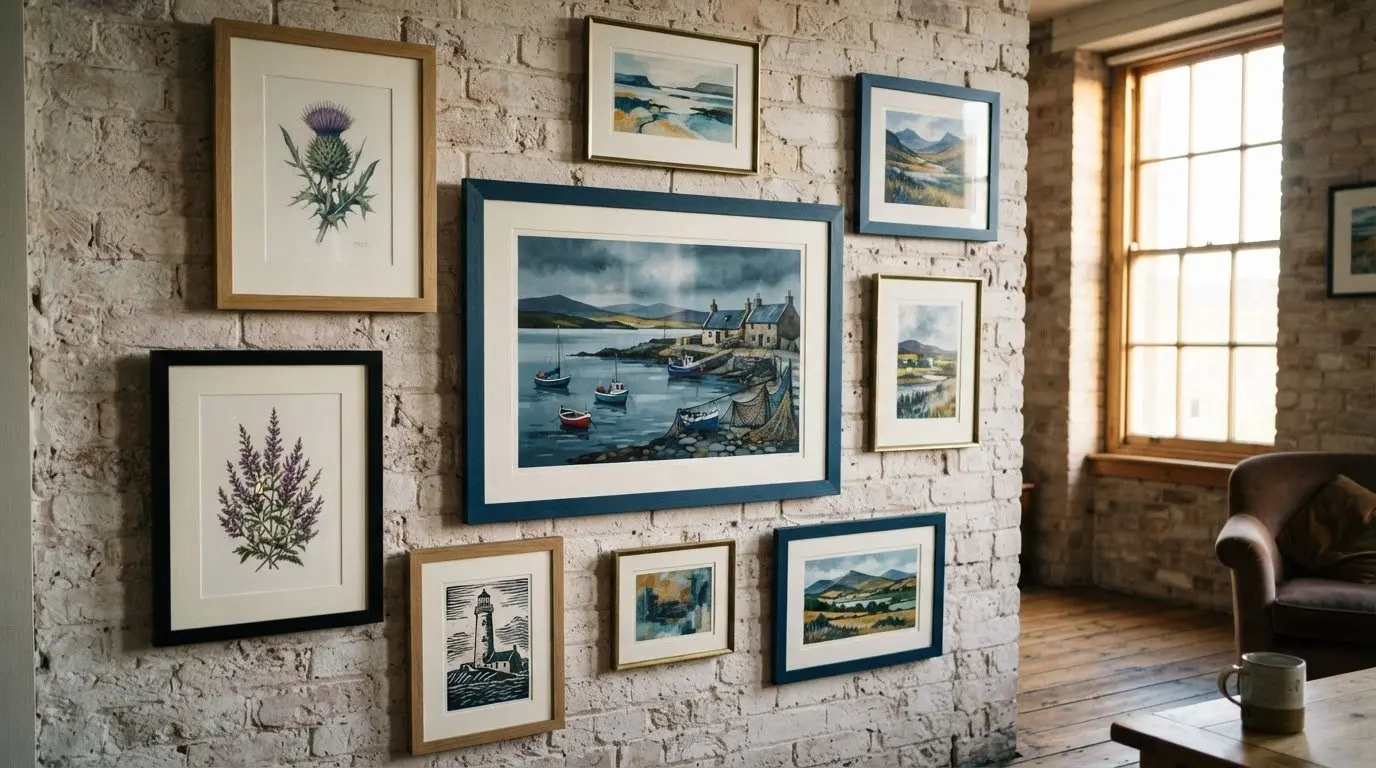
A polished gallery wall doesn’t need matching frames. Mixing different frame styles in one room adds warmth, character and contrast when a repeated colour, material or shape ties the collection together. Matching frames create a uniform look; a thoughtful mix feels personal and layered.
Choosing one frame style can feel safer: different shapes, sizes and finishes may look busy without a unifying thread. But every frame needn’t be identical for the display to feel harmonious. A clear palette and balanced arrangement bring an eclectic collection together.
These four tips explain when picture frames should match and how to combine styles, sizes and finishes with confidence. Learn how to create cohesion, balance bold and understated frames, and plan a gallery wall that feels collected rather than chaotic.
Key Takeaways
- Frames don’t have to match: repeat a colour, material or shape to give varied styles a sense of harmony.
- Plan the gallery wall around a central piece, then arrange the rest to create a balanced flow.
- Mix sizes and finishes thoughtfully, spreading visual weight across the display rather than clustering heavier frames together.
- Use contrasting frames to add character and let each artwork contribute to a more personal, layered room.
1. Should All Picture Frames Match in a Room or is Mixing Styles the Secret to Visual Harmony?
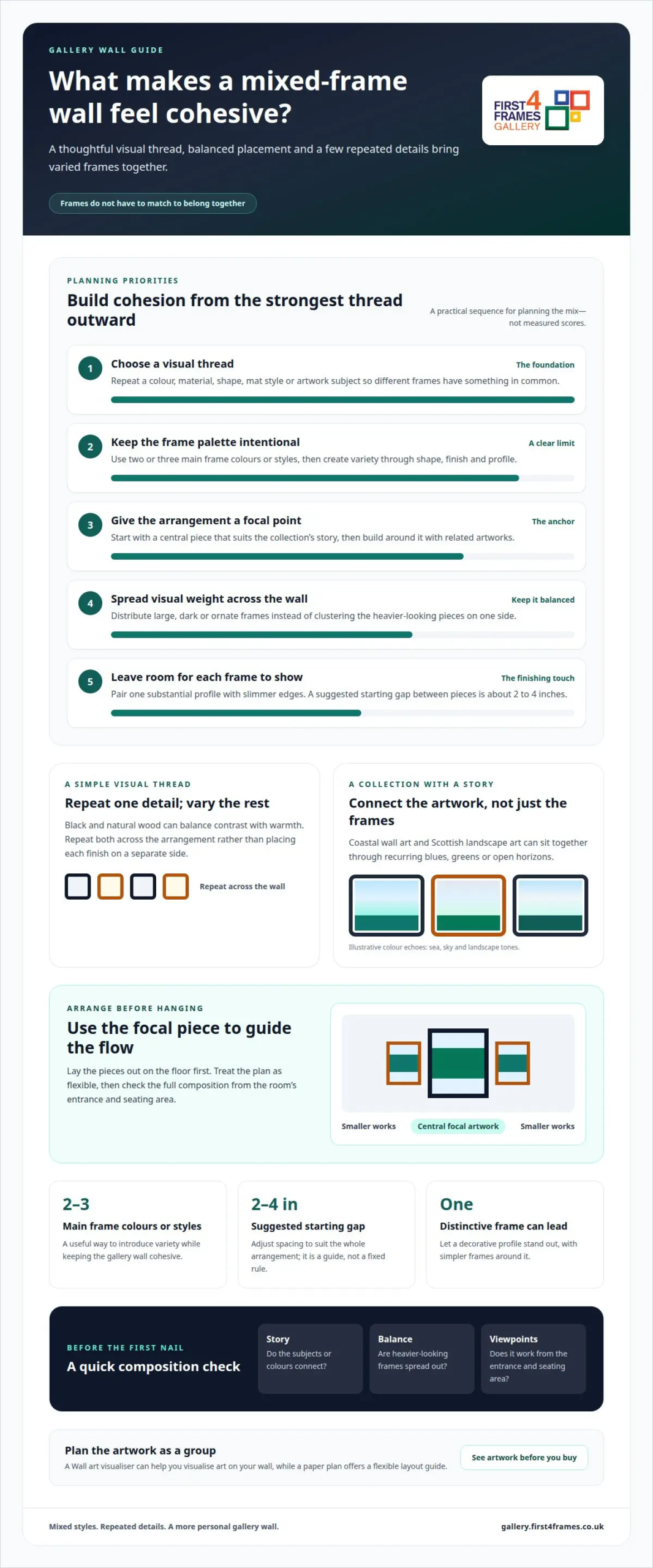
Picture frames don’t all need to match. Mixing different frame styles in one room works when a shared colour, material or shape connects the pieces. For example, pair an ornate vintage frame with a slim modern frame, then repeat their black finish elsewhere on the wall.
There’s no fixed number of frame styles for a gallery wall. Start with two or three, such as traditional wood, simple black and delicate metal, then add variety through shape or finish. This creates contrast without making every frame compete for attention.
Choose a visual thread before arranging the frames. Repeat a finish, use similar mats, or connect the artwork through a shared subject or palette. A group of coastal prints, for instance, can bring different frame designs together through recurring sea and sky colours.
Balance visual weight by spreading large, dark or ornate frames across the wall. Avoid clustering heavy-looking pieces on one side and leaving smaller, lighter frames on the other. Make a particularly decorative frame the focal point, surrounded by simpler profiles.
Frame thickness matters, too. A wide, carved frame can dominate a small print, while several thick profiles may make a display feel crowded. Pair one substantial frame with slimmer edges, and leave enough space between pieces for each profile to stand out. A common mistake is varying colour, material, thickness and shape all at once without repeating any detail.
For affordable mixed-style frames in the UK, look for ready-made options in complementary finishes and build the arrangement gradually. Use existing frames first, then add pieces that suit the artwork and wall space.
To hang mixed-size frames safely, choose fixings suited to both the wall material and each frame’s weight. Masonry and plasterboard need fixings designed for their surfaces. Position each fixing according to its instructions and use the frame’s hanging hardware as intended.
2. Creating an eclectic gallery wall
Start with a story for the collection, such as coastlines, changing seasons or places you love. Coastal wall art and Scottish landscape art can sit together through recurring blues, greens or open horizons. A shared subject gives different pieces a reason to belong, even when their styles vary.
Use a Wall art visualiser to Visualise art on your wall, or make a quick paper plan that follows the wall’s shape. Treat it as a flexible guide, not a strict template: shift the pieces until the overall composition suits the space. This also helps you see how new artwork might fit before choosing it.
Choose a focal point that reflects the collection’s story. A broad landscape print might lead a display of smaller coastal scenes, while a favourite photograph could anchor a mix of subjects. Design your framed artwork as a group, considering how each piece’s colour and subject relate to its neighbours.
Before hanging, view the planned arrangement from the room’s entrance and seating area. Those viewpoints can reveal whether the focal artwork feels hidden or the display sits awkwardly beside furniture. Browse the artwork gallery to See artwork before you buy and find pieces that could help shape your collection.
Eclectic style brings different elements together for a cohesive yet varied look, so the frames need not all match. Using two or three main frame colours is one way to add variety while keeping a gallery wall cohesive. Black and natural wood can balance contrast with warmth, helping dissimilar works feel connected without making the display uniform. Repeat these choices enough to support the mix of images and styles.
Laying out a gallery wall design on the floor before hanging can help assess its balance and flow. Starting with a central piece and building around it can help shape the display. Use the floor arrangement to judge whether its parts feel balanced and whether the progression around the centre feels cohesive. A gap of about 2 to 4 inches between gallery wall pieces is a suggested starting point; use it as an initial guide while considering the whole arrangement rather than treating every distance as fixed.
3. Using different sizes and finishes
Varying frame sizes gives a gallery wall rhythm. Landscape wall art can anchor one side, while smaller prints add detail nearby. Repeat a size elsewhere to make the contrast feel intentional. For example, place two similarly sized photographs on opposite sides of a larger artwork. Repeated proportions create a quiet connection without making the arrangement too uniform.
Let the artwork guide each frame’s scale. A detailed image may benefit from a more generous border, while a bold graphic may suit a narrow profile. A mat, the border between artwork and frame, adds breathing space around a small print. Similar mat colours can create a subtle link between varied frames.
Finishes can add warmth or a cleaner edge. Natural wood complements warm or rustic rooms, especially where timber furniture or flooring already features. Metal adds a modern note beside smooth surfaces. Black frames can sharpen a pale print, while lighter wood can soften a dark image. Echo materials already in the room rather than matching every finish exactly.
Shape adds another layer of variation. Rectangular frames work naturally with many prints, while a round or oval frame can break up repeated straight edges. Choose an unusual shape for one piece, then keep the surrounding frames simpler. This makes the distinctive outline noticeable without making every artwork compete for attention.
For a considered mix, choose two or three main frame colours, then vary size and profile within that palette. Black and natural wood offer contrast and warmth; repeat both across the arrangement instead of placing each finish on a separate side. View the complete group together: a finish that looks striking alone may feel dominant beside a large, dark frame. Assess it alongside the artwork and other materials in the room.
4. Benefits of mixing picture frame styles
A mixed-frame display can tell a more personal story than a matching set. Pair a family photograph, a travel print and contemporary art prints, and each can keep its own character. Photography prints and framed wall art can sit alongside pieces by famous artists or best-selling artists, creating a collection that reflects varied interests.
Different frames can suit different artworks. A restrained frame can let a finely detailed landscape take centre stage, while a decorative profile can complement a traditional portrait. This flexibility helps each piece feel thoughtfully presented, even when the subjects and artistic periods vary.
Eclectic framing makes it easier to build a display gradually. Add a new work beside an existing favourite without replacing every frame. For example, a newly collected abstract piece can sit with older botanical illustrations when a detail connects them. The wall can grow alongside your interests.
Varied frames can also bridge different influences in a room. A simple black frame can relate to modern furniture, while a warm timber finish echoes a wooden table or shelf. Add an ornate frame as a counterpoint, and the display can feel considered rather than tied to one decorating style.
Most importantly, a varied collection gives you room to express your taste. Choose frames that suit each artwork, then consider how the complete display feels. Explore the artwork gallery for inspiration as you shape a collection that feels distinctly yours.
Create a cohesive mix by keeping either frame colour or material consistent while varying other features. Picture frames should complement the room’s decor, style and colour scheme. Combining them without a plan can make a room feel chaotic, so consider how their finishes and shapes relate to maintain balance.
First4Frames Gallery: Ready-to-Hang Framed Art
First4Frames Gallery offers Ready-to-Hang Framed Art and Custom Picture Framing. Its online picture framing options let you choose your frame online for a print that suits your gallery wall. For artwork needing a particular finish, the art print framing service can create custom framed art prints and bespoke framed wall art.
Each frame is handmade for its individual order using high-quality materials, with 2 mm float glass glazing. This makes Custom Picture Framing a useful option when you want a frame tailored to a specific artwork rather than choosing a ready-to-hang piece.
For help with a framed piece that complements your collection, contact First4Frames Gallery to discuss your framing requirements.
Let your collection grow with your style
Your gallery wall can evolve as your tastes change. Leave room for a new print, a meaningful photograph or a piece that brings an unexpected colour into the room. When choosing future artwork, consider how it will contribute to the space’s mood, not just whether its frame matches the others. That freedom is part of the appeal of mixing different frame styles in one room: the display can feel considered while reflecting the life and interests behind it.
When you’re ready to add a new focal point, First4Frames Gallery offers Ready-to-Hang Framed Art, Custom Picture Framing and Giclée Fine Art Prints. Choose a finished piece or explore a print that could take your arrangement in a fresh direction.
Explore framed art and fine art prints, and find a piece that feels at home on your wall.
Frequently Asked Questions
Should All Picture Frames Match in a Room or is Mixing Styles the Secret to Visual Harmony?
No, matching every frame is optional. A consistent finish can give a room a formal feel, while varied frames make a collection feel personal. In an open-plan space, carry one detail, such as a recurring wood tone, between living and dining areas. This creates a gentle connection without making both displays identical.
Which colours and finishes work well together for mixed frames?
Choose finishes that relate to the room’s existing undertones. Warm timber and cream can sit comfortably alongside earthy artwork, while black and cool metal suit crisp, graphic pieces. If combining warm and cool finishes, repeat each in more than one place. Those small echoes make the contrast look deliberate rather than accidental.
Should artwork styles or mat colours match when mixing frames?
No, the artwork can vary in subject and style. A botanical print, a simple line drawing and a landscape can share a wall if their colours or mood have a subtle connection. Mats can help, but they needn’t match every piece. Leave one work unmounted among matted prints to add a change of pace.